
Economy
Five Canadian premiers demand Trudeau scrap carbon tax for all provinces and not just a few


From LifeSiteNews
By ‘singling out Atlantic Canadians with this relief, it has caused divisions across the country. All Canadians are equally valued and should be equally respected,’ the premiers wrote
Five Canadian premiers from coast to coast banded together to demand Prime Minister Justin Trudeau drop the carbon tax on home heating bills for all provinces, saying his policy of giving one region a tax break over another has caused “divisions.”
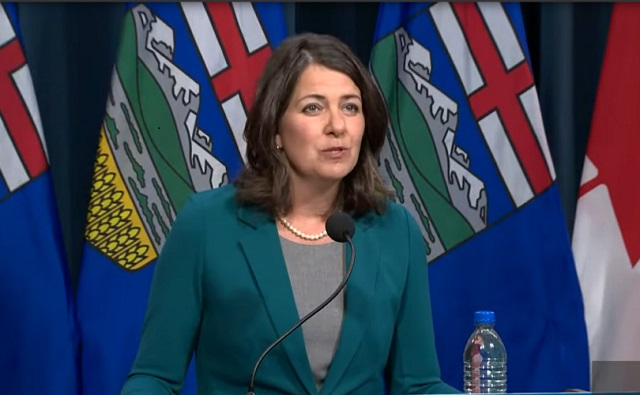
“It is of vital importance that federal policies and programs are made available to all Canadians in a fair and equitable way,” reads a letter dated November 10 and signed by Premiers Tim Houston of Nova Scotia, Blaine Higgs of New Brunswick, Doug Ford of Ontario, Danielle Smith of Alberta, and Scott Moe of Saskatchewan.
The premiers wrote that by “singling out Atlantic Canadians with this relief, it has caused divisions across the country. All Canadians are equally valued and should be equally respected.”
In the letter, the premiers demanded a meeting with Trudeau to discuss the matter and “urge the federal government to remove the carbon tax on all forms of home heating across Canada immediately.”
“We are calling on the federal government to do the right thing and treat all Canadians fairly by removing the federal carbon tax from all forms of home heating. This would help address the significant affordability concerns faced by families from coast to coast to coast,” the premiers wrote.
“Given the vast impacts of carbon pricing, we are asking for a meeting to discuss this issue.”
Trudeau recently announced he was pausing the collection of the carbon tax on home heating oil for three years, but only for Atlantic Canadian provinces. The current cost of the carbon tax on home heating fuel is 17 cents per litre. Most Canadians, however, heat their homes with clean-burning natural gas, a fuel that will not be exempted from the carbon tax.
Trudeau’s announcement came amid dismal polling numbers showing his government will be defeated in a landslide by the Conservative Party come the next election.
Indeed, a recent poll even shows the Green Party outperforming the Liberals in Atlantic Canada.
The premiers’ letter was signed by two Atlantic provinces that benefit from the carbon tax pause but whose leaders do not think it is fair they get special treatment over the others.
The premiers warned Trudeau that with winter coming most Canadians will be hit with high heating bills thanks to the carbon tax.

“Many Canadian households do not use home heating oil and instead use all forms of heating to heat their homes. Winter is coming and these people also deserve a break. It is of vital importance that federal policies and programs are made available to all Canadians in a fair and equitable way,” the letter reads.
“The federal government was elected by voters across this country. This is an opportunity to show them that they won’t be penalized for their choice of home heating source.”
The Conservative Party of Canada (CPC) under leader Pierre Poilievre firmly opposes the carbon tax. Poilievre recently dared Trudeau to call a “carbon tax” election so Canadians can decide for themselves if they want a government for or against a tax that has caused home heating bills to double in some provinces.
A recent CPC motion calling for the carbon tax to be paused for all Canadians failed to pass after the Liberal and Bloc Quebecois MPs voted against it. This motion interestingly had support from the New Democratic Party (NDP), which means its passage is likely.
85 percent of small businesses now opposed to Trudeau’s carbon tax
Opposition to Trudeau’s carbon tax is strong and growing, notably among small business owners. Indeed, a recent poll shows that 85% of small businesses reject the federal carbon tax.
The poll, conducted by the Canadian Federation of Independent Business (CFIB), shows that opposition to the carbon tax has nearly doubled in only a year. Last year, about 52% of businesses opposed a carbon tax.
CFIB president Dan Kelly noted that “the entire federal carbon tax structure is beginning to look like a shell game.”
When it comes to small businesses, Kelly said that they pay “about 40% of the costs of the carbon tax, but the federal government has promised to return only 10% to small businesses.”
LifeSiteNews reported last month how Trudeau’s carbon tax is costing Canadians hundreds of dollars annually, as the rebates given out by the federal government are not enough to compensate for the increased fuel costs.
The Trudeau government’s current environmental goals – in lockstep with the United Nations’ “2030 Agenda for Sustainable Development” – include phasing out coal-fired power plants, reducing fertilizer usage, and curbing natural gas use over the coming decades.
The reduction and eventual elimination of the use of so-called “fossil fuels” and a transition to unreliable “green” energy has also been pushed by the World Economic Forum (WEF) – the globalist group behind the socialist “Great Reset” agenda – an organization in which Trudeau and some of his cabinet are involved.

From the Frontier Centre for Public Policy
By Ian Madsen
Canada’s growing LNG exports are opening global markets and reducing dependence on U.S. prices, if Ottawa allows the pipelines and export facilities needed to reach those markets
Canada’s LNG advantage is clear, but federal bottlenecks still risk turning a rare opening into another missed opportunity
Canada is finally in a position to profit from global LNG demand. But that opportunity will slip away unless Ottawa supports the pipelines and export capacity needed to reach those markets.
Most major LNG and pipeline projects still need federal impact assessments and approvals, which means Ottawa can delay or block them even when provincial and Indigenous governments are onside. Several major projects are already moving ahead, which makes Ottawa’s role even more important.
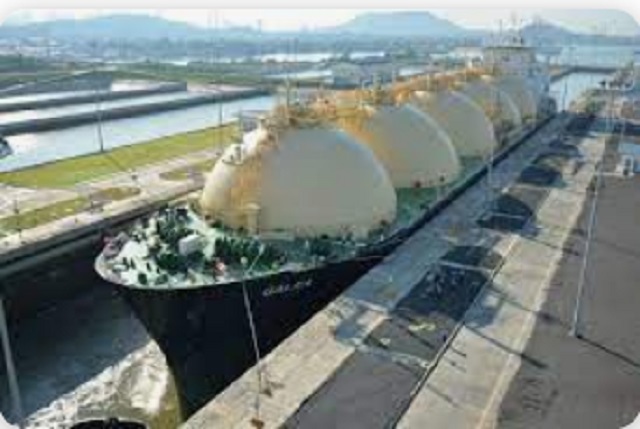
The Ksi Lisims floating liquefaction and export facility near Prince Rupert, British Columbia, along with the LNG Canada terminal at Kitimat, B.C., Cedar LNG and a likely expansion of LNG Canada, are all increasing Canada’s export capacity. For the first time, Canada will be able to sell natural gas to overseas buyers instead of relying solely on the U.S. market and its lower prices.
These projects give the northeast B.C. and northwest Alberta Montney region a long-needed outlet for its natural gas. Horizontal drilling and hydraulic fracturing made it possible to tap these reserves at scale. Until 2025, producers had no choice but to sell into the saturated U.S. market at whatever price American buyers offered. Gaining access to world markets marks one of the most significant changes for an industry long tied to U.S. pricing.
According to an International Gas Union report, “Global liquefied natural gas (LNG) trade grew by 2.4 per cent in 2024 to 411.24 million tonnes, connecting 22 exporting markets with 48 importing markets.” LNG still represents a small share of global natural gas production, but it opens the door to buyers willing to pay more than U.S. markets.
LNG Canada is expected to export a meaningful share of Canada’s natural gas when fully operational. Statistics Canada reports that Canada already contributes to global LNG exports, and that contribution is poised to rise as new facilities come online.
Higher returns have encouraged more development in the Montney region, which produces more than half of Canada’s natural gas. A growing share now goes directly to LNG Canada.
Canadian LNG projects have lower estimated break-even costs than several U.S. or Mexican facilities. That gives Canada a cost advantage in Asia, where LNG demand continues to grow.
Asian LNG prices are higher because major buyers such as Japan and South Korea lack domestic natural gas and rely heavily on imports tied to global price benchmarks. In June 2025, LNG in East Asia sold well above Canadian break-even levels. This price difference, combined with Canada’s competitive costs, gives exporters strong margins compared with sales into North American markets.
The International Energy Agency expects global LNG exports to rise significantly by 2030 as Europe replaces Russian pipeline gas and Asian economies increase their LNG use. Canada is entering the global market at the right time, which strengthens the case for expanding LNG capacity.
As Canadian and U.S. LNG exports grow, North American supply will tighten and local prices will rise. Higher domestic prices will raise revenues and shrink the discount that drains billions from Canada’s economy.
Canada loses more than $20 billion a year because of an estimated $20-per-barrel discount on oil and about $2 per gigajoule on natural gas, according to the Frontier Centre for Public Policy’s energy discount tracker. Those losses appear directly in public budgets. Higher natural gas revenues help fund provincial services, health care, infrastructure and Indigenous revenue-sharing agreements that rely on resource income.
Canada is already seeing early gains from selling more natural gas into global markets. Government support for more pipelines and LNG export capacity would build on those gains and lift GDP and incomes. Ottawa’s job is straightforward. Let the industry reach the markets willing to pay.
Ian Madsen is a senior policy analyst at the Frontier Centre for Public Policy.

From the Fraser Institute
By Steven Globerman, Joel Emes and Austin Thompson
According to our new study, in 2023 (the latest year of comparable data), typical homes on the market were unaffordable for families earning the local median income in every major Canadian city
The dream of homeownership is alive, but not well. Nearly nine in ten young Canadians (aged 18-29) aspire to own a home—but share a similar worry about the current state of housing in Canada.
Of course, those worries are justified. According to our new study, in 2023 (the latest year of comparable data), typical homes on the market were unaffordable for families earning the local median income in every major Canadian city. It’s not just Vancouver and Toronto—housing affordability has eroded nationwide.
Aspiring homeowners face two distinct challenges—saving enough for a downpayment and keeping up with mortgage payments. Both have become harder in recent years.
For example, in 2014, across 36 of Canada’s largest cities, a 20 per cent downpayment for a typical home—detached house, townhouse, condo—cost the equivalent of 14.1 months (on average) of after-tax income for families earning the median income. By 2023, that figure had grown to 22.0 months—a 56 per cent increase. During the same period for those same families, a mortgage payment for a typical home increased (as a share of after-tax incomes) from 29.9 per cent to 56.6 per cent.
No major city has been spared. Between 2014 and 2023, the price of a typical home rose faster than the growth of median after-tax family income in 32 out of 36 of Canada’s largest cities. And in all 36 cities, the monthly mortgage payment on a typical home grew (again, as a share of median after-tax family income), reflecting rising house prices and higher mortgage rates.
While the housing affordability crisis is national in scope, the challenge differs between cities.
In 2023, a median-income-earning family in Fredericton, the most affordable large city for homeownership in Canada, had save the equivalent of 10.6 months of after-tax income ($56,240) for a 20 per cent downpayment on a typical home—and the monthly mortgage payment ($1,445) required 27.2 per cent of that family’s after-tax income. Meanwhile, a median-income-earning family in Vancouver, Canada’s least affordable city, had to spend the equivalent of 43.7 months of after-tax income ($235,520) for a 20 per cent downpayment on a typical home with a monthly mortgage ($6,052) that required 112.3 per cent of its after-tax income—a financial impossibility unless the family could rely on support from family or friends.
The financial barriers to homeownership are clearly greater in Vancouver. But, crucially, neither city is truly “affordable.” In Fredericton and Vancouver, as in every other major Canadian city, buying a typical home with the median income produces a debt burden beyond what’s advisable. Recent house price declines in cities such as Vancouver and Toronto have provided some relief, but homeownership remains far beyond the reach of many families—and a sharp slowdown in homebuilding threatens to limit further gains in affordability.
For families priced out of homeownership, renting doesn’t offer much relief, as rent affordability has also declined in nearly every city. In 2014, rental rates for the median-priced rental unit required 19.8 per cent of median after-tax family income, on average across major cities. By 2023, that figure had risen to 23.5 per cent. And in the least affordable cities for renters, Toronto and Vancouver, a median-priced rental required more than 30 per cent of median after-tax family income. That’s a heavy burden for Canada’s renters who typically earn less than homeowners. It’s also an added financial barrier to homeownership— many Canadian families rent for years before buying their first home, and higher rents make it harder to save for a downpayment.
In light of these realities, Canadians should ask—why have house prices and rental rates outpaced income growth?
Poor public policy has played a key role. Local regulations, lengthy municipal approval processes, and costly taxes and fees all combine to hinder housing development. And the federal government allowed a historic surge in immigration that greatly outpaced new home construction. It’s simple supply and demand—when more people chase a limited (and restricted) supply of homes, prices rise. Meanwhile, after-tax incomes aren’t keeping pace, as government policies that discourage investment and economic growth also discourage wage growth.
Canadians still want to own homes, but a decade of deteriorating affordability has made that a distant prospect for many families. Reversing the trend will require accelerated homebuilding, better-paced immigration and policies that grow wages while limiting tax bills for Canadians—changes governments routinely promise but rarely deliver.

Steven Globerman
Senior Fellow and Addington Chair in Measurement, Fraser Institute

Joel Emes
Senior Economist, Fraser Institute

Austin Thompson
Senior Policy Analyst, Fraser Institute


Media bound to pay the price for selling their freedom to (selectively) offend

Sometimes An Ingrate Nation Pt. 2: The Great One Makes His Choice

Recent price declines don’t solve Toronto’s housing affordability crisis

From Exception to Routine. Why Canada’s State-Assisted Suicide Regime Demands a Human-Rights Review
-
 COVID-192 days ago
University of Colorado will pay $10 million to staff, students for trying to force them to take COVID shots
-
 Bruce Dowbiggin2 days ago
Integration Or Indignation: Whose Strategy Worked Best Against Trump?
-
 espionage2 days ago
Western Campuses Help Build China’s Digital Dragnet With U.S. Tax Funds, Study Warns
-
 Bruce Dowbiggin2 days ago
Wayne Gretzky’s Terrible, Awful Week.. And Soccer/ Football.
-
 Agriculture2 days ago
Canada’s air quality among the best in the world
-
 Business1 day ago
Canada invests $34 million in Chinese drones now considered to be ‘high security risks’
-
 Health2 days ago
CDC Vaccine Panel Votes to End Universal Hep B Vaccine for Newborns
-
 Business2 days ago
The EU Insists Its X Fine Isn’t About Censorship. Here’s Why It Is.