
Travel
Todayville Travel: Spring in Italy- Rome and Puglia


First in the two-part series ‘Spring in Italy’

“Let’s have a picnic. Maybe whoever picked up your pack will come back.” “Right,” I responded caustically, “to collect the 100,000 lira reward.”
On a lonely country road near Ostuni, in the Province of Puglia – the heel of Italy’s boot – I stopped to photograph a field of poppies in an olive grove. After a few happy snaps I jumped back in the car and motored on. Fifteen minutes later I reached for my daypack and realized in horror that I had left the pack (complete with camera lenses and phone) on the rock wall that fronted the poppy field. We sped back. The bag was gone. Impossible. We hadn’t been gone half an hour and there were no other cars on the road.

Poppy field in Puglia
While I lay morosely in the ditch, tearing hair and gnashing teeth, my wife Florence calmly analyzed the situation: “Why don’t we call your Iphone?” We expectantly dialed from her cell. No answer. I moped back to the roadside. Florence then suggested, “Let’s have a picnic. Maybe whoever picked up your pack will come back.”
“Right,” I responded caustically, “to collect the 100,000 lira reward.”
We broke bread, cut cheese and sliced salami. I tried vainly to enjoy a cold Peroni on this otherwise beautiful day. It seemed impossible that, in the short time we had been away, someone could have spotted my satchel in a rock crevice on this remote country lane. “There must be another explanation,” I muttered, “maybe a conspiracy.”
An hour later we were disconsolately packing up when a faded 1960’s era Fiat Panda pulled up and stopped tentatively beside us. An elderly man with glasses thick as an olive-oil bottle gazed out from behind the wheel. He eyed us with a mixture of suspicion and curiosity. A young boy with equally opaque glasses – obviously a blood relative – peered shyly from the passenger seat. Together they began a lengthy, incomprehensible Puglian discourse – and only when satisfied that we understood the situation, did they proudly retrieve my bag from the back seat.
“Mille, mille grazie,” I said, confused but genuinely grateful. I wanted a picture but the old signor waived us off and the aged Fiat puttered slowly away. “Yup,” Florence remarked, “a conspiracy.”
For years my patient wife has been suggesting, “We should spend a month in Italy.” And for ages I nodded – and deferred. But last spring when the annual request edged toward an ultimatum, in the interests of marital harmony, I acquiesced.
“And twenty minutes later we were checking into a quaint B&B steps away from the Vatican.”
As seasoned travellers we often tour by the seat of our pants, plans random, frequently pulling into a strange town late afternoon searching for accommodation. This has worked well in some places but, in a country where you no speaka da lingua, advance booking is wiser – and infinitely less stressful.
So when the plane touched down at Rome’s Leonardo da Vinci Airport in early April, our four weeks of lodging – three nights here, four nights there – were all booked. Even our ride into Rome was arranged. A driver awaited us, patiently displaying a “Mr. and Mrs. Feehan” sign. And twenty minutes later we were checking into a quaint B&B steps away from the Vatican.
We didn’t organize this trip on our own – nor did we use a tour company or travel agent. We employed a much better resource: Sandy, an acquaintance who loves Italy, has been there many times and knows exactly where to direct a couple of adventurous travellers in the land of the Azzurri.
Our friend fashioned the entire itinerary: four days exploring Rome, ten days in the south, a few days biking near San Marino and a final 10 days in the rolling hills of Tuscany. Her planning was so meticulous (right down to AirB&Bs in the heart of each town plus offering detailed day-trip ideas) that I feel we owe her a substantial commission – or maybe just a nice spaghetti dinner.
So for those looking for some free advice and a fool-proof schedule for your upcoming trip to Italy, Sandy’s phone number is…
Rome is a remarkable, fascinating place. This ancient capital of the empire is overflowing with architecture, museums, statuary, Roman ruins and wonderful old neighbourhoods. And despite the sprawling megalopolis that is modern Rome, its iconic sites (the Coliseum, Forum, Trevi Fountain, Spanish Steps, Pantheon and St. Peter’s) can all be visited in a day’s stroll.

Rome at night

Enjoying Trevi Fountain with a few hundred intimate friends
But Rome is overwhelmed with tourists. On average 40,000 people a day cue up to shuffle obediently through the Vatican and the Sistine Chapel. April is allegedly shoulder season – and we had booked a “private tour” – but we still had to share Michelangelo’s artistic brilliance with a giant throng of gawking souls, heads uniformly craned toward the majestic ceiling.

The Vatican Museum
Like many big cities Rome is a little seedy. Pope Francis has allowed the homeless to camp within meters of St Peter’s Square. Unfortunately this generous gesture does not add to the curb appeal of the Basilica. We felt a little uncomfortable at night, dodging snoring vagrants, cardboard houses, used needles and other discarded paraphernalia.

Times are tough at St. Peter’s Square
I’m not a big city guy so after four days with the hawkers and beggars and tourists snapping pictures with their “selfish sticks” I was happy to pick up our rental car and head for sleepy Puglia, in Italy’s delightful south.
Although it has millennia of history, Italy is actually a new country – only a few years older than Canada. Giuseppe Garibaldi rode in on his horse and unified all the disparate kingdoms in 1861. But even today northern Italians tend to look down their noses at their southern brethren. And reciprocally a hint of proud defiance defines the Puglian character.

Puglians are defiant- but fashionable!
Our first stop in the south was Matera, a UNESCO world heritage site renowned for its cliffside cave dwellings or sassi. These grottos have been continuously occupied since Neolithic times and the humble Materans are enormously proud of the “negative architecture” of these underground abodes.
One warm afternoon while we strolled a grassy cliffside path, a well-dressed middle-aged man stepped out from the shadows, cigarette dangling from his lips. He introduced himself as Fabrizio and invited us to visit his family sasso and the kitchen where traditional (tipica) food was served.

Fabrizio
“Quanto?” I asked suspiciously, concerned about the cost. “For the cave, free,” he said, “and if you wish something to eat, you decide what to pay.” It was nearly 1 p.m. and we were somewhat peckish, so we warily accepted his invitation.
“I was nearly full when out came two different soups, a hearty beef broth and a lentil stew. Next was a crisp pizza. I quietly undid my belt beneath the table.”
Thus began the most interesting and enjoyable afternoon of our Italian visit. After showing us the intricately hand-carved rooms where the ancients slept and stabled their animals – as well as the cisterns where water and wine were stored – Fabrizio led us up a narrow passage to his open-air kitchen overlooking Matera.

The view from Fabrizio’s kitchen
Then he started the service. First, the antipasti: crusty bread with four olive oil dips, each infused with a local herb, then bruschetta made from shredded garlic and ripe dried tomatoes, then an amazing assortment of meats, cheeses and vegetables.
I was nearly full when out came two different soups, a hearty beef broth and a lentil stew. Next was a crisp pizza. I quietly undid my belt beneath the table.
Fabrizio chatted constantly while he worked – a knowing smile on his face – educating us on local foods, customs and lifestyle. There was also an unending supply of wine, “vino rosso della casa,” vinted from primitivo grapes, which have been cultivated in this region for thousands of years.
“Why did we wait so long to visit Italy?”
There were so many courses I can’t recall them all – fish and more cheese were in there somewhere – but I know we finished with dolce (sweets) and a jolt of espresso.
Fabrizio’s motto is “less is more” but I’ve rarely eaten more in one sitting. Three hours after stumbling in on this amazing gastronomic and cultural experience, we stumbled out into the late afternoon sun. As we left Fabrizio called out, “Won’t you have some pasta Bolognese?” I think if we had kept eating he’d still be bringing out dishes.
And what was il conto you ask? He humbly, delightedly accepted 40 euro – about $60.
A couple of weeks later on the flight home, over the drone of jet engines, I asked Florence, “Why did we wait so long to visit Italy?” She raised her eyes toward the heavens, shook her head and said, “It must have been a conspiracy.” Then she smiled and nodded off.

Ostuni at night

Trulli House
Next time: Riccione and the Tuscan Hills
Gerry Feehan QC practised law in Red Deer for 27 years before starting his second life as a freelance travel writer and photographer.
Todayville is proud to showcase Gerry’s stories developed over more than a decade of travel.

Gerry Feehan
Here’s another great adventure from Gerry


From the Fraser Institute
By Alex Whalen and Jake Fuss
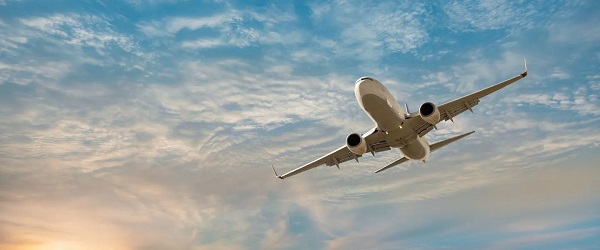
This holiday season, many Canadians will fly to spend time to with family and friends. But air travellers in Canada consistently report frustration with service, cost and choice. In its recent budget, the Carney government announced it will consider “options for the privatization of airports.” What does this mean for Canadians?
Up until the 1990s, the federal government served as both the owner and operator of Canada’s major airports. The Chrétien government partially privatized and transferred the operation of major airports to not-for-profit airport authorities, while the federal government remained the owner of the land. Since then, the federal government has effectively been the landlord for Canada’s airports, collecting rent each year from the not-for-profit operating authorities.
What would full privatization of airports look like?
If the government allows private for-profit businesses to own Canada’s major airports, their incentives would be to operate as efficiently as possible, serve customers and generate profits. Currently, there’s little incentive to compete as the operating authorities are largely unaccountable because they only report to government officials in a limited form, rather than reporting directly to shareholders as they would under privatization. Private for-profit airports exist in many other countries, and research has shown they are often less costly for passengers and more innovative.
Yet, privatization of airports should be only the first step in a broader package of reforms to improve air travel in Canada. The federal government should also open up competition by creating the conditions for new airports, new airlines and new investment. Currently, Canada restricts foreign ownership of Canadian airlines, while also restricting foreign airlines from flying within Canada. Consequently, Canadians are left with little choice when booking air travel. Opening up the industry by reversing these policies would force incumbent airlines to compete with a greater number of airlines, generating greater choice and likely lower costs for consumers.
Moreover, the federal government should reduce the taxes and fees on air travel that contribute to the cost of airline tickets. Indeed, according to our recent research, among peer countries, Canada has among the most expensive air travel taxes and fees. These costs get passed on to consumers, so it’s no surprise that Canada consistently ranks as a very expensive country for air travel.
If the Carney government actually privatizes Canada’s airports, this would be a good first step to introducing greater competition in an industry where it’s badly needed. But to truly deliver for Canadians, the government must go much further and overhaul the numerous policies, taxes and fees that limit competition and drive up costs.

Alex Whalen
Director, Atlantic Canada Prosperity, Fraser Institute

Jake Fuss
Director, Fiscal Studies, Fraser Institute
International
America first at the national parks: Trump hits Canadians and other foreign visitors with $100 fee


Foreign visitors heading to America’s crown-jewel national parks will soon face a steeper bill, as the Trump administration moves to prioritize U.S. taxpayers who already bankroll the system. The Department of the Interior announced Tuesday that starting in 2026, non-residents will be charged an additional $100 at 11 of the country’s busiest parks — a list that includes the Grand Canyon, Yellowstone, Yosemite, Acadia, Everglades, and other iconic destinations. The change accompanies a sharp increase in the cost of an annual all-parks pass for foreign tourists, which will jump to $250, more than triple the current rate. Americans and permanent residents will continue paying $80.
Interior Secretary Doug Burgum framed the policy as a straightforward matter of fairness. “President Trump’s leadership always puts American families first,” he said, arguing that U.S. households already subsidize the National Park System and deserve affordable access while international tourists contribute “their fair share” to the upkeep and expansion of the park network. It’s a pitch that aligns with Trump’s broader push to restore what he calls a sense of ownership and pride in the country’s natural treasures, and to make sure the burden of maintaining them doesn’t fall solely on American families.
We’re making it easier & more affordable for Americans to experience the beauty & freedom of our public lands!
In 2026, we’re launching:
– America-first pricing 💵
– Digital passes 📱
– Patriotic pass designs 🇺🇸
– Expanded motorcycle access 🏍️
– 5 additional fee-free days 🗓️ pic.twitter.com/a2SvHNBdSP— Secretary Doug Burgum (@SecretaryBurgum) November 25, 2025
The National Park Service recorded nearly 332 million visits in 2024 across its 63 designated national parks — a staggering figure that has placed heavy pressure on trails, facilities, and staff. While some parks charge per-vehicle fees and others by the individual, the $80 “America the Beautiful” pass covers the holder and all passengers or up to four adults. Under the new rules, foreign visitors who purchase the $250 annual pass will avoid the extra $100 at the 11 high-traffic parks, but all other overseas travelers will pay the surcharge at the gate.
The administration says the approach follows a July executive order from President Trump, aimed at preserving parkland “for American families” by ensuring those who don’t support the system through taxes help shoulder the cost of its growing maintenance needs. Burgum’s department also highlighted that U.S. visitors will continue to enjoy “patriotic fee-free days” tied to national observances — including President’s Day, Veterans Day, and Flag Day, which coincides with Trump’s birthday — while foreign visitors will pay full freight.
The move is expected to generate significant revenue from international tourism while reinforcing a message that has become central to Trump’s agenda: America’s natural wonders belong first to the taxpayers who fund them, and protecting access for those families comes before subsidizing the travel of visitors from abroad.

The $50 Billion Question: EVs Never Delivered What Ottawa Promised
The Recall Trap: 21 Alberta MLA’s face recall petitions
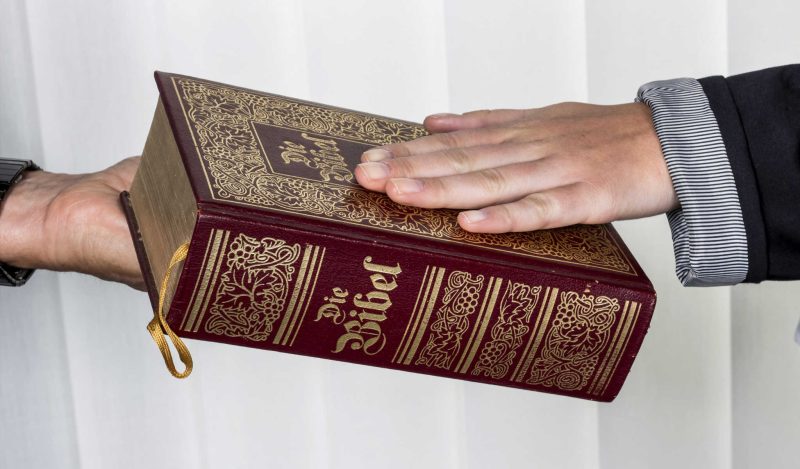
Liberals gain support for ‘hate speech’ bill targeting Bible passages against homosexuality
Wisdom of Our Elders: The Contempt for Memory in Canadian Indigenous Policy
Canada’s free speech record is cracking under pressure
Storm clouds of uncertainty as BC courts deal another blow to industry and investment

Taxpayers Federation calls on politicians to reject funding for new Ottawa Senators arena
-
 Business1 day ago
Major tax changes in 2026: Report
-
 Digital ID14 hours ago
Canada releases new digital ID app for personal documents despite privacy concerns
-
 Energy13 hours ago
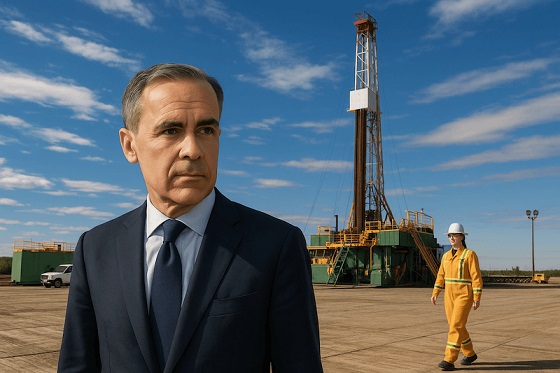
Canada’s sudden rediscovery of energy ambition has been greeted with a familiar charge: hypocrisy
-
 Alberta1 day ago
Schools should go back to basics to mitigate effects of AI
-
 Daily Caller1 day ago
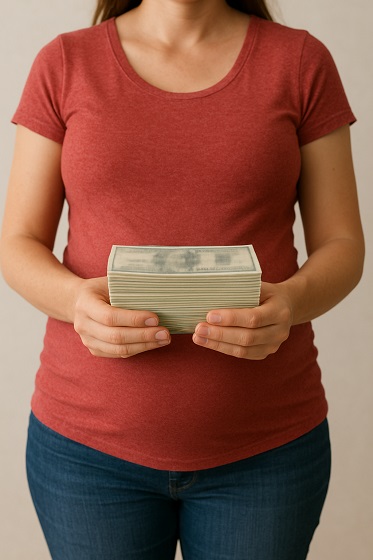
Chinese Billionaire Tried To Build US-Born Baby Empire As Overseas Elites Turn To American Surrogates
-
 International23 hours ago
Russia Now Open To Ukraine Joining EU, Officials Briefed On Peace Deal Say
-
 Censorship Industrial Complex23 hours ago
Death by a thousand clicks – government censorship of Canada’s internet
-
 International1 day ago
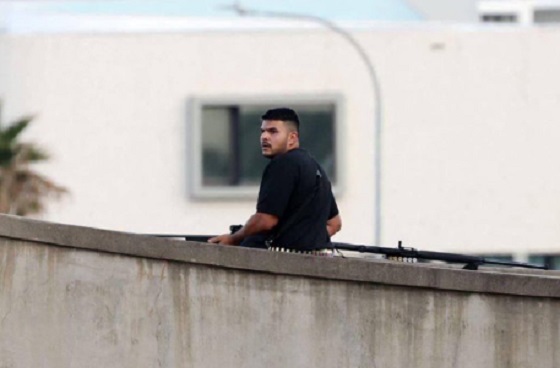
At Least 15 Killed In Shooting Targeting Jewish Community At Australia’s Bondi Beach, Police Say