
Travel
Todayville Travel: I survived the Road to Hana


I survived the Road to Hana! by Gerry Feehan
“…I’ve done enough beach holidays to fill a leaky bucket. Watching overweight tourists in undersized beach wear (throngs in thongs) has long since lost its lustre…”
The village of Hana is located on the quiet ‘windward’ side of Maui. Windward is a euphemism for rainy. Precipitation here averages three hundred inches a year. No person of sound judgment would live in a place where an inch of rain in an afternoon is considered a light drizzle.


Hana is definitely on the wet side of Mau
Most tourists endure the gruelling drive to Hana as a day trip, rising early to negotiate the eighty-five kilometer journey with its six-hundred-plus curves, 54 narrow bridges and frustratingly slow traffic. They choke down a fish taco and lemon bar at a roadside food stand then snake back at a snail’s pace in darkness to the dry leeward side of the island, collapsing into bed at a fancy seaside resort in Kaanapali or Wailea, a checkmark on their Hawaiian holiday agenda firmly ticked off.
“… But as is often the case when one ventures off the beaten track, our choice was serendipitous…”
Some time ago a clever marketer began selling T-shirts with the caption: “I survived the road to Hana!” It really is a challenging drive, so that intrepid shirt salesman is probably now quite wealthy.
I’ve done enough beach holidays to fill a leaky bucket. Watching overweight tourists in undersized beach wear (throngs in thongs) has long since lost its lustre. We were looking for a change, an out-of-the-way Hawaiian adventure. There’s hardly a soul living out Hana way. So we decided to spend a week with the free spirits and addled Vietnam vets.
My search for accommodation in Hana was careful and meticulous. Not. I booked the first place I found on the net: Entabeni Cottage. Click here for their website. But as is often the case when one ventures off the beaten track, our choice was serendipitous.

Outdoor shower anyone?
We had absolute privacy, from the gorgeous ocean view to the solar-heated outdoor shower. The north wall of the cottage consists entirely of glass doors. Each morning we awoke to a 180-degree view of the ocean and the barely discernible sound of waves crashing on the rocky shore hundreds of meters below.
“Entabeni means the place on the hill in Zulu,” explained owner Terry Kristiansen as she toured us in morning sunshine through the horticultural wonder of her amazing garden. We meandered amongst gigantic Cook pine, African tulip and mango trees. She and her husband Michael maintain a tropical nursery. I tried not to blush when she mentioned that some of the flowering plants were viviparous.

Green eggs and …
Two dogs, a cat, a goat, a multitude of chickens and a raucous gaggle of guinea fowl followed our progress. Terry’s hens lay green eggs – organically of course. Each morning our doorstep was laden with a fresh coop-full of Entabeni’s emerald bounty.
Our Hana booking was for seven days. Perhaps a mistake? There’s purportedly nothing to do there. (A renowned friend of mine, Dr. D, who is intimately familiar with Maui, asked bluntly, ”You’re going to Hana? For a week?”) So, soon after arrival, we decided to scout out some adventure. We meandered into town and chatted up some locals:
“What do you do out here in Hana?” I asked Tyler, a mixed-blood Hawaiian of Portuguese pedigree.

Tail of a whale – or whale of a tale?
“Not much” he replied, “sometimes we fish… when it’s not rough.” He looked ruefully out to sea, as whitecaps roiled in a sub-tropical winter storm. A lone humpback whale breached in the distance. I concluded that there’d be no fishing on this trip.
“Sometimes we drive into town and pick up mail,” offered his cousin, who was high on friendliness but low on wisdom teeth. “And of course there’s the big meetin’ tonight at the church to vote on the offal plebiscite.”
I’m not sure what offal is but it sounds terrible. I was about to excuse myself, vacate the cottage and head for dry, civilized parts of Maui when Tyler added: “What we really like is hunting wild boar. We’re going out tomorrow morning. You’re welcome to come along if you don’t mind getting a little muddy.”
My expertise as a hunter is renowned. I once shot a gopher – grazing it only slightly but deeply wounding its pride; and I’ve caught two fish – three if you include the goldfish I netted in my backyard pond. Still I figured ‘when in Rome’ and agreed to meet them in the morning at mile marker 26, near an abandoned, burnt-out pickup truck.

Mile 26 marks the meeting spot.
“It’s blue,” offered my newfound toothless friend, perhaps to ensure I didn’t wait by a red, abandoned burnt-out pickup truck at mile marker 26.
Terry drove me down at 7am sharp. We hadn’t waited more than a minute when up rolled a pineapple-yellow Ford crew-cab, loaded to exploding with Hawaiians, hunting dogs and guns. The truck, high on its suspension, teetered on two wheels before finally rocking to a stop. The occupants piled out and cracked a Budweiser. The humans that is. The dogs were content to slurp at the slough that had formed around the old blue pickup during the previous evening’s downpour.
Like most flora and fauna in the Hawaiian Islands, the wild pigs are alien. These invasive, destructive critters are a cross between the small Polynesian variety brought to the islands by the first human inhabitants a thousand years ago and larger European pigs imported in the 1800’s; the result is the large, black, elusive, ornery beasts that Hawaiians love to hunt.
By 7:30 a.m. we were a kilometre deep in the rainforest, up to our knees in muck. The dogs had sniffed out a promising dig. Fresh tracks confirmed that a large sow was nearby. Three hours later we were still zigzagging back and forth over, around and through jungle streams laced with invasive strangler figs and giant eucalyptus trees. The pigs were clever. On a couple of occasions the dogs bolted excitedly into the impenetrable jungle on a promising scent but near noon, with the tropical sun beating down and steam rising in the heated rainforest, we admitted defeat and called it a day.

‘Hurt’ is not an option in here.
“What happens if you get injured in here?” I asked Tyler as we began the slow hour-long crawl back to the pickup.
“Hurt is not a’ option,” he answered, tugging at a rubber boot sunk deep in a wallow of mud.
Back at the truck, with the last of the morning Budweiser, we conceded the feral pig’s victory over man.

Hike to the seven sacred pools.

Rainbow Eucalyptus
“Why don’t you and your bride come down to our place tomorrow for Super Bowl,” offered Tyler, “there’ll be plenty of grind and bevvies.”
I assumed he meant food and drink.
We arrived fashionably late with a plate full of devilled (green) eggs and a cooler full of cold ones. After the game (quite exciting – not a Superbore) I asked if it would be okay were I to bring out my ever-present ukulele from its coincidental resting place in the trunk of the rental car.
“That’d be great bra’,” said Tyler, using the term of endearment that forms every second word of Hawaiian pidgin vocabulary.
When I returned, a slack guitar and four ukuleles were jamming on the lanai. Uncle Bobby (whose relationship with our hosts I never did quite grasp) was pouring himself a stiff concoction, lighting a smoke and settling into an over-worn armchair for what turned out to be a long night of music and laughter.

Warm grind, cold bevvies – and a hot uke!
Later in the week, as we strolled Hana’s streets locals were honking, waving “hey bra’’” and inviting us for grind. Apparently we ‘haole’ (white people from another place) were a hit.
In closing I offer seven recommendations on how to pass a week in Hana:
- Walk awestruck as Terry Kristiansen guides you through the horticultural wonder that is Entabeni Cottage (whilst chickens peck at your progress);
- Shower outdoor at night in the Entabeni rain;
- Crawl on all fours for hours through steep, muddy rainforest with a pack of men, dogs and Budweiser on the hunt for wild boar;
- Enjoy a candle-lit repast of raw sashimi-grade ahi tuna, followed by lightly seared opaka-paka, served with a glass of white wine by your favorite fellow hominid;
- Get lit up with Hawaiian locals at a ukulele jam;
- Waste a day by shooting close-up photographs of the incredible rainbow eucalyptus trees;
- Snorkel at a ‘clothing optional’ black sand beach, oblivious to the nudity of those around you;
- Hike the seven sacred pools to Waimoku Falls or traverse the jagged lava cliffs of Waianapanapa State Park.

Can’t see the forest for the bamboo.
Did I say seven things? I guess there’s more to do in Hana than first meets the eye. So get off the beaten track, out of the th(r)ong and seek some adventure.
Gerry Feehan QC practised law in Red Deer for 27 years before starting his second life as a freelance travel writer and photographer. He says that, while being a lawyer is more remunerative than travel writing, it isn’t nearly as much fun. When not on the road, Gerry and his wife Florence live in Red Deer and Kimberley, BC. Todayville is proud to work with Gerry to re-publish some of his most compelling stories from his vast catalogue developed over more than a decade of travel.

Gerry Feehan
Click to read more excellent stories by Gerry Feehan.



From the Fraser Institute
By Alex Whalen and Jake Fuss
This holiday season, many Canadians will fly to spend time to with family and friends. But air travellers in Canada consistently report frustration with service, cost and choice. In its recent budget, the Carney government announced it will consider “options for the privatization of airports.” What does this mean for Canadians?
Up until the 1990s, the federal government served as both the owner and operator of Canada’s major airports. The Chrétien government partially privatized and transferred the operation of major airports to not-for-profit airport authorities, while the federal government remained the owner of the land. Since then, the federal government has effectively been the landlord for Canada’s airports, collecting rent each year from the not-for-profit operating authorities.
What would full privatization of airports look like?
If the government allows private for-profit businesses to own Canada’s major airports, their incentives would be to operate as efficiently as possible, serve customers and generate profits. Currently, there’s little incentive to compete as the operating authorities are largely unaccountable because they only report to government officials in a limited form, rather than reporting directly to shareholders as they would under privatization. Private for-profit airports exist in many other countries, and research has shown they are often less costly for passengers and more innovative.
Yet, privatization of airports should be only the first step in a broader package of reforms to improve air travel in Canada. The federal government should also open up competition by creating the conditions for new airports, new airlines and new investment. Currently, Canada restricts foreign ownership of Canadian airlines, while also restricting foreign airlines from flying within Canada. Consequently, Canadians are left with little choice when booking air travel. Opening up the industry by reversing these policies would force incumbent airlines to compete with a greater number of airlines, generating greater choice and likely lower costs for consumers.
Moreover, the federal government should reduce the taxes and fees on air travel that contribute to the cost of airline tickets. Indeed, according to our recent research, among peer countries, Canada has among the most expensive air travel taxes and fees. These costs get passed on to consumers, so it’s no surprise that Canada consistently ranks as a very expensive country for air travel.
If the Carney government actually privatizes Canada’s airports, this would be a good first step to introducing greater competition in an industry where it’s badly needed. But to truly deliver for Canadians, the government must go much further and overhaul the numerous policies, taxes and fees that limit competition and drive up costs.

Alex Whalen
Director, Atlantic Canada Prosperity, Fraser Institute

Jake Fuss
Director, Fiscal Studies, Fraser Institute
International
America first at the national parks: Trump hits Canadians and other foreign visitors with $100 fee


Foreign visitors heading to America’s crown-jewel national parks will soon face a steeper bill, as the Trump administration moves to prioritize U.S. taxpayers who already bankroll the system. The Department of the Interior announced Tuesday that starting in 2026, non-residents will be charged an additional $100 at 11 of the country’s busiest parks — a list that includes the Grand Canyon, Yellowstone, Yosemite, Acadia, Everglades, and other iconic destinations. The change accompanies a sharp increase in the cost of an annual all-parks pass for foreign tourists, which will jump to $250, more than triple the current rate. Americans and permanent residents will continue paying $80.
Interior Secretary Doug Burgum framed the policy as a straightforward matter of fairness. “President Trump’s leadership always puts American families first,” he said, arguing that U.S. households already subsidize the National Park System and deserve affordable access while international tourists contribute “their fair share” to the upkeep and expansion of the park network. It’s a pitch that aligns with Trump’s broader push to restore what he calls a sense of ownership and pride in the country’s natural treasures, and to make sure the burden of maintaining them doesn’t fall solely on American families.
We’re making it easier & more affordable for Americans to experience the beauty & freedom of our public lands!
In 2026, we’re launching:
– America-first pricing 💵
– Digital passes 📱
– Patriotic pass designs 🇺🇸
– Expanded motorcycle access 🏍️
– 5 additional fee-free days 🗓️ pic.twitter.com/a2SvHNBdSP— Secretary Doug Burgum (@SecretaryBurgum) November 25, 2025
The National Park Service recorded nearly 332 million visits in 2024 across its 63 designated national parks — a staggering figure that has placed heavy pressure on trails, facilities, and staff. While some parks charge per-vehicle fees and others by the individual, the $80 “America the Beautiful” pass covers the holder and all passengers or up to four adults. Under the new rules, foreign visitors who purchase the $250 annual pass will avoid the extra $100 at the 11 high-traffic parks, but all other overseas travelers will pay the surcharge at the gate.
The administration says the approach follows a July executive order from President Trump, aimed at preserving parkland “for American families” by ensuring those who don’t support the system through taxes help shoulder the cost of its growing maintenance needs. Burgum’s department also highlighted that U.S. visitors will continue to enjoy “patriotic fee-free days” tied to national observances — including President’s Day, Veterans Day, and Flag Day, which coincides with Trump’s birthday — while foreign visitors will pay full freight.
The move is expected to generate significant revenue from international tourism while reinforcing a message that has become central to Trump’s agenda: America’s natural wonders belong first to the taxpayers who fund them, and protecting access for those families comes before subsidizing the travel of visitors from abroad.


US Condemns EU Censorship Pressure, Defends X

Will this deal actually build a pipeline in Canada?

The West Needs Bogeymen (Especially Russia)

Loblaws Owes Canadians Up to $500 Million in “Secret” Bread Cash
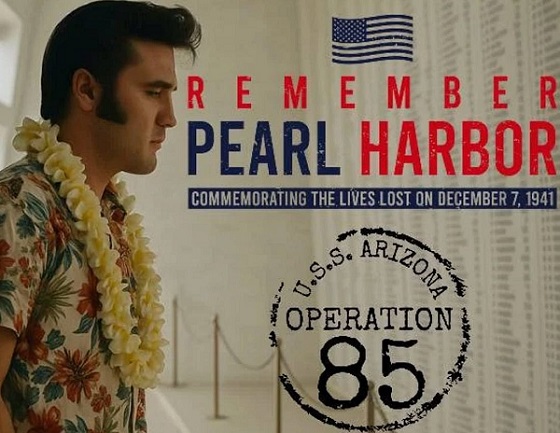
The day the ‘King of rock ‘n’ roll saved the Arizona memorial

Western Campuses Help Build China’s Digital Dragnet With U.S. Tax Funds, Study Warns

CDC Vaccine Panel Votes to End Universal Hep B Vaccine for Newborns
-
 Alberta1 day ago
The Recall Trap: 21 Alberta MLA’s face recall petitions
-
 International1 day ago
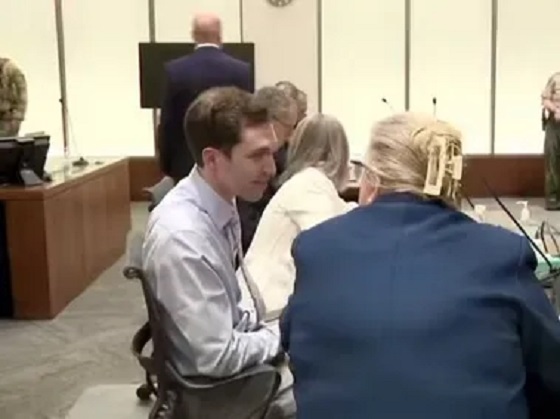
Tyler Robinson shows no remorse in first court appearance for Kirk assassination
-
 illegal immigration1 day ago
US Notes 2.5 million illegals out and counting
-
 Energy1 day ago
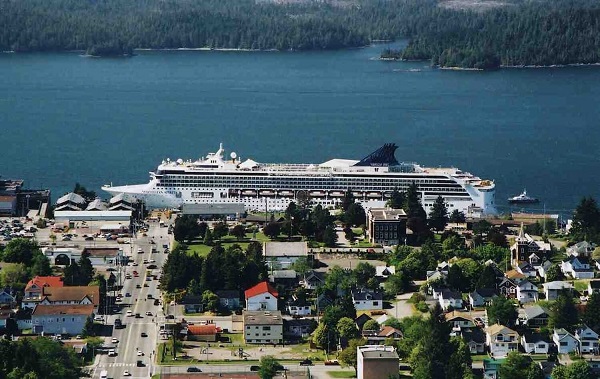
Canada’s future prosperity runs through the northwest coast
-
 2025 Federal Election2 days ago
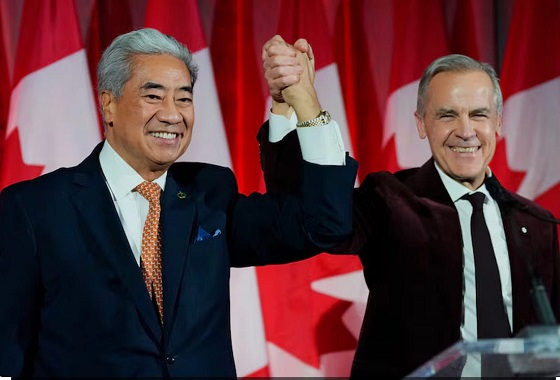
Too Close for Comfort: Carney Floor Crosser Comes From a Riding Tainted by PRC Interference
-
 Daily Caller19 hours ago
‘There Will Be Very Serious Retaliation’: Two American Servicemen, Interpreter Killed In Syrian Attack
-
 Business2 days ago
High-speed rail between Toronto and Quebec City a costly boondoggle for Canadian taxpayers
-
 Business2 days ago
The world is no longer buying a transition to “something else” without defining what that is