
Crime
Drumheller RCMP / Major Crimes Unit Lay Further Charges in Homicide


Drumheller, Alberta – The RCMP Major Crimes Unit have arrested and charged a youth as a result of the ongoing investigation into the murder of Fazal Rehman, whose body was discovered south of Morrin on October 16, 2017.
In late October, Dylan Donald Howard of Munson was arrested and charged with one count of first degree murder. He remains in custody pending his trial.
The Major Crimes Unit from Calgary maintained carriage of this investigation and continued to investigate in partnership with other RCMP specialized units. On June 5th 2017, a 16-year-old female was arrested and charged with Accessory after the Fact of Murder and Attempting Obstruction of Justice. The female, who cannot be named according to the provisions of the Youth Criminal Justice Act, is scheduled to appear in Provincial court in Calgary this morning at 9:30.
The RCMP will not be commenting further as the mater is now before the courts.
BACKGROUND:
UPDATE #1
October 27, 2017
Drumheller RCMP charge man with first degree murder
Drumheller, Alberta – Investigators arrested a 20-year-old man yesterday for the murder of Fazal Rehman (36), whose body had been discovered at the scene of a burning vehicle in a rural area south of the village of Morrin on Monday, October 16, 2017.
The police investigation into the incident confirmed the identity of the deceased man is Fazal Rehman, of Calgary, who was known also by the name of Afzad Rehman.
An autopsy was completed by the Medical Examiner’s Office in Calgary on Thursday, October 19 and based upon its findings, as well as evidence gathered from the scene, the RCMP committed several specialized resources to the homicide investigation including its Major Crimes Unit (MCU) from Calgary, Forensic Identification Section (FIS), Auto Theft Section and Police Dog Services (PDS).
Yesterday, Dylan Donald Howard (20) of Munson, Alberta was arrested without incident in Airdrie. Mr. Howard has been charged with one count of first degree murder and will appear in Provincial Court in Drumheller on Friday, November 10, 2017.

Morrin is approximately 263 kilometres south east of Edmonton and 161 kilometres northeast of Calgary.
Additional information will not be released at this time as the matter is now before the courts, however, should new details arise an updated media release will be issued.
Original News Release
October 17, 2017
Drumheller RCMP investigate human remains
Drumheller, Alberta – On Monday, October 16, at approximately 8:00 a.m., members of the Drumheller RCMP Detachment responded to a report of a burning vehicle in a rural area south of the village of Morrin, Alberta. Firefighters from Morrin attended and extinguished the flames. Human remains were discovered at the scene.
Members of the RCMP’s Major Crimes Unit (MCU) have assumed carriage of the investigation with assistance from the Drumheller RCMP Detachment and specialized units such as the RCMP’s Forensic Identification Section (FIS) and its Auto Theft Unit from Calgary.
The investigation is ongoing and the last known registered owner of the vehicle has been located and has been spoken to by police. An autopsy is scheduled for tomorrow at the Office of the Chief Medical Examiner in Calgary.
Morrin is approximately 263 kilometres south east of Edmonton and 161 kilometres northeast of Calgary.
The RCMP requests that anyone with information about this case to call the Drumheller RCMP Detachment. In the event that callers wish to remain anonymous, they are encouraged to contact Crime Stoppers by phone at 1-800-222-8477 (TIPS), or by internet at www.tipsubmit.com.
For more Stories visit Todayville.com

From The Center Square
By
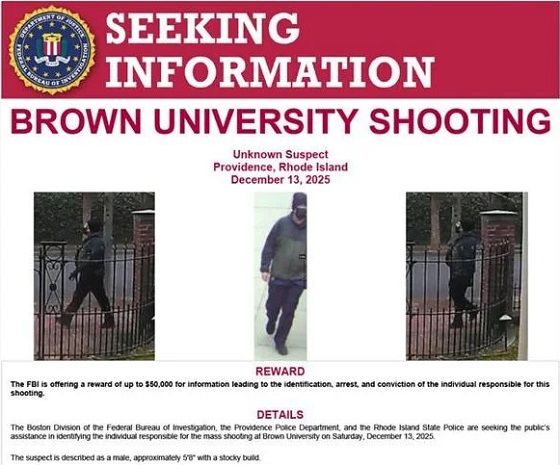
Rhode Island officials said the suspected gunman in the Brown University mass shooting has been found dead of an apparent self-inflicted gunshot wound, more than 50 miles away in a storage facility in southern New Hampshire.
The shooter was identified as Claudio Manuel Neves-Valente, a 48-year-old Brown student and Portuguese national. Neves-Valente was found dead with a satchel containing two firearms inside in the storage facility, authorities said.
“He took his own life tonight,” Providence police chief Oscar Perez said at a press conference, noting that local, state and federal law officials spent days poring over video evidence, license plate data and hundreds of investigative tips in pursuit of the suspect.
Perez credited cooperation between federal state and local law enforcement officials, as well as the Providence community, which he said provided the video evidence needed to help authorities crack the case.
“The community stepped up,” he said. “It was all about groundwork, public assistance, interviews with individuals, and good old fashioned policing.”
Rhode Island Attorney General Peter Neronha said the “person of interest” identified by private videos contacted authorities on Wednesday and provided information that led to his whereabouts.
“He blew the case right open, blew it open,” Neronha said. “That person led us to the car, which led us to the name, which led us to the photograph of that individual.”
“And that’s how these cases sometimes go,” he said. “You can feel like you’re not making a lot of progress. You can feel like you’re chasing leaves and they don’t work out. But the team keeps going.”
The discovery of the suspect’s body caps an intense six-day manhunt spanning several New England states, which put communities from Providence to southern New Hampshire on edge.
“We got him,” FBI special agent in charge for Boston Ted Docks said at Thursday night’s briefing. “Even though the suspect was found dead tonight our work is not done. There are many questions that need to be answered.”
He said the FBI deployed around 500 agents to assist local authorities in the investigation, in addition to offering a $50,000 reward. He says that officials are still looking into the suspect’s motive.
Two students were killed and nine others were injured in the Brown University shooting Saturday, which happened when an undetected gunman entered the Barus and Holley building on campus, where students were taking exams before the holiday break. Providence authorities briefly detained a person in the shooting earlier in the week, but then released them.
Investigators said they are also examining the possibility that the Brown case is connected to the killing of a Massachusetts Institute of Technology professor in his hometown.
An unidentified gunman shot MIT professor Nuno Loureiro multiple times inside his home in Brookline, about 50 miles north of Providence, according to authorities. He died at a local hospital on Tuesday.
Leah Foley, U.S. attorney for Massachusetts, was expected to hold a news briefing late Thursday night to discuss the connection with the MIT shooting.


From the Daily Caller News Foundation
A woman who survived the Hanukkah terrorist attack at Bondi Beach in Australia said on Monday that police officers seemed less concerned about stopping the attack than they were about keeping her from fighting back.
A father and son of Pakistani descent opened fire on a Hanukkah celebration Sunday, killing at least 15 people and wounding 40, with one being slain on the scene by police and the other wounded and taken into custody. Vanessa Miller told Erin Molan about being separated from her three-year-old daughter during Monday’s episode of the “Erin Molan Show.”
“I tried to grab one of their guns,” Miller said. “Another one grabbed me and said ‘no.’ These men, these police officers, they know who I am. I hope they are hearing this. You are weak. You could have saved so many more people’s lives. They were just standing there, listening and watching this all happen, holding me back.”
Dear Readers:
As a nonprofit, we are dependent on the generosity of our readers.
Please consider making a small donation of any amount here.
Thank you!
WATCH:
“Two police officers,” Miller continued. “Where were the others? Not there. Nobody was there.”
New South Wales Minister of Police Yasmin Catley did not immediately respond to a request for comment from the Daily Caller News Foundation about Miller’s comments.
Australian Prime Minister Anthony Albanese vowed to enact further restrictions on guns in response to the attack at Bondi Beach, according to the Associated Press. The new restrictions would include a limit on how many firearms a person could own, more review of gun licenses, limiting the licenses to Australian citizens and “additional use of criminal intelligence” to determine if a license to own a firearm should be granted.
Sajid Akram, 50, and Naveed Akram, 24, reportedly went to the Philippines, where they received training prior to carrying out the Sunday attack, according to the Australian Broadcasting Corporation. Naveed Akram’s vehicle reportedly had homemade ISIS flags inside it.
Australia passed legislation that required owners of semi-automatic firearms and certain pump-action firearms to surrender them in a mandatory “buyback” following a 1996 mass shooting in Port Arthur, Tasmania, that killed 35 people and wounded 23 others. Despite the legislation, one of the gunmen who carried out the attack appeared to use a pump-action shotgun with an extended magazine.


Death by a thousand clicks – government censorship of Canada’s internet

Chinese Billionaire Tried To Build US-Born Baby Empire As Overseas Elites Turn To American Surrogates
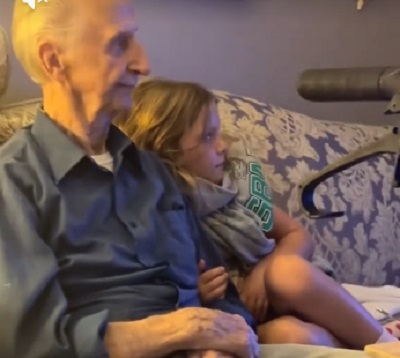
Viral TikTok video shows 7-year-old cuddling great-grandfather before he’s euthanized

Politicians should be honest about environmental pros and cons of electric vehicles
-
Censorship Industrial Complex2 days ago
Death by a thousand clicks – government censorship of Canada’s internet
-
Daily Caller2 days ago
Chinese Billionaire Tried To Build US-Born Baby Empire As Overseas Elites Turn To American Surrogates
-
Great Reset2 days ago
Viral TikTok video shows 7-year-old cuddling great-grandfather before he’s euthanized
-
Automotive2 days ago
Politicians should be honest about environmental pros and cons of electric vehicles
-
 Digital ID2 days ago
Canada releases new digital ID app for personal documents despite privacy concerns
-
 Community2 days ago
Charitable giving on the decline in Canada
-
 Alberta12 hours ago
Alberta’s huge oil sands reserves dwarf U.S. shale
-
 Alberta2 days ago
Schools should go back to basics to mitigate effects of AI