Connect with us

Opinion

British Columbia city defends allowing grown man to change in front of girls

Published

6 minute read

From LifeSiteNews

By Jonathon Van Maren

The City of Vernon, British Columbia, is defending a pool manager’s decision to allow a grown man to change in the presence of teenage girls under the pretense that prohibiting such behavior is a violation of federal law.

An average news day in Canada, circa 2024, in Vernon, British Columbia: 

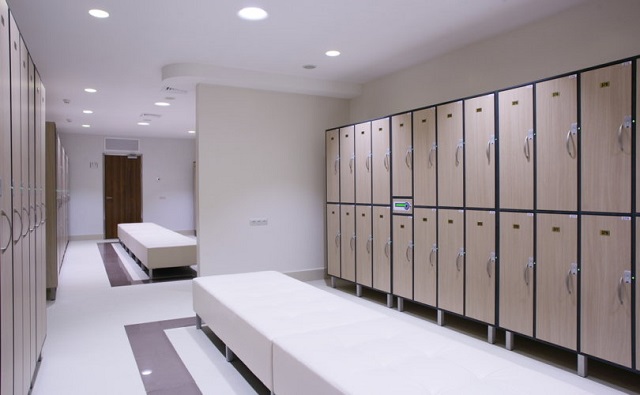
Two teenage girls going through the lifeguarding program at the Vernon Aquatic Centre were shocked to be changing beside a person they soon found out had a penis. It was the last Saturday in January and the girls wasted no time in telling their families what they had just experienced. 

‘My niece had a 50-year-old man come into the change room, strip naked in front of her and her friend, she’s 14, and put on a woman’s bathing suit and go out.’

The pool manager was contacted. “He basically said the kids have no rights and that the transgender person’s rights take precedence, this is something I think parents should know,” said the girls’ uncle, who asked to be quoted only by his first name, Kevin, for privacy purposes. According to management, to forbid a middle-aged trans-identified man from stripping naked next to young teenage girls would be a violation of Prime Minister Justin Trudeau’s Bill C-16, which forbids discrimination on the basis of “gender identity and gender expression.”  

Carolyn Baldridge, a spokeswoman for the City of Vernon, told the press that this was in line with the law. “It is against the law for Vernon Recreation staff to dictate what washroom/change room that a customer can use based on their appearance,” she said. “Staff cannot ask someone to leave for changing in the change room of their choice.” Since the passage of Bill C-16, the Vernon Aquatic Centre changed its “Family Change room” sign to “Universal change room,” meaning that the nude guy was well within his rights to do what he did.  

“Under Canadian law, users are free to change in the room that they best identify with,” Baldridge added, noting that “inclusive recreation” is an “evolving discussion across Canada” and that “Vernon’s Recreation Services will continue to take steps to ensure the inclusion of gender diverse Canadians in their programs and facilities.”  

According to Kevin: “I was told by the pool manager that there was nothing he could do unless the person was ‘leering or making overt sexual gestures toward the girls’ but this guy was naked in front of teenage girls and that’s just not right.” Kevin is right; the law is wrong; the privacy of young girls is collateral damage, although the Vernon North Okanagan RCMP stated that if anything inappropriate—besides the full-frontal nudity in front of young teen girls, that is—occurred, that they would be willing to investigate.  

There are plenty of LGBT activists who get upset at those of us who point out how disgusting this state of affairs is, insisting that we are fearmongering or smearing people. But it needs to be said: a man who is willing to expose himself in front of teenage girls, regardless of whether or not he truly believes himself to be a woman, should not be trusted, full stop. There are private stalls available that he could have used. Unless he is unfathomably stupid, he knew that doing what he was doing could make the girls scared, uncomfortable, or insecure—and he chose to do it anyway.  

The sincerity of his gender dysphoria is really besides the point here. These men are willing to make young girls fearful in order to live their preferred identities in public because they simply do not care—and many, it seems, take a perverse pleasure in forcing everyone to play along. There is a vindictiveness about this that should be pointed out. Any man, deluded or not, who is unwilling to consider how his behavior might make more vulnerable people feel is simply not worthy of respect. 

Author

Featured Image

Jonathon Van Maren is a public speaker, writer, and pro-life activist. His commentary has been translated into more than eight languages and published widely online as well as print newspapers such as the Jewish Independent, the National Post, the Hamilton Spectator and others. He has received an award for combating anti-Semitism in print from the Jewish organization B’nai Brith. His commentary has been featured on CTV Primetime, Global News, EWTN, and the CBC as well as dozens of radio stations and news outlets in Canada and the United States.

He speaks on a wide variety of cultural topics across North America at universities, high schools, churches, and other functions. Some of these topics include abortion, pornography, the Sexual Revolution, and euthanasia. Jonathon holds a Bachelor of Arts Degree in history from Simon Fraser University, and is the communications director for the Canadian Centre for Bio-Ethical Reform.

Jonathon’s first book, The Culture War, was released in 2016.

Todayville is a digital media and technology company. We profile unique stories and events in our community. Register and promote your community event for free.

Follow Author

Energy

‘The electric story is over’

Published on

Oil economist Dr. Anas F. Alhajji challenges assumptions about EVs, demand and Canada’s future.

Every episode of Power Struggle offers a different doorway into the global energy system. But every so often I speak with someone who doesn’t merely interpret the data — he dismantles the illusions around it. Energy economist Dr. Anas F. Alhajji is one of those rare voices.

For anyone who follows world oil markets, Anas requires little introduction. He is one of the most widely referenced analysts in global energy economics, managing partner at Energy Outlook Advisors, and a commentator whose views often diverge from the political narratives that dominate Western media. Our conversation, fast-paced and data-driven, reinforced a point I’ve been making for years: many assumptions about the energy transition are overdue for a hard reset.

And if you think the transition is unfolding as advertised, Anas has a simple message: look again.

Peak oil demand — or peak illusion?

We began with the recurring claim, made most notably by the International Energy Agency, that global oil demand is nearing a terminal peak. Anas has long challenged this analysis, but his breakdown was especially stark.

“In May 2025, they said they are revising up global oil demand… They’ve been wrong for 18 straight years. By how much? Two or three years. The total is about 350 million barrels.”

He added an even sharper example.

“In August, they revised up Mexico’s oil demand by a hundred thousand barrels a day — since 2020. With all of this, who is going to believe the IEA?”

If we are going to debate “peak oil demand,” Anas argued, we must start with accurate numbers. And reality, as he laid out, tells a very different story.

Oil demand is higher — not lower

The most striking fact he brought to the table was where global demand sits today.

“Current world demand for oil is 107 million barrels a day.”

That figure sits eight million barrels above 2019 levels, despite rapid growth in electric vehicle sales. And here is where the assumptions collide with the data.

“Right now we have about 55 million EVs… 35 million are in China. The replacement in terms of oil is only 1.3 million barrels a day. That’s it.”

EVs are increasing, yes — but the global vehicle fleet is expanding even faster, and so is mobility demand. A century’s worth of built energy systems does not pivot overnight.

Hybrids now dominate

This brought Anas to the point that may surprise the most people.

“The trend right now is very clear. We are going hybrid. Hybrid. The electric story is over.”

He emphasized that this is not ideological — it is practical. Hybrids outperform EVs on cost, convenience and grid impacts, and consumers are voting with their wallets.

“Hybrid sales have been going through the roof. And this is going to continue… The media reports EV sales all the time. But what matters is the number of EVs on the road.”

This distinction matters. Monthly sales data can create a false sense of momentum. What counts for emissions, infrastructure planning and oil displacement is the stock of vehicles actually in use.

Three ‘scams’ in EV sales reporting

Anas went further, arguing that even sales data does not always reflect real-world adoption. He described what he called three “scams” that inflate EV sales figures globally. He shared one example on air:

“There are many tens of thousands of them in parking lots that are not being sold… A manufacturer calls an official, says: I have 2,000 cars. I will sell them to you. You issue the license plates, you issue the insurance, you get all the subsidies, we split it. But the cars are still in the parking lot.”

On paper, these are “sales.” In reality, they are inventory.

The broader point is that EV market statistics need scrutiny — and policymakers who rely on headline numbers may be basing major decisions on flawed data.

Why Canada still needs another pipeline

We then turned to Canada’s current debates about pipelines and whether the country still needs more tidewater access. Anas answered without hesitation.

“I can tell you without any reservation, we do need another pipeline, another Canadian pipeline to tidewater.”

His rationale was blunt.

“Energy demand globally is increasing at a very high rate in a way that we have never seen before.”

For Canada, this is about competitiveness. Without access to global markets, Canadian oil is priced at a discount — a problem solved only by pipelines reaching the coast.

On LNG: “Canada should go at full speed”

Anas was even more emphatic when discussing natural gas.

“That’s where Canada basically should go at full speed.”

He criticized the idea of a long-term LNG surplus.

“All those ideas about a surplus in LNG… it is nonsense.”

Asian LNG demand is projected to grow sharply, and Canada’s low-emissions LNG — powered by hydro — gives the country a unique competitive advantage.

Why voices like Anas matter

What I value most about conversations like this is the grounding they give us. In energy, narratives and evidence are drifting apart. You may not agree with every assertion, but you can’t dismiss the data. Whether discussing EVs, oil demand, LNG or Canada’s infrastructure, Anas reminds us that aspirations only matter when they intersect with reality.

This episode of Power Struggle is exactly the kind of dialogue we need: sober, data-based, and challenging enough to re-examine assumptions.

You can listen to the full conversation wherever you get your podcasts. If it unsettles a few comfortable stories — that’s the point.

Watch the video on Power Struggle 

Power Struggle on social media:

Resource Works News

Continue Reading

Business

Some Of The Wackiest Things Featured In Rand Paul’s New Report Alleging $1,639,135,969,608 In Gov’t Waste

Published on


From the Daily Caller News Foundation

By Ireland Owens

Republican Kentucky Sen. Rand Paul released the latest edition of his annual “Festivus” report Tuesday detailing over $1 trillion in alleged wasteful spending in the U.S. government throughout 2025.

The newly released report found an estimated $1,639,135,969,608 total in government waste over the past yearPaul, a prominent fiscal hawk who serves as the chairman of the Senate Homeland Security and Governmental Affairs Committee, said in a statement that “no matter how much taxpayer money Washington burns through, politicians can’t help but demand more.”

“Fiscal responsibility may not be the most crowded road, but it’s one I’ve walked year after year — and this holiday season will be no different,” Paul continued. “So, before we get to the Feats of Strength, it’s time for my Airing of (Spending) Grievances.”

Dear Readers:

As a nonprofit, we are dependent on the generosity of our readers.

Please consider making a small donation of any amount here.

Thank you!

The 2025 “Festivus” report highlighted a spate of instances of wasteful spending from the federal government, including the Department of Health and Human Services (HHS) spent $1.5 million on an “innovative multilevel strategy” to reduce drug use in “Latinx” communities through celebrity influencer campaigns, and also dished out $1.9 million on a “hybrid mobile phone family intervention” aiming to reduce childhood obesity among Latino families living in Los Angeles County.

The report also mentions that HHS spent more than $40 million on influencers to promote getting vaccinated against COVID-19 for racial and ethnic minority groups.

The State Department doled out $244,252 to Stand for Peace in Islamabad to produce a television cartoon series that teaches children in Pakistan how to combat climate change and also spent $1.5 million to promote American films, television shows and video games abroad, according to the report.

The Department of Veterans Affairs (VA) spent more than $1,079,360 teaching teenage ferrets to binge drink alcohol this year, according to Paul’s report.

The report found that the National Science Foundation (NSF) shelled out $497,200 on a “Video Game Challenge” for kids. The NSF and other federal agencies also paid $14,643,280 to make monkeys play a video game in the style of the “Price Is Right,” the report states.

Paul’s 2024 “Festivus” report similarly featured several instances of wasteful federal government spending, such as a Las Vegas pickleball complex and a cabaret show on ice.

The Trump administration has been attempting to uproot wasteful government spending and reduce the federal workforce this year. The administration’s cuts have shrunk the federal workforce to the smallest level in more than a decade, according to recent economic data.

Festivus is a humorous holiday observed annually on Dec. 23, dating back to a popular 1997 episode of the sitcom “Seinfeld.” Observance of the holiday notably includes an “airing of grievances,” per the “Seinfeld” episode of its origin.

Continue Reading

Trending

X