
Community
Are your kids safe online? Parents invited to hear online safety expert Paul Davis at St. Joseph High School



News Release from Red Deer Catholic Regional Schools
RDCRS offering social networking safety presentation
Red Deer Catholic Regional Schools is pleased to welcome social networking and online safety expert, Paul Davis to Red Deer to speak with middle school parents and students. This event is co-sponsored by the Smiles Thru Lindsey Foundation and the Red Deer Catholic Education Foundation.
The presentation on Monday, September 12 will run from 6:30 – 8:00 p.m. at St. Joseph High School and is free to attend.
Attendees are encouraged to register on Eventbrite.
Mr. Davis brings over 30 years of IT knowledge and expertise to his presentations. He has presented to over 640,000 students from grades 4-12 across North America, focusing on social media, sexting/child pornography, digital trails, smartphones, online security and more. He will cover current topics, technologies and trends in his presentations to students and parents with cyberbullying tying into the entire presentation.
“Through my experience as a principal working with young adults, I see the importance of empowering students and parents when it comes to social media, helping them learn how to be safe and set limits with their use. The risks that come with smartphones, technology and social media, continue to increase and in the school setting we see this everyday. I am excited to hear Paul’s message so we can continue to learn and grow together as a community, ensuring our students are safe and we as a community know how to protect them,” says St. Francis of Assisi Middle School Principal Gary Gylander.

Rick and Cindy More of the Smiles Thru Lindsey Foundation know all too well the importance of keeping youth safe online.
“On September 20, 2015 our daughter Lindsey lost her battle with depression. A disease she hid from us through high school. When we searched for answers, one of our conclusions attributed social media as a contributor to her depression. As parents, it is imperative we understand the dangers that surround our children around social media and the importance of our involvement. Paul Davis will open your eyes to a tech world that is not totally understood. We pray no parent experiences the loss we endure. Thank you to all that attend this presentation,” say the Mores.
Mr. Davis’ presentations are targeted so that the audience leaves with a wealth of knowledge and empowerment for their respective age level. He will be speaking to approximately 2,700 students in grades 6-9 during two, daytime sessions on September 12.
For more information on Mr. Davis, visit https://


From the Fraser Institute
By Jake Fuss and Grady Munro
There would have been 1.5 million more Canadians who donated to charity in 2023—and $755.5 million more in donations—had Canadians given to the same extent they did 10 years prior
According to recent polling, approximately one in five Canadians have skipped paying a bill over the past year so they can buy groceries. As families are increasingly hard-pressed to make ends meet, this undoubtedly means more and more people must seek out food banks, shelters and other charitable organizations to meet their basic necessities.
And each year, Canadians across the country donate their time and money to charities to help those in need—particularly around the holiday season. Yet at a time when the relatively high cost of living means these organizations need more resources, new data published by the Fraser Institute shows that the level of charitable giving in Canada is actually falling.
Specifically, over the last 10 years (2013 to 2023, the latest year of available data) the share of tax-filers who reported donating to charity fell from 21.9 per cent to 16.8 per cent. And while fewer Canadians are donating to charity, they’re also donating a smaller share of their income—during the same 10-year period, the share of aggregate income donated to charity fell from 0.55 per cent to 0.52 per cent.
To put this decline into perspective, consider this: there would have been 1.5 million more Canadians who donated to charity in 2023—and $755.5 million more in donations—had Canadians given to the same extent they did 10 years prior. Simply put, this long-standing decline in charitable giving in Canada ultimately limits the resources available for charities to help those in need.
On the bright side, despite the worrying long-term trends, the share of aggregate income donated to charity recently increased from 0.50 per cent in 2022 to 0.52 per cent in 2023. While this may seem like a marginal improvement, 0.02 per cent of aggregate income for all Canadians in 2023 was $255.7 million.
The provinces also reflect the national trends. From 2013 to 2023, every province saw a decline in the share of tax-filers donating to charity. These declines ranged from 15.4 per cent in Quebec to 31.4 per cent in Prince Edward Island.
Similarly, almost every province recorded a drop in the share of aggregate income donated to charity, with the largest being the 24.7 per cent decline seen in P.E.I. The only province to buck this trend was Alberta, which saw a 3.9 per cent increase in the share of aggregate income donated over the decade.
Just as Canada as a whole saw a recent improvement in the share of aggregate income donated, so too did many of the provinces. Indeed, seven provinces (except Manitoba, Nova Scotia and Newfoundland and Labrador) saw an increase in the share of aggregate income donated to charity from 2022 to 2023, with the largest increases occurring in Saskatchewan (7.9 per cent) and Alberta (6.7 per cent).
Canadians also volunteer their time to help those in need, yet the latest data show that volunteerism is also on the wane. According to Statistics Canada, the share of Canadians who volunteered (both formally and informally) fell by 8 per cent from 2018 to 2023. And the total numbers of hours volunteered (again, both formal and informal) fell by 18 per cent over that same period.
With many Canadians struggling to make ends meet, food banks, shelters and other charitable organizations play a critical role in providing basic necessities to those in need. Yet charitable giving—which provides resources for these charities—has long been on the decline. Hopefully, we’ll see this trend turn around swiftly.


|

|
|

|
|
|



Death by a thousand clicks – government censorship of Canada’s internet

Chinese Billionaire Tried To Build US-Born Baby Empire As Overseas Elites Turn To American Surrogates
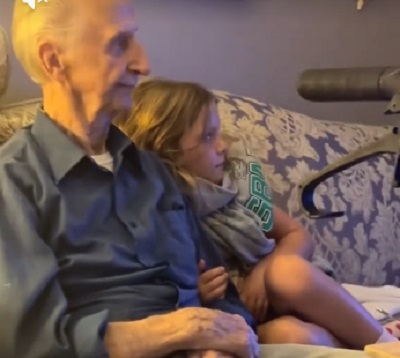
Viral TikTok video shows 7-year-old cuddling great-grandfather before he’s euthanized

Politicians should be honest about environmental pros and cons of electric vehicles
-
Censorship Industrial Complex23 hours ago
Death by a thousand clicks – government censorship of Canada’s internet
-
Daily Caller24 hours ago
Chinese Billionaire Tried To Build US-Born Baby Empire As Overseas Elites Turn To American Surrogates
-
Great Reset1 day ago
Viral TikTok video shows 7-year-old cuddling great-grandfather before he’s euthanized
-
Automotive1 day ago
Politicians should be honest about environmental pros and cons of electric vehicles
-
 Digital ID22 hours ago
Canada releases new digital ID app for personal documents despite privacy concerns
-
Community19 hours ago
Charitable giving on the decline in Canada
-
 Alberta1 day ago
Schools should go back to basics to mitigate effects of AI
-
 Bruce Dowbiggin21 hours ago
NFL Ice Bowls Turn Down The Thermostat on Climate Change Hysteria