
Business
Are you an essential worker in the time of COVID?

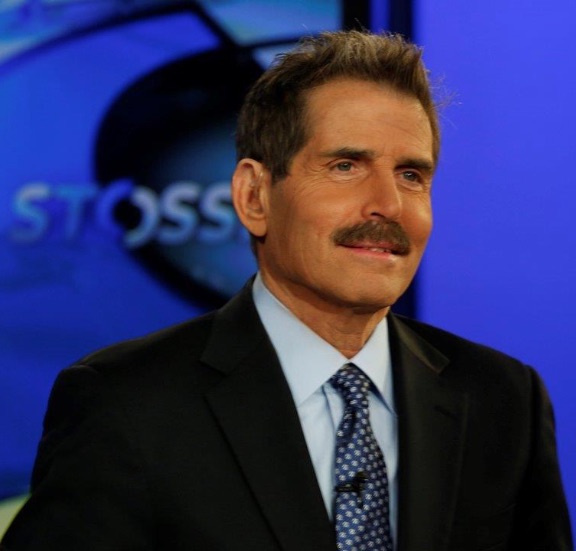

This is thought provoking article from 19 time Emmy Award winning journalist John Stossel. You may be familiar with Stossel who spent decades with 20/20 and Good Morning America on ABC.
The Dallas Morning News called him “the most consistently thought- provoking TV reporter of our time.” The Orlando Sentinel said “he has the gift for entertaining while saying something profound.”

Stossel left television news to create Stossel TV. He’s hoping short videos and the freedom of not working for a network will help him educate young people in a way not possible when he worked with television news shows. John Stossel started a non-profit to educate youth about the free market. About 10 million students a year discuss liberty and free markets through Stossel in the Classroom.
While his weekly videos are both entertaining and informative, this particular video will certainly appeal to a much wider audience during the days of restricted businesses and higher unemployment due to the COVID19 crisis.


It’s been nearly a year since I last wrote about the CBC. In the intervening months, the Prescott memo on bias at the BBC was released, whose stunning allegations of systemic journalistic malpractice “inspired” multiple senior officials to leave the corporation. Given how the institutional bias driving problems at the BBC is undoubtedly widely shared by CBC employees, I’d be surprised if there weren’t similar flaws embedded inside the stuff we’re being fed here in Canada.
Apparently, besides receiving nearly two billion dollars¹ annually in direct and indirect government funding, CBC also employs around a third of all of Canada’s full time journalists. So taxpayers have a legitimate interest in knowing what we’re getting out of the deal.
Naturally, corporate president Marie-Philippe Bouchard has solemnly denied the existence of any bias in CBC reporting. But I’d be more comfortable seeing some evidence of that with my own eyes. Given that I personally can easily go multiple months without watching any CBC programming or even visiting their website, “my own eyes” will require some creative redefinition.
So this time around I collected the titles and descriptions from nearly 300 stories that were randomly chosen from the CBC Top Stories RSS feed from the first half of 2025. You can view the results for yourself here. I then used AI tools to analyze the data for possible bias (how events are interpreted) and agendas (which events are selected). I also looked for:
- Institutional viewpoint bias
- Public-sector framing
- Cultural-identity prioritization
- Government-source dependency
- Social-progressive emphasis
Here’s what I discovered.
Story Selection Bias
Millions of things happen every day. And many thousands of those might be of interest to Canadians. Naturally, no news publisher has the bandwidth to cover all of them, so deciding which stories to include in anyone’s Top Story feed will involve a lot of filtering. To give us a sense of what filtering standards are used at the CBC, let’s break down coverage by topic.
Of the 300 stories covered by my data, around 30 percent – month after month – focused on Donald Trump and U.S.- Canada relations. Another 12-15 percent related to Gaza and the Israel-Palestine conflict. Domestic politics – including election coverage – took up another 12 percent, Indigenous issues attracted 9 percent, climate and the environment grabbed 8 percent, and gender identity, health-care worker assaults, immigrant suffering, and crime attracted around 4 percent each.
Now here’s a partial list of significant stories from the target time frame (the first half of 2025) that weren’t meaningfully represented in my sample of CBC’s Top Stories:
- Housing affordability crisis barely appears (one of the top voter concerns in actual 2025 polls).
- Immigration levels and labour-market impact.
- Crime-rate increases or policing controversies (unless tied to Indigenous or racialized victims).
- Private-sector investment success stories.
- Any sustained positive coverage of the oil/gas sector (even when prices are high).
- Critical examination of public-sector growth or pension liabilities.
- Chinese interference or CCP influence in Canada (despite ongoing inquiries in real life).
- The rest of the known galaxy (besides Gaza and the U.S.)
Interpretation Bias
There’s an obvious pattern of favoring certain identity narratives. The Indigenous are always framed as victims of historic injustice, Palestinian and Gazan actions are overwhelmingly sympathetic, while anything done by Israelis is “aggression”. Transgender representation in uniformly affirmative while dissent is bigotry.
By contrast, stories critical of immigration policy, sympathetic to Israeli/Jewish perspectives, or skeptical of gender medicine are virtually non-existent in this sample.
That’s not to say that, in the real world, injustice doesn’t exist. It surely does. But a neutral and objective news service should be able to present important stories using a neutral and objective voice. That obviously doesn’t happen at the CBC.
Consider these obvious examples:
- “Trump claims there are only ‘2 genders.’ Historians say that’s never been true” – here’s an overt editorial contradiction in the headline itself.
- “Trump bans transgender female athletes from women’s sports” which is framed as an attack rather than a policy debate.
And your choice of wording counts more than you might realize. Verbs like “slams”, “blasts”, and “warns” are used almost exclusively describing the actions of conservative figures like Trump, Poilievre, or Danielle Smith, while “experts say”, “historians say”, and “doctors say” are repeatedly used to rebut conservative policy.
Similarly, Palestinian casualties are invariably “killed“ by Israeli forces – using the active voice – while Israeli casualties, when mentioned at all, are described using the passive voice.
Institutional Viewpoint Bias
A primary – perhaps the primary job – of a serious journalist is to challenge the government’s narrative. Because if journalists don’t even try to hold public officials to account, then no one else can. Even the valuable work of the Auditor General or the Parliamentary Budget Officer will be wasted, because there will be no one to amplify their claims of wrongdoing. And Canadians will have no way of hearing the bad news.
So it can’t be a good sign when around 62 percent of domestic political stories published by the nation’s public broadcaster either quote government (federal or provincial) sources as the primary voice, or are framed around government announcements, reports, funding promises, or inquiries.
 |
In other words, a majority of what the CBC does involves providing stenography services for their paymasters.
Here are just a few examples:
- “Federal government apologizes for ‘profound harm’ of Dundas Harbour relocations”
- “Jordan’s Principle funding… being extended through 2026: Indigenous Services”
- “Liberal government announces dental care expansion the day before expected election call”
Agencies like the Bank of Canada, Indigenous Services Canada, and Transportation Safety Board are routinely presented as authoritative and neutral. By contrast, opposition or industry critiques are usually presented as secondary (“…but critics say”) or are simply invisible. Overall, private-sector actors like airlines, oil companies, or developers are far more likely to be criticized.
All this is classic institutional bias: the state and its agencies are the default lens through which reality is filtered.
Not unlike the horrors going on at the BBC, much of this bias is likely unconscious. I’m sure that presenting this evidence to CBC editors and managers would evoke little more than blank stares. This stuff flies way below the radar.
But as one of the AI tools I used concluded:
In short, this 2025 CBC RSS sample shows a very strong and consistent left-progressive institutional bias both in story selection (agenda) and in framing (interpretation). The outlet functions less as a neutral public broadcaster and more as an amplifier of government, public-sector, and social-progressive narratives, with particular hostility reserved for Donald Trump, Canadian conservatives, and anything that could be construed as “right-wing misinformation.”
And here’s the bottom line from a second tool:
The data reveals a consistent editorial worldview where legitimate change flows from institutions downward, identity group membership is newsworthy, and systemic intervention is the default solution framework.
You might also enjoy:
Is Updating a Few Thousand Readers Worth a Half Million Taxpayer Dollars? |
||||||
|
||||||
 |
||||||
| Plenty has been written about the many difficulties faced by legacy news media operations. You might even recall reading about the troubled CBC and the Liberal government’s ill-fated Online News Act in these very pages. Traditional subscription and broadcast models are drying up, and on-line ad-based revenues are in sharp decline. | ||||||
|
Business
COP30 finally admits what resource workers already knew: prosperity and lower emissions must go hand in hand

From Resource Works
What a difference a few weeks make
Finally, the Conference of the Parties to the UN climate convention (COP30) adopted a pragmatic tone that will appeal to the working class. Too bad it took thirty meetings. Pragmatism produces results, not missed targets.
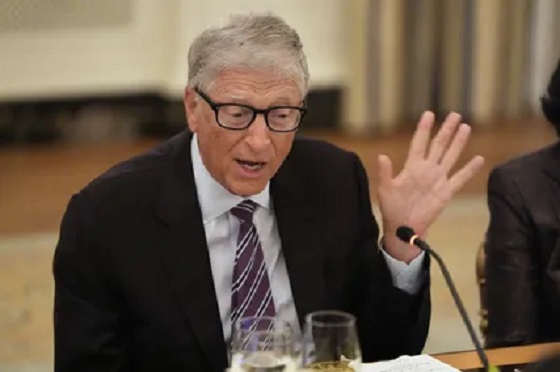
We should not have been surprised. Influential figures like Bill Gates and Canadian-Venezuelan analyst Quico Toro, who have long argued that efforts to reduce CO₂ should focus more on technology and prosperity, and less on energy consumption and declining growth, have gained ground.
In the World Energy Outlook 2025, prepared by the International Energy Agency for COP30, you can see that many of the views held by the people above had already gone mainstream before the conference started.
The World Energy Outlook 2025 lays out three scenarios: Current Policies (CPS), Stated Policies (STEPS), and Net Zero Emissions by 2050 (NZE). In WEO 2025, all three scenarios reflect longer timelines for the decline of fossil fuels than in earlier editions, and the NZE pathway explicitly states that major technological breakthroughs will be required.
Unfortunately, many potential technologies are adamantly opposed by the loudest groups within the Climate Change Movement because they are not perfect. Even some continue to oppose nuclear power, one of the few proven sources of large-scale, zero-carbon, firm electricity.
Another noteworthy standout in WEO 2025 was the strong recognition that energy security, costs, and supply chains are now the primary considerations in determining each country’s energy mix.
What all this means is we are breaking away from emotionally charged, fear-based policies and rhetoric and moving toward a practical “let’s do things better” approach.
For 30 years, the radical leadership of the environmental movement has focused on what we should stop doing and on sacrificing prosperity. Essentially, what has been going on is an attack on working people in the industrialized and developing world.
Today, workers in the developed world are so anxious that many are losing faith in democratic institutions. Meanwhile, people in the emerging and developing world see light at the end of the tunnel and are determined to industrialize.
Clearly, it is time to merge the fight to lower CO₂ emissions with prosperity. “Let’s do things better” captures the history of human progress and resonates with working people today.
What does it take for longer, healthier, safer, and more sustainable lives? It takes the pragmatism of workers. They spend their lives striving to improve workplace safety, to develop tools that enable them to perform tasks more effectively with less physical effort, to earn higher pay, to produce more food with less land, and to preserve their opportunity to continue working.
Resource workers have felt under attack and are humiliated when celebrities fly in on a helicopter to denigrate their work and make references to the virtues of small-plot gardening, or politicians who tell them to go back to school for “jobs of the future”, only to find themselves in low-paying service jobs.
As the COP30 discussion indicates, we have reached a turning point. It is time to focus on doing what needs to be done, but doing it better. It is time to stop banning activities entirely as though circumstances and technology never change. Demanding perfection hides what is possible, slows progress and, in some cases, stops it altogether.
Bill Gates’ memo to COP30 points to the turn in the road:
“We should measure success by our impact on human welfare more than our impact on the global temperature, and our success relies on putting energy, health, and agriculture at the centre of our strategies.”
Gates also makes a point that will resonate with working people: “Using more energy is a good thing because it is closely correlated with economic growth.” Ironically, a statement made by a billionaire resonates with working people more than does the message of many climate activists.
The work at the Port of Prince Rupert comes to mind, given its growing role in supplying cleaner cooking and heating fuels, when we are reminded that 2 billion people worldwide cook and/or heat their homes with highly polluting open fires (wood, charcoal, dung, agricultural waste).
Persuasion published Quico Toro’s essay on November 13, 2025, which speaks another truth.
“COP imagines these emissions as something a country’s government can set, like the dial on a thermostat. But emissions are more like GDP: the outcome of a complex process that politicians would like to be able to control, but do not actually control.”
I am feeling more secure about the future here in Canada and BC, as governments, First Nations and the public are leaning into climate and economic pragmatism.
There will be hard discussions and uncomfortable trade-offs. Past decisions need to be re-examined in good faith. Do they meet today’s demands? Are we doing what needs to be done better? Is it the right move for today’s youth and future generations? Will we bring back the hope and opportunity of a growing middle class?
Nobody, not the Liberal government, the BC NDP government, First Nations, none of us would have predicted the world we are facing today, where our economy and sovereignty are challenged.
Today, oil, natural gas, and critical minerals, not one or two but all three, are the financial backstop Canada needs, as we rebuild the economy and secure our sovereignty.
Look West: Jobs and Prosperity for Stronger BC and Canada is as much of an admission that we are falling behind as it is a call to action. Success will take billions of dollars, the exact amount unknown.
But what we do know is that oil, gas, and critical minerals generate the most public revenue, the highest incomes, and are our most significant exports. They are Canada’s bank and comparative advantage. They will provide the cash flow needed to get it done.
Not maximizing oil production and exports is fighting with both hands tied behind our back. We all know it; now we need to focus on doing it better because circumstances have changed dramatically.
Jim Rushton is a 46-year veteran of BC’s resource and transportation sectors, with experience in union representation, economic development, and terminal management.
Resource Works News


Death by a thousand clicks – government censorship of Canada’s internet

Chinese Billionaire Tried To Build US-Born Baby Empire As Overseas Elites Turn To American Surrogates
Politicians should be honest about environmental pros and cons of electric vehicles

Viral TikTok video shows 7-year-old cuddling great-grandfather before he’s euthanized
-
Censorship Industrial Complex1 day ago
Death by a thousand clicks – government censorship of Canada’s internet
-
Daily Caller1 day ago
Chinese Billionaire Tried To Build US-Born Baby Empire As Overseas Elites Turn To American Surrogates
-
Automotive2 days ago
Politicians should be honest about environmental pros and cons of electric vehicles
-
Great Reset1 day ago
Viral TikTok video shows 7-year-old cuddling great-grandfather before he’s euthanized
-
 Digital ID1 day ago
Canada releases new digital ID app for personal documents despite privacy concerns
-
 Community1 day ago
Charitable giving on the decline in Canada
-
 Alberta1 day ago
Schools should go back to basics to mitigate effects of AI
-
 Alberta3 hours ago
Alberta’s huge oil sands reserves dwarf U.S. shale