
Education
Annual Education Results released by Red Deer Catholic Regional Schools

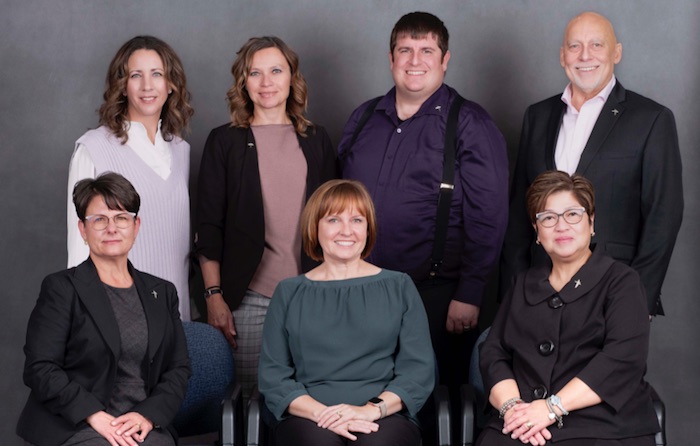
From Red Deer Catholic Regional Schools
Board Meeting Highlights
Annual Education Results Report:
The Associate Superintendent of Curriculum presented the 2021-2022 Annual Education Results Report to the Board of Trustees. RDCRS recognizes that the strong results from the 2021/2022 school year are a result of our staff’s significant efforts. Our students’ school day begins with the friendly greeting of a bus
driver and continues late into the evening with our staff coaching practices and games, directing a play or musical, or leading youth ministry events. It is this collective teamwork for all our students that makes RDCRS an extraordinary place, and RDCRS has seen this in the feedback from our staff, students, and
parents. RDCRS would like to sincerely thank everyone for their tireless efforts on behalf of our students and their families.
The Board of Trustees approved the Annual Education Results Report for the 2021-2022 school year, as presented. To view the Annual Education Results Report, please click here.
Middle School Program Change Proposal:
The Associate Superintendent of Inclusive Learning presented the Program Change Proposal: Moving Foundations and Blended Programs from St. Francis of Assisi Middle School to St. Lorenzo Ruiz Middle School Report to the Board of Trustees. The proposal outlined a relocation of the Foundations and Blended programs from St. Francis of Assisi Middle School to St. Lorenzo Ruiz Middle School.
The purpose of the relocation is to maximize programming space which will result in optimal learning opportunities for RDCRS students. Another key factor in the relocation is the current high student enrollment at St. Francis of Assisi Middle School as a result of our grandfathering guidelines.
The Board of Trustees approved moving forward with the relocation of the Foundations and Blended Programming at St. Francis of Assisi Middle School to St. Lorenzo Ruiz Middle School, effective for the 2023-2024 school year.
Preparation to Open St. Lorenzo Ruiz Middle School Report:
The Superintendent shared with the Board of Trustees the Preparation to Open St. Lorenzo Ruiz Middle School Report and provided an update of the progress to date. As RDCRS continues to prepare for the Division’s new middle school, the Superintendent informed the Board of Trustees that a core team of
educators, transportation department representatives and senior leadership personnel have been assembled to start preparations for St. Lorenzo Ruiz. This team will be undergoing extensive work over the next six months as communication with RDCRS stakeholders is pivotal. The core team met on January 18 and will continue to meet regularly for ongoing discussion, collaboration and preparation.
The Superintendent also highlighted transportation and grandfathering guidelines that are currently in effect for the Division. To view the full Preparation to Open St. Lorenzo Ruiz Middle School Report, please click here.
The next Board Meeting will take place on Tuesday, February 28, 2023 at 5:30 p.m.

From LifeSiteNews
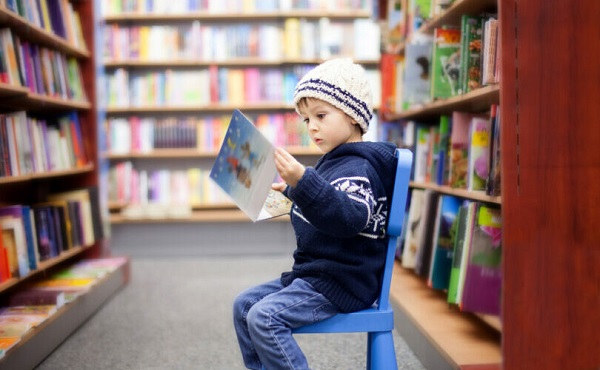
A government survey revealed strong public support, particularly among parents, for restricting or banning sexually explicit books.
Albertans are largely opposed to their children viewing pornography in school libraries, according to government polling.
In a June 20 press release, the Government of Alberta announced that their public engagement survey, launched after the discovery of sexually explicit books in school libraries, found that Albertans strongly support removing or limiting such content.
“Parents, educators and Albertans in general want action to ensure children don’t have access to age-inappropriate materials in school libraries,” Demetrios Nicolaides, Minister of Education and Childcare, said.
“We will use this valuable input to guide the creation of a province-wide standard to ensure the policy reflects the priorities and values of Albertans,” he continued.
READ: Support for traditional family values surges in Alberta
The survey, conducted between May 28 to June 6, received nearly 80,000 responses, revealing a widespread interest in the issue.
While 61 percent of respondents said that they had never previously been concerned about children viewing sexually explicit content in libraries, most were opposed to young children viewing it. 34 percent said children should never be able to access sexually explicit content in school libraries, while 23 percent believed it should be restricted to those aged 15 and up.
Similarly, 44 percent of parents of school-aged children were supportive of government regulations to control content in school libraries. Additionally, 62 percent of respondents either agreed or strongly agreed that “parents and guardians should play a role in reporting or challenging the availability of materials with sexually explicit content in school libraries.”
READ: Alberta Conservatives seeking to ban sexually graphic books from school libraries
The polling results come after the Conservative Alberta government under Premier Danielle Smith announced that they are going ahead with plans to eventually ban books with sexually explicit as well as pornographic material, many of which contain LGBT and even pedophilic content, from all school libraries, on May 27.
At the time, Nicolaides revealed that it was “extremely concerning” to discover that sexually explicit books were available in school libraries.
The books in question, found at multiple school locations, are Gender Queer, a graphic novel by Maia Kobabe; Flamer, a graphic novel by Mike Curato; Blankets, a graphic novel by Craig Thompson; and Fun Home, a graphic novel by Alison Bechdel.

 David Clinton
Ontario’s Auditor General just released a performance audit on the Toronto District School Board. I’m sure it’ll surprise exactly no one that “financial and capital resources are not consistently allocated in the most cost-effective or efficient way” or that “The effective management of operations was not always being measured and assessed for internal decision-making”.
And there was plenty of institutional chaos:
“Between 2017/18 and 2022/23…about 38% of TDSB schools did not report conducting the minimum number of fire drills required by the Ontario Fire Code annually, and about 31% of TDSB schools did not report conducting the minimum number of lockdown drills required by TDSB policy annually. The TDSB does not have an effective process to ensure the required number of drills are performed by each school, each year, or that they are performed in accordance with TDSB policy when performed.”
What else would you expect from a massive government bureaucracy that employs 40,000 people, spends $3.6 billion annually and – based on many of the highlighted items on their website – is laser-focused on pretty much anything besides education?
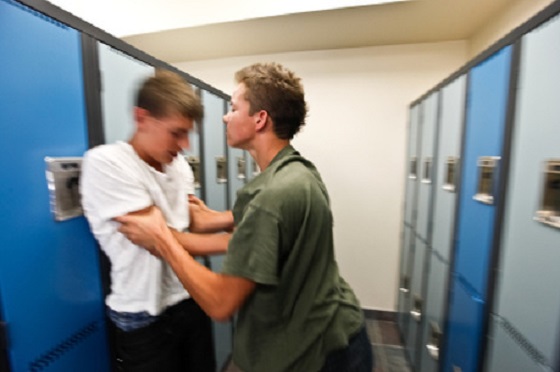
What you might not have seen coming was that around half of the report centered on in-school violence. To be sure, we’re told that there were only 407 violent events reported to the board during the 2022/2023 school year – which is a rate of around 17 events for every 10,000 students. 17:10,000 doesn’t exactly sound like an environment that’s spiraling out of control.
There was a caveat:
“Due to input errors by principals, the TDSB underreported the number of violent incidents that occurred between 2017/18 to 2021/22 to the Ministry by about 9%.”
Ok. But we’re still nowhere near Mad Max levels of violence. So what’s attracting so much of the auditor’s attention? Perhaps it’s got something to do with a couple of recent surveys whose results don’t quite match the board’s own records. Here’s how the audit describes the first of those:
“The 2022/23 TDSB Student and Parent Census was responded to by over 138,000 students, parents, guardians and caregivers. It showed that 23% of students in Grades 4 to 12 that responded to the survey said they were physically bullied (e.g., grabbed, shoved, punched, kicked, tripped, spat at), and about 71% stated they were verbally bullied (e.g., sworn at, threatened, insulted, teased, put down, called names, made fun of). Further, about 14% of student respondents indicated they had been cyberbullied. TDSB’s central tracking of all bullying incidents is much lower than this, suggesting that they are not centrally capturing a large number of bullying incidents that are occurring.”
“23% of students in Grades 4 to 12 that responded to the survey said they were physically bullied”. That’s not a great fit with that 17:10,000 ratio, even if you add the 9 percent of underreported incidents. And bear in mind that these students and their families were willing to discuss their experiences in a survey run by the school board itself, so it’s not like they’re hard to find.
But that’s not the worst of it. The Elementary Teachers’ Federation of Ontario (ETFO) ran their own survey in 2023. They wanted to hear about their members’ experiences with workplace violence. Here, quoting from the audit report, is what TDSB respondents told them:
- 42% had experienced physical force against themselves in 2022/23;
- 18% had experienced more than 10 of these physical force incidents in 2022/23;
- 81% indicated the number of violent incidents increased since they started working;
- about 77% responded that violence was a growing problem at their school;
- about 29% indicated they had suffered a physical injury;
- 57% had suffered a psychological injury/illness (such as mental stress, psychological or emotional harm) as a result of workplace violence against them; and
- about 85% indicated that violence at their school made teaching and working with students more difficult.
29 percent of teachers suffered a physical injury due to workplace violence. That’s elementary school teachers we’re talking about.
For perspective, even accounting for the 9 percent underreporting, the TDSB was aware of events impacting less than a quarter of a percentage point of their students (and apparently didn’t report any violence against teachers). But by their own accounts, 23 percent of all students and 42 percent of elementary teachers have suffered attacks. Are board officials willfully ignoring this stuff?
And if only there was some way to address violence and other criminal activities on school property. Perhaps – and I’m just spitballing here – there could even be people working in schools whose job it would be to (what’s the word I’m looking for?) police crime.
On a completely unrelated note, back in November, 2017, the Toronto District School Board voted 18-3 to permanently end their School Resource Officer (SRO) program. Since then, police officers have been unwelcome on board property.
To be sure, the TDSB has “accepted” all 18 of the report’s recommendations. But talk is cheap. Who’s to say that commitment won’t play out the same way we’ve seen with their fire drill compliance.
Can you spell “class action lawsuit”?



Before Trudeau average annual immigration was 617,800. Under Trudeau number skyrocketted to 1.4 million annually

FDA requires new warning on mRNA COVID shots due to heart damage in young men
“This is a total fucking disaster”
News Jeffrey Epstein did not have a client list, nor did he kill himself, Trump DOJ, FBI claim
-
 Also Interesting2 days ago
9 Things You Should Know About PK/PD in Drug Research
-
 Bruce Dowbiggin2 days ago
The Covid 19 Disaster: When Do We Get The Apologies?
-
 Business2 days ago
Cannabis Legalization Is Starting to Look Like a Really Dumb Idea
-
 Media2 days ago
CBC journalist quits, accuses outlet of anti-Conservative bias and censorship
-
 Business2 days ago
Carney government should recognize that private sector drives Canada’s economy
-
 Alberta2 days ago
Fourteen regional advisory councils will shape health care planning and delivery in Alberta
-
 Alberta1 day ago
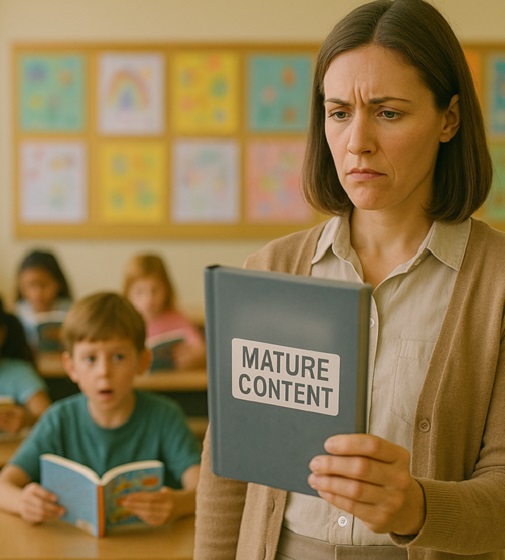
Alberta school boards required to meet new standards for school library materials with regard to sexual content
-
 Business1 day ago
UN’s ‘Plastics Treaty’ Sports A Junk Science Wrapper