
C2C Journal
A Rush to the Exits: Forget Immigration, Canada has an Emigration crisis




From the C2C Journal
By Scott Inniss
Canada’s open immigration policy has often been hailed as a positive thing, contributing to the building
of the country. Yet the Trudeau government’s decade-long determination to drive immigration numbers
ever-higher – a policy that public outcry now has it scrambling away from – has obscured an important
and discouraging phenomenon. Every year, tens of thousands of Canadians leave the country, taking
their skills and ambitions with them, and leaving Canada diminished.
Emigration is the flipside of the immigration issue — a side that has been largely ignored. Statistics
Canada estimates that more than 104,000 people left Canada in 2023-2024, a number than has been
rising for the past few years. Another study put the number of Canadian citizens living abroad in 2016 at
between 2.9 million and 5.5 million, with a “medium” scenario of 4,038,700 — or about 12.6 percent of
the Canadian population that year (the latest for which this kind of analysis exists).
This trend isn’t just an abstract problem; it undermines the very economic goals policymakers hope to
achieve through immigration. Emigrants are younger, better educated, and earn higher incomes than
the average Canadian, according to Statcan’s study: “The departure of people with these characteristics
raises concerns about the loss of significant economic potential and the retention of a highly skilled
workforce.” Canada is losing its best and brightest, many of them to the U.S. A survey by the U.S. Census
Bureau this year said the number of people moving from Canada to the U.S. was up 70 percent from a
decade ago.
Canada’s economic decline is big reason for the exodus. In 2022, all 10 Canadian provinces had median
per capita incomes lower than the lowest-earning American state. Canada’s per capita GDP growth has
also stagnated, with projections placing the country dead last among OECD nations out to 2060. Our
productivity is in decline and business investment is moribund, meaning employers in other countries
are able to pay more and compete for qualified labour.
The high cost of living, particularly skyrocketing housing costs, is an increasingly large factor pushing
skilled Canadians abroad. A recent survey by Angus Reid reported that 28 percent of Canadians are
considering leaving their province due to unaffordable housing, with 42 percent of those considering a
move outside Canada.
Even immigrants to Canada are losing faith and moving on. A recent report from the Institute for
Canadian Citizenship, entitled The Leaky Bucket, found that “onward” migration had been steadily
increasing since the 1980s. A follow-up survey of more than 15,000 immigrants and found that 26
percent said they are likely to leave Canada within two years, with the proportion rising to over 30
percent among federally selected economic immigrants—those with the highest scores in the points
system.
“While the fairy tale of Canada as a land of opportunity still holds for many newcomers,” wrote Daniel
Bernhard, CEO of the ICC, there is undeniably a “burgeoning disillusionment. After giving Canada a try,
growing numbers of immigrants are saying ‘no thanks,’ and moving on.” It’s a particularly stark
phenomenon considering that most immigrants have come from much poorer, less developed and often
autocratic or unsafe nations; that these people find Canada – for decades considered the ultimate
destination among those seeking a better life – to be such a disappointment that the best response is to
leave is a damning indictment.
Consider Elena Secara, an immigrant from Romania who built a life here only to find Canada’s economic
reality falling short of her expectations. After nearly two decades, Secara plans to return to Romania, a
country she sees as improving, while Canada, she says, “is getting worse and worse. Canada is
declining…In Romania there are much more opportunities for professionals, the medical system is
better, the food is better.” And, she adds with a laugh, “Even the roads are better.” One of her sons has
already voted with his feet, and is now living in Romania.
That a country like Romania, for years one of Europe’s poorest and most corrupt nations, can now
attract emigrants from Canada should be sobering for policymakers. Canada is facing ever-greater
competition just as it enters the second decade of what may be its longest and most serious economic
deterioration since Confederation.
Each emigrant lost represents not just an individual choice but a systemic failure to provide opportunity
at home. As the revolving door of emigration spins faster, Canada faces a reckoning. Our political leaders
must address the housing crisis, lower tax burdens, and foster a more competitive economy to retain
the talent Canada desperately needs. Without action, Canada’s silent exodus risks becoming a defining
national failure—one that leaves the country less resilient, less innovative, and less prepared for the
future.
The original, full-length version of this article was recently published in C2C Journal.
Scott Inniss is a Montreal writer.

 By Gwyn Morgan
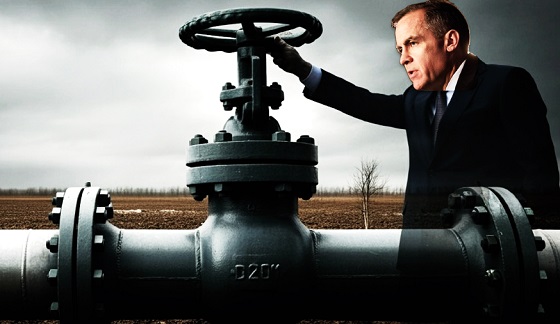
Gwyn Morgan argues that Mark Carney, despite his polished image and rhetorical shift on energy, remains ideologically aligned with the Trudeau-era net-zero agenda that stifled Canada’s energy sector and economic growth. Morgan contends that without removing emissions caps and embracing real infrastructure investment, Canada’s recovery will remain a mirage — not a reality.
Pete Townshend’s famous lyrics, “Meet the new boss / Same as the old boss,” aptly describe Canada’s new prime minister. Touted as a fresh start after the Justin Trudeau years, Mark Carney has promised to turn Canada into a “clean and conventional energy superpower.” But despite the lovey-dovey atmosphere at Carney’s recent meeting with Canada’s premiers, Canadians should not be fooled. His sudden apparent openness to new energy pipelines masks a deeper continuity, in my opinion: Carney remains just as ideologically committed to net-zero emissions.
Carney’s carefully choreographed scrapping of the consumer carbon tax before April’s election helped reduce gasoline prices and burnished his centrist image. In fact, he simply moved Canada’s carbon taxes “upstream”, onto manufacturers and producers, where they can’t be seen by voters. Those taxes will, of course, be largely passed back onto consumers in the form of higher prices for virtually everything. Many consumers will blame “greedy” businesses rather than the real villain, even as more and more Canadian companies and projects are rendered uncompetitive, leading to further reductions in capital investment, closing of beleaguered factories and facilities, and lost jobs.
This sleight-of-hand is hardly surprising. Carney spent years abroad in a career combining finance and eco-zealotry, co-founding the Glasgow Financial Alliance for Net Zero (GFANZ) and serving as the UN’s Special Envoy for Climate Action and Finance. Both roles centred on pressuring institutions to stop investing in carbon-intensive industries – foremost among them oil and natural gas. Now, he speaks vaguely of boosting energy production while pledging to maintain Trudeau’s oil and natural gas emissions cap – a contradiction that renders new pipeline capacity moot.
Canada doesn’t need a rhetorical energy superpower. It needs real growth. Our economy has just endured a lost decade of sluggish overall growth sustained mainly by a surging population, declining per-capita GDP and a doubling of the national debt. A genuine recovery requires the kind of private-sector capital investment and energy infrastructure that Trudeau suppressed. That means lifting the emissions cap, clearing regulatory bottlenecks and building pipelines that connect our resources to global markets.
We can’t afford not to do this. The oil and natural gas industry’s “extraction” activities contribute $70 billion annually to Canada’s GDP; surrounding value-added activities add tens of billions more. The industry generates $35 billion in annual royalties and supports 900,000 direct and indirect jobs. Oil and natural gas also form the backbone of Canada’s export economy, representing nearly $140 billion per year, or about 20 percent of our balance of trade.
Yet Quebec still imports oil from Algeria, Saudi Arabia and Nigeria because Ottawa won’t push for a pipeline connecting western Canada’s producing fields to Quebec and the Maritimes. Reviving the cancelled Energy East pipeline would overcome this absurdity and give Canadian crude access to European consuming markets.
Carney has hinted at supporting such a project but refuses to address the elephant in the room: without scrapping the emissions cap, there won’t be enough production growth to justify new infrastructure. So pipeline CEOs shouldn’t start ordering steel pipe or lining up construction crews just yet.
I continue to believe that Carney remains beholden to the same global green orthodoxy that inspired Trudeau’s decade of economic sabotage. While the United States shifts course on climate policy, pulling out of the Paris Accord, abandoning EV mandates and even investigating GFANZ itself, Canada is led by a man at the centre of those systems. Carney’s internationalist career and personal life – complete with multiple citizenships and a spouse known for environmental activism – underscore how far removed he is from ordinary Canadians.
Carney’s version of “clean energy” also reveals his bias. Despite the fact that 82 percent of Canada’s electricity already comes from non-greenhouse-gas-emitting sources like hydro and nuclear, Carney seems fixated on wind and solar-generated power. These options are less reliable and more expensive – though more ideologically fashionable. To climate zealots, not all zero-emission energy is created equal.
Even now, after all the damage that’s been done, Canada has the potential to resume a path to prosperity. We are blessed with vast natural resources and skilled workers. But no economy can thrive under perpetual policy uncertainty, regulatory obstruction and ideological hostility to its core industries. Energy projects worth an estimated $500 billion were blocked during the Trudeau years. That capital won’t return unless there is clarity and confidence in the government’s direction.
Some optimists argue that Carney is ultimately a political opportunist who may shift pragmatically to boost the economy. But those of us who have seen this movie before are sceptical. During my time as a CEO in the oil and natural gas sector, I witnessed Justin’s father Pierre Trudeau try to dismantle our industry under the guise of progress. Carney, despite or perhaps because of his polish, may be the most dangerous of the three.
The original, full-length version of this article was recently published in C2C Journal.
Gwyn Morgan is a retired business leader who was a director of five global corporations.
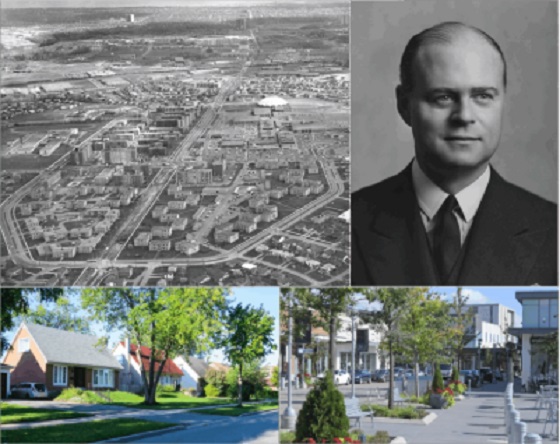
The postwar Canadian Dream: Don Mills, unveiled in 1953, was Canada’s first self-contained, suburban New Town. The brainchild of industrialist E.P. Taylor (top right), it offered young Canadian families the opportunity to abandon hectic downtown living for a more bucolic lifestyle in the suburbs.
By John Roe
Prime Minister Mark Carney says his plan to end Canada’s interminable housing crisis is to “Build Baby Build”. We can hope.
Unfortunately, Carney’s current plan is little more than a collection of unproven proposals and old policy mistakes including modular homes, boutique tax breaks, billions of taxpayer dollars in loans or subsidies and a new federal building authority.
The enormity of the task demands much broader thinking. Rather than simply encouraging a stacked townhouse here, and a condo there, Canada needs to remember what has worked in the past. And what other countries are doing today. With this in mind, Carney should embrace New Towns.
Also known as Garden Cities or Satellite Cities, New Towns are brand-new, planned communities of 10,000 or more citizens and that stand apart from existing urban centres. These are more than the suburbs reflexively loathed by so many planners and environmentalists. Rather, New Towns can offer a diverse mixture of living options, ranging from ground-level housing to built-to-purpose rental apartments and condominiums. As self-contained communities, they include schools, community centres along with shopping and employment opportunities.
New Towns represent the marriage of inspired utopianism with pragmatic realism. And they can provide the home so many of us crave.
Originally conceived in Britain during the Industrial Age, Canada witnessed its own New Town building boom during the post-war era. Communities built in the 1950s and 1960s including Don Mills, Bramalea, and Erin Mills in Ontario were all designed as separate entities meant to relieve population pressure on nearby Toronto. Other New Towns took advantage of new resource opportunities. Examples here including Thompson, Manitoba which sprang up around a nickel mine, and Kitimat, B.C., which was built to house workers in the aluminum industry.
While New Town development largely died off in the 1970s and 1980s, it is enjoying a revival today in many other countries.
Facing his own housing crisis and building on his country’s past experience, British Labour Prime Minister Keir Starmer has established a New Towns Taskforce that will soon choose 12 sites where construction on new communities will begin by 2029.
On the other side of the Atlantic — and the political spectrum — U.S. President Donald Trump — has proposed awarding 10 new city charters for building New Towns on underdeveloped federal land.
Meanwhile, several Silicon Valley billionaires are backing Solano, a planned city 60 miles east of San Francisco with a goal of creating a new community of up to 400,000 people by 2040. And Elon Musk is already building a New Town at Starbase, Texas as the headquarters for his SpaceX rocket firm.
To be fair, not every New Town has been a success. In the late 1960s, Ontario tried to build a brand-new city on the shores of Lake Erie known as Townsend. Planned as a home for up to 100,000 people, the project fizzled for a variety of reasons, including a lack of proper transportation links and other important infrastructure, such as schools or a hospital. Today, fewer than 1,000 people live there.
Despite the lessons of the past, there are three compelling reasons why Carney should include New Towns as part of his solution to Canada’s housing crisis.
First, by starting with a blank canvas, a New Town offers the chance to avoid the stultifying NIMBYism of existing home owners and municipal officials who often stand in the way of new development. The status quo is one of the biggest obstacles to ending the housing crisis, and New Towns are by their very nature new.
Second, because New Towns are located outside existing urban centres, they offer the promise of delivering ground-level homes with a yard and driveway that so many young Canadians say they want. Focusing growth exclusively in existing urban centres such as Toronto, Vancouver and Montreal – as Carney seems to be doing – will deliver greater density, but not fulfil the housing dreams of Canadian families.
Third, New Towns can herald a more prosperous and unified Canada for the 21 st century. New Towns could be built in regions such as Ontario’s Ring of Fire, rich with minerals the world demands. New Towns could also tighten the east-west ties that bind the country together. Further, this growth can be focused on areas with marginal farmland, such as the Canadian Shield, which in Ontario starts just a 90 minute drive north of
Toronto.
New Towns are already beginning to pop up in Canada. In 2017, for example, construction began on Seaton Community, a satellite town adjacent to Pickering Ontario that will eventually grow into six neighbourhoods with up to 70,000 residents. And this spring, the southwestern Ontario municipality of Central Elgin unveiled plans for a New Town of 9,000 residents on the edge of St. Thomas.
Having promised Canadians fast and decisive “elbows up” leadership, our prime minister should throw his weight behind New Towns. To begin, he could appoint a New Town Task Force, similar to the one in Britain to get to work identifying potential locations. Even better, he could simply say his government thinks New Towns are a good idea and let the private sector do all the heavy lifting.
If the millions of Canadians currently shut out of the housing market are to have any chance at owning the home of their dreams, New Towns need to be in the mix.
John Roe is a Kitchener, Ont. freelance writer and former editorial page editor of the Waterloo Region Record. The original and longer version of this story first appeared at C2CJournal.ca


Ontario man launches new challenge against province’s latest attempt to ban free expression on roadside billboards

Ottawa Funded the China Ferry Deal—Then Pretended to Oppose It

FDA Exposed: Hundreds of Drugs Approved without Proof They Work

New Peer-Reviewed Study Affirms COVID Vaccines Reduce Fertility
-
 Business2 days ago
Latest shakedown attempt by Canada Post underscores need for privatization
-
 Business2 days ago
Why it’s time to repeal the oil tanker ban on B.C.’s north coast
-
 Aristotle Foundation2 days ago
How Vimy Ridge Shaped Canada
-
 Alberta1 day ago
Pierre Poilievre – Per Capita, Hardisty, Alberta Is the Most Important Little Town In Canada
-
 MxM News1 day ago
UPenn strips Lia Thomas of women’s swimming titles after Title IX investigation
-
 Alberta1 day ago
Alberta Provincial Police – New chief of Independent Agency Police Service
-
 International2 days ago
CBS settles with Trump over doctored 60 Minutes Harris interview
-
 Energy2 days ago
If Canada Wants to be the World’s Energy Partner, We Need to Act Like It