
International
A billion views: Donald Trump tells Elon Musk Kamala Harris is a radical ‘San Francisco liberal’

From LifeSiteNews
By Matt Lamb
“I think a lot of people thought, you know, that the Biden administration would be a moderate administration, but it’s not,” he said.
He said Kamala Harris will move even “further left” than Biden.
“I mean, her dad is literally… a Marxist economist”
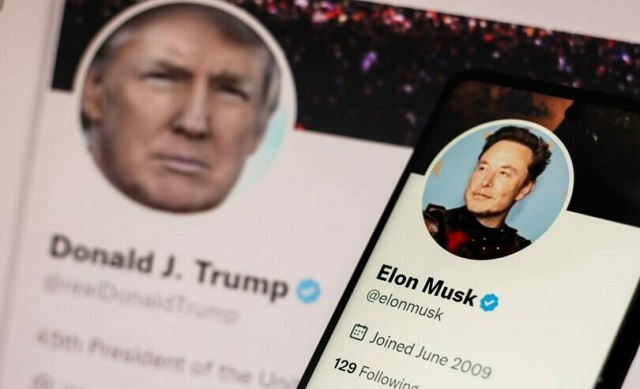
A much publicized recorded conversation between Elon Musk and President Donald Trump has generated 1 billion views, according to the former.
Musk, who owns X (formerly Twitter), spoke with Trump for nearly two hours last night on the social media platform. The conversation was delayed by a “massive distributed denial of service attack,” Musk said. The hackers’ attack showed “there’s a lot of opposition to people just hearing what President Trump has to say.”
The European Union also sent a letter to Musk warning him that he had obligations to avoid posting “harmful content” that would “generate detrimental effects on civic discourse.”
Meanwhile, the Tesla CEO said Trump must win “for the good of the country.”
The pair talked about illegal immigration, the economy under Trump, the recent assassination attempt upon the former president, and crime.
Musk said he has “historically” been a “moderate Democrat” and explained why he is backing Trump in the 2024 presidential election.
“I feel like we’re really at a critical juncture for the country,” he said during the conversation. “I think a lot of people thought, you know, that the Biden administration would be a moderate administration, but it’s not,” he said.
He said Kamala Harris will move even “further left” than Biden.
“I mean, her dad is literally… a Marxist economist,” Musk said. (Even left-wing Snopes has acknowledged Stanford University Professor Donald Harris is a Marxist.)
Musk also said that Harris is “far left” but there is a “propaganda” campaign to remake her into a moderate.
“And we’re seeing just an overnight propaganda attempt to rewrite history and make it sound like Kamala’s moderate when she in fact is not moderate,” Musk said.
'I think you should support Donald Trump for president,' Elon Musk tells people. pic.twitter.com/BYJmqBuAyV
— Matt Lamb (@MattLamb22) August 13, 2024
Trump pointed out that Harris’s running mate, Minnesota Governor Tim Walz, is also a radical. As governor, he signed a law requiring boys’ bathrooms to provide female hygiene products.
“Well, her running mate approved, signed into legislation tampons in boys’ bathrooms, okay? Now that’s all I have to hear, tampons in boys’ bathrooms,” the former president said. “And that means she believes in that, too. I mean, she picked this guy because he was the closest to her.”
“If we have her as a president, if we have a Democrat at this moment as the president, I don’t think our country can survive,” Trump warned.
Combined views of the conversation with @realDonaldTrump and subsequent discussion by other accounts now ~1 billion https://t.co/s8x8QmdmnY
— Elon Musk (@elonmusk) August 13, 2024
Both talked about “common sense” views and the need to avoid the country turning into a nation-sized San Francisco or California.
“I think these are issues that I think most people in America would agree with, which is that we want safe and clean cities,” Musk said. “We want secure borders” and “sensible government spending,” as well as a fair judicial system.
Open borders are ‘existential issue,’ Musk says
Unchecked illegal immigration is a threat to the country and an “existential issue,” according to Musk.
“Whether it’s a question of intention or competence, either way, we don’t have a secure border and we have people streaming over like it looks like a World War Z zombie apocalypse at times,” Musk said, referencing Vice President Harris’ role as border czar.
Referencing a trip he took to the border, Musk said the people crossing “did not look friendly.”
“These are rough people,” Trump said in agreement.
“The caravans are coming in… and who’s doing this is the heads of the countries,” Trump said.
“The fact is it’s brilliant for them because they’re [sending] all their bad people, really bad people,” he warned and stated that among the illegal migrants were people who are lazy or won’t work.
He added: “And they’re also getting rid of their of their murderers and their drug dealers and the people that are really brutal people.”
He also suggested that foreign countries are sending prisoners into the USA to save the money it would cost to keep them in jail.
Trump criticized Harris for suggesting that she is going to start securing the border, noting that she has not done so since taking office in 2021.
“I think this is a fundamental existential issue for the United States,” Musk said during the interview. “And if we have another four more years of open borders, and it’s gonna be even worse. With another four more years, it’s gonna be even worse than it’s been for the past three and a half years.”
— Matt Lamb (@MattLamb22) August 13, 2024
“I’m not sure we’ve got a country,” the Tesla CEO warned.
The pair also discussed how relatively few of the migrants are from neighboring Mexico.
“It’s Earth, the rest of Earth,” Musk said.
Musk and Trump also discussed some of the more radical elements of the environmentalist agenda. Though Musk owns an electric car company, he also supports the use of oil and gas. Trump pointed out that most electricity still comes from oil and gas.
“Even to create your electric car and create the electricity needed for the electric car, you know, fossil fuel is what really creates that at the generating plants,” Trump said.
Musk was more pessimistic, saying the country may need to move away from oil and gas, but that even in 100 years the country would “probably be okay” in terms of fuel. He said there should not be “hardship” in moving away from oil and gas.
He suggested that both solar and nuclear power could provide more energy in the future.
The conversation between the CEO and the former POTUS also covered the “lawfare” against Trump, who has been targeted with questionable charges and novel legal theories, including in New York. There, a left-wing prosecutor named Alvin Bragg got the president convicted on questionable charges of campaign finance violations for alleged hush money payments he made to a porn actress. The decision has drawn criticism from legal experts.
“It does happen in banana republics and third world countries, but it’s never happened [here],” Trump said.
The former president also declared that Harris would harm the country if elected president, saying that she “destroyed” San Francisco and California while in power there. Harris served as the district attorney for San Francisco prior to running for attorney general.
Harris is “radical left,” Trump said.
“She is a San Francisco liberal who destroyed San Francisco. And then as attorney general, she destroyed California,” Trump said.
“Our country is becoming a very dangerous place,” Trump warned shortly after those comments. “And she is a radical left, San Francisco liberal.”



Quick Hit:
ICE raided a California cannabis farm Thursday suspected of employing illegal immigrants, uncovering 10 underage workers — including 8 unaccompanied minors. The operation sparked protests, but federal officials defended the action as a necessary crackdown on illegal labor and child exploitation.
Key Details:
- ICE agents executed a lawful raid at Glass House Farms in Camarillo, targeting illegal immigrant laborers employed at the state-licensed cannabis operation.
- Ten underage illegal immigrants were found working at the site — eight of them unaccompanied minors — prompting a federal investigation into potential child labor violations.
- Protesters attempted to interfere with the operation and were dispersed by federal agents using crowd control measures; multiple arrests and injuries were reported.
🚨BREAKING: ICE just swarmed Ventura County fields, hauling away the very farm workers who keep America’s produce aisles stocked.
We’re arresting assets; treating the backbone of our food chain like a threat. That’s not “border security.” That’s self-sabotage in uniform. pic.twitter.com/GgZvnXbVsd
— Brian Allen (@allenanalysis) July 10, 2025
Diving Deeper:
Federal immigration agents executed a large-scale raid Thursday at a cannabis farm in Camarillo, California, targeting illegal immigrant laborers and uncovering possible child labor violations. The operation, led by Immigration and Customs Enforcement (ICE), took place at Glass House Farms, a state-licensed marijuana facility that remains illegal under federal law.
Dozens of agents stormed the property with a federal warrant, encountering resistance from left-wing protesters who attempted to disrupt the operation. Agents responded with tear gas and smoke devices, and helicopters were deployed to ensure no suspects could flee or hide in nearby fields. Authorities later confirmed that 10 minors were working at the facility—eight of whom were unaccompanied illegal aliens.
Despite clear evidence of immigration and labor violations, California Democrats rushed to attack the enforcement action. Governor Gavin Newsom lashed out on social media, posting video of people running from the scene. Rep. Salud Carbajal called the raid “deplorable,” complaining about the use of tactical gear.
Customs and Border Protection Commissioner Rodney Scott pushed back, calling out Newsom directly. “Here’s some breaking news: 10 juveniles were found at this marijuana facility – all illegal aliens, 8 of them unaccompanied,” he posted on X. “It’s now under investigation for child labor violations.”
While California officials cried foul, ICE defended the operation as necessary and lawful. The raid is part of a broader push under President Trump to enforce federal immigration laws and shut down operations that exploit illegal labor to undercut American workers.
The clash in Camarillo follows similar enforcement actions earlier this week in Los Angeles, where ICE also faced hostility from local officials. Nonetheless, the Trump administration appears undeterred, making clear that sanctuary policies will not shield illegal activity from federal scrutiny.

From the Daily Caller News Foundation
By Audrey Streb
The Department of Energy (DOE) released a new report Monday warning of impending blackouts if the United States continues to shutter power plants without adequately replacing retiring capacity.
DOE warned in its Monday report that blackouts could increase by 100% by 2030 if the U.S. continues to retire power plants without sufficient replacements, and that the electricity grid is not prepared to meet the demand of power-hungry data centers in the years to come without more reliable generation coming online quickly. The report specifically highlighted wind and solar, two resources pushed by Biden, as responsible for eroding grid stability and advised that dispatchable generation from sources like coal, oil, gas and nuclear are necessary to meet the anticipated U.S. power demand.
“This report affirms what we already know: The United States cannot afford to continue down the unstable and dangerous path of energy subtraction previous leaders pursued, forcing the closure of baseload power sources like coal and natural gas,” DOE Secretary Chris Wright said. “In the coming years, America’s reindustrialization and the AI race will require a significantly larger supply of around-the-clock, reliable, and uninterrupted power. President Trump’s administration is committed to advancing a strategy of energy addition, and supporting all forms of energy that are affordable, reliable, and secure. If we are going to keep the lights on, win the AI race, and keep electricity prices from skyrocketing, the United States must unleash American energy.”
Dear Readers:
As a nonprofit, we are dependent on the generosity of our readers.
Please consider making a small donation of any amount here.
Thank you!
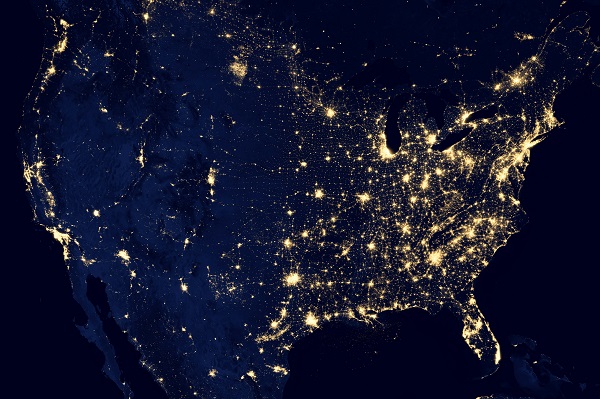
All regional grid systems across the U.S. are expected to lose reliability in the coming years without the addition of more reliable power, according to the DOE’s report. The U.S. will need an additional 100 gigawatts of new peak hour supply by 2030, with data centers projected to require as much as half of this electricity, the report estimates; for reference, one gigawatt is enough to power up to one million homes.
President Donald Trump declared a national energy emergency on his first day back in the Oval Office and signed an executive order on April 8 ordering DOE to review and identify at-risk regions of the electrical grid, which the report released Monday does. In contrast, former President Joe Biden cracked down on conventional power sources like coal with stringent regulations while unleashing a gusher of subsidies for green energy developments.
Electricity demand is projected to hit a record high in the next several years, surging 25% by 2030, according to Energy Information Administration (EIA) data and a recent ICF International report. Demand was essentially static for the last several years, and skyrocketing U.S. power demand presents an “urgent need” for electricity resources, according to the North American Electric Reliability Corporation (NERC), a major grid watchdog.
Wright has also issued several emergency orders to major grid operators since April. New Orleans experienced blackouts just two days after Wright issued an emergency order on May 23 to the Midcontinent Independent System Operator (MISO), the regional grid operator covering the New Orleans area.



FDA requires new warning on mRNA COVID shots due to heart damage in young men

Before Trudeau average annual immigration was 617,800. Under Trudeau number skyrocketted to 1.4 million annually

Carney’s new agenda faces old Canadian problems
Internal emails show Canadian gov’t doubted ‘mass graves’ narrative but went along with it
-
COVID-1922 hours ago
FDA requires new warning on mRNA COVID shots due to heart damage in young men
-
Business20 hours ago
Carney’s new agenda faces old Canadian problems
-
Indigenous21 hours ago
Internal emails show Canadian gov’t doubted ‘mass graves’ narrative but went along with it
-
Daily Caller17 hours ago
Blackouts Coming If America Continues With Biden-Era Green Frenzy, Trump Admin Warns
-
 Bruce Dowbiggin23 hours ago
Eau Canada! Join Us In An Inclusive New National Anthem
-
 Business2 days ago
CBC six-figure salaries soar
-
 Addictions2 days ago
More young men want to restrict pornography: survey
-
 Business2 days ago
Trump slaps Brazil with tariffs over social media censorship