
Energy
Why Bad Climate Legislation Is Worse Than No Climate Legislation



From Michael Schellenberger
Moderate Democratic Senators Joe Manchin & Krysten Sinema Are Right to Oppose the Clean Energy Performance Program
Progressives are angry that moderate Democratic Senator Joe Machin has reportedly opposed the inclusion of climate-related legislation in President Joe Biden’s budget “This is absolutely the most important climate policy in the package,” said Leah Stokes, a Canadian political scientist who helped write the legislation. “We fundamentally need it to meet our climate goals. That’s just the reality.”
But that’s not the reality. The “Clean Energy Performance Program” is not needed to meet climate goals, and might actually undermine them.
Consider Waxman-Markey. That’s the name of the “cap and trade” climate legislation that passed the House but failed in the Senate in 2010. It had a climate goal of reducing U.S. greenhouse gas emissions by 17 percent below 2005 levels by the year 2020. Instead, the U.S. reduced its emissions by 22 percent.
Had cap and trade legislation passed in the Senate, emissions would have declined less than 22 percent, because Waxman-Markey so heavily subsidized coal and other fossil fuels. As the Los Angeles Times reported at the time, “the Environmental Protection Agency projects that even if the emissions limits go into effect, the U.S. would use more carbon-dioxide-heavy coal in 2020 than it did in 2005.”
The same thing would likely have been true for the Clean Energy Performance Program, which lock in natural gas. Consider France. According to the Commision de Regulation de L’Energie, €29 billion (US$33) billion was used to purchase wind and solar electricity in mainland France between 2009 and 2018. But the money spent on renewables did not lead to cleaner electricity. In fact, the carbon-intensity of French electricity increased.
After years of subsidies for solar and wind, France’s 2017 emissions of 68g/CO2 per kWh was higher than any year between 2012 and 2016. The reason? Record-breaking wind and solar production did not make up for falling nuclear energy output and higher natural gas consumption. And now, the high cost of renewable electricity is showing up in French household electricity bills.
Some pro-nuclear people supported the proposed Clean Energy Performance Program. They claimed it would have saved existing nuclear plants at risk of closure. According to the U.S. Energy Information Administration, the closure of nuclear plants including Diablo Canyon in California, will result in nuclear energy in the U.S. declining by 17% by 2025. If the Program had passed, some pro-nuclear people believe, plants like Diablo Canyon could have been saved.
But the Clean Energy Performance Program would not have saved Diablo Canyon for the same reason it would not have saved Indian Point nuclear plant, which closed in New York, earlier this year: progressive Democratic politicians are forcing nuclear plants to close, and at a very high cost to ratepayers.
If the Clean Energy Performance Program had passed into law, Diablo Canyon’s owner, Pacific Gas & Electric, would simply have passed the $500 million to $1.5 billion penalty imposed by the Program onto ratepayers, along with the other billions in costs related to closing Diablo Canyon 40 years earlier than necessary. The same would have happened with Indian Point.
Where there is political support for saving nuclear plants, state legislators and governors save nuclear plants, as they did in Illinois a few weeks ago, and as they have done in Connecticut, New Jersey, and with up-state nuclear plants in New York. In other states, nuclear plants are protected from cheap natural gas by regulated electricity markets. And now, with natural gas prices rising dramatically, any nuclear plants at risk of closure for economic reasons are no longer at risk.
What threatens the continued operation of nuclear power plants, and nuclear energy in general, is the continued subsidization of renewables, which the Clean Energy Performance Program would have put on steroids. Under the program, utilities would have received $18 for each megawatt-hour of zero-emissions energy it produces between 2023 to 2030, on top of the existing $25 per megawatt-hour subsidy for wind energy.
Under such a scenario, notes energy analyst Robert Bryce, a wind energy company “could earn $43 per megawatt-hour per year for each new megawatt-hour of wind energy it sells. That’s a staggering sum given that the wholesale price of electricity in New York last year was $33 per megawatt-hour. In Texas, the wholesale price of juice was $22 per MWh.”
Manchin is joined in his opposition to the Plan by moderate Democratic Arizona Senator, Krysten Sinema, and understandably so. The legislation would cost Arizona ratepayers nearly $120 billion in additional electricity costs, according to energy analysts Isaac Orr and Mitch Rolling of the American Experiment. “This would result in a 45 percent increase in electricity prices by 2031, compared to 2019 rates,” they note.
As troubling, the Clean Energy Performance Program would increase dependence on solar panels made in China by incarcerated Uighyr Muslims living in concentration camps and against whom the Chinese government is committing “genocide,” according to the U.S. State Department. New research shows that China made solar panels cheaper through the use of forced labor, heavy government subsidies, and some of the dirtiest coal in the world. The Program would have done nothing to shift production of solar panels back to the U.S.

Nor would the legislation have done anything to internalize the high cost of solar panel waste disposal. Most solar panels become hazardous waste, and create dust from heavy metals including lead, as soon as they are removed from rooftops. A major study published in Harvard Business Review earlier this year found that, when the high cost of managing toxic solar panel waste is eventually accounted for, the true cost of solar electricity will rise four-fold.
As troubling, the continued expansion of weather-dependent renewables will increase electricity costs and blackouts across the United States, as they did in California and Texas. Those renewables-driven blackouts were likely on Senator Manchin’s mind when he made his decision to oppose the Clean Energy Performance Plan. He certainly knows about the problems of renewables in Texas and California, since I discussed them directly with Manchin when I testified before his committee earlier this year.
A better approach would be for Congress to seek nuclear-focused legislation to expand nuclear from its current 19% of U.S. electricity to 50% by 2050. It should take as a model the British government’s announcement yesterday that it would put nuclear energy at the center of its climate plans. Global energy shortages triggered by the lack of wind in Europe have led nations to realize that any efforts to decarbonize electricity grids without creating blackouts must center nuclear power, not weather-dependent solar and wind.
Environmental Progress and I met with British lawmakers in 2019 to advocate for a greater focus on nuclear. At the time, many British energy analysts, as well as ostensibly pro-nuclear climate activists, Mark Lynas and George Monbiot, were telling the public that their nation did not need more nuclear, as Britain could simply rely more on wind energy, and natural gas. Now, electricity prices are skyrocketing and factories are closing in Britain, due to a bad year for wind.
It was a strange experience to be alone in Britain, without support from supposedly pro-nuclear Britons, in urging lawmakers to build more nuclear plants, but I was similarly alone in many other parts of the world, and got on with the task. Happily, one year later, former Extinction Rebellion spokesperson Zion Lights joined me in advocating for nuclear, and quickly forced the government to agree to a nuclear build-out.
Today, in the U.S., there is a growing grassroots movement for nuclear energy, one which saved nuclear plants, twice, in Illinois, and other states, and is gearing up to save Diablo Canyon nuclear plant in California. Doing so will require a new governor, since the current one, Gavin Newsom, made closing the plant a feature of his sales pitch to powerful environmental groups, including Sierra Club and Natural Resources Defense Fund which are, like Newsom himself, heavily funded by natural gas and renewable energy companies that stand to benefit from the Diablo’s destruction.
Leadership at the national level will need to come from Senators Manchin and Sinema. While a significant amount of electricity policy is determined by the states, the Senate can play a constructive role in maintaining the reliability, resiliency, affordability, I testified to Senator Manchin and other committee members. Senator Sinema is from Arizona, a state with the largest nuclear plant in the U.S., Palo Verde, and which is a model of how to make electricity both low in emissions, and in costs.
With the Clean Energy Performance Program now apparently dead, the Congress, led by Manchin and Sinema, should take policy action to not only keep operating the nuclear plants that have been critical to preventing power outages in recent years, but also expand them.
About Michael Shellenberger
Michael Shellenberger is a Time Magazine “Hero of the Environment,”Green Book Award winner, and the founder and president of Environmental Progress.
He is author of the best-selling new book, Apocalypse Never (Harper Collins June 30, 2020), which has received strong praise from scientists and scholars. “This may be the most important book on the environment ever written,” wrote climate scientist Tom Wigley. “Apocalypse Never is an extremely important book,” says historian Richard Rhodes, who won the Pulitzer Prize for The Making of the Atomic Bomb. “Within its lively pages, Michael Shellenberger rescues with science and lived experience a subject drowning in misunderstanding and partisanship. His message is invigorating: if you have feared for the planet’s future, take heart.”
Additional Reading:
Why Biden’s Climate Agenda Is Falling Apart
China Made Solar Cheap With Coal, Subsidies, And “Slave” Labor — Not Efficiency
Why Everything They Said About Solar Was Wrong


From Resource Works
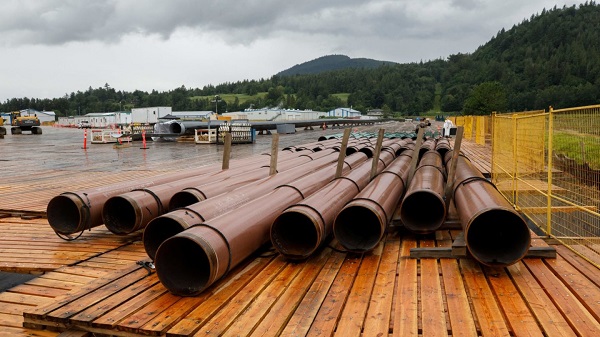
That a new oil pipeline from Alberta to BC is being aired by Ottawa and pushed by Alberta has, in turn, critics eagerly pushing carefully crafted scare stories.
Take the Green Party’s Elizabeth May, for one: She insists that oil tankers leaving Prince Rupert would be sailing through “Canada’s most dangerous waters and the fourth most dangerous waters in the world.”
First, this “dangerous waters” claim is unsubstantiated, unproven, and hyperbolic. It is apparently based on a line in a 1992 federal guide to marine-weather hazards on the west coast, but it is not credited or supported there.
Second, who says a new oil pipeline would go to Prince Rupert? No destination is specified in the memorandum of understanding published by Ottawa and Alberta.
It speaks of a commitment to “enable the export of bitumen from a strategic deep-water port to Asian markets.”
Energy Minister Tim Hodgson: “There is no route today. Under the MoU, what (Alberta) would need to do is work with the affected jurisdiction, British Columbia, and work with affected First Nations for that project to move forward. That’s what the work plan in the MoU calls for.”
First Nations concerned
Now, the MoU does say that this could include “if necessary” a change to the federal ban on oil tankers in northwest BC waters.
Some First Nations are strongly fighting the idea of oil tankers in northern BC waters citing fears of a catastrophic spill. The Assembly of First Nations (AFN), for example, is calling for the Canada-Alberta pipeline MoU to be scrapped.
“A pipeline to B.C.’s coast is nothing but a pipe dream,” said Chief Donald Edgars of Old Massett Village Council in Haida Gwaii.
And AFN National Chief Cindy Woodhouse Nepinak said: “Canada can create all the MOUs, project offices, advisory groups that they want: the chiefs are united. . . When it comes to approving large national projects on First Nations lands, there will not be getting around rights holders.”
Alberta group interested
But the Metis Settlements of Alberta say they’re interested in purchasing a stake in the proposed pipeline and want to “work with First Nations in British Columbia who oppose the project.”
The Alberta government’s Indigenous loan agency says a new oil pipeline to the BC coast could deliver “significant” returns for Indigenous Peoples.
Alberta Premier Danielle Smith has suggested the pipeline could bring in $2 billion a year in revenue, and that it could be as much as 50 per cent owned by Indigenous groups — who would thus earn $1 billion a year,
“Can you imagine the impact that would have on those communities in British Columbia and in Alberta? It’s extraordinary.”
And we note that in 2019 the First Nations-proposed Eagle Spirit Energy Corridor, which aimed to connect Alberta’s oilpatch to Kitimat, garnered serious interest among Indigenous groups. It had buy-in from 35 First Nations groups along the proposed corridor, with equity-sharing agreements floated with 400 others. (The project died with passage of the tanker ban.)
Vancouver more likely
More recent chatter, including remarks by BC Premier David Eby, would suggest oil from a new pipeline would more likely be through Vancouver, rather than via Prince Rupert or Kitimat BC. And tankers have been carrying oil from the Trans Mountain Pipeline System’s Burnaby terminal since 1956 — with no spills.
Oft cited by northern-port opponents is the major spill of 258,000 barrels of crude oil (more than 40 million litres) from the tanker Exxon Valdez, which ran aground in Alaska’s Prince William Sound in 1989.
The resulting spill killed native and marine wildlife over 2,100 km of coastline. The U.S. National Transportation Safety Board found that the spill occurred due to human error. It cited a tired third mate on watch, and noted the captain had an alcohol problem.
But the Exxon Valdez was a single-hull tanker. Its spill led to the phasing out of single-hull tankers, replaced in the ensuing 36 years by new generations of double-hull vessels (with an inner and outer hull separated to contain spills if the outer hull ruptures), new tanker safety rules — and new ways of dealing with the far-fewer spills.
Among those new ways is the Western Canada Marine Response Corporation: “Our mandate is to ensure there is a state of preparedness in place when a marine spill occurs and to mitigate the impacts on B.C.’s coast. This includes the protection of wildlife, economic and environmental sensitivities, and the safety of both responders and the public.”
What about LNG carriers?
At the same time, fear-mongers are actively flogging scare stories on social media.
One opposition group sees future LNG carrier traffic along the southern BC coast as potentially numbering “in the realm of 800+ transits a year.”
Eight hundred a year? BC Ferries runs more than 185,000 a year. And the ferries don’t have tethered tugs helping them to get safely from LNG terminals. And they don’t have BC Coast Pilots on the bridge to keep progress safe. Oil tankers leaving the Port of Vancouver have both.
As marine captain Duncan MacFarlane of LNG Canada in Kitimat says: “LNG carriers are some of the most sophisticated ships in the world…Once loading operations are complete (at LNG Canada), three BC Pilots will join the ship and start navigating up the Douglas Channel, which is approximately 159 nautical miles out to the Prince Rupert pilot station.”
“LNG Canada has partnered with HaiSea Marine, which is a company formed between the Haisla Nation and Vancouver-based SeaSpan, to provide two escort tugs and three harbour-assist tugs to safely move the vessel out of the Douglas Channel…once the vessel drops the pilots at Prince Rupert, it starts a seven- to ten-day voyage to its discharge port. To assist with this, they’ll use satellite navigation, weather routing, and a variety of other technologies to get to their port the safest and most efficient way.”
The same would apply to oil tankers from any northern port in BC.
BC’s tanker-safety record
As the small-c conservative Fraser Institute points out: “Pipelines are 2.5 times safer than rail for oil transportation, and oil tankers have [the] safest record of all.”
And it adds: “The history of oil transport off of Canada’s coasts is one of incredible safety, whether of Canadian or foreign origin, long predating federal Bill C-48’s tanker ban. . . .new pipelines and additional transport of oil from (and along) B.C. coastal waters is likely very low environmental risk. In the meantime, a regular stream of oil tankers and large fuel-capacity ships have been cruising up and down the B.C. coast between Alaska and U.S. west coast ports for decades with great safety records.”
This last refers to the 200-230 tankers a year that now carry crude oil from Alaska through Canadian waters south of Haida Gwaii and then down BC’s Inside Passage or outer coastal waters to Juan de Fuca Strait and Washington refineries.
While these tankers do not transit Hecate Strait (the north end of which is the area of concern about spills from tankers from Prince Rupert or Kitimat) all these US tankers are double-hulled, must report positions, speeds and routes in real-time, must carry certified pilots, must use traffic-separation routes (like traffic lanes), and must slow to 11 knots in sensitive areas.
And as Pipeline Action says: “Canada is not inferior — If Norway can move tankers safely through fjords, if Japan can operate in some of the busiest waterways on Earth, if Alaska balances ecological protection with responsible shipping and if Eastern Canadian ports manage tankers every day, then Canada’s West Coast, with its governance standards, technical capacity and Indigenous partnership potential, can certainly do so.”
Resource Works News

From Resource Works
A Prince Rupert megaproject is rising quietly on the coast, fuelled by Montney gas and poised to reshape Canada’s trade footprint from Asia to Alberta.
Most Canadians know who Connor McDavid is.
Most Canadians know who Connor Bedard is.
And, well … most Canadians know who Howie Mandel is, right?
Household words.
But do any Canadians know what REEF is? Probably not.
The Ridley Island Energy Export Facility project, a large-scale terminal near Prince Rupert, B.C., being built by AltaGas to export liquefied petroleum gas (LPG) and other bulk liquids to global markets.
Did you know it is providing valuable propane to Japan? No, not for barbecues, but for crucial energy demands in the Asian nation.
Japan uses propane (LP gas) for a wide range of purposes, including household use for cooking, water heating, and room heating, as well as for a majority of taxis, industrial applications, and as a raw material for town gas production.
Construction is progressing, with a target startup around the end of 2026. The project involves building significant infrastructure, including large storage tanks.
And it just so happens that Resource Works CEO Stewart Muir, paid a visit this past week to get a close-up look at a part of Canada’s export story that almost nobody talks about: a brand-new accumulator tank built to hold chilled propane and butane.

The “triple-word-score” of resources
“It’s the largest of its kind anywhere. Two more are on the way, and together they’ll form a critical piece of the AltaGas Ltd. REEF project,” Muir said in a report.
”What stood out to me is the larger pattern: projects like this only happen because of the crown jewel of the B.C. economy — the Montney Formation.”
“It’s the triple-word-score of Canadian resource development: LNG, valuable natural gas liquids like propane, and the diluent streams that help unlock Canada’s single biggest export category, crude oil.”
Like the oilsands, the industry has long known about the Montney formation, which stretches 130,000 square kilometres in a football-shaped diagonal from northeast British Columbia into northwest Alberta.
According to CBC News, underneath this huge tract of land, the National Energy Board (NEB) estimates there’s 90 billion barrels of oil equivalent (boe), most of it natural gas. That’s more than half the size of the oilsands, yet the Montney has received only a fraction of the attention, at least from the public at large.
For oil and gas types, the gold rush is on.
Without question, and despite the ire of green groups who seem to be against any kind of resource development in Canada, the Montney is the quiet force multiplier behind local jobs, municipal tax bases, and the national balance of trade.
And it’s all being done at the highest environmental standard, with producers like Tourmaline Oil Corp already posting a 41% reduction in CO2 emission intensity and a target of 55% less methane emission intensity.
A strategic corridor under pressure
“Congrats to AltaGas for pushing this project forward, and a nod as well to other major employers on the North Coast — Trigon, CN and Pembina”, writes Muir.
“Quietly and steadily, they’re building the future prosperity of Canadians. And thanks to Mayor Herb Pond, who took the time to walk us through the regional dynamics that make this corridor such a strategic asset.”
Muir was gobsmacked by the size of the project. Sources say Alberta’s midstream bottleneck and rapid growth of shale oil and gas exploration and production, has created an absolute glut in ethane, propane and butane. Ridley Island takes this glut and transports it to the Prince Rupert region by railcar and exports to Asian markets.
Ridley Island’s current export capacity of 92,000 bpd is undergoing aggressive expansion to growth by another 115,000 bpd over the next few years in two more phases of construction.
Resource Works News


From Exception to Routine. Why Canada’s State-Assisted Suicide Regime Demands a Human-Rights Review

Carney government should privatize airports—then open airline industry to competition

University of Colorado will pay $10 million to staff, students for trying to force them to take COVID shots

Integration Or Indignation: Whose Strategy Worked Best Against Trump?
-
 Automotive2 days ago
The $50 Billion Question: EVs Never Delivered What Ottawa Promised
-
 Local Business2 days ago
Red Deer Downtown Business Association to Wind Down Operations
-
 International2 days ago
Trump admin wants to help Canadian woman rethink euthanasia, Glenn Beck says
-
 C2C Journal2 days ago
Wisdom of Our Elders: The Contempt for Memory in Canadian Indigenous Policy
-
 Alberta2 days ago
Alberta introducing three “all-season resort areas” to provide more summer activities in Alberta’s mountain parks
-
 Agriculture2 days ago
Growing Alberta’s fresh food future
-
 Alberta2 days ago
The case for expanding Canada’s energy exports
-
 Censorship Industrial Complex2 days ago
Conservative MP calls on religious leaders to oppose Liberal plan to criminalize quoting Scripture