
Opinion
Which goes on top? Lettuce or tomato?


I do not remember if my parents put the lettuce on my hamburger before the tomato or afterwards. It was almost 50 years ago, but I doubt if I ever thought about it.
Apparently it is a big issue to a customer at the local burger joint. Why not just flip it over? Allergies? Sensitive taste buds? I do not know, but it was important, apparently.
Years ago, when fast food joints were becoming popular, restaurants would make batches of items and you were leery of getting a burger or fries that had been sitting too long. You order a special alteration and you believed you were getting freshly cooked food. If that was true then it is seldom true in today’s restaurants. On demand time management planning and open concepts means fresher foods and usually you can see them cook your foods.
Fast food restaurants, to me is a quick and convenient way to quell hunger pains. They are not there to tantalize my taste buds or to fill my nutritional needs, but to fulfil a maintenance function.
Now the customer with the lettuce issue was a younger person and one could think it was a generational thing but then I made the next error.
I let a little old lady go ahead of me. She had specific instructions about every stage of preparation of her order. I was looking for the hidden camera and some jokester jumping out telling me to smile.
I tend to avoid certain sandwich restaurants because there are too many questions. Now when I order a steak, I do tend to want it a bit rarer than most but in another country I tend to want it cooked a bit more, unless it is a more well-known place. That is just to be safe.
What is it? Why is it that the order of food placement, lettuce on top, mayo before mustard become so important?
Have we become so obsessive compulsive that we cannot handle even the smallest of change?
A person suggested it is a control issue. We need to be in control, over the staff, the business, the meal. Is that what it is?
Is it just small-mindedness? I do not know.
I do know that got a tasty burger at a good price and I did not feel hungry anymore.
Darn it, I never looked to see if the lettuce was on top of the tomato.

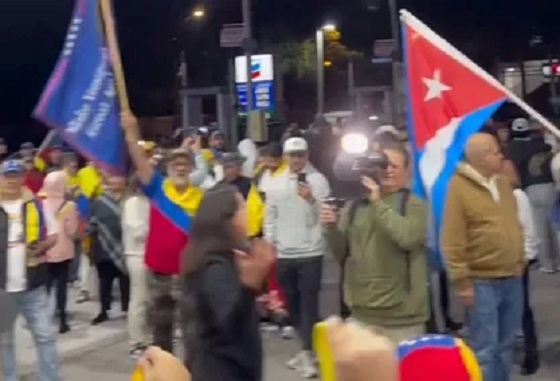

Celebrations broke out across South Florida Saturday as news spread that Venezuela’s longtime socialist strongman Nicolás Maduro had been captured and removed from power, a moment many Venezuelan exiles said they had waited their entire lives to see. In Doral, hundreds gathered outside the El Arepazo restaurant before sunrise, waving flags, embracing strangers, and reacting emotionally to what they described as a turning point for their homeland. Local television footage captured chants, tears, and spontaneous celebrations as word filtered through the community that Maduro and his wife had been “captured and flown out of the country” following U.S. military action announced by Donald Trump earlier that morning.
Venezuelans gathered early this morning in Doral to celebrate after news broke that the U.S. had captured Nicolás Maduro🇻🇪| #ONLYinDADE pic.twitter.com/mSNaF3IhR3
— ONLY in DADE (@ONLYinDADE) January 3, 2026
One young man, Edgar, spoke directly to reporters as the crowd surged behind him, calling the moment “history in the making.” He said his family had spent decades telling him stories about a Venezuela that once had real elections and basic freedoms. “My chest feels like it’s going to explode with joy,” he said, explaining that the struggle against the regime began long before he was born. Edgar thanked President Trump for allowing Venezuelans to work and rebuild their lives in the United States, adding that now, for the first time, he believed they could take those skills back home.
Similar scenes played out beyond Florida. Video circulating online showed Venezuelans celebrating in Chile and other parts of Latin America, reflecting the regional impact of Maduro’s fall. The dictator had clung to power through what U.S. officials and international observers have long described as sham elections, while presiding over economic collapse, mass emigration, and deepening ties to transnational criminal networks. U.S. authorities have pursued him for years, placing a $50 million bounty on information leading to his arrest or conviction. Federal prosecutors accused Maduro in 2020 of being a central figure in the so-called Cartel of the Suns, an international cocaine trafficking operation allegedly run by senior members of the Venezuelan regime and aimed, in prosecutors’ words, at flooding the United States with drugs.
After the overnight strikes, Venezuela’s remaining regime figures declared a state of emergency, even as images of celebration dominated social media abroad. In Washington, reaction from Florida lawmakers was swift. Rep. Carlos Gimenez, who represents a district with large Venezuelan, Cuban, and Nicaraguan exile communities, compared Maduro’s capture to one of the defining moments of the 20th century. “President Trump has changed the course of history in our hemisphere,” Gimenez wrote, calling the operation “this hemisphere’s equivalent to the Fall of the Berlin Wall.” He added that South Florida’s exile communities were “overwhelmed with emotion and hope,” and thanked U.S. service members for what he described as a decisive and successful mission.
For many gathered in Doral, the reaction was deeply personal. A CBS Miami reporter relayed comments from attendees who said they now felt safer about the possibility of returning to Venezuela to see family members they had not hugged in years. One man described it as the end of “26 years of waiting” for a free country, saying the moment felt less like politics and more like the closing of a long, painful chapter.
U.S. Attorney General Pam Bondi confirmed Saturday that Maduro and his wife have been formally indicted in the Southern District of New York. Bondi said the charges include narco-terrorism conspiracy, cocaine importation conspiracy, and weapons offenses involving machine guns and destructive devices. For Venezuelan Americans packed into South Florida streets, those legal details mattered less than the symbolism. After years of watching their country unravel from afar, many said they finally felt something unfamiliar when they looked south — relief, and the cautious hope that Venezuela’s future might no longer be written by a dictator.
Opinion
Hell freezes over, CTV’s fabrication of fake news and our 2026 forecast is still searching for sunshine

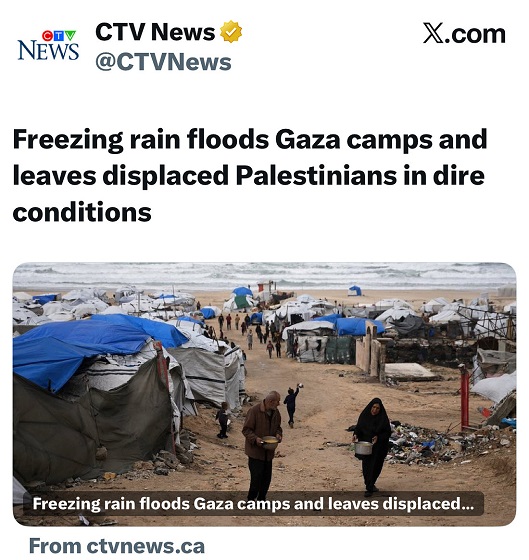

Plus! Politico warns that the far right’s stealing Christmas, a CBC content analysis ruffles feathers and more! Happy New Year
Last week, according to the people who produce the nation’s most popular newscast, the hell that is Gaza froze over.
That’s right. According to CTV News, “freezing” rain flooded Gaza camps, leaving “displaced Palestinians in dire conditions.” This, as was pointed out by social media critics (including the National Post’s Chris Selley) was an absolutely false statement. It was, to be clear, a lie.
The Rewrite is a dedicated to saving journalism from its worst instincts.
Please support us with a free or paid subscription
Winter rains had indeed fallen and made life unpleasant for people in Gaza. But the Associated Press (AP) report for which some eager beaver wrote the headline (one is tempted to suspect either a social justice warrior posing as a journalist or a bumbling incompetent produced by J-school) made no mention of anything “freezing.” Of course it didn’t, because on the day the story was published the high temperature in Gaza was 17C with a low of 13C.
Now, as one who has visited Disneyland in January, I am aware that temperatures can be relative. When it’s 14C in southern California, people from Saskatoon and Winnipeg are jumping into the local hotel pools while “cast members” at Disneyland are wearing toques and mittens. So AP was entirely within its rights to refer to conditions as chilly.
CTV Evening News, historically, has been one of Canada’s most watched regularly scheduled programs. It has boasted in the past about being the nation’s “most trusted” newscast.
So it was bad enough that CTV posted a barefaced falsehood. What was worse, although it did soften its internal headline to refer to “winter” rains, was that it did not take down its “freezing” posts or offer any hint of regret – at least none I could find – that it had ever posted information that amounted to the antithesis of journalism’s first obligation – The Truth.
 |
While CTV’s owner, Bell, continues to lobby for its newsrooms to qualify for government subsidies such as the Journalism Labour Tax Credit and campaign in Canadian Radio-television and Telecommunications Commission (CRTC) hearings for newsroom funding, it does not appear super interested in investing in good journalism or even maintaining public trust in it.
Which is a shame, because last week its presentation of fake news did significant harm to trust in the craft and was inconsistent with its published standards.
Peter Stockland did a fine job the other day in addressing the fuss raised in media concerning CBS editor-in-chief Bari Weiss’s decision to pull back a story regarding US deportees because, she said, it wasn’t complete enough for airing on 60 Minutes. Others viewed it more suspiciously.
If you haven’t read it yet, please do. We’ll see how it all turns out but what caught my eye was the manner in which the Globe and Mail’s U.S. correspondent, Adrian Morrow, chose to describe Weiss. He portrayed her only as “an anti-woke media personality” – a term of which his editors apparently approved. Given that Weiss was the Opinion Editor of the Wall Street Journal and then the New York Times, this seems a little, shall we say, catty? A childishly nasty manner in which to refer to Weiss, I thought, considering she also launched an online publication – The Free Press – that, because she was good at being an editor, used talented journalists and paid them well, recently sold to Paramount Skydance for more than $200 million.
Most of all, though, I found the reference entirely unnecessary and self-indulgent, as if the piece was written for the approval of peers and not for the benefit of readers.
Unsubstantiated references to the “far right” continue to be in prolific use as we begin a New Year, still searching for reasons to be optimistic about the state of journalism. References to the “far left,” meanwhile, continue to defy Newton’s Third Law of Motion concerning equal and opposite actions.
The European edition of Politico used no less an occasion that the birth of the previous millenium’s most influential figure to weigh in with its report on “How the far right stole Christmas.”
“U.S. President Donald Trump claims to have “brought back” the phrase “Merry Christmas” in the United States,” Politico declared, “framing it as defiance against political correctness. Now, European far-right parties more usually focused on immigration or law-and-order concerns have adopted similar language, recasting Christmas as the latest battleground in a broader struggle over culture.”
Whew. Politico, focusing on Italian leader Giorgia Meloni, went so far as to quote attendees at a Christmas celebration who wished to remain anonymous for fear of being associated with a “far right” event.
Me? I thought it was Karl Marx, father of the far left, who labeled religion the “opium of the masses” and a human creation designed to keep the working classes oppressed. And weren’t the Soviet Union, China, North Korea and other Communist states the ones that did and do their level best to “steal” Christmas and other festivities founded in faith? Times have clearly changed, even if some newsroom instincts have not.
Speaking of disconnected media, prolific numbers man David Clinton has ruffled a few feathers with an extensive analysis in his Substack platform, The Audit, of CBC content. Here’s his summary of what he found:
“Of the 300 stories covered by my data, around 30 per cent – month after month – focused on Donald Trump and U.S.- Canada relations. Another 12-15 percent related to Gaza and the Israel-Palestine conflict. Domestic politics – including election coverage – took up another 12 percent, Indigenous issues attracted 9 percent, climate and the environment grabbed 8 percent, and gender identity, health-care worker assaults, immigrant suffering, and crime attracted around 4 percent each.”
Clinton provides a list of topics that were not “meaningfully represented in my sample of CBC’s Top Stories.” It includes housing affordability, immigration levels, crime rate, private sector investment success stories, the oil and gas sector, Chinese interference, etc. You can read his full analysis here.
You can also look for my New Year’s predictions on media that (spoiler alert) states that seeing as there has been no evidence of reform in CBC President Marie-Philippe Bouchard’s first year at the helm of the Mother Corp, you can expect more of the same nothing in 2026. That piece is expected to appear in The Hub this week.
Western Standard announced before Christmas that it’s heading East and hiring a reporter to cover news emanating from Queen’s Park, Ontario’s provincial legislature.
The most notable media-on-media smackdown that came to my attention over the festive season goes to the reliably rambunctious Ezra Levant of Rebel News.
Seizing on a year-end column by the Globe and Mail’s Lawrence Martin that hailed 2025 “as one of Canada’s great nation-building years” under Prime Minister Mark Carney, Levant had this to say:
|


And that, for this week, is that. Welcome to 2026.
(Peter Menzies is a commentator and consultant on media, Macdonald-Laurier Institute Senior Fellow, a past publisher of the Calgary Herald, a former vice chair of the CRTC and a National Newspaper Award winner.)
Invite your friends and earn rewards


-
 International2 days ago
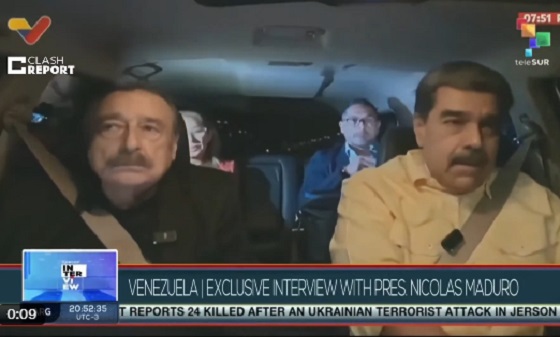
“Captured and flown out”: Trump announces dramatic capture of Maduro
-
 International2 days ago
Trump Says U.S. Strike Captured Nicolás Maduro and Wife Cilia Flores; Bondi Says Couple Possessed Machine Guns
-
Energy2 days ago
The U.S. Just Removed a Dictator and Canada is Collateral Damage
-
 International2 days ago
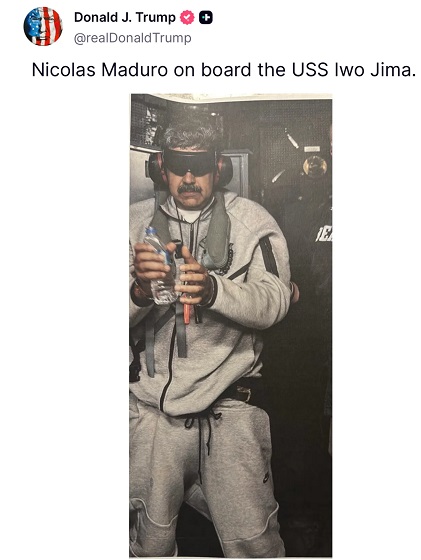
US Justice Department Accusing Maduro’s Inner Circle of a Narco-State Conspiracy
-
 Business2 days ago
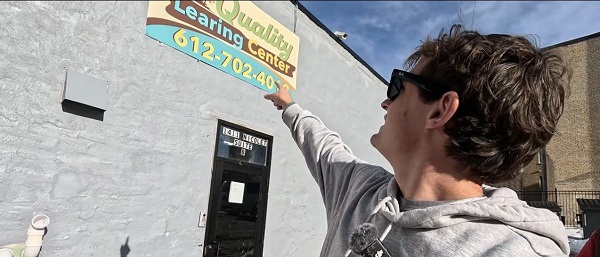
Vacant Somali Daycares In Viral Videos Are Also Linked To $300 Million ‘Feeding Our Future’ Fraud
-
 Haultain Research1 day ago
Trying to Defend Maduro’s Legitimacy
-
International2 days ago
U.S. Claims Western Hemispheric Domination, Denies Russia Security Interests On Its Own Border
-
 Daily Caller1 day ago
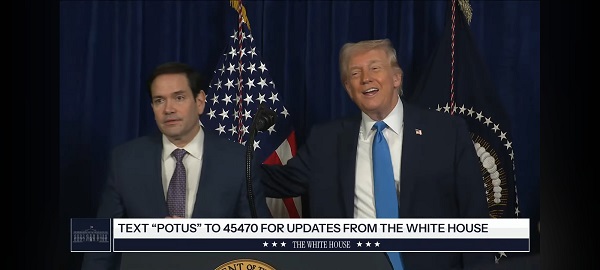
Trump Says US Going To Run Venezuela After Nabbing Maduro