
Censorship Industrial Complex
Winnipeg Universities Flunk The Free Speech Test


From the Frontier Centre for Public Policy
By Tom Flanagan
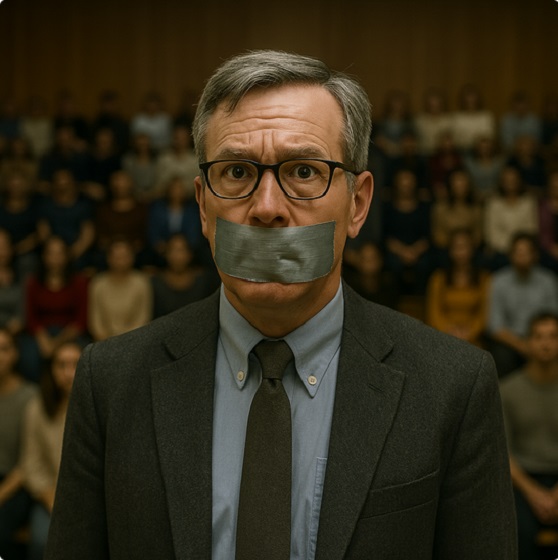
Frances Widdowson faced mob hostility for saying unmarked graves have yet to be proven
Dr. Frances Widdowson’s visit to Winnipeg on Sept. 25 and 26 should have been an opportunity for debate. Instead, the city’s universities endorsed a statement that undermines academic freedom.
Widdowson, a political scientist known for questioning official narratives about residential schools, came to meet students who wanted to ask about claims of “unmarked graves.” Those claims, which became national headlines in 2021 after ground-penetrating radar surveys at former school sites, remain unproven because no physical evidence of burials has been found.
For many Canadians, the claims of “unmarked graves” were a shocking revelation, given how widely the story was reported as a settled fact.
That context alone should have been enough to spark discussion. Instead, the University of Manitoba and the University of Winnipeg joined the Assembly of Manitoba Chiefs in issuing a statement that should embarrass both schools. At institutions dedicated to study and inquiry, the instinct should be to ask more questions, not to shut them down.
At first, the statement sounded reasonable. It said the universities did not “condone violence or threats to anyone’s safety.” But that did not stop Widdowson from being roughed up by a mob at the University of Winnipeg. It would be refreshing if the universities condemned mob violence with the same urgency they condemned a professor answering questions. Their silence sends its own message about which kind of behaviour is tolerated on campus.
The bigger problem is the statement’s claim that there is a single “truth” about residential schools, known to “survivors,” and that questioning it amounts to “denial.” In reality, 143 residential schools operated with federal support for more than a century. What happened varied widely from place to place and decade to decade.

That is a subject for historical research, grounded in evidence and debate, not pronouncements about capital-T “Truth” issued by communications offices. Canadians deserve to know that history is still being studied, not declared untouchable.
Worse still was the statement’s promise to “press the Government of Canada to enact legislation that makes residential school denialism a crime.” The Assembly of Manitoba Chiefs is free to say what it wants. But universities lending their names to a demand that historical inquiry be criminalized is beyond misguided; it is dangerous.
Criminalizing “denialism” would mean that even challenging details of the residential school record could be punishable by law. Canadians should think carefully before accepting laws that turn historical debate into a criminal offence.
The University of Chicago’s widely praised statement on academic freedom puts it well: “the University’s fundamental commitment is to the principle that debate or deliberation may not be suppressed because the ideas put forth are thought by some or even by most members of the University community to be offensive, unwise, immoral, or wrong-headed. It is for the individual members of the University community, not for the University as an institution, to make those judgments for themselves.” That principle should also guide Canadian universities. Academic freedom is not a luxury; it is the foundation of higher education.
Worst of all, these positions were not even issued in the names of presidents or academic leaders. They were issued under “media relations.” Imagine being a serious scholar or scientist at one of these universities and discovering that the media office had taken a political stance on your behalf.
I know how I would feel: undermined as a professional and silenced as a citizen.
Tom Flanagan is a professor emeritus of political science at the University of Calgary and a Fellow of the Royal Society of Canada. He is a senior fellow at the Frontier Centre for Public Policy and co-editor of the best-selling book Grave Error: How the Media Misled Us (and the Truth about Residential Schools).



Speech Crimes on Campus
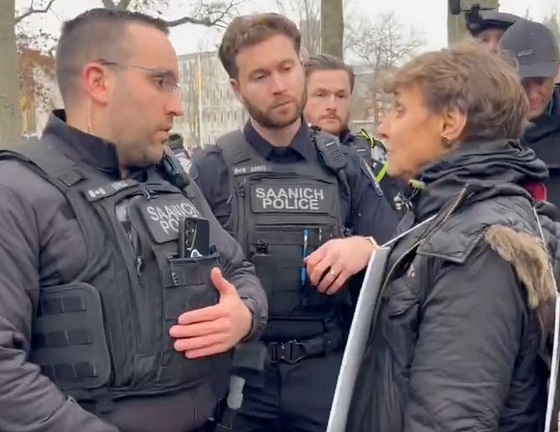
Frances Widdowson, a former colleague professor at Mount Royal University, was arrested this past week on the University of Victoria campus. Her offence? Walking, conversing, and asking questions on a university campus. She was not carrying a megaphone, making threats, organizing a protest, or waving foreign flags. She was planning quietly to discuss, with whoever wished it, a widespread claim that has curiously evaded forensic scrutiny in Canada for five years: that the remains of 215 Indigenous children lie beneath the grounds of the former Kamloops Residential School.
UVic Campus security did not treat her as a scholar. Nor even as a citizen. They treated her as a contaminating source.
The director of security, a woman more reminiscent of a diversity consultant than a peace officer, almost shaking, presented Widdowson with papers and told her to vacate “the property.” When Widdowson questioned the order, citing her Charter rights and the university’s public nature, she was told to leave. She refused, and she was arrested. No force, no defiance, only a refusal to concede that inquiry is trespass.
Widdowson is no provocateur in the modern sense. She is not a shock-jock in a cardigan. She is a once-tenured academic with a long record of challenging orthodoxies in Indigenous policy, identity politics, and campus culture.
In 2008, she co-authored Disrobing the Aboriginal Industry, a book that deconstructed the bureaucratic machinery that profits from preserving Indigenous dependency. The book was methodical, sourced, and daring enough to be labelled heretical in some quarters, but simultaneously boringly Marxist materialistic.
Her arguments have made people uncomfortable for a long time. When I assigned her book to my political science students in the Department of Policy Studies, where Frances also taught, I was summoned by the department head’s office. Someone in my class complained about the book, though I ignored what was said, and the technocratic colleague, as chair of the department, had prepared a host of arguments to chastise me for assigning the book.
Widdowson was good enough to be hired as a colleague of that department, but they were all afraid of her ideas, and perhaps her manner. I have often wondered if the folks in the Mount Royal hiring committee had bothered to read her book. Hey, they had a female Marxist applying for a teaching job. Knowing how they operate makes me think they made giant assumptions about Frances.
My bureaucratic colleague relented. I got the impression that the department head was putting on a show, going through motions he didn’t want to engage in, but which he had to perform for administrative purposes. He had to act on the complaint, though the complaint had no substance. He tried to tell me that the ideas in the book might offend some students, and then went on with the typical dribble about being caring, but agreed that protecting feelings was not the objective of an education, nor the job of a professor.
Haultain’s Substack is a reader-supported publication.
To receive new posts and support our work, please consider becoming a free or paid subscriber.
Try it out.
I went to my campus office after the conversation with the department head, typed up a memo detailing our discussion, and emailed it to him to ensure there was a record of my viewpoint. The email got no response. He never mentioned it again, and to this day, 15 or 16 years later, we still haven’t spoken about it.
Some academic arguments are meant to shake things up. That is the purpose of scholarship: to stir the sediment of consensus. To challenge conventional views. Marxist or no, scholars are supposed to push the envelope. Expand the boundaries of our understanding. But in today’s academic culture, discomfort is treated as injury and dissent as violence. So, Widdowson was treated as a threat merely by walking and speaking.
Was the university within its legal rights to remove her? Possibly. Universities can invoke property rights, ironically in Cowichan territory, and provincial legislation sometimes grants them a curious status: publicly funded yet selectively private. But the question is not merely legal. It is cultural and constitutional.
The University of Victoria is a publicly funded institution, governed under provincial authority and subsidized by taxpayers. Its grounds, though some claim they are on unceded Indigenous territory, are functionally administered by the Crown. The university is not a monastery. While it is not a temple to be kept free of doubt, it is not a temple to be torched either. It is a civic institution. An institution of higher learning. When it uses its resources to shield ideology and expel dissenters, it forfeits its academic character.
Consider the contrast. On this same campus, as on many others across the country, protests have called for the destruction of Israel and the extermination of Jews. Banners are waved, slogans chanted, and genocidal euphemisms like “from the river to the sea” are uttered without hesitation. These demonstrations, some of which praise Hamas or glorify martyrdom, proceed unimpeded. Security stands down. The administration issues boilerplate statements about inclusion and respect.
But when a female academic arrives to ask whether the number “215” refers to actual remains or mere radar anomalies, she is marched off by police. The imbalance is not accidental. It is a product of institutional capture.
Contemporary universities have adopted a new moral vocabulary. Terms like “safety,” “inclusion,” and “harm” are now treated as constitutional categories. But their terms are undefined, fluid, shaped by ideology rather than principle. “Safety” no longer refers to bodily security, but has become an emotional preference. “Inclusion” does not mean openness to different ideas and people, but a validation of specific identities. “Harm” is not an act, but a feeling.
Under this logic, Widdowson’s presence becomes a form of injury. Her questions are recast as wounds. And because feelings have been elevated to rights, her removal becomes a public good.
This ideology has structure. It is not random. It rests on a model of revolutionary politics in which dissent must not be part of the conversation. A differing opinion is an obstacle to be cleared. The new inclusivity has become a form of exclusion. It uses the language of welcome to police belief, and the rhetoric of tolerance to enforce conformity.
Charter rights were once the guardrails of public life. They are not supposed to vanish down the rabbit holes when one steps onto that university lawn. The right to free expression, to peaceful assembly, and to enter public space are not conditional on popularity. They are not subject to the feelings of a security director or the preferences of a DEI office.
Widdowson is testing this principle. She did not resist arrest, nor did she make a spectacle of herself. She acted as a citizen asserting a constitutional right. The courts may eventually rule on whether her rights were infringed. But the deeper issue is already visible.
If our public institutions can exile peaceful critics while accommodating radical political agitators who cheer for foreign terror movements, we are not in a neutral society. We are in an elite-managed consensus.
This consensus is enforced by policy. It does not need debate. The consensus managers already know what is true and treat challenges as threats. In this environment, universities are no longer places where young minds wrestle with the pangs of uncertainty. They are enforcing temples of doctrine. Their priests wear lanyards. Their rituals involve land acknowledgments. Their blasphemies include asking inconvenient questions about graves that no one has bothered to exhume.
Frances Widdowson may not be universally admired. No one is. Her conclusions are sharp. Her manner is uncompromising. But that is precisely why her treatment should alarm us. The test of a free society is not how it treats the agreeable, but how it tolerates the disagreeable, to paraphrase Bernard Crick.
When universities lose the confidence to host dissent, they cease to be universities in any meaningful sense. They become echo chambers with fancy libraries. They educate students in the same way a treadmill provides runners with travel: motion without movement.
We are at a moment of reckoning for universities and for Canadian liberal democracy. When citizens cannot openly raise questions without fear of removal, the Charter becomes ornamental. If the test of allowable speech is whether it affirms prevailing narrative and myths, then neither truth nor inquiry has a place among us.
Widdowson’s arrest is not an isolated event. It is a signal that tells us who is welcome in the public square and who is not. It tells us that the basic right to question popular opinions is now conditional. And it affirms for us what we already know: that the guardians of inclusion are, in practice, the agents of exclusion.
No democracy can afford such arbiters. Certainly not one that still calls itself liberal.
Haultain’s Substack is a reader-supported publication.
To receive new posts and support our work, please consider becoming a free or paid subscriber.
Try it out.

From the Frontier Centre for Public Policy
By Collin May
Targeting comedians is a sign of political insecurity
A democracy that fears its comedians is a democracy in trouble. That truth landed hard when Graham Linehan, the Irish writer behind Father Ted and The IT Crowd, stepped off a plane at Heathrow on Sept. 1, 2025, and was met by five London Metropolitan Police officers ready to arrest him for three posts on X.
Returning to the UK from Arizona, he was taken into custody on the charge of “suspicion of inciting violence”, an allegation levelled with increasing ease in an age wary of offence. His actual “crime” amounted to three posts, the most contentious being a joke about trans-identified men in exclusively female spaces and a suggestion that violated women respond with a swift blow to a very sensitive part of the male’s not-yet-physically-transitioned anatomy.
The reaction to Linehan’s arrest, from J.K. Rowling to a wide array of commentators, was unqualified condemnation. Many wondered whether free speech had become a museum piece in the UK. Asked about the incident, British Prime Minister Keir Starmer defended his country’s reputation for free expression but declined to address the arrest itself.
Canada has faced its own pressures on comedic expression. In 2022, comedian Mike Ward saw a 12-year legal saga end when the Supreme Court of Canada ruled five-to-four that the Quebec Human Rights Commission had no jurisdiction to hear a complaint about comments Ward made regarding a disabled Quebec boy. The ruling confirmed that human rights bodies cannot police artistic expression when no discrimination in services or employment has occurred. In that case, comic licence survived narrowly.
These cases reveal a broader trend. Governments and institutions increasingly frame comedy as a risk rather than a social pressure valve. In an environment fixated on avoiding perceived harm, humour becomes an easy and symbolic target. Linehan’s arrest underscores the fragility of free speech, especially in comedic form, in countries that claim to value democratic openness.
Comedy has long occupied an unusual place in public life. One of its earliest literary appearances is in Homer’s Iliad. A common soldier, Thersites, is ugly, sharp-tongued and irreverent. He speaks with a freedom others will not risk, mocking Agamemnon and voicing the frustrations of rank-and-file soldiers. He represents the instinct to puncture pretension. In this sense, comedy and philosophy share a willingness to speak uncomfortable truths that power prefers to avoid.
Aristotle, in his Poetics, noted that tragedy imitates noble actions and depicts people who are to be taken seriously. Comedy, by contrast, imitates those who appear inferior. Yet this lowly status is precisely what gives comedy its political usefulness. It allows performers to say what respectable voices cannot, revealing hypocrisies that formal discourse leaves untouched.
In the Iliad, Thersites does not escape punishment. Odysseus, striving to restore order, strikes him with Agamemnon’s staff, and the soldiers laugh as Thersites is silenced. The scene captures a familiar dynamic. Comedy can expose authority’s flaws, but authority often responds by asserting its dominance. The details shift across history, but the pattern endures.
Modern democracies are showing similar impatience. Comedy provides a way to question conventions without inviting formal conflict. When governments treat jokes as misconduct, they are not protecting the public from harm. They are signalling discomfort with scrutiny. Confident systems do not fear irreverence; insecure ones do.
The growing targeting of comedians matters because it reflects a shift toward institutions that view dissent, even in comedic form, as a liability. Such an approach narrows the space for open dialogue and misunderstands comedy’s role in democratic life. A society confident in itself tolerates mockery because it trusts its citizens to distinguish humour from harm.
In October, the British Crown Prosecution Service announced it would not pursue charges against Linehan. The London Metropolitan Police Service also said it would stop recording “non-crime hate incidents”, a controversial category used to document allegations of hateful behaviour even when no law has been broken. These reversals are welcome, but they do not erase the deeper unease that allowed the arrest to happen.
Comedy survives, but its environment is shifting. In an era where leaders are quick to adopt moral language while avoiding meaningful accountability, humour becomes more necessary, not less. It remains one of the few public tools capable of exposing the distance between political rhetoric and reality.
The danger is that in places where Agamemnon’s folly, leadership driven by pride and insecurity, takes root, those who speak uncomfortable truths may find themselves facing not symbolic correction but formal sanctions. A democracy that begins by targeting its jesters rarely stops there.
Collin May is a Senior Fellow with the Frontier Centre for Public Policy, a lawyer, and Adjunct Lecturer in Community Health Sciences at the University of Calgary, with degrees in law (Dalhousie University), a Masters in Theological Studies (Harvard) and a Diplome d’etudes approfondies (Ecole des hautes etudes, Paris).


Media bound to pay the price for selling their freedom to (selectively) offend

Sometimes An Ingrate Nation Pt. 2: The Great One Makes His Choice

Recent price declines don’t solve Toronto’s housing affordability crisis

Health Canada report finds euthanasia now accounts for over 5% of deaths nationwide
-
National2 days ago
Media bound to pay the price for selling their freedom to (selectively) offend
-
Bruce Dowbiggin2 days ago
Sometimes An Ingrate Nation Pt. 2: The Great One Makes His Choice
-
Business1 day ago
Recent price declines don’t solve Toronto’s housing affordability crisis
-
MAiD1 day ago
Health Canada report finds euthanasia now accounts for over 5% of deaths nationwide
-
 Daily Caller1 day ago
Tech Mogul Gives $6 Billion To 25 Million Kids To Boost Trump Investment Accounts
-
 Automotive21 hours ago
Power Struggle: Governments start quietly backing away from EV mandates
-
 Energy1 day ago
Unceded is uncertain
-
 Business22 hours ago
New Chevy ad celebrates marriage, raising children