
International
UN committee urges Canada to repeal euthanasia for non-terminally ill patients


From LifeSiteNews
The UN Committee on the Rights of Persons with Disabilities has warned against Canada’s euthanasia program, urging the repeal of legislation that allows the killing of non-terminally ill individuals.
Canada’s euthanasia regime has become too radical even for the anti-life United Nations, who recently called on the nation to repeal its law allowing non-terminally ill patients to qualify for death through the state’s “Medical Assistance in Dying” program.
In closing remarks published March 21, the UN Committee on the Rights of Persons with Disabilities argued that Canada should repeal its 2021 MAID expansion legislation that allowed those who are chronically ill but not terminally ill to be put to death by the state.
The committee said that Canada’s regime “establishes medically assisted dying for persons with disabilities based on negative, ableist perceptions of the quality and value of the life of persons with disabilities, including that ‘suffering’ is intrinsic to disability rather than the fact that inequality and discrimination cause and compound ‘suffering’ for persons with disabilities.”
It pointed out that “the concept of ‘choice’ creates a false dichotomy by setting up the premise that if persons with disabilities are suffering, it is valid for the State Party to enable their death.”
In Canada, euthanasia is divided into Track 1 and Track 2 requests. Track 1 requests deal with those whose death is allegedly imminent or foreseeable. Track 2 requests deal with those who are not terminally ill but have lost the will to live due to their having chronic health problems.
The UN committee took specific issue with Track 2 MAID, writing that it is “extremely concerned about the 2021 amendments to the State Party’s Criminal Code through Bill C-7 that expanded the eligibility criteria for obtaining Medical Assistance in Dying (MAID), known as ‘Track 2’ MAiD by removing the ‘foreseeable death’ criteria.”
The committee further recommended that Canada not euthanize its citizens for mental health reasons and abandon additional expansions of the program. Such an expansion is slated to come into effect in 2027.

It is worth noting that while Track 2 cases of MAID are indeed evil, so are Track 1 cases. The Catholic Church infallibly teaches that euthanasia is a grave evil tantamount to murder and must be rejected in all circumstances.
The UN committee’s criticism of Canada’s euthanasia regime comes after many have pointed out that the regime has spawned a culture of death and eugenics in the country, with the disabled and the poor often being those who request or who are even suggested to request death via Track 2 MAID.
In one case, a Nova Scotia grandmother revealed that doctors repeatedly offered her euthanasia while she underwent cancer treatment, making her feel as though she was “better off dead.”
“I felt like a problem that needed to be [gotten] rid of instead of a patient in need of treatment,” she said. “I don’t want to be asked if I want to die.”
Similarly, in May of last year, LifeSiteNews reported on a Canadian man who felt “completely traumatized” and violated that he was offered MAID “multiple times” instead of getting the proper care he needed while in the hospital.
The most recent reports show that MAID is the sixth highest cause of death in Canada. However, it was not listed as such in Statistics Canada’s top 10 leading causes of death from 2019 to 2022.
When asked why MIiD was left off the list, the agency said that it records the illnesses that led Canadians to choose to end their lives via euthanasia, not the actual cause of death, as the primary cause of death.
According to Health Canada, in 2022, 13,241 Canadians died by MAID lethal injections. This accounts for 4.1 percent of all deaths in the country for that year, a 31.2 percent increase from 2021.

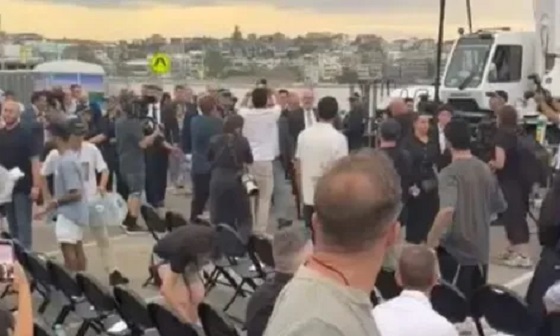

Australian Prime Minister Anthony Albanese faced a wave of public anger Sunday when he appeared at a memorial vigil at Bondi Beach honoring the victims of last week’s brutal terrorist attack on a Hanukkah celebration. The Labor leader was met with loud boos, cries of “shame,” and jeers of “you are not welcome” from furious attendees who blame his government for failing to confront a rise in antisemitism.
Albanese, accompanied by his wife and security detail, appeared visibly rattled as shouts of “blood on your hands” rang out while he walked through the crowd. The hostility didn’t let up during the vigil itself—when the prime minister’s name was mentioned by a speaker, fresh boos erupted.
“Shame on You”
“You are NOT welcome”
Bondi, Australia – Australian Prime Minister @AlboMP heckled by mourners of Bondi Chanukah Massacre@theage @theheraldsun @australian @abcnews @SBSNews @cnnbrk @Jerusalem_Post @nytimes @BBCBreaking @9NewsAUS @10NewsAU @7NewsMelbourne pic.twitter.com/C2xusWFDxQ
— Menachem Vorchheimer (@MenachemV) December 21, 2025
Critics are now intensifying their attacks on Albanese’s left-wing administration, accusing it of turning a blind eye to Jewish concerns in the wake of Hamas’ October 7 rampage in Israel. Among them is Israeli Prime Minister Benjamin Netanyahu, who last week publicly condemned Albanese in an interview with Sky News Australia, saying the terrorist violence in Bondi was “preventable” and that his government had ignored clear warnings about a brewing antisemitic threat.
Footage unearthed by Sky News has only added fuel to the fire. In the video, a younger Albanese is seen at a pro-Palestinian rally standing beside signs declaring “Stop the Israeli Slaughter: Free Palestine Now.” During that demonstration, the future prime minister took aim at Israel’s military, aligning himself with anti-Israel activists. Reports also resurfaced showing that Albanese traveled to meet with the late PLO leader Yasser Arafat in 1998—on a trip reportedly funded by the Palestinian Authority.
Despite the growing discontent, Jewish leaders urged the community not to lose hope. David Ossip, president of the New South Wales Jewish Board of Deputies, opened the Bondi vigil by acknowledging the deep pain felt across the country, calling last week’s massacre a turning point. “We have lost our innocence… our nation has been stained,” Ossip said. But he pointed to the message of Hanukkah as a source of strength: “A single act of courage, a single flame of hope, can give us direction and point the path forward.”
That message stood in stark contrast to the political reality facing Albanese, whose approval ratings have been shaken by his perceived indifference and growing ties to far-left factions that demonize Israel. The backlash now confronting him is not just about a vigil—it’s about years of silence, a pattern of political posturing, and a government many feel has abandoned the people it claims to represent.
Crime
The Uncomfortable Demographics of Islamist Bloodshed—and Why “Islamophobia” Deflection Increases the Threat
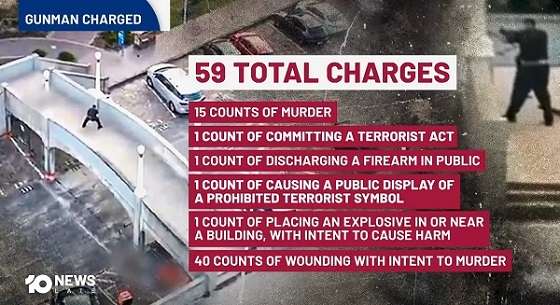

Addressing realities directly is the only path toward protecting communities, confronting extremism, and preventing further loss of life, Canadian national security expert argues.
After attacks by Islamic extremists, a familiar pattern follows. Debate erupts. Commentary and interviews flood the media. Op-eds, narratives, talking points, and competing interpretations proliferate in the immediate aftermath of bloodshed. The brief interval since the Bondi beach attack is no exception.
Many of these responses condemn the violence and call for solidarity between Muslims and non-Muslims, as well as for broader societal unity. Their core message is commendable, and I support it: extremist violence is horrific, societies must stand united, and communities most commonly targeted by Islamic extremists—Jews, Christians, non-Muslim minorities, and moderate Muslims—deserve to live in safety and be protected.
Yet many of these info-space engagements miss the mark or cater to a narrow audience of wonks. A recurring concern is that, at some point, many of these engagements suggest, infer, or outright insinuate that non-Muslims, or predominantly non-Muslim societies, are somehow expected or obligated to interpret these attacks through an Islamic or Muslim-impact lens. This framing is frequently reinforced by a familiar “not a true Muslim” narrative regarding the perpetrators, alongside warnings about the risks of Islamophobia.
These misaligned expectations collide with a number of uncomfortable but unavoidable truths. Extremist groups such as ISIS, Al-Qaeda, Hamas, Hezbollah, and decentralized attackers with no formal affiliations have repeatedly and explicitly justified their violence through interpretations of Islamic texts and Islamic history. While most Muslims reject these interpretations, it remains equally true that large, dynamic groups of Muslims worldwide do not—and that these groups are well prepared to, and regularly do, use violence to advance their version of Islam.
Islamic extremist movements do not, and did not, emerge in a vacuum. They draw from the broader Islamic context. This fact is observable, persistent, and cannot be wished or washed away, no matter how hard some may try or many may wish otherwise.
Given this reality, it follows that for most non-Muslims—many of whom do not have detailed knowledge of Islam, its internal theological debates, historical divisions, or political evolution—and for a considerable number of Muslims as well, Islamic extremist violence is perceived as connected to Islam as it manifests globally. This perception persists regardless of nuance, disclaimers, or internal distinctions within the faith and among its followers.
THE COST OF DENIAL AND DEFLECTION
Denying or deflecting from these observable connections prevents society from addressing the central issues following an Islamic extremist attack in a Western country: the fatalities and injuries, how the violence is perceived and experienced by surviving victims, how it is experienced and understood by the majority non-Muslim population, how it is interpreted by non-Muslim governments responsible for public safety, and how it is received by allied nations. Worse, refusing to confront these difficult truths—or branding legitimate concerns as Islamophobia—creates a vacuum, one readily filled by extremist voices and adversarial actors eager to poison and pollute the discussion.
Following such attacks, in addition to thinking first of the direct victims, I sympathize with my Muslim family, friends, colleagues, moderate Muslims worldwide, and Muslim victims of Islamic extremism, particularly given that anti-Muslim bigotry is a real problem they face. For Muslim victims of Islamic extremism, that bigotry constitutes a second blow they must endure. Personal sympathy, however, does not translate into an obligation to center Muslim communal concerns when they were not the targets of the attack. Nor does it impose a public obligation or override how societies can, do, or should process and respond to violence directed at them by Islamic extremists.
As it applies to the general public in Western nations, the principle is simple: there should be no expectation that non-Muslims consider Islam, inter-Islamic identity conflicts, internal theological disputes, or the broader impact on the global Muslim community, when responding to attacks carried out by Islamic extremists. That is, unless Muslims were the victims, in which case some consideration is appropriate.
Quite bluntly, non-Muslims are not required to do so and are entitled to reject and push back against any suggestion that they must or should. Pointedly, they are not Muslims, a fact far too many now seem to overlook.
The arguments presented here will be uncomfortable for many and will likely provoke polarizing discussion. Nonetheless, they articulate an important, human-centered position regarding how Islamic extremist attacks in Western nations are commonly interpreted and understood by non-Muslim majority populations.
Non-Muslims are free to give no consideration to Muslim interests at any time, particularly following an Islamic extremist attack against non-Muslims in a non-Muslim country. The sole exception is that governments retain an obligation to ensure the safety and protection of their Muslim citizens, who face real and heightened threats during these periods. This does not suggest that non-Muslims cannot consider Muslim community members; it simply affirms that they are under no obligation to do so.
The impulse for Muslims to distance moderate Muslims and Islam from extremist attacks—such as the targeting of Jews in Australia or foiled Christmas market plots in Poland and Germany—is understandable.
Muslims do so to protect their own interests, the interests of fellow Muslims, and the reputation of Islam itself. Yet this impulse frequently collapses into the “No True Scotsman” fallacy, pointing to peaceful Muslims as the baseline while asserting that the attackers were not “true Muslims.”
Such claims oversimplify the reality of Islam as it manifests globally and fail to address the legitimate political and social consequences that follow Islamic extremist attacks in predominantly non-Muslim Western societies. These deflections frequently produce unintended effects, such as strengthening anti-Muslim extremist sentiments and movements and undermining efforts to diminish them.
The central issue for public discourse after an Islamic extremist attack is not debating whether the perpetrators were “true” or “false” Muslims, nor assessing downstream impacts on Muslim communities—unless they were the targets.
It is a societal effort to understand why radical ideologies continue to emerge from varying—yet often overlapping—interpretations of Islam, how political struggles within the Muslim world contribute to these ideologies, and how non-Muslim-majority Western countries can realistically and effectively confront and mitigate threats related to Islamic extremism before the next attack occurs and more non-Muslim and Muslim lives are lost.
Addressing these realities directly is the only path toward protecting communities, confronting extremism, and preventing further loss of life.
Ian Bradbury, a global security specialist with over 25 years experience, transitioned from Defence and NatSec roles to found Terra Nova Strategic Management (2009) and 1NAEF (2014). A TEDx, UN, NATO, and Parliament speaker, he focuses on terrorism, hybrid warfare, conflict aid, stability operations, and geo-strategy.
The Bureau is a reader-supported publication.
To receive new posts and support my work, consider becoming a free or paid subscriber.


Death by a thousand clicks – government censorship of Canada’s internet

Chinese Billionaire Tried To Build US-Born Baby Empire As Overseas Elites Turn To American Surrogates
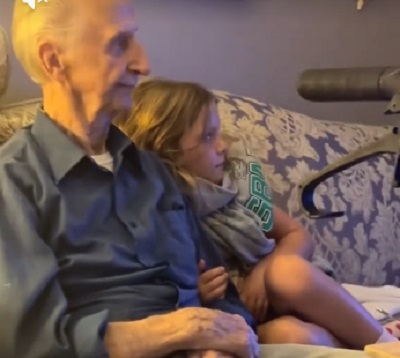
Viral TikTok video shows 7-year-old cuddling great-grandfather before he’s euthanized

Politicians should be honest about environmental pros and cons of electric vehicles
-
Censorship Industrial Complex2 days ago
Death by a thousand clicks – government censorship of Canada’s internet
-
Daily Caller2 days ago
Chinese Billionaire Tried To Build US-Born Baby Empire As Overseas Elites Turn To American Surrogates
-
 Digital ID2 days ago
Canada releases new digital ID app for personal documents despite privacy concerns
-
 Community2 days ago
Charitable giving on the decline in Canada
-
 Alberta19 hours ago
Alberta’s huge oil sands reserves dwarf U.S. shale
-
 Bruce Dowbiggin2 days ago
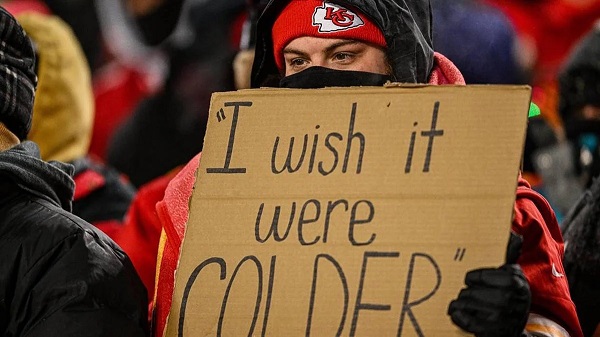
NFL Ice Bowls Turn Down The Thermostat on Climate Change Hysteria
-
 Energy15 hours ago
Canada’s sudden rediscovery of energy ambition has been greeted with a familiar charge: hypocrisy
-
 Alberta22 hours ago
Canada’s New Green Deal