Connect with us

J.D. Tuccille

Signal Chat Controversy Is an Endorsement of Encryption Software

Published

9 minute read

Logo

By

Popular encryption apps are probably secure if government officials rely on them.

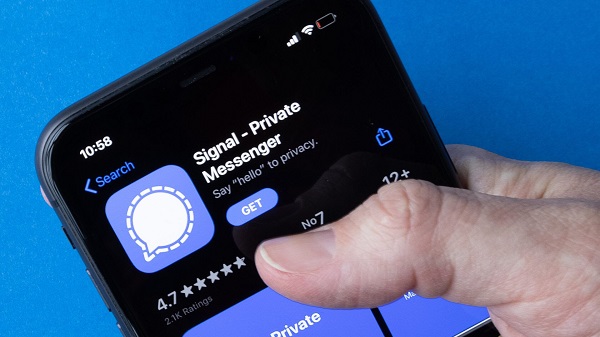
The drama this week over the Trump administration Signal group chat about a strike on Houthis in Yemen in which The Atlantic Editor in Chief Jeffrey Goldberg was inadvertently included has been popcorn-worthy, if you’re into that sort of thing. But beyond the resultant posturing between screw-up bureaucrats and pompous politicians, we learned something of value from the incident: Government officials use the popular encrypted messaging app because the intelligence community considers it secure. While the political class argues over the details, the rest of us should consider that an endorsement of this technology.

Is It Snoop-Resistant?

Encryption software is widely used by businesspeople, journalists, and regular folks who don’t want to share the details of their lives and their finances with the world. But there’s always been speculation about how secure apps like Signal and Telegram are from government snoops who have the resources of surveillance agencies behind them. Are we just amusing the geeks at the NSA when we say nasty things about them to our colleagues via ProtonMail or WhatsApp?

One indication that private encryption software really is resistant to even sophisticated eavesdropping is the degree to which governments hate it. U.S. federal officials have long pushed for backdoor access to encrypted communications. Apple is currently battling British officials over that government’s requirements that the company compromise the encryption offered to users so that law enforcement can paw through private data. The Signal Foundation—creator of the open-source software at the center of the current controversy—threatened to leave the U.K. in 2023 during an earlier anti-encryption frenzy while Germany-based Tutanota said it would refuse to comply.

But then we got news of a group chat on Signal including such officials as Vice President J.D. Vance, Director of National Intelligence Tulsi Gabbard, Defense Secretary Pete Hegseth, CIA Director John Ratcliffe, National Security Adviser Mike Waltz and, of course, Goldberg as a plus-one. If administration officials including several from the intelligence community are willing to hold a conversation on the app, that’s important added testimony to the security of the software.

Endorsed by the CIA

Even more evidence came courtesy of the March 25 Senate Intelligence Committee Hearing on Worldwide Threats, during which attendees were understandably pressed to explain the incident and the use of Signal.

“One of the first things that happened when I was confirmed as CIA director was Signal was loaded onto my computer at the CIA, as it is for most CIA officers,” Ratcliffe told Sen. Mark Warner (D–Va.). “One of the things that I was briefed on very early, Senator, was by the CIA records management folks about the use of Signal as a permissible work use. It is. That is a practice that preceded the current administration, to the Biden administration.”

Later, in response to Sen. Martin Heinrich (D–N.M.), Ratcliffe added: “Signal is a permissible use, being used by the CIA. It has been approved by the White House for senior officials and recommended by CISA [the Cybersecurity and Infrastructure Security Agency] for high level officials who would be targeted by foreign adversaries to use end-to-end encrypted apps whenever possible, like Signal.”

Whether all popular encryption software is equally secure isn’t clear. But Ratcliffe’s mention that officials are encouraged to use apps “like Signal” suggests it’s not the only one that’s reliable.

Nothing Will Save You From Your Own Carelessness

Of course, Jeffrey Goldberg got access to the hush-hush meeting anyway, but that wasn’t a failure of the software’s encryption. Goldberg was apparently included in the chat accidentally, by the invitation of National Security Advisor Mike Waltz, according to his own embarrassed admission.

“A staffer wasn’t responsible, and I take full responsibility,” Waltz told Fox News’s Laura Ingraham. “I built the group. My job is to make sure everything is coordinated.”

Waltz claimed he had Goldberg’s phone number in his contacts under the name of a government official who he intended to add to the meeting. Basically, the fault lies with Waltz’ mastery of contact lists and how to make sure you share confidential info only with those you want to have it.

“There’s no encryption software in the world that is going to prevent you from making a blunder if you directly send classified information to a journalist accidentally,” Northeastern University professor Ryan Ellis, who researches cybersecurity among other topics, commented on the matter.

Ellis and his Northeastern colleagues emphasize that Signal and government-developed communications platforms don’t differ regarding the security they offer for data but in “safeguards to prevent the sharing of information with individuals without the proper clearance.” Presumably, government software doesn’t draw on generic contact lists. That means there’s less opportunity for officials to unintentionally share secrets—or dick pics—with journalists and foreign operatives.

Popular With Everybody (Just Watch That Contact List)

That said, commercial encryption software is as popular among government officials as it is with the public. “The AP found accounts for state, local and federal officials in nearly every state, including many legislators and their staff, but also staff for governors, state attorneys general, education departments and school board members,” the news service reported last week in a piece that emphasized transparency concerns around the use of encryption by government officials. Like Ratcliffe, the A.P. noted that CISA “has recommended that ‘highly valued targets’—senior officials who handle sensitive information—use encryption apps for confidential communications.”

After news of the administration group-chat breach broke, Frederick Scholl, a professor of cybersecurity at Quinnipiac University, discussed several apps that people can use to keep their communications secure “including BriarSessionSignalSimpleXTelegramThreemaViber and Wire.”

That’s in addition to others including Meta’s WhatsApp. And encrypted RCS is replacing old-school SMS for basic text messages, though the transition isn’t complete. Even better, the new standard is supported by both Apple and Google so that encryption will work in conversations between Android and iPhone platforms.

Nothing is completely safe, of course. People developing security are in a constant race with those trying to compromise it. And, like Mike Waltz has discovered, nothing can save you from embarrassment if you invite the wrong person to the chat.

By the way, If you like this newsletter and want to support it, you can: 

Contribute to Reason. This newsletter (and everything Reason produces) relies on the support of readers like you. Contributions help us spread commentary like this to more people. 

Forward this newsletter. Know of someone who needs to read it? They can sign up for free at this link.

Todayville is a digital media and technology company. We profile unique stories and events in our community. Register and promote your community event for free.

Follow Author

International

Bondi Beach Shows Why Self-Defense Is a Vital Right

Published on

Reason.com - Free Minds and Free Markets

By  

Individuals and communities must take responsibility for their own safety.

At Bondi Beach in Sydney, Australia, a father-son team of ISIS-inspired terrorists murdered attendees at a celebration of the first day of Hanukkah. One of the attackers was disarmed by a heroic civilian who was shot in the process, while others lost their lives trying to help.

Contrasting Responses to Threats

Australia’s Prime Minister Anthony Albanese responded to the shooting with promises to further tighten gun laws in the already restrictive country—a measure more likely to disarm potential victims than to inconvenience those planning a homicidal attack. In the U.S., by contrast, Jews stepped up security by themselves and alongside police. At the request of my wife’s rabbi, I recruited a friend who served as a Force Recon Marine. We strapped on armor and pistols to patrol the crowd at the menorah lighting in Sedona, Arizona. Members of the congregation carried concealed weapons of their own.

Nothing happened, but we were there to deter problems and respond if necessary. There’s a big difference between doubling down on failed state policies and taking responsibility for your own safety.

According to Prime Minister Albanese’s office, after the attack, “leaders agreed that strong, decisive and focused action was needed on gun law reform as an immediate action” and promised “to strengthen gun laws” with further restrictions. Of course, that’s what Australia did in 1996 after the Port Arthur mass shooting. The government banned a variety of firearms, with compensation for their surrender. Compliance was limited and the effort spawned a significant black market for guns.

But Australia’s millions of guns didn’t kill 15 people at Bondi Beach. Two men with known Islamist ties who traveled last month to the Philippines for training at terrorist summer camp committed the murders. They chose guns as their tools, but they could just as easily have used explosives, vehicles, incendiaries, or something else to cause mayhem.

“The issue is not gun laws. It’s hatred of Jews,” Rabbi Daniel Greyber of Durham, North Carolina commented after the Bondi Beach attack.

A Government That Can’t Be Trusted

And there’s little reason Australian Jews should trust the Australian government.

At a December 14 press conference responding to the Bondi Beach terrorist attack, Prime Minister Albanese denounced the perpetrators and assured Jews “you have every right to be proud of who you are and what you believe.” But then a journalist pointed out inconvenient facts:

“In September, your government recognized a Palestinian State. Your ministers have attacked the Israeli Government. Senior ministers refused to visit the sites of the October 7 massacres. And you created a Special Islamophobia Envoy alongside an Antisemitism Envoy. Have you taken the threat of antisemitism seriously? And can you guarantee the safety of Jewish Australians?”

Albanese’s reply wasn’t impressive and didn’t matter anyway. Rabbi Eli Schlanger, among those murdered at Bondi Beach, wrote to Albanese in September as his government rewarded Hamas’ attack on Israel by recognizing a Palestinian state: “As a Rabbi in Sydney, I implore you not to betray the Jewish people.” Schlanger wasn’t alone in his concerns—other members of the community share them.

Whether or not the Australian government’s policy choices promote the country’s interests in the long run, it’s clear the country’s Jews can’t look to the state for protection. It’s not especially sympathetic to their situation to begin with. Nor does the Australian government much care for people defending themselves. As JB Solicitors, a Sydney law firm, advises: “In Australia, the law generally forbids an individual to carry or use weapons for self-defence.” Had Ahmed al Ahmed, the brave man who was wounded while disarming one of the Bondi Beach attackers, used a knife or a pipe to take down the terrorist, he might have faced charges himself.

And yet, Albanese’s government plans to further tighten laws that might be obeyed by the peaceful citizens of Australia but will have little effect on people who plan mass murder.

Deference to Authorities Is Foolish in the U.S., Too

Even citizens of the United States, where self-defense rights are better recognized than in most other countries, can fall afoul of demands that we rely on the authorities to protect us. As I write, police in Rhode Island are still looking for a shooter who killed two students and injured nine others.

Brown University policy infamously dictates that “the possession, use, or storage of Weapons or Firearms is strictly prohibited on all University Property and at University-sponsored events.” Instead of carrying the means of self-defense, students, faculty, staff, and visitors are expected to defer to the university’s extensive surveillance camera system and the help it will supposedly summon in case of emergency.

Not only did help not arrive on time on Saturday, but the cameras apparently didn’t capture a clear picture of the attacker. Brown University officials may (or may not) be better-intentioned than those of the Australian government, but their promises of protection are just as empty.

Defend Yourself and Your Community

Such promises are inevitably empty. The only people well positioned to respond to a homicidal attack are those there when it happens. If they have the tools and training to do something, they can deter some people with bad intentions and react appropriately to the crimes of others.

In 2019, Jack Wilson shot a gunman who opened fire in the West Freeway Church of Christ in Texas. At the time he commented, “I don’t feel like I killed a human. I killed an evil” when he stopped the attack.

Ideally, nobody would ever have to rise to such an occasion. But we should all consider Ahmed al Ahmed and Jack Wilson as inspirations if it’s necessary. Like Boris and Sofia Gurman, who were killed at Bondi Beach, they engaged attackers when the situation called for intervention.

Wilson’s big advantage is that he was armed and prepared for such a situation.

Jews in Australia and elsewhere should draw on that lesson; they are the only people they can count on to have their own backs. But so should everybody, even if they trust their local authorities. They will be the people on the scene if something happens—not police or politicians with dedicated security details.

And so, my friend and I will soon be at another menorah lighting, along with armed members of the congregation. I’m confident nothing will happen. But we’ll be ready if it does.

By the way, If you like this newsletter and want to support it, you can: 

Contribute to Reason. This newsletter (and everything Reason produces) relies on the support of readers like you. Contributions help us spread commentary like this to more people. 

Forward this newsletter. Know of someone who needs to read it? They can sign up for free at this link.

Continue Reading

J.D. Tuccille

Politicians Go Out of Their Way To Make Political Tensions Worse

Published on

Nobody wants to be governed by people who despise them.

J.D. Tuccille

At the Arizona memorial service for Charlie Kirk, who was assassinated two weeks ago, President Donald Trump acknowledged Kirk’s character, saying, “he did not hate his opponents; he wanted the best for them.” And then he added, “That’s where I disagreed with Charlie. I hate my opponents. And I don’t want the best for them.”

It was an honest moment if an awkward comment to make at a memorial service for a man murdered (to all appearances) by a political opponent. Like too much of the political class across the ideological spectrum, Trump is prone to despising those he disagrees with. It raises questions about why people should ever submit to the governance of those who hate them—and whether politicians realize that they’re a big part of what brought us to this unfortunate moment.

“It’s long past time for all Americans and the media to confront the fact that violence and murder are the tragic consequence of demonizing those with whom you disagree,” Trump had told the nation on the day of Kirk’s assassination at a kinder and, perhaps, more self-aware moment. “This kind of rhetoric is directly responsible for the terrorism that we’re seeing in our country today.”

In truth, that day Trump also put the blame for Kirk’s murder on “the radical left” and promised to “find each and every one of those who contributed to this atrocity and to other political violence,” hinting at something nastier than a criminal investigation. But for a moment, the president seemed to recognize that hating political opponents and wishing them ill might have unhappy consequences. For a moment.

Years of Politicians Despising Their Constituents

Trump isn’t alone in the political class when it comes to villainizing those who disagree or treating them as aliens in their own country and unworthy of respect. In a bizarre address to the nation in 2022, then-President Joe Biden lectured the country that “MAGA Republicans do not respect the Constitution” and “fan the flames of political violence.”

By that time, Biden had already accused his opponents of “semi-fascism.”

Kamala Harris, Biden’s unsuccessful successor as Democratic standard bearer in the 2024 presidential race, dropped the “semi” and went with “fascist” to describe her opponent.

That wasn’t the beginning of the dismissal of half the country by politicians courting the other half. Trump and his allies regularly accuse their opponents of anti-Americanism—”I really believe they hate our country,” Trump said in July. Trump’s 2016 Democratic opponent, Hillary Clinton, dismissed her foes as belonging in a “basket of deplorables” characterized as “racist, sexist, homophobic, xenophobic, Islamaphobic—you name it.” And, as a presidential candidate in 2008, Barack Obama sniffed at small-town dwellers as “bitter, they cling to guns or religion or antipathy to people who aren’t like them.”

The result is that no matter which of the big political parties wins national office, around half the people over whom the victors exercise power know they’re governed by people who hate them – and they return the favor.

“I think that is something to be fearful of, the normalization of what can devolve into dehumanizing, inciting rhetoric,” James Druckman, a professor of political science and co-author of Partisan Hostility and American Democracy: Explaining Political Divisions and When They Mattercommented last year. “It has consequences for what people think of other groups. It has consequences for what people think of democracy.”

America’s Political Tribes Loathe Each Other

In terms of what Americans think of each other, we already know partisan hostility is intensifying.

“About three-quarters (73 percent) of voters who identify themselves as Republican agree that ‘Democrats are generally bullies who want to impose their political beliefs on those who disagree,'” a poll by the University of Chicago’s Institute of Politics found in 2022. “An almost identical percentage of Democrats (74 percent) express that view of Republicans.”

In summarizing YouGov polls, Eli McKown-Dawson noted last year that “Democrats and Republicans are increasingly likely to dislike each other and to feel hostile toward members of the other political party.” Specifically, “85% of Democrats have an unfavorable opinion of the Republican Party, an increase of 16 percentage points since February 2023. The share of Republicans who view the Democratic Party unfavorably rose by a similar amount: 88% of Republicans feel unfavorably toward the Democratic Party, compared to 74% last year.”

Maybe it was inevitable that a political culture that has normalized “demonizing those with whom you disagree,” as Trump put it in the day of Kirk’s murder, would turn to force to settle disputes. That’s meant vandalism, arsonvehicle attacksattempted assassinations, and murders, such as those of Yaron Lischinsky, Sarah MilgrimBrian ThompsonMelissa Hortman, and Charlie Kirk.

There Has To Be a Better Way

This is insane, and it’s dangerous. Americans—people in general—should not be subject to the whims of those who despise them. We deserve better than to be governed by those who disdain what we believe and how we live. This is a big enough country that there’s no need to live at daggers-drawn alongside people whose values and preferences are so different they’d rather fight than find common ground.

For years, Americans have been moving to live in neighborhoods where they feel politically comfortable. “Our analysis suggests partisanship itself, intentional or not, plays a powerful role when Americans uproot and find a new home,” Ronda Kaysen and Ethan Singer wrote last year for The New York Times in a piece on Americans’ moving patterns. “In all but three states that voted for Mr. Biden in 2020, more Democrats have moved in than Republicans. The reverse is true for states Mr. Trump won.”

Rather than seethe at “deplorables” or those who “hate our country,” and instead of fighting with opponents for a brief opportunity to force policies on the unwilling before they do the same in return, perhaps our political class could turn their attention to those localities dominated by people willing to buy what they’re selling. They could leave the rest of us alone to live by different rules. That was, after all, how our federal system was designed to work—as separate experiments in laws and governance.

At Kirk’s memorial, Erika Kirk, Charlie’s widow, had a different message than that of Trump. “That young man,” she said of her husband’s assassin, “I forgive him.

That’s a kinder sentiment than I could summon in such circumstances. But nobody would be asked to extend such forgiveness if members of the political class could keep their loathing for people who disagree with them unvoiced and confine themselves to inflicting their views on willing followers.

By the way, If you like this newsletter and want to support it, you can: 

Contribute to Reason. This newsletter (and everything Reason produces) relies on the support of readers like you. Contributions help us spread commentary like this to more people. 

Forward this newsletter. Know of someone who needs to read it? They can sign up for free at this link.

Continue Reading

Trending

X