
Crime
Could the UK’s ‘Grooming Gangs’ operate in Canada?



From the Macdonald Laurier Institute
By Raheel Raza
Fear of being labelled a racist prevented UK officials from stopping the mass abuse of women by “grooming gangs.” Could the same happen in Canada?
If you asked Canadians what they know about the United Kingdom’s “grooming gangs” the majority would be clueless. So far, the issue has been an exclusively UK based scandal, with limited media coverage.
These so-called “grooming gangs” sexually exploited hundreds of vulnerable young women and girls across the UK for many years before their activities came to public attention in the early 2010s. In essence, because the perpetrators are largely groups of British-Pakistani men, the media, law enforcement, and officials failed in their duty to address or publicize the scandal for fear of being accused of racism. This is a truly tragic result of identity politics on a massive scale.
The victims were mostly female and white (although some Asian girls were also targeted). Many victims were underage, some were homeless or living in state children’s homes. Local social services officials knew many of the girls but stood by as the gangs exploited them – sometimes for years.
Media reports suggested that local law enforcement also knew some of the perpetrators but waited unreasonably long before making arrests and laying charges. Scores of men in different towns have since been arrested, tried and imprisoned for their actions. But hundreds roam free, even today.
Among the worst cases were gangs operating in the northern towns of Rotherham and Rochdale, but many others have been exposed around the country over the last decade-and-a-half: Oldham, Oxford, Telford, Peterborough, and others. Ministers and members of the opposition have acknowledged that similar gangs may still be operating.
The story came to international attention recently, due to intervention by Elon Musk, who tweeted in clear terms about the UK’s problems with racial integration. Prime Minister Keir Starmer is now grappling with the re-emergence of this long-running scandal.
GB News UK produced one of the most comprehensive and detailed exposes through an investigative documentary featuring exclusive interviews with survivors, whistleblowers, and activists. The documentary explains why the police and authorities have allowed such a significant cover up to persist for so long. There is evidence of a massive cover up by people who had infiltrated into social services, councils and law enforcement.
UK Safeguarding Minister Jess Phillips refused a request from Oldham City Council to launch a national inquiry into the issue and instead told the council it should mount a local one itself. But thankfully, UK Home Secretary Yvette Cooper has announced plans for a nationwide review and five government-backed local inquiries.
British academic Alexis Jay, a professor of social work and a child protection expert, concluded a multi-year public inquiry detailing how an organized gang abused girls as young as 11, trafficking them across the country and even picking them up from children’s care homes in taxis without any effort to hide what they were doing.
Jay found that “1,400 children had been sexually exploited, raped by multiple perpetrators, trafficked across other towns, abducted, beaten, and threatened with guns. Children had even been doused in petrol. Girls as young as 11 had been raped. Those reports a decade ago identified a failure to confront Pakistani heritage gangs and a ‘widespread perception’ that they should ‘downplay the ethnic dimensions’ for fear of being seen to be racist.”
Some UK Labour politicians previously said that fear of being labelled racist has created a taboo around saying there is a specific ethnicity of men, of Pakistani heritage, participating in sexual exploitation.
Among them is Sarah Champion, who represents of the areas where grooming gangs operated. She has campaigned consistently on the issue, and recently called for another national inquiry into grooming gangs, putting more pressure on Prime Minister Starmer.
Champion wrote an op-ed for a tabloid newspaper in which she stated: “Britain has a problem with British Pakistani men raping and exploiting white girls. There. I said it. Does that make me a racist? Or am I just prepared to call out this horrifying problem for what it is?”
Champion’s statement caused such an outrage – the Labour Party responded by shunning her – that she had to retract it from her article.
In 2023, then-Home Secretary Suella Braverman made several comments about the ethnicity of abusers in high-profile gangs. She said, “the perpetrators are groups of men, almost all British Pakistani.” She told the BBC the gangs “overwhelmingly” consisted of British Pakistani males.
Reports first surfaced about the groomer gangs more than a decade earlier. In September 2012, journalist Andrew Norfolk, chief investigative reporter for The Times, published an article based on a police report about the extent of the issue. It revealed that networks of mainly British Pakistani men were abusing children in Rotherham “on an unprecedented scale.”
Law authorities failed to prosecute suspects despite police and child protection agencies in Rotherham having had knowledge of these crimes for decades, the newspaper said.
To show that they were engaged, governments and agencies commissioned various reports, but no action was taken. In these reports, the criminals were referred to as “men of Asian heritage”!
Meanwhile Naz Shah, a Labour MP, retweeted, “Those abused girls in Rotherham and elsewhere just need to shut their mouths. For the good of diversity.” She later deleted her retweet and unliked the post.

In 2018, I was invited to the UK to give testimony in the House of Lords about the Sharia debate in Ontario. At the time, there was a rising number of Sharia Councils operating in the UK that were depriving many Muslim women of their rights.
During that visit I met a white woman named Toni Bugle. Bugle is founder of MARIAS – Mothers Against Radical Islam and Sharia. Bugle had been a victim of gang rape and abuse as a child (not by grooming gangs) so she paid close attention to the stories of victims of grooming gangs.
Bugle asked me if I would attend a conference that she set up at the UK Parliament where some of the grooming gang victims would tell their stories. She told me she needed a Muslim woman’s voice because when she tried to expose the stories, she was called a racist, bigot, and Islamophobe.
At Bugle’s conference (which had no media presence) I met some of the rape victims, including Caitlin, Samantha, and Torron. They were scared and insecure and spoke in soft voices, looking around constantly. Some of them showed visible signs of trauma and had bruises on their arms and faces. But they were brave enough to share their stories, which were absolutely horrendous. The shock gave me sleepless nights.
Bugle had also organized a rally outside the British Parliament with the victims and I was happy to join her to amplify the victims’ concerns about the authorities’ failure to stop the abuse.
Bugle told me “I realized that there was a massive issue with Muslim men of predominantly Pakistani and Bangladeshi ethnicity targeting predominantly young white working-class girls.” Bugle decided to reach out to the victims to help them and started to hear their stories. She continues to do that to this day:
“I always have my phone near me,” Bugle says, “These young girls can and do call me at anytime… I make myself available. If I had to give a number for how many girls I’ve helped, I would take a guess that via just the phone maybe fifty or sixty and more direct involvement approximately ten or fifteen young women. I have also helped many Muslim women who were facing the trauma of forced marriage and sharia councils – two of which I introduced at the conference.”
Hearing this, I was shocked as to why Muslim organizations in UK (especially women’s groups) did not condemn what was happening to their non-Muslim sisters or take any action? Imagine if this was the reverse and happened to Muslim women? All hell would have broken loose!
Bugle said that she had also been contacted by young girls for support. The first girl who reached out, Caitlin Spencer, eventually wrote a book titled, Please, let me go: the horrific true story of a girl’s life in the hands of sex traffickers.
From the age of 14, traffickers controlled Caitlin, raped her, and repeatedly sold and passed her on to new gangs across the UK. Her abusers were blatant in their attacks, often collecting her from school or home, to be taken to flats they owned, family homes, or hotels booked for the day.
Please, Let Me Go is Caitlin’s shocking story of abuse and survival. She writes, “I was trapped. I’d been raped so many times, abused by hundreds, if not thousands. They could have left every door open, and it would have made no difference. And I always came back – they always brought me back.”
Bugle says, “given that Caitlin still sees her abusers driving their taxis with impunity and that other victims similarly see perpetrators living freely and intimidating them, what will our government do to bring those perpetrators to justice?”
Bugle continues, “I have met girls who have been raped, defecated on, urinated on, had children from their abusers and often those children were taken away from these girls by social services. You can imagine the damage that did was devastating for the whole family.”
Another girl Bugle helped is Sarah, a 15 year old white girl. A journalist for the Daily Mail did a story on Sarah: a grooming gang coerced her to marry a gang member who effectively forced her into sex slavery after abducting her in a Tesco parking lot in an English suburb. Sarah’s captivity lasted for 12 years.
I asked Bugle why they didn’t go to court or the police. She says “sadly they went to the police, who pretty much promised they would deal with what happened – but also made it very clear it would be ‘their word against the men’… The girls were made to feel they were not believed and it led to the girls just giving up… every time they went to the police and nothing was done the girls would often find themselves beaten by the very men they reported.”
Bugle says she saw this same trend, of girls and their families not believed by local authorities, occur over and over. The total failure of social services, law enforcement, teachers, and council officers exacerbated the trauma faced by these victims.
In the past eight years, I’ve observed the changing face of Canada, and the picture is eerily similar to the changes I’ve observed in UK. Every time I returned from a trip to the UK, I worried that with a rise in wokeism, political correctness, and DEI policies, a similar situation of abuse could arise in Canada, and that Canadian leaders would likewise remain silent.
The rise in radical Islamist extremism across Europe and the UK is also happening in Canada, while our politicians and institutions refuse to acknowledge this reality. Radical Islamist extremism is directly connected to the behaviour and attitudes of Islamists. They justify their weaponizing of sexual slavery, disrespect, and dishonouring of non-Muslim women as being in sync with their warped interpretation of the faith. The sexual abuse unleashed by Hamas terrorists against innocent Israeli women is a further indication of the ideological mindset of Islamist radicals. For example, ISIS raped and abused Yazidi women – the irony being that some of the Yazidi women given asylum in the West have seen their captors on the streets.
We now see protestors in Canada rallying in favour of a radical Islamist terror organizations with impunity, a weak judicial system where criminals roam the streets on bail days after committing a crime, an influx of mass immigration with a lack of integration, assimilation, and respect for Canadian values, and a hyper focus on identity politics across our political institutions. A worrying thought: All the ingredients that allowed the “grooming gangs” to operate in the UK are now present in Canada. Canada should learn from the UK’s experience before it is too late.
Raheel Raza is President of The Council for Muslims Against Antisemitism and a senior fellow at the Macdonald-Laurier Institute.

Crime
The Uncomfortable Demographics of Islamist Bloodshed—and Why “Islamophobia” Deflection Increases the Threat
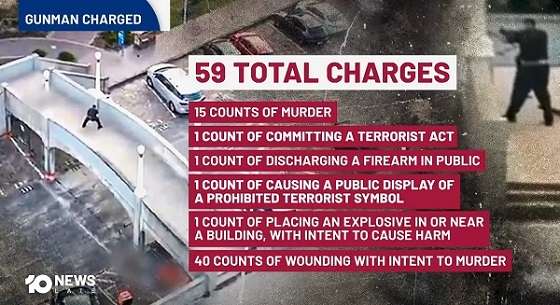

Addressing realities directly is the only path toward protecting communities, confronting extremism, and preventing further loss of life, Canadian national security expert argues.
After attacks by Islamic extremists, a familiar pattern follows. Debate erupts. Commentary and interviews flood the media. Op-eds, narratives, talking points, and competing interpretations proliferate in the immediate aftermath of bloodshed. The brief interval since the Bondi beach attack is no exception.
Many of these responses condemn the violence and call for solidarity between Muslims and non-Muslims, as well as for broader societal unity. Their core message is commendable, and I support it: extremist violence is horrific, societies must stand united, and communities most commonly targeted by Islamic extremists—Jews, Christians, non-Muslim minorities, and moderate Muslims—deserve to live in safety and be protected.
Yet many of these info-space engagements miss the mark or cater to a narrow audience of wonks. A recurring concern is that, at some point, many of these engagements suggest, infer, or outright insinuate that non-Muslims, or predominantly non-Muslim societies, are somehow expected or obligated to interpret these attacks through an Islamic or Muslim-impact lens. This framing is frequently reinforced by a familiar “not a true Muslim” narrative regarding the perpetrators, alongside warnings about the risks of Islamophobia.
These misaligned expectations collide with a number of uncomfortable but unavoidable truths. Extremist groups such as ISIS, Al-Qaeda, Hamas, Hezbollah, and decentralized attackers with no formal affiliations have repeatedly and explicitly justified their violence through interpretations of Islamic texts and Islamic history. While most Muslims reject these interpretations, it remains equally true that large, dynamic groups of Muslims worldwide do not—and that these groups are well prepared to, and regularly do, use violence to advance their version of Islam.
Islamic extremist movements do not, and did not, emerge in a vacuum. They draw from the broader Islamic context. This fact is observable, persistent, and cannot be wished or washed away, no matter how hard some may try or many may wish otherwise.
Given this reality, it follows that for most non-Muslims—many of whom do not have detailed knowledge of Islam, its internal theological debates, historical divisions, or political evolution—and for a considerable number of Muslims as well, Islamic extremist violence is perceived as connected to Islam as it manifests globally. This perception persists regardless of nuance, disclaimers, or internal distinctions within the faith and among its followers.
THE COST OF DENIAL AND DEFLECTION
Denying or deflecting from these observable connections prevents society from addressing the central issues following an Islamic extremist attack in a Western country: the fatalities and injuries, how the violence is perceived and experienced by surviving victims, how it is experienced and understood by the majority non-Muslim population, how it is interpreted by non-Muslim governments responsible for public safety, and how it is received by allied nations. Worse, refusing to confront these difficult truths—or branding legitimate concerns as Islamophobia—creates a vacuum, one readily filled by extremist voices and adversarial actors eager to poison and pollute the discussion.
Following such attacks, in addition to thinking first of the direct victims, I sympathize with my Muslim family, friends, colleagues, moderate Muslims worldwide, and Muslim victims of Islamic extremism, particularly given that anti-Muslim bigotry is a real problem they face. For Muslim victims of Islamic extremism, that bigotry constitutes a second blow they must endure. Personal sympathy, however, does not translate into an obligation to center Muslim communal concerns when they were not the targets of the attack. Nor does it impose a public obligation or override how societies can, do, or should process and respond to violence directed at them by Islamic extremists.
As it applies to the general public in Western nations, the principle is simple: there should be no expectation that non-Muslims consider Islam, inter-Islamic identity conflicts, internal theological disputes, or the broader impact on the global Muslim community, when responding to attacks carried out by Islamic extremists. That is, unless Muslims were the victims, in which case some consideration is appropriate.
Quite bluntly, non-Muslims are not required to do so and are entitled to reject and push back against any suggestion that they must or should. Pointedly, they are not Muslims, a fact far too many now seem to overlook.
The arguments presented here will be uncomfortable for many and will likely provoke polarizing discussion. Nonetheless, they articulate an important, human-centered position regarding how Islamic extremist attacks in Western nations are commonly interpreted and understood by non-Muslim majority populations.
Non-Muslims are free to give no consideration to Muslim interests at any time, particularly following an Islamic extremist attack against non-Muslims in a non-Muslim country. The sole exception is that governments retain an obligation to ensure the safety and protection of their Muslim citizens, who face real and heightened threats during these periods. This does not suggest that non-Muslims cannot consider Muslim community members; it simply affirms that they are under no obligation to do so.
The impulse for Muslims to distance moderate Muslims and Islam from extremist attacks—such as the targeting of Jews in Australia or foiled Christmas market plots in Poland and Germany—is understandable.
Muslims do so to protect their own interests, the interests of fellow Muslims, and the reputation of Islam itself. Yet this impulse frequently collapses into the “No True Scotsman” fallacy, pointing to peaceful Muslims as the baseline while asserting that the attackers were not “true Muslims.”
Such claims oversimplify the reality of Islam as it manifests globally and fail to address the legitimate political and social consequences that follow Islamic extremist attacks in predominantly non-Muslim Western societies. These deflections frequently produce unintended effects, such as strengthening anti-Muslim extremist sentiments and movements and undermining efforts to diminish them.
The central issue for public discourse after an Islamic extremist attack is not debating whether the perpetrators were “true” or “false” Muslims, nor assessing downstream impacts on Muslim communities—unless they were the targets.
It is a societal effort to understand why radical ideologies continue to emerge from varying—yet often overlapping—interpretations of Islam, how political struggles within the Muslim world contribute to these ideologies, and how non-Muslim-majority Western countries can realistically and effectively confront and mitigate threats related to Islamic extremism before the next attack occurs and more non-Muslim and Muslim lives are lost.
Addressing these realities directly is the only path toward protecting communities, confronting extremism, and preventing further loss of life.
Ian Bradbury, a global security specialist with over 25 years experience, transitioned from Defence and NatSec roles to found Terra Nova Strategic Management (2009) and 1NAEF (2014). A TEDx, UN, NATO, and Parliament speaker, he focuses on terrorism, hybrid warfare, conflict aid, stability operations, and geo-strategy.
The Bureau is a reader-supported publication.
To receive new posts and support my work, consider becoming a free or paid subscriber.
From The Center Square
By
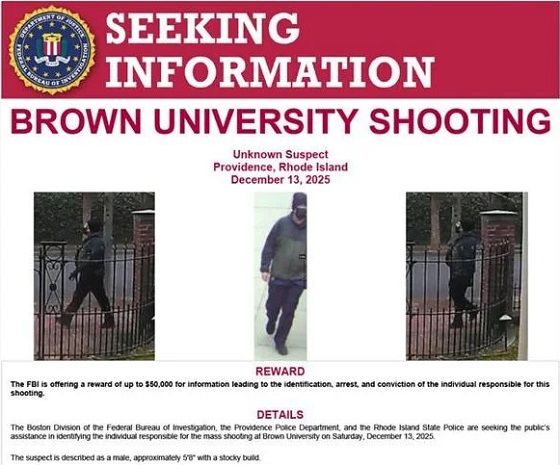
Rhode Island officials said the suspected gunman in the Brown University mass shooting has been found dead of an apparent self-inflicted gunshot wound, more than 50 miles away in a storage facility in southern New Hampshire.
The shooter was identified as Claudio Manuel Neves-Valente, a 48-year-old Brown student and Portuguese national. Neves-Valente was found dead with a satchel containing two firearms inside in the storage facility, authorities said.
“He took his own life tonight,” Providence police chief Oscar Perez said at a press conference, noting that local, state and federal law officials spent days poring over video evidence, license plate data and hundreds of investigative tips in pursuit of the suspect.
Perez credited cooperation between federal state and local law enforcement officials, as well as the Providence community, which he said provided the video evidence needed to help authorities crack the case.
“The community stepped up,” he said. “It was all about groundwork, public assistance, interviews with individuals, and good old fashioned policing.”
Rhode Island Attorney General Peter Neronha said the “person of interest” identified by private videos contacted authorities on Wednesday and provided information that led to his whereabouts.
“He blew the case right open, blew it open,” Neronha said. “That person led us to the car, which led us to the name, which led us to the photograph of that individual.”
“And that’s how these cases sometimes go,” he said. “You can feel like you’re not making a lot of progress. You can feel like you’re chasing leaves and they don’t work out. But the team keeps going.”
The discovery of the suspect’s body caps an intense six-day manhunt spanning several New England states, which put communities from Providence to southern New Hampshire on edge.
“We got him,” FBI special agent in charge for Boston Ted Docks said at Thursday night’s briefing. “Even though the suspect was found dead tonight our work is not done. There are many questions that need to be answered.”
He said the FBI deployed around 500 agents to assist local authorities in the investigation, in addition to offering a $50,000 reward. He says that officials are still looking into the suspect’s motive.
Two students were killed and nine others were injured in the Brown University shooting Saturday, which happened when an undetected gunman entered the Barus and Holley building on campus, where students were taking exams before the holiday break. Providence authorities briefly detained a person in the shooting earlier in the week, but then released them.
Investigators said they are also examining the possibility that the Brown case is connected to the killing of a Massachusetts Institute of Technology professor in his hometown.
An unidentified gunman shot MIT professor Nuno Loureiro multiple times inside his home in Brookline, about 50 miles north of Providence, according to authorities. He died at a local hospital on Tuesday.
Leah Foley, U.S. attorney for Massachusetts, was expected to hold a news briefing late Thursday night to discuss the connection with the MIT shooting.


Death by a thousand clicks – government censorship of Canada’s internet

Chinese Billionaire Tried To Build US-Born Baby Empire As Overseas Elites Turn To American Surrogates
Viral TikTok video shows 7-year-old cuddling great-grandfather before he’s euthanized

Politicians should be honest about environmental pros and cons of electric vehicles
-
 Alberta2 days ago
Alberta’s huge oil sands reserves dwarf U.S. shale
-
 Energy2 days ago
Canada’s sudden rediscovery of energy ambition has been greeted with a familiar charge: hypocrisy
-
 armed forces2 days ago
Ottawa’s Newly Released Defence Plan Crosses a Dangerous Line
-
 Alberta2 days ago
Canada’s New Green Deal
-
 Business2 days ago
COP30 finally admits what resource workers already knew: prosperity and lower emissions must go hand in hand
-
 Business1 day ago
Ottawa Pretends To Pivot But Keeps Spending Like Trudeau
-
 Indigenous2 days ago
Residential school burials controversy continues to fuel wave of church arsons, new data suggests
-
 Automotive1 day ago
Ford’s EV Fiasco Fallout Hits Hard