
Frontier Centre for Public Policy
The Smallwood solution


From the Frontier Centre for Public Policy
All Canadians deserve decent housing, and indigenous people have exactly the same legal right to house ownership, or home rental, as any other Canadian. That legal right is zero.
$875,000 for every indigenous man, woman and child living in a rural First Nations community. That is approximately what Canadian taxpayers will have to pay if a report commissioned by the Assembly of First Nations (AFN) is accepted. According to the report 349 billion dollars is needed to provide the housing and infrastructure required for the approximately 400,000 status Indians still living in Canada’s 635 or so First Nations communities. ($349,000,000,000 divided by 400,000 = ~$875,000).
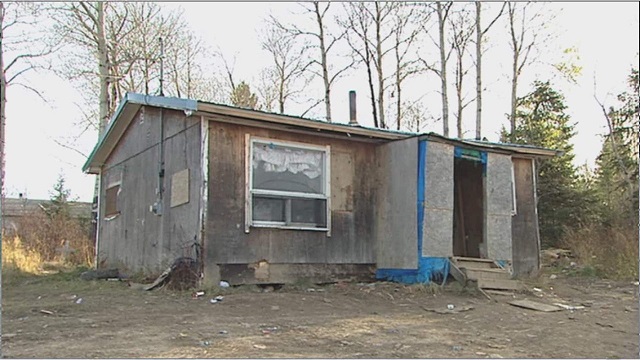
St Theresa Point First Nation is typical of many of such communities. It is a remote First Nation community in northern Manitoba. CBC recently did a story about it. One person interviewed was Christina Wood, who lives in a deteriorating house with 23 family members. Most other people in the community live in similar squalor. Nobody in the community has purchased their own house, and all rely on the federal government to provide housing for them. Few people in the community have paid employment. Those that do have salaries that come in one way or another from the taxpayer.
But St. Theresa Point is a growing community in the sense that birth rates are high, and few people have the skills or motivation needed to be successfully employed in Winnipeg, or other job centres. Social pathologies, such as alcohol and other drug addictions are rampant in the community. Suicide rates are high.
St. Theresa Point is one of hundreds of such indigenous communities in Canada. This is not to say that all such First Nations communities are poor. In fact, some are wealthy. Those lucky enough to be located in or near Vancouver, for example, located next to oil and gas, or on a diamond mine do very well. Some, like Chief Clarence Louis’ Osoyoos community have successfully taken advantage of geography and opportunity and created successful places where employed residents live rich lives.
Unfortunately, most are not like that. They look a lot more like St. Theresa Point. And the AFN now says that 350 billion dollars are needed to keep those communities going.
Meanwhile, all of Canada is in the grip of a serious housing crisis. There are many causes for this, including the massive increase in new immigrants, foreign students and asylum seekers, all of whom have to live somewhere. There are various proposals being considered to respond to this problem. None of those plans come anywhere near to suggesting that $875,000 of public funds should be spent on every Canadian man, woman or child who needs housing. The public treasury would not sustain such an assault.
All Canadians deserve decent housing, and indigenous people have exactly the same legal right to house ownership, or home rental, as any other Canadian. That legal right is zero. Our constitution does not give Canadians – indigenous or non-indigenous- any legal right to publicly funded home ownership, or any right to publicly funded rental property. And no treaty even mentions housing. In all cases it is assumed that Canadians – indigenous and non-indigenous – will provide for themselves. This is the brutal reality. We are on our own when it comes to housing. There are government programs that assist low income people to buy or rent homes, but they are quite limited, and depend on a person qualifying in various ways.
But indigenous people do not have any preferred right to housing. The chiefs and treaty commissioners who signed the treaties expected indigenous people to provide for their own housing in exactly the same way that all other Canadians were expected to provide for their own housing. In fact, the treaty makers, chiefs and treaty commissioners – assumed that indigenous people would support themselves just like every other Canadian. There was no such thing as welfare then.
Our leaders today face difficult decisions about how to spend limited public funds to try and help struggling Canadians find adequate housing in which to raise their families, and get to and from their places of employment. Indigenous Canadians deserve exactly as much help in this regard as everyone else. Finding sensible, affordable ways to do this is vitally important if Canada is to thrive.

And one of hundreds of these difficult and expensive housing decisions our leaders must deal with now is how to respond to this new demand for 350 billion dollars – a demand that would result in indigenous Canadians receiving hundreds of times more housing help than other Canadians.
Our leaders know that authorising massive spending like that in uneconomic communities is completely unfair to other Canadians – for one thing doing so means that there would be no money left for urban housing assistance. They also know that pouring massive amounts of money into uneconomic, dysfunctional communities like St. Theresa’s Point – the “unguarded concentration camps” Farley Mowat described long ago- only keeps generations of young indigenous people locked in hopeless dependency.
In short, they know that the 350 billion dollar demand makes no sense.
Our leaders know that, but they won’t say that. In fact it is not hard to predict how politicians will respond to the 350 billion dollar demand. None of their responses will look even remotely like what I have written above. Instead, they will say soothing things, while pushing the enormous problem down the road. Eventually, when forced by circumstances to actually make spending decisions they will provide stopgap “bandage” funding. And perhaps come up with pretend “loan guarantee” schemes – loans they know will never be repaid. Massive loan defaults in the future will be an enormous problem for our children and grandchildren. But today’s leaders will be gone by then.
So, in a decade or so communities, like St. Theresa Point, will still be there. Any new housing that has been built will already be deteriorating and inadequate. The communities will remain dependent. The young people will be trapped in hopeless dependency.
And the chiefs will be making new money demands.
At some point this country will have to confront the reality that most of Canada’s First Nations reserves, particularly the remote ones, are not sustainable. Better plans to educate and provide job skills to the younger generations in those communities, and assist them to move to job centres, will have to be found. Continuing to pretend that this massive problem will sort itself out by passing UNDRIP legislation, or pretending that those depressed communities are “nations” is only delaying the inevitable.
When Joey Smallwood told the Newfoundland fishermen, who had lived in their outports for generations, that they must move for their own good, there was much pain. But the communities could no longer support themselves, and it had to be done. Entire communities moved. It worked out.
The northern First Nations communities are no different. The ancestors of the residents of those communities supported themselves by fishing and hunting. It was an honourable life. But it is gone. The young people there now will have to move, build new lives, and become self-supporting like their ancestors.
Brian Giesbrecht, retired judge, is a Senior Fellow at the Frontier Centre for Public Policy


From the Frontier Centre for Public Policy
By Conrad Eder
Conrad Eder supports universal health care, but not Canada’s broken version. Despite massive spending, Canadians face brutal wait times. He argues it’s time to allow private options, as other countries do, without abandoning universality.
It’s not about money. It’s about the rules shaping how Canada’s health care system works
Canada’s health care system isn’t failing because it lacks funding or public support. It’s failing because governments have tied it to restrictive rules that block private medical options used in other developed countries to deliver timely care.
Canada spends close to $400 billion a year on health care, placing it among the highest-spending countries in the Organization for Economic Co-operation and Development (OECD). Yet the system continues to struggle with some of the longest waits for care, the fewest doctors per capita and among the lowest numbers of hospital beds in the OECD. This is despite decades of spending increases, including growth of 4.5 per cent in 2023 and 5.7 per cent in 2024, according to estimates from the Canadian Institute for Health Information.
Canadians are losing confidence that government spending is the solution. In fact, many don’t even think it’s making a difference.
And who could blame them? Median health care wait times reached 30 weeks in 2024, up from 27.7 weeks in 2023, which was up from 27.4 weeks in 2022, according to annual surveys by the Fraser Institute.
Nevertheless, politicians continue to tout our universal health care system as a source of national pride and, according to national surveys, 74 per cent of Canadians agree. Yet only 56 per cent are satisfied with it. This gap reveals that while Canadians value universal health care in principle, they are frustrated with it in practice.
But it isn’t universal health care that’s the problem; it’s Canada’s uniquely restrictive version of it. In most provinces, laws restrict physicians from working simultaneously in public and private systems and prohibit private insurance for medically necessary services covered by medicare, constraints that do not exist in most other universal health care systems.
The United Kingdom, France, Germany and the Netherlands all maintain universal health care systems. Like Canada, they guarantee comprehensive insurance coverage for essential health care services. Yet they achieve better access to care than Canada, with patients seeing doctors sooner and benefiting from shorter surgical wait times.
In Germany, there are both public and private hospitals. In France, universal insurance covers procedures whether patients receive them in public hospitals or private clinics. In the Netherlands, all health insurance is private, with companies competing for customers while coverage remains guaranteed. In the United Kingdom, doctors working in public hospitals are allowed to maintain private practices.
All of these countries preserved their commitment to universal health care while allowing private alternatives to expand choice, absorb demand and deliver better access to care for everyone.
Only 26 per cent of Canadians can get same-day or next-day appointments with their family doctor, compared to 54 per cent of Dutch and 47 per cent of English patients. When specialist care is needed, 61 per cent of Canadians wait more than a month, compared to 25 per cent of Germans. For elective surgery, 90 per cent of French patients undergo procedures within four months, compared to 62 per cent of Canadians.
If other nations can deliver timely access to care while preserving universal coverage, so can Canada. Two changes, inspired by our peers, would preserve universal coverage and improve access for all.
First, allow physicians to provide services to patients in both public and private settings. This flexibility incentivizes doctors to maximize the time they spend providing patient care, expanding service capacity and reducing wait times for all patients. Those in the public system benefit from increased physician availability, as private options absorb demand that would otherwise strain public resources.
Second, permit private insurance for medically necessary services. This would allow Canadians to obtain coverage for private medical services, giving patients an affordable way to access health care options that best suit their needs. Private insurance would enable Canadians to customize their health coverage, empowering patients and supporting a more responsive health care system.
These proposals may seem radical to Canadians. They are not. They are standard practice everywhere else. And across the OECD, they coexist with universal health care. They can do the same in Canada.
Alberta has taken an important first step by allowing some physicians to work simultaneously in public and private settings through its new dual-practice model. More Canadian provinces should follow Alberta’s lead and go one step further by removing legislative barriers that prohibit private health insurance for medically necessary services. Private insurance is the natural complement to dual practice, transforming private health care from an exclusive luxury into a viable option for Canadian families.
Canadians take pride in their health care system. That pride should inspire reform, not prevent it. Canada’s health care crisis is real. It’s a crisis of self-imposed constraints preventing our universal system from functioning at the level Canadians deserve.
Policymakers can, and should, preserve universal health care in this country. But maintaining it will require a willingness to learn from those who have built systems that deliver universality and timely access to care, something Canada’s current system does not.
Conrad Eder is a policy analyst at the Frontier Centre for Public Policy.

From the Frontier Centre for Public Policy
By Lee Harding
Alarming claims out of P.E.I. point to deep foreign interference, and the federal government keeps stalling. Why?
Explosive new allegations of Chinese interference in Prince Edward Island show Canada’s institutions may already be compromised and Ottawa has been slow to respond.
The revelations came out in August in a book entitled “Canada Under Siege: How PEI Became a Forward Operating Base for the Chinese Communist Party.” It was co-authored by former national director of the RCMP’s proceeds of crime program Garry Clement, who conducted an investigation with CSIS intelligence officer Michel Juneau-Katsuya.
In a press conference in Ottawa on Oct. 8, Clement referred to millions of dollars in cash transactions, suspicious land transfers and a network of corporations that resembled organized crime structures. Taken together, these details point to a vulnerability in Canada’s immigration and financial systems that appears far deeper than most Canadians have been told.
P.E.I.’s Provincial Nominee Program allows provinces to recommend immigrants for permanent residence based on local economic needs. It seems the program was exploited by wealthy applicants linked to Beijing to gain permanent residence in exchange for investments that often never materialized. It was all part of “money laundering, corruption, and elite capture at the highest levels.”
Hundreds of thousands of dollars came in crisp hundred-dollar bills on given weekends, amounting to millions over time. A monastery called Blessed Wisdom had set up a network of “corporations, land transfers, land flips, and citizens being paid under the table, cash for residences and property,” as was often done by organized crime.
Clement even called the Chinese government “the largest transnational organized crime group in the history of the world.” If true, the allegation raises an obvious question: how much of this activity has gone unnoticed or unchallenged by Canadian authorities, and why?
Dean Baxendale, CEO of the China Democracy Fund and Optimum Publishing International, published the book after five years of investigations.
“We followed the money, we followed the networks, and we followed the silence,” Baxendale said. “What we found were clear signs of elite capture, failed oversight and infiltration of Canadian institutions and political parties at the municipal, provincial and federal levels by actors aligned with the Chinese Communist Party’s United Front Work Department, the Ministry of State Security. In some cases, political donations have come from members of organized crime groups in our country and have certainly influenced political decision making over the years.”
For readers unfamiliar with them, the United Front Work Department is a Chinese Communist Party organization responsible for influence operations abroad, while the Ministry of State Security is China’s main civilian intelligence agency. Their involvement underscores the gravity of the allegations.
It is a troubling picture. Perhaps the reason Canada seems less and less like a democracy is that it has been compromised by foreign actors. And that same compromise appears to be hindering concrete actions in response.
One example Baxendale highlighted involved a PEI hotel. “We explore how a PEI hotel housed over 500 Chinese nationals, all allegedly trying to reclaim their $25,000 residency deposits, but who used a single hotel as their home address. The owner was charged by the CBSA, only to have the trial shut down by the federal government itself,” he said. The case became a key test of whether Canadian authorities were willing to pursue foreign interference through the courts.
The press conference came 476 days after Bill C-70 was passed to address foreign interference. The bill included the creation of Canada’s first foreign agent registry. Former MP Kevin Vuong rightly asked why the registry had not been authorized by cabinet. The delay raises doubts about Ottawa’s willingness to confront the problem directly.
“Why? What’s the reason for the delay?” Vuong asked.
Macdonald-Laurier Institute foreign policy director Christopher Coates called the revelations “beyond concerning” and warned, “The failures to adequately address our national security challenges threaten Canada’s relations with allies, impacting economic security and national prosperity.”
Former solicitor general of Canada and Prince Edward Island MP Wayne Easter called for a national inquiry into Beijing’s interference operations.
“There’s only one real way to get to the bottom of what is happening, and that would be a federal public inquiry,” Easter said. “We need a federal public inquiry that can subpoena witnesses, can trace bank accounts, can bring in people internationally, to get to the bottom of this issue.”
Baxendale called for “transparency, national scrutiny, and most of all for Canadians to wake up to the subtle siege under way.” This includes implementing a foreign influence transparency commissioner and a federal registry of beneficial owners.
If corruption runs as deeply as alleged, who will have the political will to properly respond? It will take more whistleblowers, changes in government and an insistent public to bring accountability. Without sustained pressure, the system that allowed these failures may also prevent their correction.
Lee Harding is a research fellow for the Frontier Centre for Public Policy.

Georgia county admits illegally certifying 315k ballots in 2020 presidential election
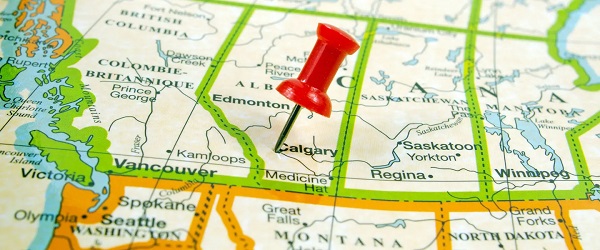
Alberta Next Panel calls to reform how Canada works

Canadian government launches trial version of digital ID for certain licenses, permits

End Supply Management—For the Sake of Canadian Consumers
-
International10 hours ago
Georgia county admits illegally certifying 315k ballots in 2020 presidential election
-
 Business1 day ago
ICYMI: Largest fraud in US history? Independent Journalist visits numerous daycare centres with no children, revealing massive scam
-
 Alberta1 day ago
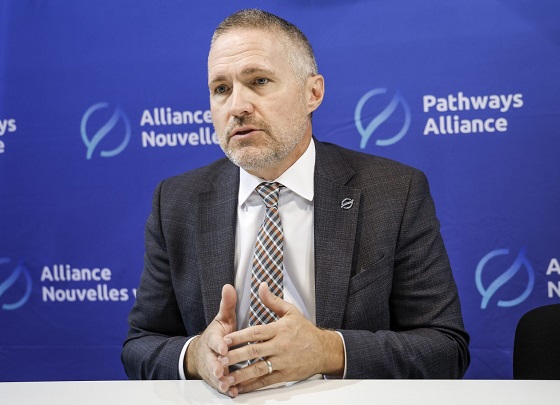
Alberta project would be “the biggest carbon capture and storage project in the world”
-
 Energy1 day ago
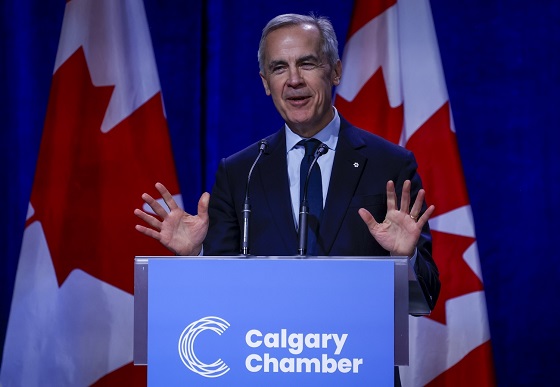
Canada’s debate on energy levelled up in 2025
-
 Haultain Research12 hours ago
Sweden Fixed What Canada Won’t Even Name
-
 Business11 hours ago
What Do Loyalty Rewards Programs Cost Us?
-
 Business1 day ago
Socialism vs. Capitalism
-
 Energy1 day ago
New Poll Shows Ontarians See Oil & Gas as Key to Jobs, Economy, and Trade