
Also Interesting
A Look at Five Predictions for Healthcare in 2030


Keeping up with the intricacy of current care is extremely challenging for healthcare providers. Fifty-five new medications were given the green light by the FDA in 2018. Healthcare providers want to do what’s best for their patients, but they can’t possibly be experts in every imaginable scenario. At this time, new medicines and therapies are constantly being introduced. Because each patient is unique, the results of clinical studies can never guarantee success. How can medical professionals keep up with rapidly evolving knowledge in order to deliver optimal care to their patients?
The ability to tailor medical care to each patient’s specific need has been made possible by technological advancements in recent decades. Indeed, things are looking up. Our ability to put the information we gather from healthcare technologies to good use is crucial. Data analytics in the field of public health. Providers could benefit from seeing how their treatments are actually used in the real world if they have access to population health data analytics.
Let’s take a look at how population health data analytics might change the patient experience in the coming 10 years.
-
Health status is tracked by means of wearable devices
The potential influence of wearable technology on providers’ access to population health data has been on their radar for some time. One-third of U.S. adults used a wearable fitness tracker in 2019.
Medical professionals sought novel approaches to patient surveillance during the COVID-19 pandemic. As a novel, risk-free, and novel method of collecting patient data, wearable technology has evolved. Put simply, there are many potential applications for wearable technology, including:
- Keep an eye on how unwell individuals are getting along with others.
- Find all infected medical staff and quarantine them.
- Keep an eye on patients with COVID-19 so you can decide where to quarantine them.
Current wearable technology focuses mostly on physiological metrics like heart rate and exercises intensity. One potential future use for these gadgets is monitoring body temperature or oxygen levels in the blood. Patients may use this data to determine if they need to visit a doctor right away, and doctors could use it to learn crucial information that could affect the course of therapy.
-
Genealogical research and genetic profiling are popular
Now, I’ll explain how these two phrases vary. Commonly, a patient undergoes genetic testing to look for heritary features and abnormalities (such as the BRCA-1 gene mutation for breast cancer). Through genomic profiling, we can find changes that aren’t related to genes. These could be cancer cells that were brought on by environmental factors like smoking or sun exposure.

Data from wearable technologies may be utilized in conjunction with genetic testing and genomic profiling in the future to give individualized care.
-
When it comes to primary care, telehealth is used for the very first appointment.
In the event that a patient’s wearable device detects a change in health or if they start to feel under the weather, they will contact their doctor via telehealth using their smartphone. Long waits for even a simple diagnostic are a thing of the past. Providers will now conduct most of their communications with patients over the phone and will only see them in person if absolutely necessary.
-
Better availability of health data analytics
Wearable devices, genetic and genomic testing, and provider interactions will all contribute to a collective database that may be de-identified and used to make better healthcare decisions in the future. Even though participants in clinical trials make up a sizable portion of the population, they only represent a small fraction of the total population that will end up taking a drug. Providers could benefit much from having access to patient data since it would provide several examples of how various drugs have been used in practice to treat issues like morbidity and allergy.
This information might also be used to enable healthcare providers in a community to develop interdisciplinary teams to better serve the needs of the people in that area and to better inform residents on healthcare issues.
-
Benefits to health have improved
Better information sharing will allow for more individualized treatment plans, the creation of public health databases, and the reduction of healthcare costs. Reduced work for clinicians and administrators, improved illness surveillance and prevention, and optimal care for patients are all outcomes of these developments.
All of this revolves around the sharing of information. Care delivery could be revolutionized over the next decade because of improved data sharing and technological advancements. While the basic principles of healthcare delivery remain the same, technological advancements will allow for more attention to be paid to each individual patient.


Strategic partnerships move fast, then stall for familiar reasons: scattered contracts, unclear change control, misaligned KPIs, and painful renewals. A modern virtual data room solves those execution gaps by giving both parties a single, secure workspace to negotiate and govern the relationship.
Below is a practical playbook for partnership for legal and governance teams that need better oversight of the process without slowing the deal.
Why partnerships fail in execution
Alliances now account for a rising share of growth activity, yet many underperform because governance and information flows break down after the signing ceremony. McKinsey has reported sustained growth in partnership activity and the need for rigor in how companies structure and manage complex partner portfolios.
Risk compounds as third parties plug deeper into your tech stack and customer data. KPMG’s recent third-party risk work highlights regulatory pressure and real breach exposure tied to vendor access — amplifying the need for disciplined data, access, and contract controls across the partner lifecycle.
What a VDR contributes that shared drives can’t
Virtual data room services outperform generic cloud folders in four partnership jobs-to-be-done:
- A secure contract repository that centralizes master agreements, statements of work, schedules, and side letters, with version history and tamper-evident audit trails. This is foundational for obligations management and dispute resolution. Research shows that advanced contract lifecycle controls materially reduce missed obligations and improve risk visualization.
- Permissioned partner access so each party sees only what they must. Granular, role-based permissions and watermarking help you share sensitive materials with confidence during escalations or executive reviews. HBR’s long-standing guidance on alliance scorecards underscores the value of clear information rights and accountability, which VDRs operationalize day to day.
- Milestone tracking in VDR to link documents and discussions directly to the KPIs that define success — launch dates, enablement targets, marketing funds, or co-sell quotas — so status never lives in email threads.
- Renewal and compliance files managed in one place for audits, certifications, cybersecurity questionnaires, privacy addenda, and regulatory notices. With regulators sharpening expectations on third-party oversight, having these artifacts organized and provable is no longer optional.
Selecting data room providers for partnerships
In the process of selecting data room providers, you should evaluate top vendors against your partnership-specific needs, not just M&A checklists. Here’s what to pay attention to:
- Granular permissions that support external groups and expiring links.
- Tasking and approvals to shepherd redlines, consent requests, and change orders.
- API and SSO so you can sync with CRM and other tools.
- Audit-quality logs and data residency options for regulated markets.
- Structured dashboards for milestone tracking in VDR without exporting to slides.
If you’re comparing options, check out data room provider reviews at dataroom.org.uk page — a curated platform that evaluates the VDR providers. You’ll find it useful if you want your partnerships to run for years rather than weeks.
Designing the core folder architecture
Once you have a decent data room selected, you’re ready to think about folder architecture. Experienced teams use a common structure across deals so stakeholders can find the right file in seconds. A typical data room for partnerships includes:
- Governance — charters, joint steering deck, RACI, escalation paths, meeting minutes.
- Contracts — MSA, SOWs, pricing exhibits, data protection terms, change orders.
- Delivery — technical specs, APIs, integration test evidence, rollout plans.
- Commercials — business cases, rebate logic, MDF claims, sales playbooks.
- Compliance & risk — SOC/ISO reports, penetration tests, DPIAs, DPA annexes.
- Performance & KPIs — dashboards, QBR packs, remediation logs.
- Renewal & amendments — redlines, approvals, countersigned documents.
Keep naming conventions strict (e.g., YYYY-MM-DD_DocumentName_Vx), and map folders to contract clauses so audits are traceable to obligations.
Access control that matches real-world roles
Partnerships span legal, finance, security, product, marketing, and sales on both sides. Use the VDR’s permission model to mirror this:
- Internal core team: full read/write within governance, contracts, and delivery.
- Partner core team: scoped access to execution materials, not internal approvals.
- Executives and board: read-only to governance and KPI packs for QBRs.
- Specialists (security, privacy, tax): time-boxed, watermark-protected access to specific subfolders.
This permissioned access keeps collaboration fluid while containing risk if membership changes mid-stream.
From diligence to day 2: Workflows that prevent drift
VDRs shine when you operationalize a few high-leverage workflows:
- Vendor due diligence. Host questionnaires, evidence, and remediation in one trackable space. Thomson Reuters outlines the scope of effective vendor due diligence; your VDR should reflect that scope with structured folders, checklists, and deadlines.
- Security events. Keep incident notifications, joint response notes, and root-cause analyses in the compliance area with restricted access.
- Quarterly business reviews. Publish dashboards, opportunity lists, pipeline hygiene notes, and joint marketing calendars under a single Quarterly Business Review (QBR) folder — reducing prep time and increasing continuity across sponsors.
Contract intelligence that keeps money on the table
Money usually leaks in quiet ways: someone forgets to pay a rebate, prices don’t get updated, or a service promise keeps auto-renewing without anyone checking it. To stop that, you write down the most important details from each deal — like when it renews, how prices can change, what refunds are owed if something breaks, and when special rights end — and you keep those in one safe place everyone can see.
Then you set five important reminders in that same place:
- When the deal is about to renew
- When it’s time to review prices
- When you need to check rebates after each quarter
- When you need to make sure a broken promise got a credit
- When “only we’re allowed to do this” ends
Each reminder should have one person in charge, a due date, and proof saved before anyone can say it’s done.
How to launch a partner VDR in 30 days
You don’t need a massive program to see value. In four weeks, you can stand up a partner-ready data room that legal, security, and sales will actually use:
Week 1 — Foundation. Confirm the folder taxonomy, map documents to contract clauses, and assign owners. Set baseline permissions and watermark settings.
Week 2 — Migration. Move authoritative versions only; archive duplicates. Create a secure contract repository and lock naming conventions.
Week 3 — Workflows. Configure diligence and change-control checklists, SLA tracking, and QBR templates. Enable alerts for renewals and audits.
Week 4 — Operate. Run a QBR using VDR dashboards, test guest invites with permissioned partner access, and review logs. Document playbooks for handoffs if needed.
Partnership pilot programs are forgiving; scale is not. As your partnership expands, decision rights blur, metrics drift, and files scatter. Your VDR should prevent that: one place for obligations, KPIs, and audits, all tied to owners and dates.
Don’t wait for a customer review or regulator to force the issue. Stand up the folder model, set renewal and control alerts, and use QBRs from the data room — not slides.

It is no secret that life has become a lot more digital in recent times, particularly since the COVID-19 pandemic. People now do many activities online that they once did in person, which can provide a new level of convenience and accessibility for local communities. It has been fascinating to observe how these digital trends have reshaped modern life as we know it and given people the possibility to easily stay connected and entertained from home or on the move on a mobile device.
With this in mind, this post will explore a few of the biggest digital trends that local communities are embracing today.
1. Virtual Learning
One of the most notable trends that continues to grow each year is virtual learning. These days, people do not have to attend in-person courses and classes to earn qualifications or learn new skills, as they can engage in online learning. This can change people’s lives with the ability to advance their careers, start new careers, or simply expand their horizons without having to leave the house.
2. Online Shopping
Few things have changed life so much in the 21st century as the rise of ecommerce. It is hard to remember a time before when you could not get all of your shopping delivered to your home, offering greater convenience as well as the ability to shop from sellers all around the world. Since the pandemic, local communities are buying practically all of their needs online, including groceries, fashion, furniture, homeware, technology, and much more. Additionally, second-hand marketplaces have surged in popularity in recent times, allowing people to save money and find rare items.
3. Live Casino Games
Many local communities have turned to online casino games in recent times. This can provide the same thrill and excitement of going to a land-based casino with the convenience of playing from home or on the move. In recent years, online live casino games have taken off. These are games with a real-life dealer using streaming technology, helping to create a more realistic, engaging, and social experience. This includes live blackjack, roulette, and baccarat at popular online casinos where you can interact with dealers and other players via a live chat function. Casino games are often seen as a solo activity, but this is changing with the rise of live casino games.
4. Virtual Fitness
The way in which people exercise and stay in shape is also changing. Now, virtual PT sessions and exercise classes give people the ability to exercise and socialize without having to leave the house. This is ideal for those who crave social connection as part of their exercise regime but have busy schedules and/or live in remote areas. This has also extended to wellness in recent times with guided meditation sessions and virtual yoga classes, allowing people to look after their overall well-being from home.
These are a few of the main digital trends that have emerged in recent times and changed the way in which local communities lead their daily lives. It will be fascinating to see how these trends evolve and what new trends emerge in the years to come as life becomes increasingly digital.


Wayne Gretzky’s Terrible, Awful Week.. And Soccer/ Football.

Western Campuses Help Build China’s Digital Dragnet With U.S. Tax Funds, Study Warns
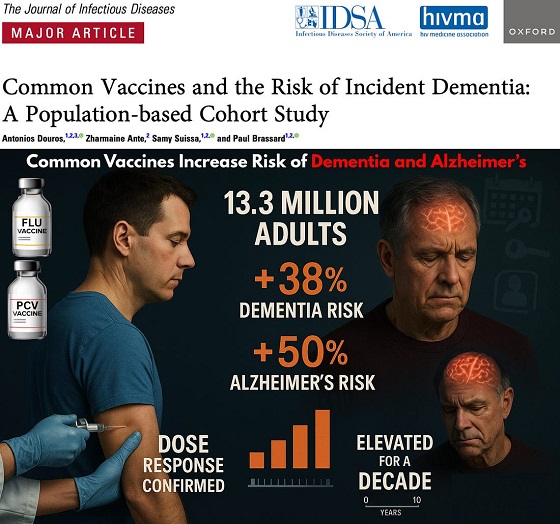
Common Vaccines Linked to 38-50% Increased Risk of Dementia and Alzheimer’s

Trump DOJ seeks to quash Pfizer whistleblower’s lawsuit over COVID shots
-
COVID-191 day ago
Trump DOJ seeks to quash Pfizer whistleblower’s lawsuit over COVID shots
-
 Alberta2 days ago
Alberta introducing three “all-season resort areas” to provide more summer activities in Alberta’s mountain parks
-
 Agriculture1 day ago
Growing Alberta’s fresh food future
-
 International1 day ago
Trump admin wants to help Canadian woman rethink euthanasia, Glenn Beck says
-
 Alberta1 day ago
The case for expanding Canada’s energy exports
-
 Business2 days ago
Storm clouds of uncertainty as BC courts deal another blow to industry and investment
-
 Censorship Industrial Complex1 day ago
Ottawa’s New Hate Law Goes Too Far
-
 Business1 day ago
Fuelled by federalism—America’s economically freest states come out on top