
Community
Alberta Celebrates First Philippine Heritage Month


Deputy Premier and Health Minister Sarah Hoffman proclaimed June as Philippine Heritage Month in Alberta.
The Government of Alberta is proud to recognize and celebrate the tremendous contributions of generations of Filipinos to the province’s faith, civic and cultural communities by designating June of each year as Philippine Heritage Month in Alberta.
“Alberta is the proud home to the second-largest Filipino population in the country. For decades, Filipinos have enriched our province with their culture, their languages and their skills. I wish all people of Filipino descent a joyous Philippine Heritage Month, and I hope all Albertans share in the festivities.”
– Rachel Notley, Premier
“Filipinos make this province a brighter, caring and more vibrant place. We’re lucky that so many call Alberta home. Alberta’s economy, public services like health care, and communities are all made stronger thanks to their hard work, talent and enduring spirit of volunteerism and generosity.”

– Sarah Hoffman, Deputy Premier, Minister of Health
Filipinos run hundreds of groups, societies and organizations that reach out to Albertans of all ages and backgrounds. Many are guided by values like bayanihan (being a hero to others) and malasakit (empathy and solidarity).
Quick facts
- According to Statistics Canada, Alberta is home to 175,130 Filipinos, making up 4.3 per cent of its population.
- Calgary is home to the fourth largest Filipino community in Canada, and Edmonton has a growing population of 64,275 Filipinos.
- Tagalog is the second-most spoken non-official language in Alberta.
- The first recorded Filipino immigrants arrived in Canada in 1931. Early immigrants included nurses, teachers, doctors and other professionals.
- Filipinos in Alberta and around the world will celebrate the 120th Philippine Independence Day on June 12, 2018.
For more stories visit Todayville.com


From the Fraser Institute
By Jake Fuss and Grady Munro
There would have been 1.5 million more Canadians who donated to charity in 2023—and $755.5 million more in donations—had Canadians given to the same extent they did 10 years prior
According to recent polling, approximately one in five Canadians have skipped paying a bill over the past year so they can buy groceries. As families are increasingly hard-pressed to make ends meet, this undoubtedly means more and more people must seek out food banks, shelters and other charitable organizations to meet their basic necessities.
And each year, Canadians across the country donate their time and money to charities to help those in need—particularly around the holiday season. Yet at a time when the relatively high cost of living means these organizations need more resources, new data published by the Fraser Institute shows that the level of charitable giving in Canada is actually falling.
Specifically, over the last 10 years (2013 to 2023, the latest year of available data) the share of tax-filers who reported donating to charity fell from 21.9 per cent to 16.8 per cent. And while fewer Canadians are donating to charity, they’re also donating a smaller share of their income—during the same 10-year period, the share of aggregate income donated to charity fell from 0.55 per cent to 0.52 per cent.
To put this decline into perspective, consider this: there would have been 1.5 million more Canadians who donated to charity in 2023—and $755.5 million more in donations—had Canadians given to the same extent they did 10 years prior. Simply put, this long-standing decline in charitable giving in Canada ultimately limits the resources available for charities to help those in need.
On the bright side, despite the worrying long-term trends, the share of aggregate income donated to charity recently increased from 0.50 per cent in 2022 to 0.52 per cent in 2023. While this may seem like a marginal improvement, 0.02 per cent of aggregate income for all Canadians in 2023 was $255.7 million.
The provinces also reflect the national trends. From 2013 to 2023, every province saw a decline in the share of tax-filers donating to charity. These declines ranged from 15.4 per cent in Quebec to 31.4 per cent in Prince Edward Island.
Similarly, almost every province recorded a drop in the share of aggregate income donated to charity, with the largest being the 24.7 per cent decline seen in P.E.I. The only province to buck this trend was Alberta, which saw a 3.9 per cent increase in the share of aggregate income donated over the decade.
Just as Canada as a whole saw a recent improvement in the share of aggregate income donated, so too did many of the provinces. Indeed, seven provinces (except Manitoba, Nova Scotia and Newfoundland and Labrador) saw an increase in the share of aggregate income donated to charity from 2022 to 2023, with the largest increases occurring in Saskatchewan (7.9 per cent) and Alberta (6.7 per cent).
Canadians also volunteer their time to help those in need, yet the latest data show that volunteerism is also on the wane. According to Statistics Canada, the share of Canadians who volunteered (both formally and informally) fell by 8 per cent from 2018 to 2023. And the total numbers of hours volunteered (again, both formal and informal) fell by 18 per cent over that same period.
With many Canadians struggling to make ends meet, food banks, shelters and other charitable organizations play a critical role in providing basic necessities to those in need. Yet charitable giving—which provides resources for these charities—has long been on the decline. Hopefully, we’ll see this trend turn around swiftly.


|

|
|

|
|
|


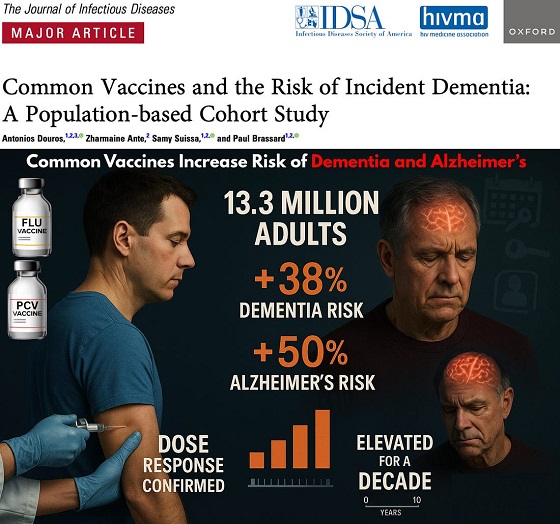
Common Vaccines Linked to 38-50% Increased Risk of Dementia and Alzheimer’s

Trump DOJ seeks to quash Pfizer whistleblower’s lawsuit over COVID shots

Alberta introducing three “all-season resort areas” to provide more summer activities in Alberta’s mountain parks

The $50 Billion Question: EVs Never Delivered What Ottawa Promised
-
Community2 days ago
Charitable giving on the decline in Canada
-
 Business2 days ago
Canada’s recent economic growth performance has been awful
-
 Alberta2 days ago
Canada’s New Green Deal
-
 armed forces2 days ago
Ottawa’s Newly Released Defence Plan Crosses a Dangerous Line
-
 Health1 day ago
Saskatchewan woman approved for euthanasia urged to seek medical help in Canada rather than US
-
 Indigenous1 day ago
Residential school burials controversy continues to fuel wave of church arsons, new data suggests
-
 Alberta1 day ago
Alberta’s huge oil sands reserves dwarf U.S. shale
-
 Business2 days ago
COP30 finally admits what resource workers already knew: prosperity and lower emissions must go hand in hand