
Business
My European Favourites – Segovia, Spain

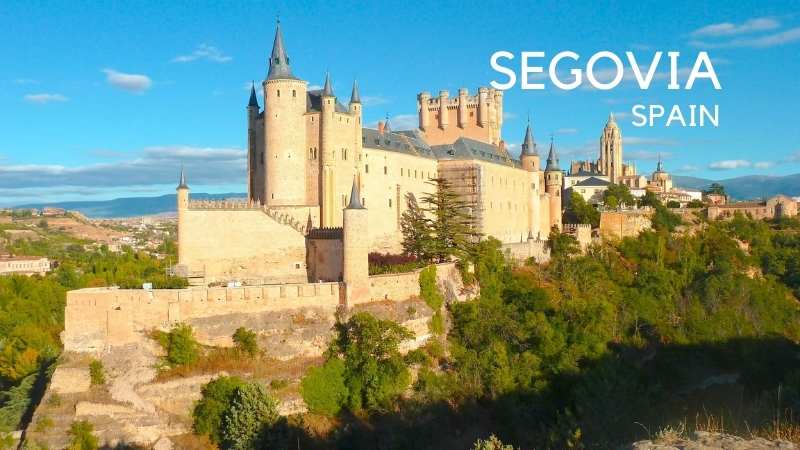

 Spain is one of our favourite countries to visit in Europe. The warm sunshine, the history, the architecture, the gastronomy, and above all, the passionate and friendly people make it a desirable location. We have been to Spain with sightseeing groups, school groups and soccer groups. Madrid, the Spanish capital is always included in our itineraries. In addition to exploring the city, there are numerous worthwhile day trips to surrounding towns. Segovia is one of those towns.
Segovia is located about an hour northwest from Madrid and the day trip is sometimes combined with a stop in the nearby medieval walled city of Ávila. Segovia is just inside the large northwestern Castile and León region of Spain. The region consists of an expansive high plateau surrounded by a ring of mountains.
Segovia’s old town is perched high on a rocky hill surrounded by the Eresma and Clamores rivers. Declared a UNESCO World Heritage site in 1985, the old town features an impressive cathedral, numerous Roman churches, a Jewish quarter, and the striking Alcazar or castle. The town is full of Roman and medieval structures including the massive Roman aqueduct.
A Brief History Of Segovia
There was already a settlement by the Aravaci, a Celtic people, for over 600 years in Segovia prior to the Romans arriving in 96 BC. The Romans installed a military installation here to control access to the Douro River region in the north, and they built the aqueduct to bring in fresh water from the surrounding mountains. After the Romans left, Segovia was inhabited by people from northern Europe until the Spanish invasion by the Moors in the early 8th century.

Panoramic view of Segovia with the Cathedral at the centre.
After the reconquest by Christian Kin Alphonso VI in 1079, Segovia was resettled by Christians. Numerous parishes and monasteries were established in area. Due to its location on main trading routes, Segovia reached its golden age during the middle ages due to the foundation of a cloth industry. The town experienced a rise in the Jewish population and became an important centre for wool and textiles.
In the 13th century, Alfonso X, King of Castile, León and Galicia, made Segovia his residence.
Later in the 15th century Henry IV, King of Castile, also made Segovia his residence, built important buildings, renovated the Alcazar, and made Segovia the site of the Royal Mint.
Segovia is also known as the place where Isabella the Catholic pronounced herself Queen of Castile in the church of San Miguel in 1474. Afterwards, she married king Ferdinand II, King of Aragon, to create a unified Spain. They are probably best known for financing the voyages of Christopher Columbus.
In the mid 16th century there was a revolt by the citizens of Castile against King Charles I and his administration. The “War of the Communities of Castile” lasted 18 months from April 1520 to October 1521. One of the rebel leaders, Juan Bravo, was from Segovia and has a statue in the main square. He was captured in the Battle of Villalar along with two other prominent rebel leaders. They were beheaded the following day. Despite the rebellion Segovia remained prosperous and the population grew to approximately 27,000.
Segovia’s decline started with an outbreak of the plague in the late 16th century and then mostly by the subsequent 17th century collapse of the textile industry. By 1694, the population dropped to just 8,000. Later attempts to revive the textile industry by King Charles III failed. In 1764 a military academy, the Royal School of Artillery, was established and is still in operation. In 1808, during the Napoleonic wars, Segovia was sacked by French troops.
19th century Spain had three Carlist Wars related to claims to the throne of Spain. During the first Carlist War, Segovia was unsuccessfully attacked. Since then, it has escaped military destruction, including during the Spanish Civil war from 1936 to 1939 that pitted the Republicans against the Nationalists led by Francisco Franco. In fact, since 1920 the population of Segovia has grown from 16,000 to over 50,000 in the early 80s. The population has stabilized in the last 40 years and the economy along with it.

The Roman Aqueduct, the Candido restaurant, and the aqueduct from the Plaza del Azoguejo.
The Roman Aqueduct
Our walking tour begins at the Plaza del Azoguejo and you can find a google map of our walk at www.azorcan.net/media to follow along. Once a market place, the plaza is located at the foot of the colossal Aqueduct of Segovia. The 28.5 meters tall aqueduct bridge, known locally as El Puente (the bridge), is one of the best preserved in the world. Built by the Romans at the end of the 1st century from stacked granite, the aqueduct transported water over 15 kilometers over rolling hills from the Sierra mountains to the town. The pillars and arches are solid rock with very little mortar in between. The aqueduct continued to supply water for many centuries after being built by the Romans and is one of the most recognizable landmarks in Spain.
The Artillery Academy of Segovia, which recently celebrated a 250 year anniversary in Segovia, is located a few blocks from the plaza in a former 15th century Franciscan convent with an interesting Gothic cloister.
Located in a half-timbered house on the south side of the Plaza del Azoguejo, you will find the famous Cándido restaurant. Since 1905, three generations of the Cándido family have been serving their famous suckling pig, stews and wines. The official Tourist Office of Segovia is located across the square from the Cándido. From the plaza, we will walk up the Calle Cervantes. Calle means street, and this one is named after the most famous Spanish literary figure, Miguel de Cervantes. Cervantes is best known for being the author of the literary classic, Don Quixote.

The Miradouro de la Canaleja, the panoramic view, and an interesting building at the viewpoint.
The Medina de la Campo and the Jewish Quarter
About 200 meters from the Plaza del Azoguejo, we arrive at an observation terrace named the Mirador de la Canaleja. Here we can admire a fantastic panoramic view of the lower town’s pastel colored buildings with red roof tops.
There is an interesting light blue building on the north side of the Mirador with three stacked sunrooms. We walk along the side of this building on the Calle Juan Bravo, the street named after Segovia’s rebel leader. A few steps away on the right is the eye-catching Casa de los Picos. The 15th century historic Gothic-Renaissance building is decorated with numerous pyramids or diamond tips made from granite and now houses the School of Art and Superior Design.

The Palacio de Cascales façade, the narrow Calle de Juan Bravo, and the Casa de los Picos.
A bit further on the Calle Juan Bravo we will come upon a little plaza on the left that leads to the Palacio de Cascales. The palace is known by a few names from its past including the Aspiroz or the del Conde Alpuente. Nowadays, it is used for the offices of the Ministry of Development of the Junta de Castilla y León. The palace was built in the 15th century by a prominent knight from Segovia named, Alonso Cascales. Its façade features Gothic windows, a unique pattern on the walls, and a Moorish or Mudejar arch kept from the original Arab building that was once there.

The Church of San Martin, statue of Juan Bravo in front of the Tower of Lozoya, and one of our school soccer academy groups.
A short distance away along the Calle Juan Bravo is the square of Medina del Campo. The square contains three notable buildings, the house of Juan Bravo, the Tower of Lozoya and the Church of San Martin. The 14th century rectangular shaped Tower of Lozoya, was once used as an armoury. The tower is now used to exhibit contemporary art. The 12th century catholic Church of San Martin, at the centre of the square, is an interesting mix of Arabic and Romanesque elements.
Moving forward on the Calle Juan Bravo, we will reach the small square Plaza Corpus. The square is named after the Corpus Christi Church which is located on the left side of the square. The church was once the largest Jewish Synagogue in Segovia starting in the 13th century. You can visit the interesting church that was converted from a synagogue in 1410 as it is open to the public.
At the Plaza Corpus you will reach a fork in the rod. The Calle la Juderia Vieja (Old Jewish Quarter Street) is on the left, and as the name implies, it leads to the Jewish Quarter. We will take the Calle Isabella la Catolica (Isabella the Catholic) on the right to the Plaza Mayor (Main Square).

Entrance to the Corpus Christi Church. The town hall and cathedral on the Plaza Mayor.
Plaza Mayor
The Plaza Mayor is the central hub of the town of Segovia. The large rectangular cobblestone square has a performance gazebo at its centre surrounded by trees. The square was once a market place in medieval times, and Segovia’s citizens still meet here to celebrate festivals and to enjoy the numerous bars and restaurants spilling onto the square from the arcades. The square still hosts a market every Thursday. The La Concepción on the north side of the square is a bit pricy, but its terrace is a great place from which to people watch. Next to the restaurant is the 17th century Segovia town hall.
On the east side of the Plaza Mayor is the Juan Bravo Theatre. Built in 1917 and refurbished in the 1980s, it is the principal theatre of Segovia. A few steps away on the south east of the square behind the luxury priced Villena restaurant is the 16th century gothic San Miguel Church.

The church is famous for being the place where, in 1474, Isabella the Catholic was crowned Queen of Castile. Exploring the maze of alleys and squares behind the San Miguel Church, you will find various interesting and moderately priced bars and restaurants. The El Sitio and the El Figon de los Comuneros are two great choices for lunch.

The Segovia Cathedral on the Plaza Mayor and a panoramic view of the cathedral and its tall tower.
Located on the west side of the square, the main building on the Plaza Mayor is the Cathedral of the Assumption. As the highest point of Segovia, the cathedral, built in late gothic style between 1525-1577, can be seen for miles around. Construction began after the original cathedral, located near the Alczar, burned in 1520. The cathedral can be toured and the view from the cathedral tower is memorable.

The Tower of John II at the entrance to the Alcazar, the Weapons Patio and the Clock Yard.
Segovia Alcazar
From the cathedral, we will walk about 600 meters on the Calle Marques del Arco which becomes the Calle Daoiz to the Plaza la Reina Victoria Eugenia (Square of Queen Victoria Eugenia). The Queen’s square is a nice garden located at the forefront of the entrance to the Alcazar. In addition to the imposing castle façade, there are great views of the Spanish countryside from the garden. On the left, there is a building called the Casa de la Química. There is a cafeteria there with a nice terrace with an amazing view of the town. There are better places for a meal, but it’s a good place to enjoy a drink under the shade of a patio umbrella on a hot day.
Like most fortresses, the Alcazar is built on an elevated area that offers a natural defensive advantage. The Alcazar’s site, on a large rock promontory at the spur of the Eresma and Clamores rivers, was a fort during the Roman occupation in the 1st century. Since Roman times, the castle has been rebuilt and expanded many times over hundreds of years by different people including the Romans, the Muslim Umayyad Dynasty in the 8th century and eventually the Spanish in the 12th century. Over time, the Alcazar has been used as a fortress, a royal palace, a prison, and a military school. The picturesque Alcazar is now a museum, a major tourist attraction, and one of the most recognizable castles in Europe. The original building from the 13th century was painstakingly restored after a devastating fire in 1862.

Statue of Ferdinand VI, the Armoury, the Throne Room, the Chapel and a panoramic view.
Approaching the Alcazar from the Queen’s square, we are faced with the imposing Tower of John II and the draw bridge. Once inside there are two staircases with 156 steps leading to the top of the tower where you can enjoy a great view of Segovia. Entering further, we arrive at the first major open area of the fortress, the Parade or Weapons Patio with a colonnade and upper walk way. This is the largest open space in the Alcazar, and along with the next outdoor area, the Clock Yard, has a great deal of Moorish influence.
At the back of the fortress, there is the Armoury with medieval flags, lances, swords, knights armour and even armour for horses. The “V” shaped well terrace at the very back looks like the bow of a boat gives the castle the appearance of being a large rock ship. The Alcazar’s garden, with shrubs in geometric shapes, is also located at the back of the castle.

The Alabaster Hall, stained glass with the Spanish coat of arms and the Armoury.
Other interesting rooms include the Chapel, Throne Room, Royal Bedrooms, a Pineapple Room, the Alabaster Hall and the Kings Hall with 52 sculptures of kings that ruled the area for hundreds of years. The Museum of the Royal Artillery School in the Alcazar contains documents, scale models, weapons and uniforms from the 18th and 19th centuries. At the base of the castle and along exterior of the city walls there is a network of connected gardens and wooded areas.

The Monastery of Santa Maria del Parral and the Church of Vera Cruz.
View from the Alcazar
From the Alcazar’s Tower of John II, you will have a great view of the surrounding area’s rolling hills, churches and monasteries. You can’t miss the impressive 15th century Monastery of Santa Maria del Parral that was founded by Henry IV of Spain. The monastery’s church was built in gothic style, while the later built bell tower has a Romanesque top. The monastery, currently owned by the Order of St. Jerome, has four interesting cloisters in built in various architectural styles.
Looking to the left from the monastery, we see the tower of the Romaesque Church of San Marcos at the bottom of a winding road. As we look up along the road, we will see the larger Convent of San Juan de la Cruz on the left and the unique Church of Vera Cruz on the right. The Church of the Vera Cruz was founded by the Knights of the Order of the Holy Sepulchre of Jerusalem in 1208. The Romanesque style church was built in the shape of a twelve-sided polygon with three semi-circular chapels. The design of the church was inspired by the Holy Sepulchre in Jerusalem that the order was named after.

El Sitio restaurant, sucking pig, patatas bravas, tapas and sangria.
Dinner
Segovia is a great place to enjoy traditional Spanish cuisine and in restaurants with matching architecture and atmosphere. The local specialities include roasted suckling pig (cochinillo), suckling lamb (lechazo), Cantimpalos chorizos, wild mushrooms and a traditional layer cake named Ponche Segoviano.
One of the best places to enjoy a meal in Segovia is near the aqueduct. We have already mentioned the famous Candido restaurant and dinner upstairs with a view of the illuminated aqueduct as a backdrop is a memorable experience.
On the Calle De Cevantes, not far from the aqueduct, there are two more great restaurants serving traditional dishes. The Conde Duque, one of the oldest restaurants in Segovia, has a unique interior while the Asador El Bernardino has a terrace with a great view.
On the Plaza Mayor, we wrote about enjoying a drink and people watching at La Concepción. Near the square we have three recommendations. El Figon de los Comuneros is a great place for sampling local tapas. At El Sitio you can have a nice traditional meal or try their pinchos in the bar area. The Restaurante Jose Maria has excellent wines, a tasting menu and a nice selection of tapas at the bar.
After dinner at any of these restaurants, you may want to take a walk of the historic centre with all the town’s monuments lit up.
Let’s Go To Segovia
Segovia is a great place to visit at any time of year, and you can easily spend a couple of days exploring the town’s historic buildings, walls, churches, monuments, narrow streets, shops, museums, bars, cafes and restaurants. The town is also known for two special religious events, the Holy Easter Week (Semana Santa) and the Three Kings parade (los Reyes Magos) held on January 5th.
Segovia is well worth the journey from the hustle and bustle of Madrid and is one of my favourite destinations in Spain. If you get a chance to visit the town, I think you will agree.

Explore Europe With Us
Azorcan Global Sport, School and Sightseeing Tours have taken thousands to Europe on their custom group tours since 1994. Visit azorcan.net to see all our custom tour possibilities for your group of 26 or more. Individuals can join our “open” signature sport, sightseeing and sport fan tours including our popular Canada hockey fan tours to the World Juniors.
At azorcan.net/media you can read our newsletters, listen to our podcasts and view maps related tour all of our “My European Favourites” stories.
Images compliments of Paul Almeida and Azorcan Tours.
Read more of Paul’s stories on Todayville.


From the Daily Caller News Foundation
A resurfaced 2018 video from a Minneapolis-area TV station shows how Somali scammers allegedly bilked Minnesota out of millions of dollars for services that they never provided.
Independent journalist Nick Shirley touched off a storm on social media Friday after he posted a photo of one day-care center, which displayed a banner calling it “The Greater Learing Center” on X, along with a 42-minute video that went viral showing him visiting that and other day-care centers. The surveillance video, which aired on Fox 9 in 2018 after being taken in 2015, showed parents taking kids into the center, then leaving with them minutes later, according to Fox News.
“They were billing too much, they went up to high,” Hennepin County attorney Mike Freeman told Fox 9 in 2018. “It’s hard to imagine they were serving that many people. Frankly if you’re going to cheat, cheat little, because if you cheat big, you’re going to get caught.”
Dear Readers:
As a nonprofit, we are dependent on the generosity of our readers.
Please consider making a small donation of any amount here.
Thank you!
Democratic Gov. Tim Walz of Minnesota was accused of engaging in “systemic” retaliation against whistleblowers in a Nov. 30 statement by state employees. Assistant United States Attorney Joe Thompson announced on Dec. 18 that the amount of suspected fraud in Minnesota’s Medicaid program had reached over $9 billion.
After Shirley’s video went viral, FBI Director Kash Patel announced the agency was already sending additional resources in a Sunday post on X, citing the case surrounding Feeding Our Future, which at one point accused the Minnesota government of racism during litigation over the suspension of funds after earlier allegations of fraud.
KSTP reported that the Quality Learning Center, one of the centers visited by Shirley, had 95 citations for violations from one Minnesota agency between 2019 to 2023.
President Donald Trump announced in a Nov. 21 post on Truth Social that he would end “Temporary Protected Status” for Somalis in the state in response to allegations of welfare fraud and said that the influx of refugees had “destroyed our country.”
Business
Disclosures reveal Minnesota politician’s husband’s companies surged thousands-fold amid Somali fraud crisis



Rep. Ilhan Omar’s latest financial disclosures reveal seemingly sudden wealth accumulation inside her household, even as Minnesota grapples with revelations of massive fraud that may have siphoned more than $9 billion from government programs. The numbers, drawn from publicly filed congressional reports, show two companies tied to Omar’s husband, Tim Mynett, surging in value at a pace that raises more questions than answers.
According to the filings, Rose Lake Capital LLC — a business advisory firm Mynett co-founded in 2022 — jumped from an assessed range of $1 to $1,000 in 2023 to between $5 million and $25 million in 2024. Even using the most conservative assumptions allowed under Congress’ broad valuation ranges, the company’s value would have increased thousands of times in a single year. The firm advertises itself as a facilitator of “deal-making, mergers and acquisitions, banking, politics and diplomacy.”
Archived versions of Rose Lake’s website once showcased an eye-catching lineup of political heavyweights: former Ambassador to Bahrain Adam Ereli, former Sen. Max Baucus, and prominent Democratic National Committee alumni William Derrough and Alex Hoffman. But as scrutiny surrounding Omar intensifies — particularly over whether her political network intersected with sprawling fraud schemes exposed in Minnesota — the company has quietly scrubbed its online footprint. Names and biographies of team members have vanished, and the firm has not clarified whether these figures remain involved. Omar’s office offered no comment when asked to explain the company’s sudden growth or the removal of its personnel listings.
Mynett, Omar’s third husband, has long been a controversial presence in her political orbit, but the dramatic swell in his business holdings comes at a moment when trust in Minnesota’s oversight systems is already badly shaken. Federal and state investigators now estimate that fraud involving pandemic-era and nonprofit programs may exceed $9 billion, a staggering figure for a state often held up as a model of progressive governance. For many residents, the revelation that Omar’s household wealth soared during the same period only deepens skepticism about who benefited from Minnesota’s expansive social-spending apparatus.
The financial story doesn’t stop with Rose Lake. A second Mynett-linked entity, ESTCRU LLC — a boutique winery registered in Santa Rosa, California — reported an assessed value of $1 million to $5 million in 2024. Just a year earlier, Omar disclosed its worth at $15,000 to $50,000. Despite the dramatic valuation spike, ESTCRU’s online storefront does not appear to function, its last social media activity dates back to early 2023, and the phone number listed on its website is no longer in service. As with Rose Lake, Omar’s office declined to comment on the winery’s sudden rise in reported value.
The House clerk has yet to release 2025 disclosures, leaving unanswered how these companies are performing today — and how such explosive growth materialized in the first place.

Alberta Next Panel calls to reform how Canada works

Canadian government launches trial version of digital ID for certain licenses, permits

Georgia county admits illegally certifying 315k ballots in 2020 presidential election

End Supply Management—For the Sake of Canadian Consumers
-
 Business16 hours ago
ICYMI: Largest fraud in US history? Independent Journalist visits numerous daycare centres with no children, revealing massive scam
-
 Daily Caller2 days ago
While Western Nations Cling to Energy Transition, Pragmatic Nations Produce Energy and Wealth
-
 Daily Caller2 days ago
US Halts Construction of Five Offshore Wind Projects Due To National Security
-
 Alberta2 days ago
Alberta Next Panel calls for less Ottawa—and it could pay off
-
 Bruce Dowbiggin2 days ago
Be Careful What You Wish For In 2026: Mark Carney With A Majority
-
 International2 days ago
China Stages Massive Live-Fire Encirclement Drill Around Taiwan as Washington and Japan Fortify
-
 Energy2 days ago
Rulings could affect energy prices everywhere: Climate activists v. the energy industry in 2026
-
 Digital ID2 days ago
The Global Push for Government Mandated Digital IDs And Why You Should Worry