
Agriculture
Why is Canada paying for dairy ‘losses’ during a boom?


This article supplied by Troy Media.
Canadians are told dairy farmers need protection. The newest numbers tell a different story
Every once in a while, someone inside a tightly protected system decides to say the quiet part out loud. That is what Joel Fox, a dairy farmer from the Trenton, Ont., area, did recently in the Ontario Farmer newspaper.
In a candid open letter, Fox questioned why established dairy farmers like himself continue to receive increasingly large government payouts, even though the sector is not shrinking but expanding. For readers less familiar with the system, supply management is the federal framework that controls dairy production through quotas and sets minimum prices to stabilize farmer income.
His piece, titled “We continue to privatize gains, socialize losses,” did not come from an economist or a critic of supply management. It came from someone who benefits from it. Yet his message was unmistakable: the numbers no longer add up.
Fox’s letter marks something we have not seen in years, a rare moment of internal dissent from a system that usually speaks with one voice. It is the first meaningful crack since the viral milk-dumping video by Ontario dairy farmer Jerry Huigen, who filmed himself being forced to dump thousands of litres of perfectly good milk because of quota rules. Huigen’s video exposed contradictions inside supply management, but the system quickly closed ranks until now. Fox has reopened a conversation that has been dormant for far too long.
In his letter, Fox admitted he would cash his latest $14,000 Dairy Direct Payment Program cheque, despite believing the program wastes taxpayer money. The Dairy Direct Payment Program was created to offset supposed losses from trade agreements like the Comprehensive Economic and Trade Agreement (CETA), the Comprehensive and Progressive Agreement for Trans-Pacific Partnership (CPTPP) and the Canada–United States–Mexico Agreement (CUSMA).
During those negotiations, Ottawa promised compensation because the agreements opened a small share of Canada’s dairy market, roughly three to five per cent, to additional foreign imports. The expectation was that this would shrink the domestic market. But those “losses” were only projections based on modelling and assumptions about future erosion in market share. They were predictions, not actual declines in production or demand. In reality, domestic dairy demand has strengthened.
Which raises the obvious question: why are we compensating dairy farmers for producing less when they are, in fact, producing more?
This month, dairy farmers received another one per cent quota increase, on top of several increases totalling four to five per cent in recent years. Quota only goes up when more milk is needed.
If trade deals had actually harmed the sector, quota would be going down, not up. Instead, Canada’s population has grown by nearly six million since 2015, processors have expanded and consumption has held steady. The market is clearly expanding.

Understanding what quota is makes the contradiction clearer. Quota is a government-created financial asset worth $24,000 to $27,000 per kilogram of butterfat. A mid-sized dairy farm may hold about $2.5 million in quota. Over the past few years, cumulative quota increases of five per cent or more have automatically added $120,000 to $135,000 to the value of a typical farm’s quota, entirely free.
Larger farms see even greater windfalls. Across the entire dairy system, these increases represent hundreds of millions of dollars in newly created quota value, likely exceeding $500 million in added wealth, generated not through innovation or productivity but by a regulatory decision.
That wealth is not just theoretical. Farm Credit Canada, a federal Crown corporation, accepts quota as collateral. When quota increases, so does a farmer’s borrowing power. Taxpayers indirectly backstop the loans tied to this government-manufactured asset. The upside flows privately; the risk sits with the public.
Yet despite rising production, rising quota values, rising equity and rising borrowing capacity, Ottawa continues issuing billions in compensation. Between 2019 and 2028, nearly $3 billion will flow to dairy farmers through the Dairy Direct Payment Program. Payments are based on quota holdings, meaning the largest farms receive the largest cheques. New farmers, young farmers and those without quota receive nothing. Established farms collect compensation while their asset values grow.
The rationale for these payments has collapsed. The domestic market did not shrink. Quota did not contract. Production did not fall. The compensation continues only because political promises are easier to maintain than to revisit.
What makes Fox’s letter important is that it comes from someone who gains from the system. When insiders publicly admit the compensation makes no economic sense, policymakers can no longer hide behind familiar scripts. Fox ends his letter with blunt honesty: “These privatized gains and socialized losses may not be good for Canadian taxpayers … but they sure are good for me.”
Canada is not being asked to abandon its dairy sector. It is being asked to face reality. If farmers are producing more, taxpayers should not be compensating them for imaginary declines. If quota values keep rising, Ottawa should not be writing billion-dollar cheques for hypothetical losses.
Fox’s letter is not a complaint; it is an opportunity. If insiders are calling for honesty, policymakers should finally be willing to do the same.
Dr. Sylvain Charlebois is a Canadian professor and researcher in food distribution and policy. He is senior director of the Agri-Food Analytics Lab at Dalhousie University and co-host of The Food Professor Podcast. He is frequently cited in the media for his insights on food prices, agricultural trends, and the global food supply chain.
Troy Media empowers Canadian community news outlets by providing independent, insightful analysis and commentary. Our mission is to support local media in helping Canadians stay informed and engaged by delivering reliable content that strengthens community connections and deepens understanding across the country.


This article supplied by Troy Media.
 By Gwyn Morgan
Trump is forcing the Canadian government to confront what it has long avoided: an end to supply management
U.S. President Donald Trump’s deeply harmful tariff rampage has put the Canada-U.S.-Mexico Agreement (CUSMA) under renewed strain. At the centre of that uncertainty is Canada’s supply management system, an economically costly and politically protected regime Ottawa has long refused to reform.
Supply management uses quotas and fixed prices for milk, eggs and poultry with the intention of matching supply with demand while restricting imports. Producers need quota in order to produce and sell output legally. Given the thousands of farmers spread across the country, combined with the fact that the quotas are specific to milk, eggs, chickens and turkey, the bureaucracy (and number of bureaucrats) required is huge and extremely costly. Department of Agriculture and Agri-Food 2024-25 transfer payments included $4.8 billion for “Supply Management Initiatives.”
The bureaucrats often get it wrong. Canada’s most recent chicken production cycle saw one of the worst supply shortfalls in more than 50 years. Preset quota limits stopped farmers from responding to meet demand, leaving consumers with higher grocery bills for 11th-hour imports. The reality is that accurately predicting demand is impossible.
The dysfunction doesn’t stop with chicken. Egg imports under the shortage allocation program had already topped 14 million dozen by mid-year. Our trading partners are taking full advantage. Chile, for example, is on track to double chicken exports.
The cost to consumers is considerable. Pre-pandemic research estimates the average Canadian family pays $300 to $444 extra for food as a result of supply management. And since, as a share of their income, lower-income Canadians spend three times as much as middle-income Canadians and almost five times as much as upper-income Canadians, the impact on them is proportionally much greater.
It’s no surprise that farmers are anxious to protect their monopoly. In most cases, they have paid hefty sums for their quota. If the price of their product were allowed to fall to free-market levels, the value of their quota would go to zero. In addition, the Dairy Farmers of Canada argue that supply management means “the right amount of food is produced,” producers get a “fair return,” and import restrictions guarantee access to “homegrown food,” all of which is debatable.
All price-fixing systems create problems. Dairy cattle are not machines. A cow’s milk production varies. If a farmer gets more milk than his quota, the excess must be dumped. When governments limit the supply of any item, its value always rises. Dairy quotas, by their very nature, have become a valuable commodity, selling for more than $25,000 per “cow equivalent.” That means a 100-head dairy farm is worth at least $2,500,000 in quota alone, a value that exists only because of the legislated ability to charge higher-than-market prices.
Dairy isn’t the only sector where government-regulated quotas have become very valuable. The West Coast fishery is another. Commercial fishery quotas for salmon and halibut have become valuable commodities worth millions of dollars, completely out of reach for independent fishers, turning them into de facto employees of quota holders.
While of relatively limited national importance, supply management is of major political significance in Quebec. As George Mason University and Montreal Economic Institute economist Vincent Geloso notes, “In 17 ridings provincially, people under supply management are strong enough to change the outcome of the election.”
That brings us back to the upcoming CUSMA negotiations. Under CUSMA, the U.S. gets less than five per cent of Canada’s agricultural products market. Given that President Trump has been a long-standing critic of supply management, especially in dairy, it’s certain to be targeted.
Looking to pre-empt concessions, supply-managed farmer associations lobbied the federal government to pass legislation keeping supply management off the table in any future trade negotiations. This makes voters in those 17 Quebec ridings happy, but it’s certain to enrage Trump, starting the CUSMA negotiations off on a decidedly adversarial note. As Concordia University economist Moshe Lander says: “The government seems willing even to accept tariffs and damage to the Canadian economy rather than put dairy supply management on the table.”
Parliament can pass whatever laws it likes, but Trump has made it clear that ending supply management, especially in dairy, is one of his main goals in the CUSMA review. It’s hard to see how a deal can be made without substantial reform. That will make life difficult for the federal Liberals. But the president will be doing Canadian consumers a big favour.
Gwyn Morgan is a retired business leader who has been a director of five global corporations.
Troy Media empowers Canadian community news outlets by providing independent, insightful analysis and commentary. Our mission is to support local media in helping Canadians stay informed and engaged by delivering reliable content that strengthens community connections and deepens understanding across the country.

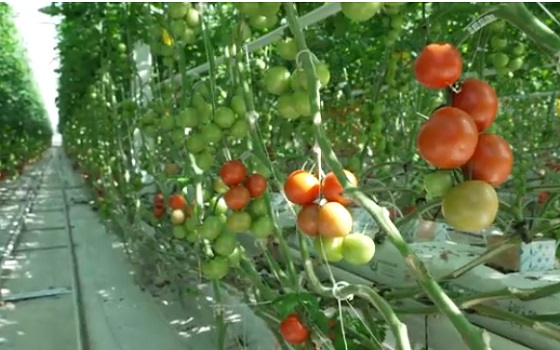
A new program funded by the Sustainable Canadian Agricultural Partnership will accelerate expansion in Alberta greenhouses and vertical farms.
Albertans want to keep their hard-earned money in the province and support producers by choosing locally grown, high-quality produce. The new three-year, $10-milllion Growing Greenhouses program aims to stimulate industry growth and provide fresh fruit and vegetables to Albertans throughout the year.
“Everything our ministry does is about ensuring Albertans have secure access to safe, high-quality food. We are continually working to build resilience and sustainability into our food production systems, increase opportunities for producers and processors, create jobs and feed Albertans. This new program will fund technologies that increase food production and improve energy efficiency.”
“Through this investment, we’re supporting Alberta’s growers and ensuring Canadians have access to fresh, locally-grown fruits and vegetables on grocery shelves year-round. This program strengthens local communities, drives innovation, and creates new opportunities for agricultural entrepreneurs, reinforcing Canada’s food system and economy.”
The Growing Greenhouses program supports the controlled environment agriculture sector with new construction or expansion improvements to existing greenhouses and vertical farms that produce food at a commercial scale. It also aligns with Alberta’s Buy Local initiative launched this year as consumers will be able to purchase more local produce all year-round.
The program was created in alignment with the needs identified by the greenhouse sector, with a goal to reduce seasonal import reliance entering fall, which increases fruit and vegetable prices.
“This program is a game-changer for Alberta’s greenhouse sector. By investing in expansion and innovation, we can grow more fresh produce year-round, reduce reliance on imports, and strengthen food security for Albertans. Our growers are ready to meet the demand with sustainable, locally grown vegetables and fruits, and this support ensures we can do so while creating new jobs and opportunities in communities across the province. We are very grateful to the Governments of Canada and Alberta for this investment in our sector and for working collaboratively with us.”
Sustainable Canadian Agricultural Partnership (Sustainable CAP)
Sustainable CAP is a five-year, $3.5-billion investment by federal, provincial and territorial governments to strengthen competitiveness, innovation and resiliency in Canada’s agriculture, agri-food and agri-based products sector. This includes $1 billion in federal programs and activities and $2.5 billion that is cost-shared 60 per cent federally and 40 per cent provincially/territorially for programs that are designed and delivered by provinces and territories.
Quick facts
- Alberta’s greenhouse sector ranks fourth in Canada:
- 195 greenhouses produce $145 million in produce and 60 per cent of them operate year-round.
- Greenhouse food production is growing by 6.2 per cent annually.
- Alberta imports $349 million in fresh produce annually.
- The program supports sector growth by investing in renewable and efficient energy systems, advanced lighting systems, energy-saving construction, and automation and robotics systems.
Related information


Common Vaccines Linked to 38-50% Increased Risk of Dementia and Alzheimer’s

Trump DOJ seeks to quash Pfizer whistleblower’s lawsuit over COVID shots

Alberta introducing three “all-season resort areas” to provide more summer activities in Alberta’s mountain parks

The $50 Billion Question: EVs Never Delivered What Ottawa Promised
-
 Alberta2 days ago
Canada’s New Green Deal
-
 Business2 days ago
Canada’s recent economic growth performance has been awful
-
 Alberta2 days ago
Alberta’s huge oil sands reserves dwarf U.S. shale
-
 armed forces2 days ago
Ottawa’s Newly Released Defence Plan Crosses a Dangerous Line
-
 Health2 days ago
Saskatchewan woman approved for euthanasia urged to seek medical help in Canada rather than US
-
 Indigenous2 days ago
Residential school burials controversy continues to fuel wave of church arsons, new data suggests
-
 Business2 days ago
COP30 finally admits what resource workers already knew: prosperity and lower emissions must go hand in hand
-
 Health2 days ago
Canadian gov’t considers sharing census data on gender-confused children