Connect with us

Business

While Canada’s population explodes, the federal workforce grows even faster

Published

2 minute read

From the Fraser Institute

By Ben Eisen and Milagros Palacios

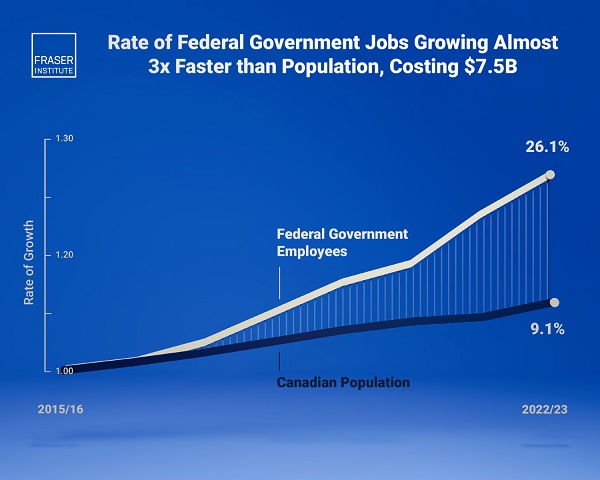
Hiring by the federal government in excess of population growth cost taxpayers $7.5 billion in 2022/23.

The federal workforce has grown more rapidly than the Canadian population starting in 2015/16, imposing significant costs on taxpayers, finds a new study published by the Fraser Institute, an independent, non-partisan Canadian public policy think tank.

Federal government employment has grown significantly faster than the Canadian population starting in 2015/16, and we’re already seeing the consequences,” said Ben Eisen, senior fellow at the Fraser Institute and author of Growing Government Workforce Puts Pressure on Federal Finances, the first in a series of studies on federal reform.

The study finds that between 2015/16 and 2022/23, the latest year of data available, the number of full-time federal workers has increased by 26.1 per cent compared to growth in the overall Canadian population of 9.1 per cent.

“Growth in federal employment has almost tripled the rate of population growth since 2015/16, which is simply unsustainable” commented Eisen.

How much will this growth in government cost Canadian taxpayers?

According to the study, if federal hiring had simply kept pace with the rate of Canada’s population growth taxpayers would have saved $7.5 billion.

The reduced spending on federal employees would lower the federal deficit, which is expected to exceed $35.3 billion in 2022/23.

“The growth in the number of federal employees has been a major contributor to the growth in federal government spending and the size of deficits in recent years,” Eisen said.

  • The Canadian federal government workforce has grown more rapidly than the Canadian population starting in 2015/16, imposing significant costs on taxpayers.
  • In fact, between 2015/16 and 2022/23, the latest year of data available, the number of full-time federal government workers has increased by 26.1 per cent, compared to growth in the overall Canadian population of 9.1 per cent.
  • If federal hiring had simply kept pace with the rate of Canada’s population growth taxpayers would have saved $7.5 billion.
  • The reduced spending on federal employees would lower the federal deficit, which is expected to exceed $35.3 billion in 2022/23.

Ben Eisen

Senior Fellow, Fraser Institute

Milagros Palacios

Director, Addington Centre for Measurement, Fraser Institute

Todayville is a digital media and technology company. We profile unique stories and events in our community. Register and promote your community event for free.

Follow Author

More from this author

Business

Land use will be British Columbia’s biggest issue in 2026

Published on

By Resource Works

Tariffs may fade. The collision between reconciliation, property rights, and investment will not.

British Columbia will talk about Donald Trump’s tariffs in 2026, and it will keep grinding through affordability. But the issue that will decide whether the province can build, invest, and govern is land use.

The warning signs were there in 2024. Land based industries still generate 12 per cent of B.C.’s GDP, and the province controls more than 90 per cent of the land base, and land policy was already being remade through opaque processes, including government to government tables. When rules for access to land feel unsettled, money flows slow into a trickle.

The Cowichan ruling sends shockwaves

In August 2025, the Cowichan ruling turned that unease into a live wire. The court recognized the Cowichan’s Aboriginal title over roughly 800 acres within Richmond, including lands held by governments and unnamed third parties. It found that grants of fee simple and other interests unjustifiably infringed that title, and declared certain Canada and Richmond titles and interests “defective and invalid,” with those invalidity declarations suspended for 18 months to give governments time to make arrangements.

The reaction has been split. Supporters see a reminder that constitutional rights do not evaporate because land changed hands. Critics see a precedent that leaves private owners exposed, especially because unnamed owners in the claim area were not parties to the case and did not receive formal notice. Even the idea of “coexistence” has become contentious, because both Aboriginal title and fee simple convey exclusive rights to decide land use and capture benefits.

Market chill sets in

McLTAikins translated the risk into advice that landowners and lenders can act on: registered ownership is not immune from constitutional scrutiny, and the land title system cannot cure a constitutional defect where Aboriginal title is established. Their explanation of fee simple reads less like theory than a due diligence checklist that now reaches beyond the registry.

By December, the market was answering. National Post columnist Adam Pankratz reported that an industrial landowner within the Cowichan title area lost a lender and a prospective tenant after a $35 million construction loan was pulled. He also described a separate Richmond hotel deal where a buyer withdrew after citing precedent risk, even though the hotel was not within the declared title lands. His case that uncertainty is already changing behaviour is laid out in Montrose.

Caroline Elliott captured how quickly court language moved into daily life after a City Richmond letter warned some owners that their title might be compromised. Whatever one thinks of that wording, it pushed land law out of the courtroom and into the mortgage conversation.

Mining and exploration stall

The same fault line runs through the critical minerals push. A new mineral claims regime now requires consultation before claims are approved, and critics argue it slows early stage exploration and forces prospectors to reveal targets before they can secure rights. Pankratz made that critique earlier, in his argument about mineral staking.

Resource Works, summarising AME feedback on Mineral Tenure Act modernisation, reported that 69.5 per cent of respondents lacked confidence in proposed changes, and that more than three quarters reported increased uncertainty about doing business in B.C. The theme is not anti consultation. It is that process, capacity, and timelines decide whether consultation produces partnership or paralysis.

Layered on top is the widening fight over UNDRIP implementation and DRIPA. Geoffrey Moyse, KC, called for repeal in a Northern Beat essay on DRIPA, arguing that Section 35 already provides the constitutional framework and that trying to operationalise UNDRIP invites litigation and uncertainty.

Tariffs and housing will still dominate headlines. But they are downstream of land. Until B.C. offers a stable bargain over who can do what, where, and on what foundation, every other promise will be hostage to the same uncertainty. For a province still built on land based wealth, Resource Works argues in its institutional history that the resource economy cannot be separated from land rules. In 2026, that is the main stage.

Resource Works News
Continue Reading

Business

What Do Loyalty Rewards Programs Cost Us?

Published on

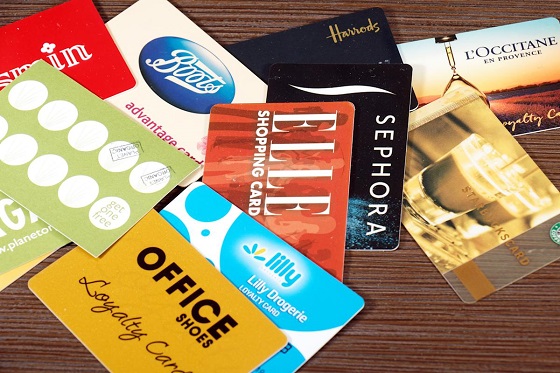
You’ve certainly been asked (begged!) to join up for at least one loyalty “points” program – like PC Optimum, Aeroplan, or Hilton Honors – over the years. And the odds are that you’re currently signed up for at least one of them. In fact, the average person apparently belongs to at no less than 14 programs. Although, ironically, you’ll need to sign up to an online equivalent of a loyalty program to read the source for that number.

Well all that warm, fuzzy “belonging” comes with some serious down sides. Let’s see how much they might cost us.

To be sure, there’s real money involved here. Canadians redeem at least two billion dollars in program rewards each year, and payouts will often represent between one and ten percent of the original purchase value.

At the same time, it’s estimated that there could be tens of billions of unredeemed dollars due to expirations, shifting program terms, and simple neglect. So getting your goodies isn’t automatic.

The Audit is a reader-supported publication.

To receive new posts and support my work, consider becoming a free or paid subscriber.

Just why do consumer-facing corporations agree to give away so much money in the fist place?

As you probably already know, it’s about your data. Businesses are willing to pay cold, hard cash in exchange for detailed descriptions of your age, sex, ethnicity, wealth, location, employment status, hobbies, preferences, medical conditions, political leanings, and, of course, shopping habits.

Don’t believe it works? So then why, after all these years, are points programs still giving away billions of dollars?

Every time you participate in such a program, the data associated with that activity will be collected and aggregated along with everything else known about you. It’s more than likely that points-based data is being combined with everything connected to your mobile phone account, email addresses, credit cards, provincial health card, and – possibly – your Social Insurance number. The depth and accuracy of your digital profile improves daily.

What happens to all that data? A lot of it is shared with – or sold to – partners or affiliates for marketing purposes. Some of it is accidentally (or intentionally) leaked to organized criminal gangs driving call center-related scams. But it’s all about getting to know you better in ways that maximize someone’s profits.

One truly scary way this data is used involves surveillance pricing (also known as price discrimination) – particularly as it’s described in a recent post by Professor Sylvain Charlebois.

The idea is that retailers will use your digital profile to adjust the prices you pay at the cash register or when you’re shopping online. The more loyal you are as a customer, the more you’ll pay. That’s because regular (“loyal”) customers are already reliable revenue sources. Companies don’t need to spend anything to build a relationship with you. But they’re more than willing to give up a few percentage points to gain new friends.

I’m not talking about the kind of price discrimination that might lead to higher prices for sales in, say, urban locations to account for higher real estate and transportation costs. Those are just normal business decisions.

What Professor Charlebois described is two customers paying different prices for the same items in the same stores. In fact, a recent Consumer Reports experiment in the U.S. involving 437 shoppers in four cities found the practice to be quite common.

But the nasty bit here is that there’s growing evidence that retailers are using surveillance pricing in grocery stores for basic food items. Extrapolating from the Consumer Reports study, such pricing could be adding $1,200 annually to a typical family’s spending on basic groceries.

I’m not sure what the solution is. It’s way too late to “unenroll” from our loyalty accounts. And government intervention would probably just end up making things worse.

But perhaps getting the word out about what’s happening could spark justified mistrust in the big retailers. No retailer enjoys dealing with grumpy customers.

Be grumpy.

The Audit is a reader-supported publication.

To receive new posts and support my work, consider becoming a free or paid subscriber.

Continue Reading

Trending

X