
Business
Upcoming federal budget likely to increase—not reduce—policy uncertainty



From the Fraser Institute
By Tegan Hill and Grady Munro
The government is opening the door to cronyism, favouritism and potentially outright corruption
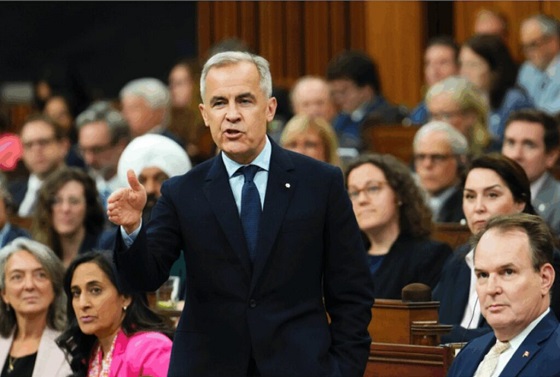
In the midst of budget consultations, the Carney government hopes its upcoming fall budget will provide “certainty” to investors. While Canada desperately needs to attract more investment, the government’s plan thus far may actually make Canada less attractive to investors.
Canada faces serious economic challenges. In recent years, the economy (measured on an inflation-adjusted per-person basis) has grown at its slowest rate since the Great Depression. And living standards have hardly improved over the last decade.
At the heart of this economic stagnation is a collapse in business investment, which is necessary to equip Canadian workers with the tools and technology to produce more and provide higher quality goods and services. Indeed, from 2014 to 2022, inflation-adjusted business investment (excluding residential construction) per worker in Canada declined (on average) by 2.3 per cent annually. For perspective, business investment per worker increased (on average) by 2.8 per cent annually from 2000 to 2014.
While there are many factors that contribute to this decline, uncertainty around government policy and regulation is certainly one. For example, investors surveyed in both the mining and energy sectors consistently highlight policy and regulatory uncertainty as a key factor that deters investment. And investors indicate that uncertainty on regulations is higher in Canadian provinces than in U.S. states, which can lead to future declines in economic growth and employment. Given this, the Carney government is right to try and provide greater certainty for investors.
But the upcoming federal budget will likely do the exact opposite.

According to Liberal MPs involved in the budget consultation process, the budget will expand on themes laid out in the recently-passed Building Canada Act (a.k.a. Bill C-5), while also putting new rules into place that signal where the government wants investment to be focused.
This is the wrong approach. Bill C-5 is intended to help improve regulatory certainty by speeding up the approval process for projects that cabinet deems to be in the “national interest” while also allowing cabinet to override existing laws, regulations and guidelines to facilitate such projects. In other words, the legislation gives cabinet the power to pick winners and losers based on vague criteria and priorities rather than reducing the regulatory burden for all businesses.
Put simply, the government is opening the door to cronyism, favouritism and potentially outright corruption. This won’t improve certainty; it will instead introduce further ambiguity into the system and make Canada even less attractive to investment.
In addition to the regulatory side, the budget will likely deter investment by projecting massive deficits in the coming years and adding considerably to federal debt. In fact, based on the government’s election platform, the government planned to run deficits totalling $224.8 billion over the next four years—and that’s before the government pledged tens of billions more in additional defence spending.
A growing debt burden can deter investment in two ways. First, when governments run deficits they increase demand for borrowing by competing with the private sector for resources. This can raise interest rates for the government and private sector alike, which lowers the amount of private investment into the economy. Second, a rising debt burden raises the risk that governments will need to increase taxes in the future to pay off debt or finance their growing interest payments. The threat of higher taxes, which would reduce returns on investment, can deter businesses from investing in Canada today.
Much is riding on the Carney government’s upcoming budget, which will set the tone for federal policy over the coming years. To attract greater investment and help address Canada’s economic challenges, the government should provide greater certainty for businesses. That means reining in spending, massive deficits and reducing the regulatory burden for all businesses—not more of the same.

Tegan Hill
Director, Alberta Policy, Fraser Institute

Grady Munro
Policy Analyst, Fraser Institute


The Canadian Taxpayers Federation released its annual New Year’s Tax Changes report today to highlight the major tax changes in 2026.
“There’s some good news and bad news for taxpayers in 2026,” said Franco Terrazzano, CTF Federal Director. “The federal government cut income taxes, but it’s hiking payroll taxes. The government cancelled the consumer carbon tax, but it’s hammering Canadian businesses with a higher industrial carbon tax.”
Payroll taxes: The federal government is raising the maximum mandatory Canada Pension Plan and Employment Insurance contributions in 2026. These payroll tax increases will cost a worker up to an additional $262 next year.
For workers making $85,000 or more, federal payroll taxes (CPP and EI tax) will cost $5,770 in 2026. Their employers will also be forced to pay $6,219.
Income tax: The federal government cut the lowest income tax rate from 15 to 14 per cent. This will save the average taxpayer $190 in 2026, according to the Parliamentary Budget Officer.
Carbon taxes: The government cancelled its consumer carbon tax effective April 1, 2025. However, the government still charges carbon taxes through its industrial carbon tax and a hidden carbon tax embedded in fuel regulations.
The industrial carbon tax will increase to $110 per tonne in 2026. While the government hasn’t provided further details on how much the industrial carbon tax will cost Canadians, 70 per cent of Canadians believe businesses pass on most or some of the cost of the tax to consumers, according to a Leger poll.
Alcohol taxes: Federal alcohol taxes are expected to increase by two per cent on April 1, 2026. This alcohol tax hike will cost taxpayers about $41 million in 2026-27, according to industry estimates.
First passed in the 2017 federal budget, the alcohol escalator tax automatically increases excise taxes on beer, wine and spirits every year without a vote in Parliament. Since being imposed, the alcohol escalator tax has cost taxpayers about $1.6 billion, according to industry estimates.
“Canadians pay too much tax because the government wastes too much money,” Terrazzano said. “Canadians are overtaxed and need serious tax cuts to help make life more affordable and our economy more competitive.
“Prime Minister Mark Carney needs to significantly cut spending, provide major tax relief and scrap all carbon taxes.”
You can read the CTF’s New Year’s Tax Changes report here.
From the Fraser Institute
By Annika Segelhorst and Elmira Aliakbari
According to Steven Guilbeault, former environment minister under Justin Trudeau and former member of Prime Minister Carney’s cabinet, “Switching to an electric vehicle is one of the most impactful things Canadians can do to help fight climate change.”
And the Carney government has only paused Trudeau’s electric vehicle (EV) sales mandate to conduct a “review” of the policy, despite industry pressure to scrap the policy altogether.
So clearly, according to policymakers in Ottawa, EVs are essentially “zero emission” and thus good for environment.
But is that true?
Clearly, EVs have some environmental advantages over traditional gasoline-powered vehicles. Unlike cars with engines that directly burn fossil fuels, EVs do not produce tailpipe emissions of pollutants such as nitrogen dioxide and carbon monoxide, and do not release greenhouse gases (GHGs) such as carbon dioxide. These benefits are real. But when you consider the entire lifecycle of an EV, the picture becomes much more complicated.
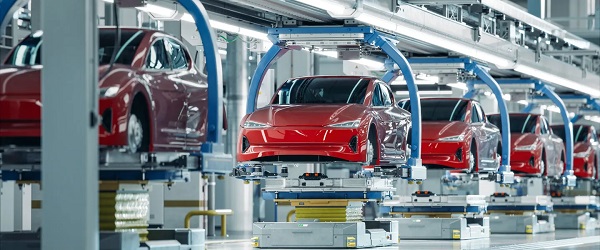
Unlike traditional gasoline-powered vehicles, battery-powered EVs and plug-in hybrids generate most of their GHG emissions before the vehicles roll off the assembly line. Compared with conventional gas-powered cars, EVs typically require more fossil fuel energy to manufacture, largely because to produce EVs batteries, producers require a variety of mined materials including cobalt, graphite, lithium, manganese and nickel, which all take lots of energy to extract and process. Once these raw materials are mined, processed and transported across often vast distances to manufacturing sites, they must be assembled into battery packs. Consequently, the manufacturing process of an EV—from the initial mining of materials to final assembly—produces twice the quantity of GHGs (on average) as the manufacturing process for a comparable gas-powered car.
Once an EV is on the road, its carbon footprint depends on how the electricity used to charge its battery is generated. According to a report from the Canada Energy Regulator (the federal agency responsible for overseeing oil, gas and electric utilities), in British Columbia, Manitoba, Quebec and Ontario, electricity is largely produced from low- or even zero-carbon sources such as hydro, so EVs in these provinces have a low level of “indirect” emissions.
However, in other provinces—particularly Alberta, Saskatchewan and Nova Scotia—electricity generation is more heavily reliant on fossil fuels such as coal and natural gas, so EVs produce much higher indirect emissions. And according to research from the University of Toronto, in coal-dependent U.S. states such as West Virginia, an EV can emit about 6 per cent more GHG emissions over its entire lifetime—from initial mining, manufacturing and charging to eventual disposal—than a gas-powered vehicle of the same size. This means that in regions with especially coal-dependent energy grids, EVs could impose more climate costs than benefits. Put simply, for an EV to help meaningfully reduce emissions while on the road, its electricity must come from low-carbon electricity sources—something that does not happen in certain areas of Canada and the United States.
Finally, even after an EV is off the road, it continues to produce emissions, mainly because of the battery. EV batteries contain components that are energy-intensive to extract but also notoriously challenging to recycle. While EV battery recycling technologies are still emerging, approximately 5 per cent of lithium-ion batteries, which are commonly used in EVs, are actually recycled worldwide. This means that most new EVs feature batteries with no recycled components—further weakening the environmental benefit of EVs.
So what’s the final analysis? The technology continues to evolve and therefore the calculations will continue to change. But right now, while electric vehicles clearly help reduce tailpipe emissions, they’re not necessarily “zero emission” vehicles. And after you consider the full lifecycle—manufacturing, charging, scrapping—a more accurate picture of their environmental impact comes into view.

Annika Segelhorst
Junior Economist

Elmira Aliakbari


Wayne Gretzky’s Terrible, Awful Week.. And Soccer/ Football.

Western Campuses Help Build China’s Digital Dragnet With U.S. Tax Funds, Study Warns

Common Vaccines Linked to 38-50% Increased Risk of Dementia and Alzheimer’s

Trump DOJ seeks to quash Pfizer whistleblower’s lawsuit over COVID shots
-
COVID-192 days ago
Trump DOJ seeks to quash Pfizer whistleblower’s lawsuit over COVID shots
-
 Alberta2 days ago
Alberta introducing three “all-season resort areas” to provide more summer activities in Alberta’s mountain parks
-
 Agriculture2 days ago
Growing Alberta’s fresh food future
-
 International2 days ago
Trump admin wants to help Canadian woman rethink euthanasia, Glenn Beck says
-
 Alberta2 days ago
The case for expanding Canada’s energy exports
-
 Censorship Industrial Complex2 days ago
Ottawa’s New Hate Law Goes Too Far
-
 Business2 days ago
Fuelled by federalism—America’s economically freest states come out on top
-
Automotive2 days ago
Politicians should be honest about environmental pros and cons of electric vehicles