
International
Tyler Robinson shows no remorse in first court appearance for Kirk assassination

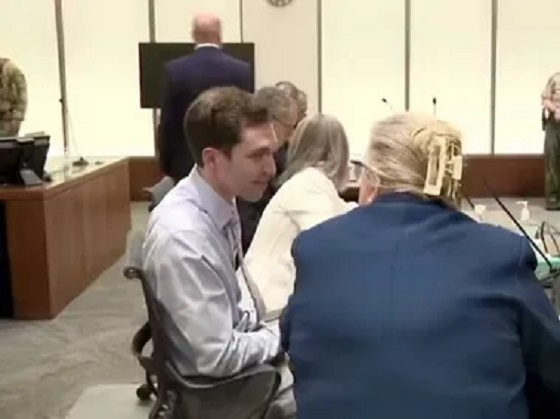


Tyler Robinson walked into a packed Provo courtroom Thursday looking nothing like a man facing a potential firing squad. The 22-year-old accused of murdering conservative leader Charlie Kirk during a Utah Valley University event sat at the defense table in a blue button-down and tie, trading quiet laughs with his attorneys as his family watched from the gallery. It was the first time the public had seen Robinson in person since the September 10 shooting that stunned the country, when Kirk — a 31-year-old father of two and a driving force behind a new generation of young conservatives — was gunned down in front of thousands.
Judge Tony Graf allowed cameras to film only part of Thursday’s hearing before moving into a closed session to hear arguments over whether the media should be barred from future proceedings. Robinson’s attorneys insist that cameras could influence potential jurors, a claim that has been echoed by the Utah County Sheriff’s Office. Graf agreed to a limited compromise, cutting the feed for the internal debate but reopening the courtroom afterward. Even Robinson’s own family — his father, mother, and brother — were temporarily removed during the closed-door portion despite defense requests to keep them inside.
Suspected Charlie Kirk assassin Tyler Robinson seen smirking, laughing in his first public court appearance. pic.twitter.com/4MXrWSoAlB
— johnny maga (@_johnnymaga) December 11, 2025
Through it all, Robinson appeared almost relaxed. He smiled, whispered what looked like joking comments to his lawyers, and maintained a calm demeanor that stood in stark contrast to the charges he’s facing: aggravated murder, felony discharge of a firearm causing serious bodily injury, obstruction of justice, two counts of witness tampering, and committing a violent offense in the presence of a child. Prosecutors say Robinson shot Kirk once in the neck with a bolt-action rifle as Kirk spoke onstage, then slipped away as stunned students rushed to help. Videos of the attack ricocheted across social media within minutes, fueling national outrage and triggering a manhunt.

The break in the case came 33 hours later, when Robinson’s own father turned him in after images of the suspected shooter circulated online. Investigators say Robinson later admitted the killing in text messages to a trans live-in partner and even described where he hid the rifle. He has not yet entered a plea.
Robinson fought successfully to appear in civilian clothing — a request Judge Graf granted in an earlier remote hearing — but the court ordered him to remain shackled for safety reasons, with instructions that the restraints not be filmed. Meanwhile, Erika Kirk, the widow of the slain Turning Point USA co-founder, has been adamant that cameras stay in place, arguing the public deserves to see the man accused of executing her husband in broad daylight.
If convicted, Robinson faces the death penalty — by firing squad, the method allowed under Utah law.


From the Fraser Institute
By Annika Segelhorst and Elmira Aliakbari
Canadians care about the environment and breathing clean air. In 2023, the share of Canadians concerned about the state of outdoor air quality was 7 in 10, according to survey results from Abacus Data. Yet Canada outperforms most comparable high-income countries on air quality, suggesting a gap between public perception and empirical reality. Overall, Canada ranks 8th for air quality among 31 high-income countries, according to our recent study published by the Fraser Institute.
A key determinant of air quality is the presence of tiny solid particles and liquid droplets floating in the air, known as particulates. The smallest of these particles, known as fine particulate matter, are especially hazardous, as they can penetrate deep into a person’s lungs, enter the blood stream and harm our health.
Exposure to fine particulate matter stems from both natural and human sources. Natural events such as wildfires, dust storms and volcanic eruptions can release particles into the air that can travel thousands of kilometres. Other sources of particulate pollution originate from human activities such as the combustion of fossil fuels in automobiles and during industrial processes.
The World Health Organization (WHO) and the Canadian Council of Ministers of the Environment (CCME) publish air quality guidelines related to health, which we used to measure and rank 31 high-income countries on air quality.
Using data from 2022 (the latest year of consistently available data), our study assessed air quality based on three measures related to particulate pollution: (1) average exposure, (2) share of the population at risk, and (3) estimated health impacts.
The first measure, average exposure, reflects the average level of outdoor particle pollution people are exposed to over a year. Among 31 high-income countries, Canadians had the 5th-lowest average exposure to particulate pollution.
Next, the study considered the proportion of each country’s population that experienced an annual average level of fine particle pollution greater than the WHO’s air quality guideline. Only 2 per cent of Canadians were exposed to fine particle pollution levels exceeding the WHO guideline for annual exposure, ranking 9th of 31 countries. In other words, 98 per cent of Canadians were not exposed to fine particulate pollution levels exceeding health guidelines.
Finally, the study reviewed estimates of illness and mortality associated with fine particle pollution in each country. Canada had the fifth-lowest estimated death and illness burden due to fine particle pollution.
Taken together, the results show that Canada stands out as a global leader on clean air, ranking 8th overall for air quality among high-income countries.

Canada’s record underscores both the progress made in achieving cleaner air and the quality of life our clean air supports.

Annika Segelhorst
Junior Economist

Elmira Aliakbari
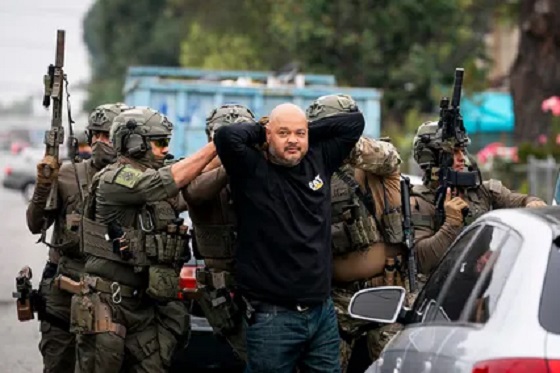
President Trump’s Department of Homeland Security is marking what officials are calling a landmark moment in U.S. immigration enforcement, announcing Wednesday that more than 2.5 million illegal aliens have now left the country since Trump returned to the Oval Office in January. DHS Secretary Kristi Noem said the surge reflects a sweeping, sustained crackdown driven by Immigration and Customs Enforcement teams that — according to internal tallies — have already removed more than 605,000 illegal aliens, most of whom were facing criminal charges or carrying prior convictions. Nearly two million more have opted to self-deport, a wave Noem attributes to stepped-up enforcement and the administration’s aggressive public messaging. She again urged those still in the country illegally to use the government’s CBP Home app, which offers a free one-way flight and a $1,000 stipend to expedite departure.
Senior DHS officials say arrests have climbed as well, with almost 600,000 illegal aliens taken into custody since January 20. “Illegal aliens are hearing our message to leave now,” DHS official McLaughlin said this week. “They know if they don’t, we will find them, we will arrest them, and they will never return.”
The administration argues the impact is being felt far beyond immigration courts and detention facilities, pointing to the U.S. housing market as one of the clearest signs of change. For six straight months, DHS says not a single illegal alien has been released into the interior from the southern border — a dramatic shift after years of mass inflows under President Biden. That decline, they say, is finally filtering into rent and home-price data after years of punishing increases.
Housing and Urban Development Secretary Scott Turner said Americans have now seen four consecutive months of rent decreases — the first sustained drop in years — as fewer illegal aliens compete for housing. Vice President JD Vance emphasized the connection even more bluntly: “The connection between illegal immigration and skyrocketing housing costs is as clear as day. We are proud to be moving in the right direction. Still so much to do.”
Research abroad and at home backs up the administration’s argument. Economists in Denmark released findings earlier this year showing that a one-percentage-point rise in local immigration over a five-year period drove private rental prices up roughly 6 percent and home prices up about 11 percent. The Center for Immigration Studies presented similar data to Congress last year, with researcher Steven Camarota testifying that a 5-percentage-point increase in a metro area’s recent-immigrant share was tied to a 12-percent rise in rent for U.S.-born households.
As DHS leaders frame it, Trump’s second-term enforcement machine is reshaping both border policy and household budgets — an approach they say is finally delivering relief to Americans who spent years squeezed by soaring housing costs and unchecked migration.

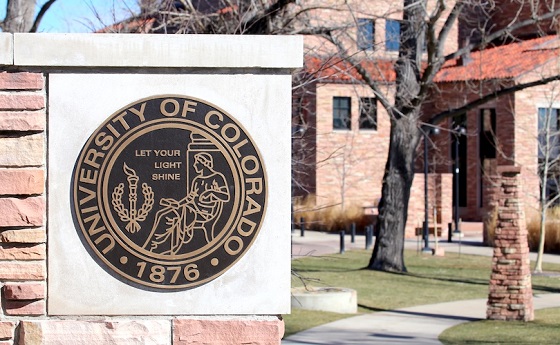
University of Colorado will pay $10 million to staff, students for trying to force them to take COVID shots

Wayne Gretzky’s Terrible, Awful Week.. And Soccer/ Football.

Western Campuses Help Build China’s Digital Dragnet With U.S. Tax Funds, Study Warns
Surgery Denied. Death Approved.
-
Bruce Dowbiggin1 hour ago
Wayne Gretzky’s Terrible, Awful Week.. And Soccer/ Football.
-
espionage4 hours ago
Western Campuses Help Build China’s Digital Dragnet With U.S. Tax Funds, Study Warns
-
Agriculture1 min ago
Canada’s air quality among the best in the world
-
 Business2 hours ago
Canada invests $34 million in Chinese drones now considered to be ‘high security risks’
-
 Economy3 hours ago
Affordable housing out of reach everywhere in Canada
-
 Business2 days ago
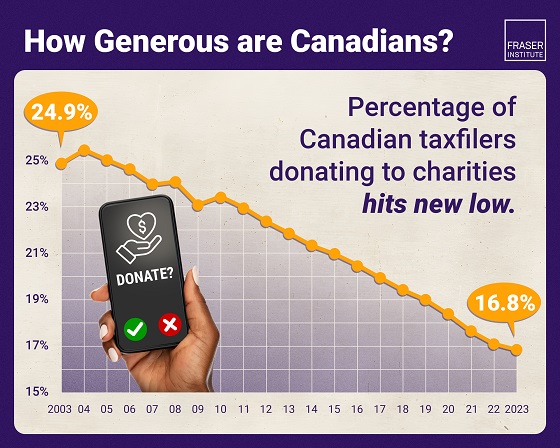
Albertans give most on average but Canadian generosity hits lowest point in 20 years
-
 Fraser Institute1 day ago
Claims about ‘unmarked graves’ don’t withstand scrutiny
-
 Bruce Dowbiggin2 days ago
Carney Hears A Who: Here Comes The Grinch