
Opinion
Two Press Conferences, Two Futures: Reality vs. Liberal Delusion

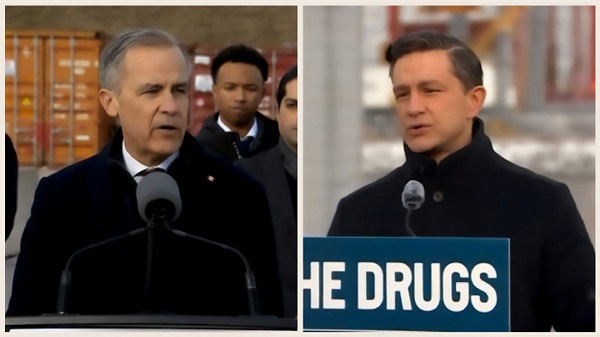


Poilievre lays out a real plan to fight fentanyl and secure Canada’s economy. Carney delivers empty slogans and Trudeau 2.0 talking points.
So let’s talk about two very different press conferences that happened today. One was from Pierre Poilievre, who laid out a serious, detailed plan to crack down on fentanyl traffickers, secure Canada’s borders, and put drug kingpins in prison for life. The other? Mark Carney, the Liberal Party’s unelected golden boy, who stood at a podium, threw out a bunch of vague, focus-grouped slogans, and then told Canadians—with a straight face—that he’s not a politician.
Hold on—HAHAHAHAHA. Let’s just take a second to appreciate how absurd that is.
Mark Carney—the man standing at a podium, announcing his candidacy to lead the Liberal Party, delivering pre-rehearsed political talking points, and desperately trying to sound relatable—is telling you he’s not a politician.
That’s like Justin Trudeau saying he’s not a virtue-signaler. It’s like Joe Biden saying he’s a great public speaker. It’s like CNN saying they just report the news. It’s so obviously untrue that you almost have to admire the sheer arrogance of saying it out loud.
But Carney’s dishonesty didn’t stop there. No, he went on to deliver a speech so full of contradictions, hypocrisy, and Liberal gaslighting that it deserves its own category at the Academy Awards.
Carney’s Fantasy vs. Poilievre’s Reality on the Fentanyl Crisis
Poilievre’s press conference today was dead serious—because the fentanyl crisis is dead serious. He laid out the numbers:
- 50,000 Canadians dead since 2016. More than all the soldiers we lost in World War II.
- A super lab in British Columbia capable of producing enough fentanyl to kill 95 million people.
- 99% of shipping containers coming into Canada go uninspected.
His response? Mandatory life sentences for fentanyl traffickers. 15-year minimums for those caught with smaller amounts. Military-backed border security. 2,000 new CBSA officers to stop fentanyl from coming in at the source.
Now let’s compare that to Carney’s response.
Oh wait—he didn’t have one.
Carney spent his entire press conference talking about “trade diversification” and “economic growth.” Not a single detailed plan for stopping the flow of fentanyl into this country, putting drug traffickers in prison, or protecting Canadian families.
Why? Because the Liberal Party doesn’t actually care about fentanyl. They only started pretending to care because Trump forced them to.
Poilievre called it out perfectly:
“If Donald Trump hadn’t threatened tariffs, Trudeau wouldn’t even be talking about fentanyl.”
And he’s right. Because if Trudeau, Carney, and the Liberals actually cared about fentanyl, they wouldn’t have eliminated mandatory minimums for traffickers with Bill C-5.
Carney’s Laughable “Trade Strategy” vs. Poilievre’s Economic Reality
Carney—who spent most of his career **as an unelected globalist banker—**wants you to believe he has a plan to fix Canada’s economy. His big idea?
“We need to diversify trade away from the U.S.”
Oh, brilliant! Canada should just pivot away from its largest trading partner—the country that buys 75% of our exports—and do business with… who exactly?
China? The same China that’s flooding our country with fentanyl and stealing our intellectual property?
That’s like saying, “I don’t like getting my paycheck from my current job, so I’ll just get paid by a different company!” That’s not how reality works, Mark.
But now Mark Carney wants to diversify trade away from the U.S.? Fascinating. And how exactly does he plan to do that?
Energy East? Oh yeah, you guys killed that. A pipeline that would have let us sell our own oil to our own refineries instead of importing from Saudi Arabia—but nope, too “dirty” for the Liberal climate cult.
Northern Gateway? Oh yeah, canceled that too. That would have gotten Alberta oil to the Pacific, letting us sell to Asia instead of relying on the Americans. But the Liberals shut it down before the first barrel could even roll.
How about LNG exports to Japan? Oh wait—Trudeau’s government said there was “no business case.” Meanwhile, Japan is signing massive deals with Qatar while Canada, sitting on one of the world’s largest gas reserves, does absolutely nothing. Brilliant strategy, Mark.
So what’s the plan here? Sell more maple syrup to Belgium? Hope the French suddenly develop a taste for Tim Hortons coffee? Maybe trade luxury tax credits for electric BMWs? Be serious.
This is the problem with guys like Carney—they live in a world of theoretical trade deals and imaginary supply chains, while the rest of us have to live with reality. And the reality is, Canada depends on the U.S. because Liberal policies have systematically destroyed every alternative.
But sure, Mark. Tell us more about your vision for trade while Canada’s biggest industries are locked out of the global market—because of people like you.
Meanwhile, Poilievre actually acknowledged reality.
“Trump sees weakness, and what does a real estate mogul from New York do when he spots weakness? He pounces.”
This isn’t just about trade. This is about Canada being so economically weak after eight years of Liberal mismanagement that we’re now at the mercy of Trump’s tariffs.
And what did Carney have to say about that? Nothing.
Carney’s Carbon Tax Flip-Flop
And here it is—Carbon Tax 2.0 from Trudeau 2.0.
Mark Carney, the guy who spent years preaching that carbon taxes were the single most powerful tool to fight climate change, is now standing at a podium, pretending he never said that.
“We should eliminate the consumer carbon tax and instead make large polluters pay.”
Oh really? Excuse me? Carney spent his entire career defending carbon taxes, telling struggling Canadians that their skyrocketing gas and heating bills were just part of the “climate transition.” And now, magically, he’s against them?
This isn’t leadership. This is pure, shameless political opportunism.
Let’s get something straight: Mark Carney doesn’t actually care about the carbon tax. What he does care about is winning an election. And right now, even Liberal voters hate the carbon tax. So suddenly, he’s got a new idea—carbon tax for thee, but not for me.
Because, of course, Carney himself never had to pay these taxes. The man made millions as a banker, then made even more at Brookfield Asset Management—a firm that just happens to be heavily invested in fossil fuels. Oh yeah, Carney loved talking about green energy, but when it came to his own paycheck? Fossil fuels were just fine.
This is the classic Liberal formula: They jack up your energy costs, kill your job, and call it a “transition” while making sure their wealthy buddies get exemptions.
Now contrast that with Pierre Poilievre’s response.
Axe the tax.
Yeah, no shit.
While Carney is rebranding the exact same Liberal scam, Poilievre is saying what every Canadian already knows: The carbon tax isn’t saving the planet. It’s just making life unaffordable.
Because here’s the truth: It was never about fighting climate change. It was always about taking your money. And Carney’s latest spin? It’s just the next version of the same scam.
Mark Carney: Trudeau 2.0, Just With a Better Suit
Here’s the bottom line: Poilievre laid out a real plan today—one that actually addresses the fentanyl crisis, border security, and Canada’s economic vulnerabilities.
Carney? He gave a meaningless, bureaucratic speech that could have been written by ChatGPT.
Poilievre talked about real consequences for fentanyl traffickers. Carney didn’t.
Poilievre called out the Liberals’ disastrous economic policies. Carney helped design them.
Poilievre acknowledged Canada’s dependence on the U.S. Carney pretended we could just trade with Europe instead.
And yet, the Liberal Party wants you to believe that Mark Carney is Canada’s next great leader.
Here’s the truth: Carney isn’t new. He isn’t different. He isn’t a “pragmatist.” He’s just Justin Trudeau in a better suit, with a fancier resume, and the exact same failed policies.
And if Canadians fall for this scam, we’ll get four more years of Trudeau-style incompetence—just with a British accent.

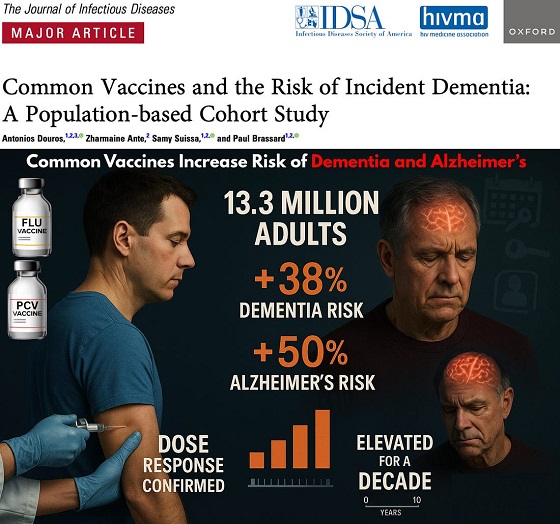

The single largest vaccine–dementia study ever conducted (n=13.3 million) finds risk intensifies with more doses, remains elevated for a full decade, and is strongest after flu and pneumococcal shots.
The single largest and most rigorous study ever conducted on vaccines and dementia — spanning 13.3 million UK adults — has uncovered a deeply troubling pattern: those who received common adult vaccines faced a significantly higher risk of both dementia and Alzheimer’s disease.
The risk intensifies with more doses, remains elevated for a full decade, and is strongest after influenza and pneumococcal vaccination. With each layer of statistical adjustment, the signal doesn’t fade — it becomes sharper, more consistent, and increasingly difficult to explain away.
And critically, these associations persisted even after adjusting for an unusually wide range of potential confounders, including age, sex, socioeconomic status, BMI, smoking, alcohol-related disorders, hypertension, atrial fibrillation, heart failure, coronary artery disease, stroke/TIA, peripheral vascular disease, diabetes, chronic kidney and liver disease, depression, epilepsy, Parkinson’s disease, cancer, traumatic brain injury, hypothyroidism, osteoporosis, and dozens of medications ranging from NSAIDs and opioids to statins, antiplatelets, immunosuppressants, and antidepressants.
Even after controlling for this extensive list, the elevated risks remained strong and remarkably stable.
Vaccinated Adults Had a 38% Higher Risk of Dementia
The primary adjusted model showed that adults receiving common adult vaccines (influenza, pneumococcal, shingles, tetanus, diphtheria, pertussis) had a:
38% increased risk of developing dementia (OR 1.38)
This alone dismantles the narrative of “vaccines protect the brain,” but the deeper findings are far worse.
Alzheimer’s Disease Risk Is Even Higher — 50% Increased Risk
Buried in the supplemental tables is a more shocking result: when the authors restricted analyses to Alzheimer’s disease specifically, the association grew even stronger.
50% increased risk of Alzheimer’s (Adjusted OR 1.50)
This indicates the effect is not random. The association intensifies for the most devastating subtype of dementia.
Clear Dose–Response Pattern: More Vaccines = Higher Risk
 |
The authors ran multiple dose–response models, and every one of them shows the same pattern:
Dementia (all types)
From eTable 2:
- 1 vaccine dose → Adjusted OR 1.26 (26% higher risk)
- 2–3 doses → Adjusted OR 1.32 (32% higher risk)
- 4–7 doses → Adjusted OR 1.42 (42% higher risk)
- 8–12 doses → Adjusted OR 1.50 (50% higher risk)
- ≥13 doses → Adjusted OR 1.55 (55% higher risk)
Alzheimer’s Disease (AD) Shows the Same—and Even Stronger—Trend
From eTable 7:
- 1 dose → Adjusted OR 1.32 (32% higher risk)
- 2–3 doses → Adjusted OR 1.41 (41% higher risk)
- ≥4 doses → Adjusted OR 1.61 (61% higher risk)
This is one of the most powerful and unmistakable signals in epidemiology.
Time–Response Curve: Risk Peaks Soon After Vaccination and Remains Elevated for Years
 |
Another signal strongly inconsistent with mere bias: a time-response relationship.

The highest dementia risk occurs 2–4.9 years after vaccination (Adjusted OR 1.56). The risk then slowly attenuates but never returns to baseline, remaining elevated across all time windows.
After 12.5 years, the risk is still meaningfully elevated (Adjusted OR 1.28) — a persistence incompatible with short-term “detection bias” and suggestive of a long-lasting biological impact.
This pattern is what you expect from a biological trigger with long-latency neuroinflammatory or neurodegenerative consequences.
Even After a 10-Year Lag, the Increased Risk Does Not Disappear
When the authors apply a long 10-year lag — meant to eliminate early detection bias — the elevated risk persists:
- Dementia: OR 1.20
- Alzheimer’s: OR 1.26
If this were simply “people who see doctors more often get diagnosed earlier,” the association should disappear under long lag correction.
Influenza and Pneumococcal Vaccines Drive the Signal
Two vaccines show particularly strong associations:
Influenza vaccine
- Dementia: OR 1.39 → 39% higher risk
- Alzheimer’s: OR 1.49 → 49% higher risk
Pneumococcal vaccine
- Dementia: OR 1.12 → 12% higher risk
- Alzheimer’s: OR 1.15 → 15% higher risk
And again, both exhibit dose–response escalation — the hallmark pattern of a genuine exposure–outcome relationship.
Taken together, the findings across primary, supplemental, dose–response, time–response, stratified, and sensitivity analyses paint the same picture:
• A consistent association between cumulative vaccination and increased dementia risk
• A stronger association for Alzheimer’s than for general dementia
• A dose–response effect — more vaccines, higher risk
• A time–response effect — risk peaks after exposure and persists long-term
• Influenza and pneumococcal vaccines strongly drive the signal
• The association remains after 10-year lag correction and active comparator controls
This is what a robust epidemiologic signal looks like.
In the largest single study ever conducted on vaccines and dementia, common adult vaccinations were associated with a 38% higher risk of dementia and a 50% higher risk of Alzheimer’s disease. The risk increases with more doses, persists for a decade, and is strongest for influenza and pneumococcal vaccines.
Epidemiologist and Foundation Administrator, McCullough Foundation
Support our mission: mcculloughfnd.org
Please consider following both the McCullough Foundation and my personal account on X (formerly Twitter) for further content.
FOCAL POINTS (Courageous Discourse) is a reader-supported publication.
To receive new posts and support my work, consider becoming a free or paid subscriber.
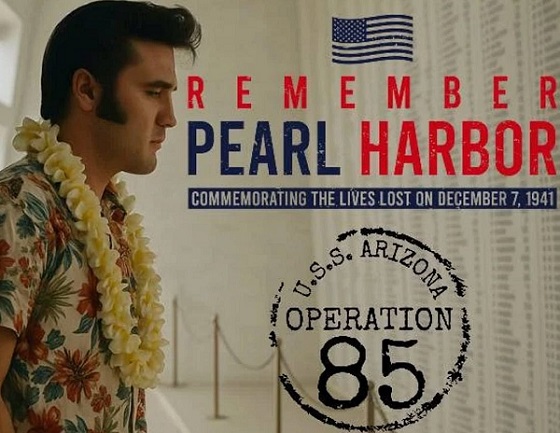

“As we express our gratitude, we must never forget that the highest appreciation is not to utter words but to live by them.”
— President John F. Kennedy, visiting the Arizona Memorial on June 9, 1963
I was on an Aston Hotels media junket to Hawaii, and I had a morning off.
My wife took our daughter Rica, to spend a day at Waikiki beach, while I headed to Pearl Harbor on a bus.
It was my only chance to see the Arizona Memorial, and I was determined to do so.
A small ferry boat takes you there, and I have to say, it is a silent trip.
Everyone on board, seemed to feel the same weight of the moment.
The memorial is simple, but very impactful, to the say the least.
A list of the names, of the 1,177 sailors who died on Dec. 7, 1941, is posted along a wall.
That’s a lot of sailors, to go down with the ship, folks.
The Japanese attack on Pearl Harbor began at 7:55 that morning. The entire attack took only one hour and 15 minutes.
But the devastation, was immense.
Of the eight U.S. battleships present, all were damaged and four were sunk. All but Arizona were later raised, and six were returned to service during the war.
The Japanese also sank or damaged three cruisers, three destroyers, an anti-aircraft training ship, and a minelayer. More than 180 U.S. aircraft were destroyed.
Only six sailors were rescued from the burning USS Arizona, by a sailor from the nearby repair ship USS Vestal.
There is no evidence of men being trapped alive within the submerged hull of the Arizona after the ship settled on the harbor bottom, unlike on other ships like the USS Oklahoma and USS West Virginia, where trapped sailors were heard tapping on the hull for days.
SCUBA technology did not exist at that time, but at least one rescue was successful.
Civilian yard worker Julio DeCastro led a team that used pneumatic hammers to cut through the hull of the capsized USS Oklahoma and rescued 32 men who had been trapped for hours.
No U.S. aircraft carriers were present at Pearl Harbor during the attack, as USS Enterprise, USS Lexington, and USS Saratoga were all at sea on missions, while the six Japanese carriers that attacked; Akagi, Kaga, Sōryū, Hiryū, Shōkaku, Zuikaku — all returned to Japan safely after the raid, though most were sunk later in the war.
 |
I only remember one moment of that day. A young Japanese woman dropped a garland of flowers, into the water above the wreck.
Like magic, it floated directly over the length of the ship, which is still leaking oil.
A moment of time, I can never forget.
Most people don’t know, that the Airzona Memorial almost didn’t happen.
If not for Elvis Presley.
In the early 1960s, fundraising for the memorial had stalled.
Less than half of the roughly $500,000 needed had been raised, and the project was slipping from view.
After his manager, Colonel Tom Parker, read about the struggle, Elvis organized a benefit concert in Hawaii.
Newly discharged from the U.S. Army and on his way to film Blue Hawaii — the King stepped in to help without hesitation.
With one carefully staged benefit at Pearl Harbor’s Bloch Arena on March 25, 1961, he reignited public interest, raising over US $60,000 (equivalent to millions today) for the stalled fundraising effort, which helped push President John F. Kennedy and Congress to finish the job.
The memorial opened the following year.
Bloch Arena on the Navy base became the venue, and Parker handled the details with a fundraiser’s ruthlessness: tickets would range from $3 to $100, and no complimentary tickets would be issued — not even to admirals or VIPs.
Reports from the time underscore Parker’s insistence that everyone pay, a point that generated headlines and maximized proceeds.
A crowd of about 4,000 packed the hall to see Elvis in his gold lamé jacket deliver a rare live set — one of only a handful of concerts he performed between his Army service and the 1968 “Comeback Special.”
He later admitted forgetting lyrics due to being out of practice but was grateful for the crowd’s noise, which covered his mistakes.
He would visit the memorial in 1965 and place a wreath there, showing his deep respect.
The Arizona, launched in June 1915, measured 608 ft, with a beam of 97 ft. She was fully modernized in 1929, after which she was crewed by 92 officers and 1,639 enlisted men.
A Pennsylvania class battleship, she was the flagship of Battleship Division One at the time.
The final living survivor of the Arizona, Lou Conter, died last year, on April 1, 2024.
At Pearl Harbor, the Arizona was hit by four bombs just after 8 a.m., the final one of these is believed to have gone through the armoured deck and blown up the ship’s forward magazines with devastating effects.
Both the captain of the Arizona, Franklin Van Valkenburgh, and rear admiral Isaac Campbell Kidd, the head of the Battleship Division One were killed on the bridge of the Arizona.
More than two million people visit the memorial each year. It is only accessible by boat and straddles the sunken hull of the Arizona, without touching it.
THE MAKICHUK REPORT is free today.
But if you enjoyed this post, you can tell THE MAKICHUK REPORT that their writing is valuable by pledging a future subscription.
You won’t be charged unless they enable payments.


Media bound to pay the price for selling their freedom to (selectively) offend

Sometimes An Ingrate Nation Pt. 2: The Great One Makes His Choice

Recent price declines don’t solve Toronto’s housing affordability crisis
From Exception to Routine. Why Canada’s State-Assisted Suicide Regime Demands a Human-Rights Review
-
Business2 days ago
Recent price declines don’t solve Toronto’s housing affordability crisis
-
MAiD19 hours ago
From Exception to Routine. Why Canada’s State-Assisted Suicide Regime Demands a Human-Rights Review
-
 MAiD2 days ago
Health Canada report finds euthanasia now accounts for over 5% of deaths nationwide
-
 Daily Caller2 days ago
Tech Mogul Gives $6 Billion To 25 Million Kids To Boost Trump Investment Accounts
-
 Automotive1 day ago
Power Struggle: Governments start quietly backing away from EV mandates
-
 Energy2 days ago
Unceded is uncertain
-
 Business17 hours ago
Carney government should privatize airports—then open airline industry to competition
-
 Business2 days ago
New Chevy ad celebrates marriage, raising children