
Business
Trump slaps Brazil with tariffs over social media censorship


From LifeSiteNews
By Dan Frieth
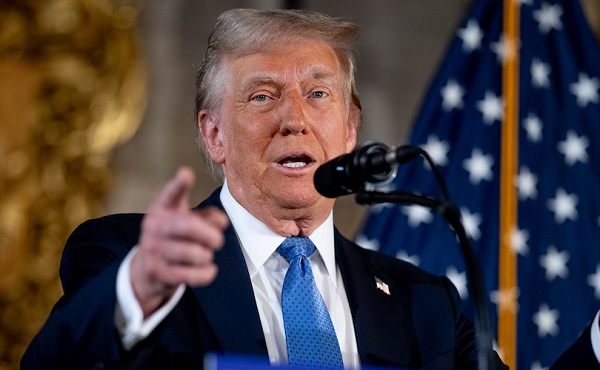
In his letter dated July 9, 2025, addressed to President Luiz Inácio Lula da Silva, Trump ties new U.S. trade measures directly to Brazilian censorship.
U.S. President Donald Trump has launched a fierce rebuke of Brazil’s moves to silence American-run social media platforms, particularly Rumble and X.
In his letter dated July 9, 2025, addressed to President Luiz Inácio Lula da Silva, Trump ties new U.S. trade measures directly to Brazilian censorship.
He calls attention to “SECRET and UNLAWFUL Censorship Orders to U.S. Social Media platforms,” pointing out that Brazil’s Supreme Court has been “threatening them with Millions of Dollars in Fines and Eviction from the Brazilian Social Media market.”


Trump warns that these actions are “due in part to Brazil’s insidious attacks on Free Elections, and the fundamental Free Speech Rights of Americans,” and states: “starting on August 1, 2025, we will charge Brazil a Tariff of 50% on any and all Brazilian products sent into the United States, separate from all Sectoral Tariffs.” He also adds that “Goods transshipped to evade this 50% Tariff will be subject to that higher Tariff.”
Brazil’s crackdown has targeted Rumble after it refused to comply with orders to block the account of Allan dos Santos, a Brazilian streamer living in the United States.
On February 21, 2025, Justice Alexandre de Moraes ordered Rumble’s suspension for non‑compliance, saying it failed “to comply with court orders.”
Earlier, from August to October 2024, Moraes had similarly ordered a nationwide block on X.

The court directed ISPs to suspend access and imposed fines after the platform refused to designate a legal representative and remove certain accounts.
Elon Musk responded: “Free speech is the bedrock of democracy and an unelected pseudo‑judge in Brazil is destroying it for political purposes.”
By linking censorship actions, particularly those targeting Rumble and X, to U.S. trade policy, Trump’s letter asserts that Brazil’s judiciary has moved into the arena of foreign policy and economic consequences.
The tariffs, he makes clear, are meant, at least in part, as a response to Brazil’s suppression of American free speech.
Trump’s decision to impose tariffs on Brazil for censoring American platforms may also serve as a clear signal to the European Union, which is advancing similar regulatory efforts under the guise of “disinformation” and “online safety.”
With the EU’s Digital Services Act and proposed “hate speech” legislation expanding government authority over content moderation, American companies face mounting pressure to comply with vague and sweeping takedown demands.
By framing censorship as a violation of U.S. free speech rights and linking it to trade consequences, Trump is effectively warning that any foreign attempt to suppress American voices or platforms could trigger similar economic retaliation.
Reprinted with permission from Reclaim The Net.

From Pierre Poilievre
From the Frontier Centre for Public Policy
By Ian Madsen
Canada’s growing LNG exports are opening global markets and reducing dependence on U.S. prices, if Ottawa allows the pipelines and export facilities needed to reach those markets
Canada’s LNG advantage is clear, but federal bottlenecks still risk turning a rare opening into another missed opportunity
Canada is finally in a position to profit from global LNG demand. But that opportunity will slip away unless Ottawa supports the pipelines and export capacity needed to reach those markets.
Most major LNG and pipeline projects still need federal impact assessments and approvals, which means Ottawa can delay or block them even when provincial and Indigenous governments are onside. Several major projects are already moving ahead, which makes Ottawa’s role even more important.
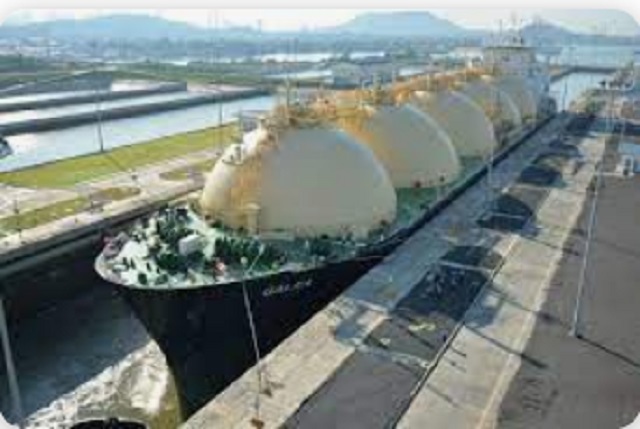
The Ksi Lisims floating liquefaction and export facility near Prince Rupert, British Columbia, along with the LNG Canada terminal at Kitimat, B.C., Cedar LNG and a likely expansion of LNG Canada, are all increasing Canada’s export capacity. For the first time, Canada will be able to sell natural gas to overseas buyers instead of relying solely on the U.S. market and its lower prices.
These projects give the northeast B.C. and northwest Alberta Montney region a long-needed outlet for its natural gas. Horizontal drilling and hydraulic fracturing made it possible to tap these reserves at scale. Until 2025, producers had no choice but to sell into the saturated U.S. market at whatever price American buyers offered. Gaining access to world markets marks one of the most significant changes for an industry long tied to U.S. pricing.
According to an International Gas Union report, “Global liquefied natural gas (LNG) trade grew by 2.4 per cent in 2024 to 411.24 million tonnes, connecting 22 exporting markets with 48 importing markets.” LNG still represents a small share of global natural gas production, but it opens the door to buyers willing to pay more than U.S. markets.
LNG Canada is expected to export a meaningful share of Canada’s natural gas when fully operational. Statistics Canada reports that Canada already contributes to global LNG exports, and that contribution is poised to rise as new facilities come online.
Higher returns have encouraged more development in the Montney region, which produces more than half of Canada’s natural gas. A growing share now goes directly to LNG Canada.
Canadian LNG projects have lower estimated break-even costs than several U.S. or Mexican facilities. That gives Canada a cost advantage in Asia, where LNG demand continues to grow.
Asian LNG prices are higher because major buyers such as Japan and South Korea lack domestic natural gas and rely heavily on imports tied to global price benchmarks. In June 2025, LNG in East Asia sold well above Canadian break-even levels. This price difference, combined with Canada’s competitive costs, gives exporters strong margins compared with sales into North American markets.
The International Energy Agency expects global LNG exports to rise significantly by 2030 as Europe replaces Russian pipeline gas and Asian economies increase their LNG use. Canada is entering the global market at the right time, which strengthens the case for expanding LNG capacity.
As Canadian and U.S. LNG exports grow, North American supply will tighten and local prices will rise. Higher domestic prices will raise revenues and shrink the discount that drains billions from Canada’s economy.
Canada loses more than $20 billion a year because of an estimated $20-per-barrel discount on oil and about $2 per gigajoule on natural gas, according to the Frontier Centre for Public Policy’s energy discount tracker. Those losses appear directly in public budgets. Higher natural gas revenues help fund provincial services, health care, infrastructure and Indigenous revenue-sharing agreements that rely on resource income.
Canada is already seeing early gains from selling more natural gas into global markets. Government support for more pipelines and LNG export capacity would build on those gains and lift GDP and incomes. Ottawa’s job is straightforward. Let the industry reach the markets willing to pay.
Ian Madsen is a senior policy analyst at the Frontier Centre for Public Policy.


Media bound to pay the price for selling their freedom to (selectively) offend

Sometimes An Ingrate Nation Pt. 2: The Great One Makes His Choice

Recent price declines don’t solve Toronto’s housing affordability crisis

From Exception to Routine. Why Canada’s State-Assisted Suicide Regime Demands a Human-Rights Review
-
 COVID-191 day ago
University of Colorado will pay $10 million to staff, students for trying to force them to take COVID shots
-
 Bruce Dowbiggin1 day ago
Integration Or Indignation: Whose Strategy Worked Best Against Trump?
-
 Focal Points2 days ago
Common Vaccines Linked to 38-50% Increased Risk of Dementia and Alzheimer’s
-
 espionage1 day ago
Western Campuses Help Build China’s Digital Dragnet With U.S. Tax Funds, Study Warns
-
 Opinion2 days ago
The day the ‘King of rock ‘n’ roll saved the Arizona memorial
-
 Bruce Dowbiggin1 day ago
Wayne Gretzky’s Terrible, Awful Week.. And Soccer/ Football.
-
 Agriculture1 day ago
Canada’s air quality among the best in the world
-
 Censorship Industrial Complex2 days ago
US Condemns EU Censorship Pressure, Defends X