
International
Trump shuts down USAID HQ as Elon Musk calls it a “criminal organization”

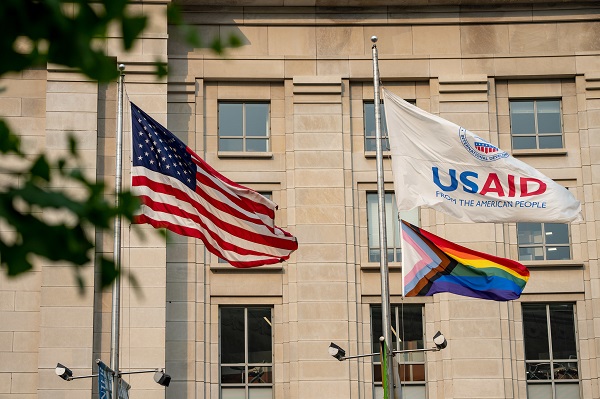


Quick Hit:
The U.S. Agency for International Development (USAID) shut down its Washington headquarters on Monday, locking staffers out of its internal systems. Elon Musk indicated that President Trump supports eliminating USAID, calling it a “criminal organization.”
Key Details:
- USAID staffers were locked out of the agency’s headquarters and computer systems overnight, with an internal email confirming the closure.
- Elon Musk, leading the government efficiency push, said Trump agrees USAID should be dismantled, calling it beyond repair.
- Former USAID officials warn the move will have global consequences, including disrupting disease outbreak responses and cutting key humanitarian efforts.
Diving Deeper:
The U.S. Agency for International Development (USAID) effectively shut down its Washington headquarters on Monday, locking employees out of the agency’s systems overnight. An internal email confirmed the closure, citing a directive from leadership, sources told Fox News Digital.
Elon Musk suggested the shutdown is part of a broader effort to dismantle the agency, an idea he claims President Donald Trump supports. During an X Spaces discussion, Musk doubled down on his criticism of USAID, calling it “a bowl of worms” that is “beyond repair.”

“There is no apple,” Musk said. “It’s beyond saving.”
Musk has been vocal in his attacks on USAID, going as far as calling it a “criminal organization” on X. He claimed the agency was run by radical-left operatives who were undermining American interests. The agency’s website was also taken offline Saturday.
The move has sparked outrage among former USAID officials and global health experts. Atul Gawande, who led the agency’s global health division under President Biden, warned that the shutdown is catastrophic for international disease control efforts.
“This is a gift to our enemies and competitors,” Gawande told Fox News Digital. “We were actively managing 21 serious outbreaks worldwide just two weeks ago. Now, three of those have escalated into crises—Ebola in Uganda, a bird flu outbreak spanning 49 countries, and another major threat.”
Gawande added that the agency’s abrupt closure is a blow to morale, claiming employees have been treated with “enormous disrespect and fear.” Reports indicate that the USAID Memorial Wall, which honored staff killed while serving overseas, has been removed. Additionally, entire departments, including malaria prevention and child immunization teams, have been gutted.
“The top three layers of experienced employees are gone,” Gawande continued. “All contract workers are being terminated. Two-thirds of our malaria staff and child immunization experts are gone. This is not reform. This is destruction.”




In a stunning shift, the CDC now says its own “vaccines don’t cause autism” claim was not evidence-based.
For the first time in a generation, the US Centres for Disease Control and Prevention (CDC) has rewritten its official position on whether vaccines can cause autism.
This is a change that could reshape one of the most politically charged and emotionally fraught debates in modern medicine.
In a website update published on 19 November 2025, the agency now states that the long-standing claim “vaccines do not cause autism” is “not an evidence-based claim” because scientific studies “have not ruled out the possibility that infant vaccines cause autism.”
The page also acknowledges that “studies supporting a link have been ignored by health authorities.”
It’s difficult to overstate the significance of these statements. For nearly two decades, they would have been unthinkable for a federal public health agency.
The timing is equally striking.
The change arrives at a moment when the political and scientific landscape around vaccine safety is undergoing a marked shift inside the Trump–Kennedy administration.
For months, critics have accused Health Secretary Robert F. Kennedy Jr and several of the administration’s appointees of holding unconventional views on vaccine safety.
The CDC’s revised language now places the agency closer to Kennedy’s long-standing argument that federal agencies had ignored crucial evidence.
The CDC explains the shift by pointing to the Data Quality Act, which requires federal communications to accurately reflect the evidence.
Because studies have not excluded the possibility that infant vaccines could contribute to autism, the agency concedes that its long-standing categorical statement was not scientifically justified.
The update states plainly that scientific uncertainty remains, particularly for vaccines administered in the first year of life.
Scientific uncertainty finally acknowledged
The information on the website draws a sharp distinction between the infant vaccine schedule — which includes DTaP, HepB, Hib, IPV, PCV and others — and the measles–mumps–rubella (MMR) vaccine.
For the MMR, the CDC continues to cite observational evidence showing “no association … with autism spectrum disorders,” describing the conclusion as supported by “high strength of evidence.”
But the agency also acknowledges that these studies had “serious methodological limitations” and were all retrospective epidemiological analyses, the type that cannot establish cause and effect or identify subgroups who may be more vulnerable.
The acknowledgement of limitations is unusually candid for a federal agency discussing vaccines and autism.
For the infant vaccine schedule, the shift is even more dramatic.
The CDC cites a series of authoritative reviews — including the 1991 and 2012 Institute of Medicine’s assessments, and the Agency for Healthcare Research and Quality’s review in 2021 — all concluding that the evidence was “inadequate to accept or reject” a causal relationship between early-life vaccines and autism.
In other words, the fundamental scientific question remains unresolved.
Political dynamite
The political context makes this change even more consequential. Senator Bill Cassidy, who chairs the Senate Health Committee, has been one of the most vocal critics of Kennedy’s vaccine views.
 |
Cassidy has repeatedly insisted that the science on autism and vaccination was settled years ago. Now the CDC states that the claim “vaccines do not cause autism” does not meet evidence standards.
Remarkably, the CDC states that the headline phrase remains on the page only “due to an agreement with the chair of the U.S. Senate Health, Education, Labor, and Pensions Committee.”
 |
The implication — that the wording is a political compromise rather than a scientific one — will undoubtedly invite scrutiny on Capitol Hill.
Attorney Aaron Siri, who has spent years litigating against federal agencies for greater transparency around vaccine safety, said the update marks a long overdue shift in honesty from the CDC.
 |
“It is an excellent step in the right direction for CDC to start telling the truth to the public about its past misdeeds and misrepresentations,” said Siri.
“Telling the truth and apologizing for its prior misrepresentations is the only way the CDC will ever rebuild trust with the public,” he added.
How the Wakefield saga shaped debate
For years, any attempt to revisit the vaccine–autism question was coloured by the fallout from the “Wakefield saga.”
The retracted 1998 Lancet paper became a shorthand for misinformation, and it allowed public health agencies to dismiss all subsequent concerns as if they were simply a continuation of that controversy.
The episode became a kind of cultural firewall.
Invoking Wakefield was an easy way to shut down inquiry, even when parents were describing patterns that had nothing to do with the MMR vaccine and everything to do with the expanding infant schedule.
The CDC’s admission that the evidence for early-life vaccines is “inadequate to accept or reject” a causal link — and that some studies “supporting a link have been ignored” — breaks the long-standing habit of waving away legitimate questions by pointing back to a decades-old scandal.
A broad recalibration
The CDC’s shift also aligns with a broader recalibration underway across federal health agencies in the US.
The Trump administration has ordered new NIH reviews of vaccine safety science, reinstated the Task Force on Safer Childhood Vaccines, and rejuvenated the CDC’s Advisory Committee on Immunization Practices (ACIP).
The pattern is unmistakable: agencies that once treated certain questions as “settled science” are now reopening them and its impact is likely to reverberate across the globe.
The CDC now admits the science has not ruled out potential links for vaccines given in infancy.
The website also notes that “about one in two surveyed parents of children with autism” believe vaccination played a role, often pointing to shots given in the first months of life or around the one-year mark.
Until now, those parents were often told their concerns were baseless. The agency’s new wording fundamentally alters that dynamic.
Changing the conversation
In the US at least, public health agencies will no longer be able to respond to parental concerns with blanket denials.
Moreover, researchers studying plausible mechanisms — such as aluminium adjuvants, neuroinflammation, mitochondrial vulnerabilities and immune activation — will find themselves in an environment that formally recognises these questions as scientifically legitimate.
Informed consent practices may need to be revisited as the existence of uncertainty is formally acknowledged.
And lawmakers who insisted that the science was settled will now face uncomfortable questions about why federal agencies relied on definitive messaging that did not meet evidence standards.
To be clear — the CDC’s update does NOT assert that vaccines cause autism. What it does say — with clarity the agency has avoided for years — is that the available evidence has not established that they do not, at least for the vaccines given in early infancy.
That distinction may seem subtle, but it represents a profound shift in how the conversation is framed and will undoubtedly impact the personal experiences of families raising autistic children.
For the first time that I can remember, the question of vaccines and autism is no longer treated as taboo. It has been recast — at the CDC’s own hand — as a research question that demands proper investigation.
The shift may prove to be one of the most consequential public health developments of the decade, and it suggests that something significant is moving behind the scenes in the federal agencies that once seemed immovable.
OLD CDC WEBSITE:
 |
UPDATED CDC WEBSITE:
 |
Your paid subscription is what sustains my work.
Please upgrade your subscription to ensure independent investigations continue.
Get 10% off a group subscription
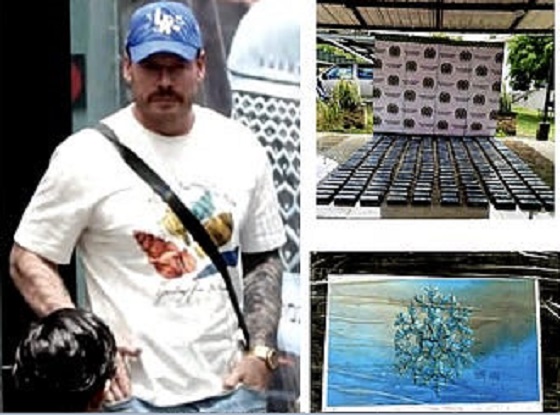

From Caledon to Mecca and Medellín: U.S. Says Toronto ‘Cocaine Lawyer’ Used Encrypted Chats Inside Wedding’s Murder Conspiracies
On the path to becoming the first Canadian of genuine Latin American cartel stature — a man the FBI has likened to a “modern-day iteration of Pablo Escobar” — Ryan Wedding did not simply exploit Canada’s borders, ports and highways to move cocaine, methamphetamine and fentanyl.
Prosecutors say he became the single largest cocaine importer into Canada, building a billion-dollar enterprise by mastering cryptocurrency money-laundering, legal strategy, paramilitary training and the kind of hardened operational security usually associated with state intelligence agencies.
It was an operation, U.S. authorities now allege, in which a brash Toronto criminal lawyer not only counselled murder and helped arrange bribes, but also tapped into Canadian police evidence to glean information about a contracted assassination that collapsed into tragedy — the killing of innocent people mistaken for the family of an Indo-Canadian narco-trucker.

A stunning 50-page indictment unsealed in California this week explains how Wedding allegedly discovered that a trusted associate in both cocaine trafficking and crypto-based money-laundering — identified only as “Victim A” in the document — had quietly become a federal informant. The murdered government witness is Jonathan Acebedo-Garcia, a Colombian-Canadian who appears in prosecutors’ Tether-crypto flow chart as a key node in Wedding’s KuCoin-centred laundering network.
According to the indictment, Wedding then turned to Toronto lawyer Deepak Balwant Paradkar — “a dual Indian-Canadian citizen” listed under aliases including “cocaine_lawyer” — and, together with his top lieutenant Andrew Clark, used encrypted Threema chats to plan Acebedo-Garcia’s murder in Medellín. For Paradkar, now under arrest in Canada and facing extradition, the brutality alleged in the filing is not confined to a distant Colombian restaurant. The indictment also places him at the centre of two other crises in Wedding’s empire: a 521-kilogram cocaine seizure in Arkansas, and a botched assassination in Caledon, Ontario, that left an innocent Indo-Canadian family dead.
The Arkansas strand starts on October 1, 2024, when Canadian truckers Maninderjit Singh Dhillon and Ranjodh Singh were stopped in Hazen, Arkansas, with “approximately 521 kilograms” of cocaine. That same day, Wedding told Clark on Threema that their load had been seized and sent Dhillon’s name. Clark then asked — in coded language — if Wedding wanted Paradkar “to monitor Dhillon and Singh’s arrests,” and Wedding agreed, suggesting that an American lawyer be used to obfuscate the Toronto lawyer’s role.
In a Threema group chat with Clark and a transport co-conspirator, Paradkar allegedly asked for the drivers’ names and licences, said he would “look into it,” and asked if there were “any relatives” he could contact. The key line in the indictment states:
“On October 1, 2024, in the Threema group chat and using coded language, defendant PARADKAR advised that he was calling law enforcement to obtain information about Dhillon and Singh’s arrests.”
Prosecutors say Paradkar later reported that he had located Singh in prison but not Dhillon, directed that Singh’s brother be told he was Singh’s lawyer so he could get the arrest report, and called Singh about his arrest “while Clark covertly listened in.”
When Clark and the co-conspirator began “discussing murdering Dhillon” on October 3, Paradkar allegedly told them “to discuss the matter on a different chat without him present and to delete any and all discussion of the murder plot.”
He is also accused of sending Clark discovery on the Arkansas case, drafting questions over WhatsApp, then deleting the messages and turning on disappearing-message settings before calling Dhillon again with Clark listening.
The same document links Wedding and Clark to an earlier hit order on another truck driver, CC-1, a driver they believed had stolen a massive load. Under a section headed “Victims B, C, and D,” prosecutors write that: “On or before November 20, 2023, defendant Wedding and Clark issued an order to kill a driver co-conspirator whom they believed stole 300 kilograms of cocaine from them.”
According to the indictment, members of a Canadian-based assassin crew then “broke into a rental property in Caledon inhabited by Victims B, C, and D” and “shot and killed Victims B and C and shot and wounded Victim D, mistakenly believing that they were CC-1’s family members.”
Local coverage at the time identified the slain couple as Jagtar Sidhu, 57, and his wife, Harbhajan Sidhu, 57, both killed by gunshot wounds after officers were called to a late-night shooting. Their daughter was rushed to hospital in serious but stable condition. In an interview, the couple’s son — speaking on condition of anonymity — said he had been at work when the shooting took place and that his parents and sister were shot multiple times. He said his parents had travelled from India to visit him and his sister, who had come to Canada as international students.
Nearly ten months later, Paradkar is again alleged to have somehow obtained sensitive information and channelled it from Canadian police back to cartel command:
“On September 11, 2024, via Threema, defendant PARADKAR sent Clark screenshots of evidence obtained by the Ontario Provincial Police during its investigation of the shootings of Victims B, C, and D.”
Before turning back to the Medellín murder allegedly counselled by Paradkar, the indictment sets out the staggering scale of the enterprise that made Acebedo-Garcia so valuable — and, allegedly, so expendable.
Prosecutors describe the Wedding Criminal Enterprise as “a billion-dollar drug trafficking organization and the largest supplier of cocaine to Canada,” operating simultaneously in “Mexico, Colombia, Canada, and the United States, among other countries.” They say the group sourced cocaine from Colombia, “cooking and testing it in ‘cocaine kitchens’ run collaboratively with a Colombian neo-paramilitary group and drug cartel,” then working “in conjunction with members and associates of prominent Mexican drug cartels” to move “hundreds of kilograms of cocaine from Colombia to Mexico at a time” by boat and plane.
In this telling, Southern California is the hub between Latin coca fields and Canadian and American drug dens.
“The Southern California Counties of Los Angeles, San Bernardino, and Riverside generally served as the ‘hub’ where the Wedding Criminal Enterprise’s cocaine was stored before being conveyed by Canadian drug transportation networks to final destinations in Canada and other American states, with the cocaine predominantly being distributed in Canada.”
The indictment says the enterprise’s purposes included “establishing control over the Canadian drug trade” and “violently retaliating” against anyone perceived to be co-operating with law enforcement.
As reported previously by The Bureau, the trucks and routes tasked by Wedding were controlled by Indo-Canadian crime networks. The U.S. government says that the Toronto lawyer Paradkar “introduced Wedding to the drug traffickers that have been moving Wedding’s cocaine and has also helped Wedding with bribery and murder.”
In late summer 2024, Acebedo-Garcia — Victim A — was still a trusted intermediary inside that system. Prosecutors allege that: “Between August 15, 2024, and September 6, 2024, using Victim A as an intermediary, defendant WEDDING purchased 300 kilograms of cocaine to be shipped from Colombia to Mexico.”
A Colombian lab manager, Carlos Eduardo Riascos, is then said to have received the order “for 300 kilograms of cocaine” from Wedding, and on September 11, 2024, to have been paid about two billion Colombian pesos which “had been converted from cryptocurrency” for “approximately 300 kilograms of cocaine.” Within weeks, Riascos allegedly launched a shipment of “approximately 240 bricks containing cocaine” out of Cali.
In parallel, U.S. authorities say they were mapping the Tether flows linked to this cargo. The truncated flow chart in the indictment shows large transfers moving from KuCoin accounts associated with financier Rasheed Pascua Hossain of Vancouver, and others into a hub wallet tied to Wedding — including a 564,571-USDT transfer directly from Wedding to Victim A. Those arrows, prosecutors argue, capture the way Acebedo-Garcia sat at the intersection of Wedding’s cocaine supply and his crypto-laundering machine.
On October 17, 2024, that world was exposed. A first superseding indictment, “Wedding I,” was unsealed in the same federal court, charging Wedding and Clark in a continuing-criminal-enterprise case. According to the new filing, it was in the aftermath of that disclosure — once it was clear that Victim A had become a co-operating witness — that the Toronto lawyer allegedly proposed killing him as a legal strategy.
“On or after October 17, 2024, defendant Paradkar advised defendant Wedding and Clark that if Victim A was killed, the charges against them in Wedding I and related extradition proceedings would necessarily be dismissed,” the record says.
In a prior exclusive report, sourced from U.S. law enforcement, The Bureau revealed that some American investigators believed Canadian police provided little assistance as bodies mounted.
“We tried to work with RCMP on Wedding too, and they said, ‘No,’” a source aware of probes from three separate U.S. agencies said. “He’s killed God knows how many. But the RCMP threw up roadblocks. Just in the Greater Toronto Area alone, people were falling once a week. Especially when the heat was getting closer to this guy, he started killing all the people he knew. And I think there were seriously missed opportunities.”
From Mecca to Medellín
Prosecutors say Wedding responded by placing “a bounty of up to $5 million USD on Victim A in exchange for any person locating and killing Victim A.” He allegedly enlisted a Laval, Que., hitman, Atna Ohna, described as “a hired sicario”; a Colombian madame, Carmen Yelinet Valoyes Florez, who “operated a network of commercial sex workers”; a Colombian sex worker, Daniela Alejandra Tejeda, who provided Victim A’s personal information; and a cluster of Canadian intermediaries and unidentified locals in Colombia and Saudi Arabia.
Once the U.S. government’s first indictment against Wedding was unsealed and Paradkar allegedly advised that killing Victim A would “necessarily” collapse the case, the manhunt for Acebedo-Garcia moved quickly. Florez, operating a Medellín-based commercial sex-work network that included Tejeda, allegedly used that network to track Acebedo-Garcia’s movements and glean intimate details — addresses, routines, contacts — that could be passed back to Mexico.
Canadian associates, meanwhile, were allegedly funnelling information from home. Defendant Ramon Basilio Demorizi, a Canadian resident, is accused of trying to locate Victim A through Edwin Basora-Hernandez, a Montréal-based reggaeton artist. Basora-Hernandez is alleged to have supplied Victim A’s contact information and to have told Demorizi — and, indirectly, Wedding and Paradkar — that Canadian law enforcement had approached him seeking Victim A’s whereabouts. According to one overt act, it was at this point that Wedding himself stepped into the hunt.
Assuming the persona of a lawyer, he allegedly arranged a conference call with Basora-Hernandez and his real-life legal counsel, Deepak Paradkar, during which Basora-Hernandez revealed that Canadian law-enforcement officers had approached him for information about the fugitive witness’s whereabouts.
In January 2025, Clark allegedly hired a Canadian associate, Ahmad Nabil Zitoun, to physically hunt Acebedo-Garcia for “approximately $10,000 CAD plus expenses.” Zitoun is accused of travelling to Medellín and then to Mecca, Saudi Arabia, trying to spot the fugitive witness. While he was in Mecca, the indictment says, Clark offered him the actual murder contract. Zitoun declined — but still received “approximately $40,000 CAD for attempting to locate Victim A” once he returned.
Throughout these weeks, the document alleges, the conspirators were sending each other surveillance pictures of Acebedo-Garcia.
The assassination itself, on January 31, 2025, reads like a textbook cartel hit. One unidentified conspirator, LNU 1, is described as a motorcyclist who “conducted reconnaissance of Victim A by following Victim A to a restaurant in Medellín before Victim A was murdered.” Another, LNU 2, is said to have been the shooter: “Defendant LNU 2, a motorcyclist, shot Victim A approximately five times in the head while he was eating at the Restaurant.”
A third, LNU 3, allegedly ferried the gunman away; a fourth, LNU 4, is described as a photographer who “cased the Restaurant” beforehand and “photographed Victim A’s dead body” afterwards; and a fifth, LNU 5, picked the photographer up and helped him flee along the same escape route as the shooter.
Within minutes, prosecutors say, images of the killing were being sent back up the chain. On January 31, Wedding allegedly used Threema to inform Clark that “Victim A was dead” and to send a photograph of his corpse.
And then the murder became content. Defendant Gursewak Singh Bal, a Mississauga man described as the founder of “the Dirty News” urban news outlet, is accused of posting a celebratory Instagram story showing the restaurant and the lower half of a body, with the caption: “[Victim A] down…” and “BOOM! Headshot.” A longer Dirty News post, quoted in the indictment, called Acebedo-Garcia “one of the informants involved in dismantling Ryan ‘Snowboarder aka SB’ Wedding’s transnational organization/criminal network” and claimed “there were bounties being placed on every individual involved in ‘snitching’ on the kingpins operations,” including seven-figure “hits.”
more to come on this breaking story
The Bureau is a reader-supported publication.
To receive new posts and support my work, consider becoming a paid subscriber.

National Crisis Approaching Due To The Carney Government’s Centrally Planned Green Economy
Carney fails to undo Trudeau’s devastating energy policies
The UN Pushing Carbon Taxes, Punishing Prosperity, And Promoting Poverty
Federal cabinet calls for Canadian bank used primarily by white farmers to be more diverse
-
Alberta2 days ago
National Crisis Approaching Due To The Carney Government’s Centrally Planned Green Economy
-
Carbon Tax1 day ago
Carney fails to undo Trudeau’s devastating energy policies
-
Agriculture2 days ago
Federal cabinet calls for Canadian bank used primarily by white farmers to be more diverse
-
Business1 day ago
The UN Pushing Carbon Taxes, Punishing Prosperity, And Promoting Poverty
-
 Health1 day ago
NEW STUDY: Infant Vaccine “Intensity” Strongly Predicts Autism Rates Worldwide
-
 Business1 day ago
Climate Climbdown: Sacrificing the Canadian Economy for Net-Zero Goals Others Are Abandoning
-
 Great Reset2 days ago
Canadian government forcing doctors to promote euthanasia to patients: report
-
 Artificial Intelligence1 day ago
Lawsuit Claims Google Secretly Used Gemini AI to Scan Private Gmail and Chat Data