
International
Trump rejects globalist Agenda 2030 and its climate emphasis as inconsistent with US sovereignty

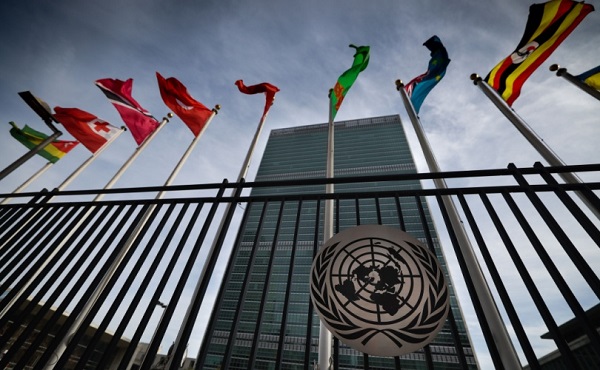
From LifeSiteNews
According to Trump administration officials, the US president believes ‘the United Nations should refocus on its ‘founding purpose’ of preserving international peace and security.’
A Trump administration official informed the United Nations that the U.S. rejects the UN’s 2030 Agenda for Sustainable Development.
In a speech to the UN General Assembly, minister-counselor Edward Heartney of the U.S. mission to the UN said that its 2030 Agenda is “a program of soft global governance that is inconsistent with U.S. sovereignty and adverse to the rights and interests of Americans,” according to an Associated Press (AP) report.
Agenda 2030 has been touted as a “global partnership” and “shared blueprint for peace and prosperity” with 17 “Sustainable Development Goals (SDGs), which are an urgent call for action by all countries.”
The authors of the plan claim that “ending poverty and other deprivations must go hand-in-hand with strategies that improve health and education, reduce inequality, and spur economic growth,” emphasizing that this be done “while tackling climate change.”
Agenda 2030 was adopted by the UN in September 2015. Three months later, the Paris Agreement on Climate Change (PACC) was ratified. Both ambitious projects were welcomed by the Obama administration. President Donald Trump withdrew the U.S. from participation in the PACC early in his first term in the White House.
On Day One of his second term, Trump directed the U.S. Ambassador to the UN to:
- Immediately submit written formal notification to the Secretary-General of the United Nations, or any relevant party, of the United States’ withdrawal from any agreement, pact, accord, or similar commitment made under the United Nations Framework Convention on Climate Change.
- Immediately cease or revoke any purported financial commitment made by the United States under the United Nations Framework Convention on Climate Change.
His order also declared that the “U.S. International Climate Finance Plan is revoked and rescinded immediately. The Director of the Office of Management and Budget shall, within 10 days of this order, issue guidance for the rescission of all frozen funds.”
“In recent years, the United States has purported to join international agreements and initiatives that do not reflect our country’s values or our contributions to the pursuit of economic and environmental objectives,” the President wrote. “Moreover, these agreements steer American taxpayer dollars to countries that do not require, or merit, financial assistance in the interests of the American people.”
“Members of the Trump administration have said that U.S. President Donald Trump believes the United Nations should refocus on its ‘founding purpose’ of preserving international peace and security,” explained Richard Gowan, writing at Foreign Policy. The administration has announced “a full review of all U.S. multilateral commitments and treaties, which include the U.N. Charter. But Washington has offered little detail about what Trump’s vision of a peace-focused U.N. would look like.”
According to a separate AP report, Trump administration freezes on U.S. foreign aid have led many UN agencies to cut staff, budgets, and services.


President Trump delivered one of his bluntest warnings yet to Colombian President Gustavo Petro during a Saturday press conference, brushing aside Petro’s claim that he had no concerns about his own safety following the U.S. military operation that captured Venezuelan strongman Nicolás Maduro. Asked directly about Petro’s remarks, Trump pointed to Colombia’s role in the global cocaine trade and made clear he was not backing off earlier threats. Petro, Trump said, presides over cocaine production facilities whose product is being funneled into the United States, adding that the Colombian leader “does have to watch his a**.”
The exchange revived tensions that have been simmering since December, when Trump publicly warned Petro to shut down multiple major cocaine labs inside Colombia. At the time, Trump said U.S. authorities had precise intelligence on their locations and openly labeled Petro a “troublemaker,” cautioning him to “watch it.” Since returning to office, Trump has taken a far more confrontational posture toward leftist leaders in the hemisphere, and Petro — a self-described Marxist and former guerrilla — has repeatedly found himself in Washington’s crosshairs.
NOW – Trump says Colombian President Gustavo Petro has "to watch his ass" as he's making cocaine and sending it to the U.S. pic.twitter.com/H2ctUOmX9O
— Disclose.tv (@disclosetv) January 3, 2026
Petro’s clashes with the United States extend well beyond rhetoric. He was previously sanctioned by the Treasury Department and had his U.S. visa revoked after urging American service members to defy Trump’s orders and join what he described as a multinational force to “free Palestine.” He has also triggered diplomatic flare-ups over deportation flights, branded Trump an “obstacle to democracy,” and drew widespread condemnation last October after suggesting humanity should “get rid of Trump,” punctuating the comment with a finger snap during a televised interview.
Those remarks now hang over a far more consequential moment in U.S.–Latin American relations. Trump’s comments came in the immediate aftermath of the high-risk operation that resulted in Maduro’s capture and removal from Venezuela — a move the president hailed as a “brilliant operation.” Carried out under the banner of Operation Absolute Resolve, the joint military and law enforcement mission ended with Maduro and his wife, Cilia Flores, flown to the United States without the loss of American personnel or equipment. The takedown marked the most aggressive assertion of U.S. power in the region in decades, with administration officials openly framing it as a modern enforcement of the Monroe Doctrine — rechristened by Trump as the “Donroe Doctrine.”
Maduro’s legal exposure is extensive. Indicted in 2020, the longtime socialist ruler has been accused by U.S. prosecutors of leading the Cartel de los Soles, a transnational cocaine trafficking network. According to the indictment unsealed by Attorney General Pam Bondi, Maduro’s regime worked hand-in-glove with Colombian insurgent groups including the FARC and ELN, as well as Mexican cartels such as Sinaloa and Los Zetas, to move enormous quantities of cocaine into the United States. He and Flores now face charges ranging from narco-terrorism and cocaine importation conspiracy to weapons offenses involving machine guns and destructive devices.
Petro has tried, cautiously, to put distance between himself and the fallen Venezuelan dictator. In late 2025, he referred to Maduro as a dictator for the first time, but stopped short of acknowledging the narco-trafficking allegations that have followed Caracas for years. Even after Maduro’s arrest, Petro has continued to dismiss U.S. accusations as a manufactured “narrative,” despite a trail of indictments and evidence stretching back more than half a decade.
For Trump, the message Saturday was unmistakable. The Maduro operation was not a one-off, and public defiance from regional leaders will be met with pressure, exposure, and consequences. Petro may insist he has nothing to worry about — but Trump made clear he disagrees, and he is no longer content to issue quiet warnings.

Nearly a quarter of TV-Y7-rated shows crossed into what it labeled explicit territory, including direct statements about sexual orientation or gender identity and depictions of related behavior. The group argued that this goes well beyond background representation and enters the realm of ideological messaging directed at children who are still years away from adolescence.
A new year-end analysis is raising fresh questions about what major streaming platforms are serving to young audiences, and whether parents are being given an honest picture of that content. According to a report released by Concerned Women for America, more than four in ten children’s programs labeled as suitable for general audiences on Netflix now include LGBTQ-themed material, despite ratings that suggest the shows are appropriate for very young viewers. The group’s review of 2025 programming found that 41 percent of Netflix shows rated TV-G contained what it described as overt gay or transgender content. Even in the TV-Y category, which is meant for children up to age seven, 21 percent of programs included similar material. For slightly older children, the share jumped sharply, with 41 percent of TV-Y7 programs containing LGBTQ themes. Taken together, CWA concluded that roughly one-third of all Netflix programming across the three primary child-rated categories — TV-G, TV-Y, and TV-Y7 — now includes such content.
Hey @netflix, what is going on here? pic.twitter.com/8XXY0neBnE
— Concerned Women for America LAC (@CWforA) December 9, 2025
Beyond simple presence, the report also attempted to measure intensity. Programs were categorized on a scale ranging from “meta” references and implied messaging to “queer-coded” characters and fully explicit content. CWA found that nearly a quarter of TV-Y7-rated shows crossed into what it labeled explicit territory, including direct statements about sexual orientation or gender identity and depictions of related behavior. The group argued that this goes well beyond background representation and enters the realm of ideological messaging directed at children who are still years away from adolescence.
The report also points to a noticeable pattern in reboots and long-running franchises. According to CWA, revived or extended versions of familiar children’s shows often introduce LGBTQ characters or storylines that were absent from the originals. Titles cited include The Magic School Bus, Power Rangers, The Baby-Sitter’s Club, She-Ra, and The Fairly OddParents. CWA said this trend suggests a deliberate choice by creators to reshape legacy brands that parents may trust based on earlier iterations.
To place the shift in a broader cultural context, the report traces the normalization of LGBTQ representation in television back several decades. When Ellen DeGeneres’ character came out on the sitcom Ellen in 1997, it was widely viewed as a watershed moment in entertainment. What once sparked national debate, the group notes, has since become routine — driven in part by sustained pressure from advocacy organizations such as GLAAD, which has tracked and promoted increased representation through its annual “Where We Are on TV” reports. GLAAD’s most recent assessment claimed another year-over-year increase in LGBTQ characters across television.
CWA argues that the implications are different when that momentum is applied to children’s programming. In its view, the growing volume of LGBTQ content aimed at young audiences — coupled with the unapologetic defense of those choices by showrunners and studios — reflects a belief within the industry that children’s entertainment should actively shape cultural attitudes rather than simply entertain. For parents relying on ratings systems to make informed decisions, the group warns, the labels no longer tell the full story.

Rulings could affect energy prices everywhere: Climate activists v. the energy industry in 2026

The Global Push for Government Mandated Digital IDs And Why You Should Worry
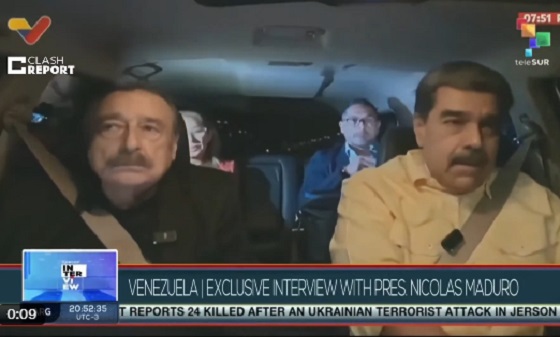
Maduro says he’s “ready” to talk
The Rise Of The System Engineer: Has Canada Got A Prayer in 2026?
-
 Frontier Centre for Public Policy16 hours ago
Is Canada still worth the sacrifice for immigrants?
-
 Business16 hours ago
Policy uncertainty continues to damage Canada’s mining potential
-
 Bruce Dowbiggin16 hours ago
The Olympic Shutout: No Quebec Players Invited For Canada
-
 Canadian Energy Centre16 hours ago
Five reasons why 2026 could mark a turning point for major export expansions
-
 Opinion2 days ago
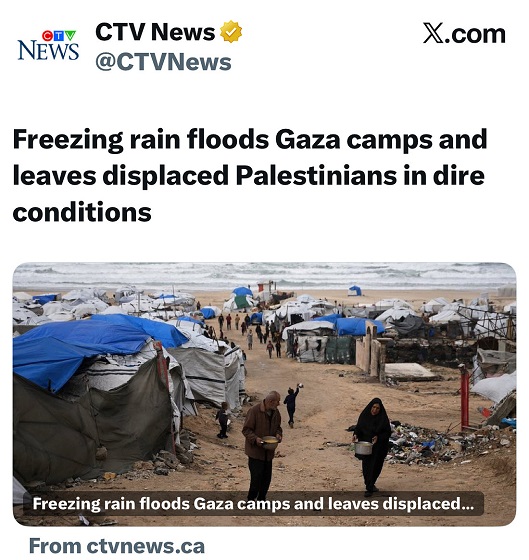
Hell freezes over, CTV’s fabrication of fake news and our 2026 forecast is still searching for sunshine
-
 International14 hours ago
Network of Nonprofits with Marxist and CCP Ties, and Elected Socialists Race to Counter Washington’s Narrative of the Maduro Raid
-
 COVID-191 day ago
A new study proves, yet again, that the mRNA Covid jabs should NEVER have been approved for young people.
-
 Alberta13 hours ago
Trump’s Venezuela Geopolitical Earthquake Shakes up Canada’s Plans as a “Net Zero” Energy Superpower