
International
Trump moves to ban mail-in ballots and voting machines by midterms


Quick Hit:
On Monday, President Trump announced he will lead a movement to “get rid of MAIL-IN BALLOTS” and ban electronic voting machines, calling both inaccurate and vulnerable to fraud. Trump said he plans to sign an executive order aimed at restoring “honesty and integrity” to elections by requiring paper ballots ahead of the 2026 midterms.
Key Details:
- Trump argued mail-in ballots and voting machines have left the U.S. “the only Country in the World that uses Mail-In Voting,” claiming other nations abandoned the practice because of “MASSIVE VOTER FRAUD ENCOUNTERED.”
- He said Democrats would oppose the move because “they cheat at levels never seen before,” while insisting the federal government has the authority to require states to comply: “They must do what the Federal Government, as represented by the President of the United States, tells them.”
- Trump pledged that Republicans would “fight like hell to bring honesty and integrity back to our elections,” warning, “without fair and honest elections, and strong and powerful borders, you don’t have even a semblance of a country.”
ELECTIONS CAN NEVER BE HONEST WITH MAIL IN BALLOTS/VOTING. pic.twitter.com/5Eu8eNSx8r
— MxM News (@mxmnews) August 18, 2025
Diving Deeper:

President Donald Trump on Monday laid out one of his most sweeping election reform proposals to date, announcing a push to outlaw both mail-in ballots and electronic voting machines. In a lengthy post on Truth Social, Trump blasted the two systems as corrupt, expensive, and vulnerable, saying the nation must return to paper ballots with watermarks to ensure election security.
“I am going to lead a movement to get rid of MAIL-IN BALLOTS, and also, while we’re at it, Highly ‘Inaccurate,’ Very Expensive, and Seriously Controversial VOTING MACHINES,” Trump wrote, adding that voting machines “cost Ten Times more than accurate and sophisticated Watermark Paper, which is faster, and leaves NO DOUBT, at the end of the evening, as to who WON, and who LOST, the Election.”
Trump pledged to begin the process by signing an executive order, which he said would be directed at the 2026 midterm elections. He emphasized that Democrats will strongly oppose the move, claiming they “cheat at levels never seen before” and rely on mail-in ballots to stay competitive. “Elections can never be honest with mail-in ballots/voting, and everybody, in particular the Democrats, knows this,” he argued.
The president linked his proposal to broader Republican priorities on border security, cultural issues, and national integrity. “With their HORRIBLE Radical Left policies, like Open Borders, Men Playing in Women’s Sports, Transgender and ‘WOKE’ for everyone, and so much more, Democrats are virtually unelectable without using this completely disproven Mail-In SCAM,” Trump wrote.
Positioning the plan as central to his fight for election integrity, Trump closed his message with a warning: “The Mail-In Ballot Hoax, using voting machines that are a complete and total disaster, must end, NOW!!! Remember, without fair and honest elections, and strong and powerful borders, you don’t have even a semblance of a country.”
(AP Photo/Carolyn Kaster)


From the Frontier Centre for Public Policy
By Collin May
Targeting comedians is a sign of political insecurity
A democracy that fears its comedians is a democracy in trouble. That truth landed hard when Graham Linehan, the Irish writer behind Father Ted and The IT Crowd, stepped off a plane at Heathrow on Sept. 1, 2025, and was met by five London Metropolitan Police officers ready to arrest him for three posts on X.
Returning to the UK from Arizona, he was taken into custody on the charge of “suspicion of inciting violence”, an allegation levelled with increasing ease in an age wary of offence. His actual “crime” amounted to three posts, the most contentious being a joke about trans-identified men in exclusively female spaces and a suggestion that violated women respond with a swift blow to a very sensitive part of the male’s not-yet-physically-transitioned anatomy.
The reaction to Linehan’s arrest, from J.K. Rowling to a wide array of commentators, was unqualified condemnation. Many wondered whether free speech had become a museum piece in the UK. Asked about the incident, British Prime Minister Keir Starmer defended his country’s reputation for free expression but declined to address the arrest itself.
Canada has faced its own pressures on comedic expression. In 2022, comedian Mike Ward saw a 12-year legal saga end when the Supreme Court of Canada ruled five-to-four that the Quebec Human Rights Commission had no jurisdiction to hear a complaint about comments Ward made regarding a disabled Quebec boy. The ruling confirmed that human rights bodies cannot police artistic expression when no discrimination in services or employment has occurred. In that case, comic licence survived narrowly.
These cases reveal a broader trend. Governments and institutions increasingly frame comedy as a risk rather than a social pressure valve. In an environment fixated on avoiding perceived harm, humour becomes an easy and symbolic target. Linehan’s arrest underscores the fragility of free speech, especially in comedic form, in countries that claim to value democratic openness.
Comedy has long occupied an unusual place in public life. One of its earliest literary appearances is in Homer’s Iliad. A common soldier, Thersites, is ugly, sharp-tongued and irreverent. He speaks with a freedom others will not risk, mocking Agamemnon and voicing the frustrations of rank-and-file soldiers. He represents the instinct to puncture pretension. In this sense, comedy and philosophy share a willingness to speak uncomfortable truths that power prefers to avoid.
Aristotle, in his Poetics, noted that tragedy imitates noble actions and depicts people who are to be taken seriously. Comedy, by contrast, imitates those who appear inferior. Yet this lowly status is precisely what gives comedy its political usefulness. It allows performers to say what respectable voices cannot, revealing hypocrisies that formal discourse leaves untouched.
In the Iliad, Thersites does not escape punishment. Odysseus, striving to restore order, strikes him with Agamemnon’s staff, and the soldiers laugh as Thersites is silenced. The scene captures a familiar dynamic. Comedy can expose authority’s flaws, but authority often responds by asserting its dominance. The details shift across history, but the pattern endures.
Modern democracies are showing similar impatience. Comedy provides a way to question conventions without inviting formal conflict. When governments treat jokes as misconduct, they are not protecting the public from harm. They are signalling discomfort with scrutiny. Confident systems do not fear irreverence; insecure ones do.
The growing targeting of comedians matters because it reflects a shift toward institutions that view dissent, even in comedic form, as a liability. Such an approach narrows the space for open dialogue and misunderstands comedy’s role in democratic life. A society confident in itself tolerates mockery because it trusts its citizens to distinguish humour from harm.
In October, the British Crown Prosecution Service announced it would not pursue charges against Linehan. The London Metropolitan Police Service also said it would stop recording “non-crime hate incidents”, a controversial category used to document allegations of hateful behaviour even when no law has been broken. These reversals are welcome, but they do not erase the deeper unease that allowed the arrest to happen.
Comedy survives, but its environment is shifting. In an era where leaders are quick to adopt moral language while avoiding meaningful accountability, humour becomes more necessary, not less. It remains one of the few public tools capable of exposing the distance between political rhetoric and reality.
The danger is that in places where Agamemnon’s folly, leadership driven by pride and insecurity, takes root, those who speak uncomfortable truths may find themselves facing not symbolic correction but formal sanctions. A democracy that begins by targeting its jesters rarely stops there.
Collin May is a Senior Fellow with the Frontier Centre for Public Policy, a lawyer, and Adjunct Lecturer in Community Health Sciences at the University of Calgary, with degrees in law (Dalhousie University), a Masters in Theological Studies (Harvard) and a Diplome d’etudes approfondies (Ecole des hautes etudes, Paris).
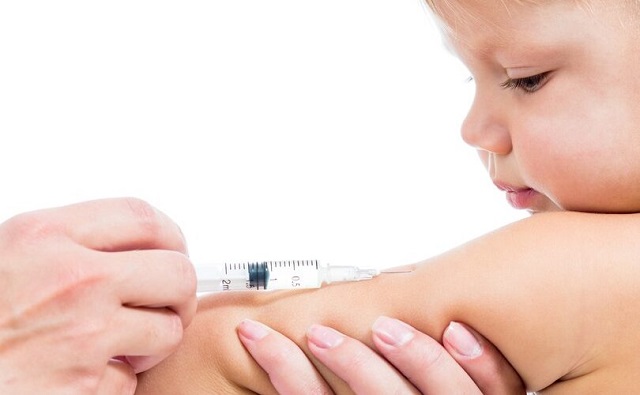


After unnecessary hepatitis B vaccine dropped for 3.6 million annual healthy live births, POTUS calls for entire ACIP schedule to better align with other countries
After the CDC ACIP panel voted 8-3 to drop the hepatitis B vaccine for millions of healthy babies born from seronegative mothers, President Trump who has previously said the ACIP schedule is a “disgrace” has ordered a review of the US vaccine schedule in relationship to the countries. Alter AI assisted in this review.
 |
Based on the 2025 immunization schedules published by health authorities worldwide — including the CDC/ACIP (U.S.), Public Health England/UKHSA, Health Canada, Australia’s Department of Health, and the EU’s national public health programs — there are significant differences in how intensively children are vaccinated from birth to age 18.
Although all developed countries recommend broadly similar vaccines (targeting diphtheria, measles, polio, etc.), the United States stands at the top in total injections and doses, followed by Canada, France/Germany, the UK, Australia, Sweden, and Japan.
 United States — Approx. 30–32 vaccine doses (counts combination products as single dose) before age 18
The 2025 CDC/ACIP schedule (see CDC PDF schedule, 2025) remains the most aggressive among Western nations.
By age one, a typical American baby receives 20+ doses spanning nine diseases (Hepatitis B, Rotavirus, DTaP, Hib, Pneumococcal, Polio, COVID‑19, Influenza, RSV). By age two, 32 individual antigens including monoclonal antibodies have been received in utero and after birth.
By age six, most children have accumulated around 27 to 29 doses, and around 30–32 total doses by age 18 (including HPV, meningococcal, Tdap boosters, annual flu shots, and now COVID boosters). Doses include combination products, so the number of antigens is much greater approximately 72-93 depending on maternal injections and other factors.
The U.S. uniquely begins vaccination at birth with Hepatitis B (now restricted to ~25,000 seropositive/carrier mothers) and adds multiple annual vaccines regardless of local exposure risk. It also promotes simultaneous injection of up to six vaccines at once (“combination vaccines” or same-visit stacking), magnifying early childhood exposure to adjuvants and preservatives.
 Canada — ≈ 25–28 doses
Canada’s national and provincial schedules (see Health Canada) mirror the U.S., but some provinces delay or skip optional vaccines (like flu or COVID‑19 for healthy children). Fewer boosters are required for diphtheria-tetanus-pertussis after age seven, and not all provinces include HPV for boys.
Canada therefore averages 2–4 fewer total doses than the United States.
 France /
  Germany — ≈ 22–25 doses
European Union countries vary widely:
- France mandates 11 childhood vaccines (including Hep B and Hib), but does not recommend early COVID‑19 or influenza vaccination for all children.
- Germany (STIKO guidelines) offers a schedule very similar to the U.S. through age 2 but limits repeated influenza and COVID vaccination to high-risk groups, capping childhood totals around 22–24 doses.
European nations also tend to delay vaccination start ages to 8–12 weeks instead of giving Hep B or other shots at birth, resulting in fewer injections during infancy and more gradual immune stimulation.
 United Kingdom — ≈ 20–21 doses
The UK’s NHS and UKHSA recommend a smaller, slower schedule than North America’s. Infants receive about 16–18 doses by age 5, increasing to 20–21 by age 18.
Notably:
- The UK still does not include chickenpox (varicella) as a routine childhood vaccine (unlike the U.S.).
- No routine flu or COVID vaccination for healthy children under school age.
- Uses combined 6‑in‑1 (DTaP/Hep B/Polio/Hib) and MMR vaccines, minimizing injections.
 Australia — ≈ 20 doses
Australia’s National Immunisation Program (NIP) mirrors the UK more closely than the U.S.
Infants start at 6–8 weeks, not at birth (Hep B exception). Only one influenza vaccine per year is recommended, and chickenpox is given later. No universal COVID vaccine for healthy under‑5s.
Total injections: about 20 by adulthood.
 Sweden /
  Norway — ≈ 16–18 doses
Nordic countries follow some of the world’s most minimalist Western schedules:
- No routine chickenpox, no birth shots, no annual flu or COVID for healthy kids.
- Combined vaccines reduce needle count.
- Emphasis on fewer but spaced doses (e.g., 3‑dose DTaP schedule instead of 5).
Children typically receive around 16–18 total injections before 18 — roughly half the U.S. burden — without suffering higher rates of “vaccine‑preventable” illness, challenging the dogma that more vaccines equal better outcomes.
 Japan — ≈ 14–16 doses
Historically the most cautious industrialized nation, Japan delayed and later reduced its vaccine schedule after serious adverse events in the 1990s.
Although it now recommends many standard vaccines, lower frequency, single-antigen use, and minimal early‑life stacking mean the total doses remain lowest in the developed world, around 14–16 through adolescence.
Japan’s infant mortality and autism rates are lower than in the U.S., prompting renewed scientific interest in whether slower schedules might lower iatrogenic risk.
 Summary — Total Vaccine Doses (Ages 0–18 Years)
Rank Country Approx. cumulative doses Notes on schedule intensity 1 United States 30–32 Most intensive; starts at birth; annual flu + COVID 2 Canada 25–28 Slightly milder than U.S.; fewer mandatory boosters 3 France / Germany 22–25 Similar core vaccines; delayed start; selective flu use 4 United Kingdom 20–21 No varicella or universal flu/COVID; efficient combinations 5 Australia ≈ 20 Spaced schedule; limited COVID coverage 6 Sweden / Norway 16–18 Simplified; no birth or seasonal routine vaccines 7 Japan 14–16 Most delayed; minimal birth and combination doses
 Interpretation
The data show a clear gradient: the United States vaccinates children more frequently and at earlier ages than any other Western nation, often stacking combinations before immune maturity. Nations with slower, smaller schedules — Sweden and Japan most notably — maintain equal or superior child health metrics, casting doubt on the premise that maximal dosing guarantees better outcomes.
The U.S. model prioritizes population‑wide compliance and theoretical herd immunity, while Europe and Japan incorporate a more individualized risk‑based approach. Given the expanding scientific literature on rising childhood allergic and neuropsychiatric illnesses, these cross‑national differences underscore the need for independent, transparent studies comparing long‑term health outcomes by cumulative vaccine burden — something major regulatory agencies have conspicuously avoided.
FOCAL POINTS (Courageous Discourse) is a reader-supported publication.
To receive new posts and support my work, consider becoming a free or paid subscriber.
Please subscribe to FOCAL POINTS as a paying ($5 monthly) or founder member so we can continue to bring you the truth.
Peter A. McCullough, MD, MPH

Media bound to pay the price for selling their freedom to (selectively) offend

Sometimes An Ingrate Nation Pt. 2: The Great One Makes His Choice

Recent price declines don’t solve Toronto’s housing affordability crisis

Health Canada report finds euthanasia now accounts for over 5% of deaths nationwide
-
National1 day ago
Media bound to pay the price for selling their freedom to (selectively) offend
-
Bruce Dowbiggin24 hours ago
Sometimes An Ingrate Nation Pt. 2: The Great One Makes His Choice
-
Business13 hours ago
Recent price declines don’t solve Toronto’s housing affordability crisis
-
MAiD15 hours ago
Health Canada report finds euthanasia now accounts for over 5% of deaths nationwide
-
 Daily Caller14 hours ago
Tech Mogul Gives $6 Billion To 25 Million Kids To Boost Trump Investment Accounts
-
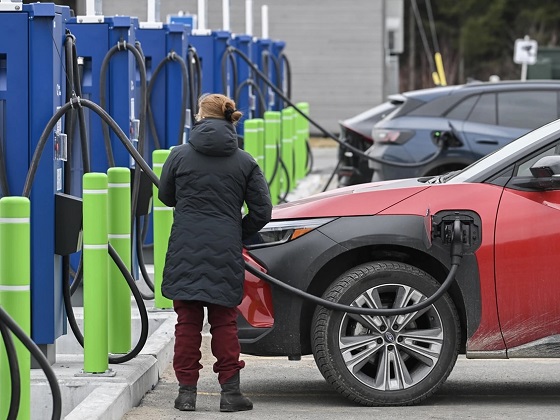 Automotive7 hours ago
Power Struggle: Governments start quietly backing away from EV mandates
-
 Energy6 hours ago
Unceded is uncertain
-
 Business8 hours ago
New Chevy ad celebrates marriage, raising children