
Daily Caller
Trump Executive Orders ensure ‘Beautiful Clean’ Affordable Coal will continue to bolster US energy grid


From the Daily Caller News Foundation
By
President Trump signed several executive orders Tuesday that will allow coal-fired power plants to stay online past planned retirement dates, identify coal resources on federal lands, and bolster the reliability of the electric grid. The orders may help the U.S. face an uncomfortable truth: wind turbines and solar panels can’t cost-effectively meet the U.S.’ growing electricity needs.
Coal provides an important source of the reliable and fuel-secure energy needed to keep the lights on. Our organization’s research shows that it is more affordable than wind and solar, too.
Mr. Trump’s executive orders will allow coal operators the flexibility to delay the premature closures caused in part by President Biden’s policies. A May 2024 rule from the Biden Environmental Protection Agency would have forced coal plants to spend billions on unproven technology to capture 90% of their carbon dioxide emissions. If coal plants failed to comply by 2035, they would be forced to shutter by 2039. The Trump EPA has since announced it will reconsider this rule, but the process could take years.
Coal should be allowed to help keep the lights on, especially because U.S. electricity demand is rising. The North American Electric Reliability Council’s 2024 long-term reliability assessment warns that “resource additions are not keeping up with generator retirements and demand growth” in most regions of the U.S. Coal produced 16% of the U.S.’ electricity in 2023, and coal, natural gas and petroleum together produced 60%. Nuclear comprised another 18%. It is folly to believe that the U.S. can meet its growing power demands while kneecapping a significant source of its baseload power.
Not only is reliable baseload power a must for the grid, but electricity generated by coal is less expensive than intermittent resources like wind and solar. It’s easy to understand why: the cheapest source of electricity is from plants that have already been built. Most of the U.S.’ coal fleet is like houses where the mortgages have been paid off. With no loans or interest left to repay, operating costs for existing coal plants typically consist of property taxes, insurance, labor, maintenance, and fuel.

Our organization models the full costs of building enough wind, solar, and battery storage to replace coal, natural gas, and nuclear plants. Powering a grid on wind, solar, and batteries is more expensive than coal because connecting wind turbines and solar panels to the grid entails system-wide costs like constructing new transmission lines. The intermittency of wind and solar means you need more power plant capacity to generate the same amount of power. More power plant infrastructure means more property taxes. More weather-dependent resources means more costs to managing the grid, like turning off wind turbines and solar panels when they are producing too much electricity for the grid to absorb — or conversely, ramping up natural gas generation on cloudy and still days when wind and solar aren’t producing.
Our research incorporates system-wide costs and shows that a realistic midpoint estimate for wind turbines is $72 per MWh. Electricity from new solar can range between $50 per MWh to $85 per MWh. Data from the Federal Energy Regulatory Commission shows that the average coal plant generated electricity for only $34 per megawatt-hour (MWh) in 2020 (the last year of available data). It could be even less expensive for coal plants to generate electricity if states and utilities allowed coal plants to operate more often. In 2024, the coal fleet generated electricity only about 43% of the time. If that approached 80%, costs could go as low as $29.
Keeping America’s “beautiful, clean coal” plants online is the right thing for the country and it is good news for consumers that the U.S. has recognized the electric grid’s reliability hole and decided to stop digging.
Isaac Orr is vice president of research, and Mitch Rolling is the director of research at Always On Energy Research, a nonprofit energy modeling firm.

Business
Some Of The Wackiest Things Featured In Rand Paul’s New Report Alleging $1,639,135,969,608 In Gov’t Waste

From the Daily Caller News Foundation
Republican Kentucky Sen. Rand Paul released the latest edition of his annual “Festivus” report Tuesday detailing over $1 trillion in alleged wasteful spending in the U.S. government throughout 2025.
The newly released report found an estimated $1,639,135,969,608 total in government waste over the past year. Paul, a prominent fiscal hawk who serves as the chairman of the Senate Homeland Security and Governmental Affairs Committee, said in a statement that “no matter how much taxpayer money Washington burns through, politicians can’t help but demand more.”
“Fiscal responsibility may not be the most crowded road, but it’s one I’ve walked year after year — and this holiday season will be no different,” Paul continued. “So, before we get to the Feats of Strength, it’s time for my Airing of (Spending) Grievances.”
Dear Readers:
As a nonprofit, we are dependent on the generosity of our readers.
Please consider making a small donation of any amount here.
Thank you!
The 2025 “Festivus” report highlighted a spate of instances of wasteful spending from the federal government, including the Department of Health and Human Services (HHS) spent $1.5 million on an “innovative multilevel strategy” to reduce drug use in “Latinx” communities through celebrity influencer campaigns, and also dished out $1.9 million on a “hybrid mobile phone family intervention” aiming to reduce childhood obesity among Latino families living in Los Angeles County.
The report also mentions that HHS spent more than $40 million on influencers to promote getting vaccinated against COVID-19 for racial and ethnic minority groups.
The State Department doled out $244,252 to Stand for Peace in Islamabad to produce a television cartoon series that teaches children in Pakistan how to combat climate change and also spent $1.5 million to promote American films, television shows and video games abroad, according to the report.
The Department of Veterans Affairs (VA) spent more than $1,079,360 teaching teenage ferrets to binge drink alcohol this year, according to Paul’s report.
The report found that the National Science Foundation (NSF) shelled out $497,200 on a “Video Game Challenge” for kids. The NSF and other federal agencies also paid $14,643,280 to make monkeys play a video game in the style of the “Price Is Right,” the report states.
Paul’s 2024 “Festivus” report similarly featured several instances of wasteful federal government spending, such as a Las Vegas pickleball complex and a cabaret show on ice.
The Trump administration has been attempting to uproot wasteful government spending and reduce the federal workforce this year. The administration’s cuts have shrunk the federal workforce to the smallest level in more than a decade, according to recent economic data.
Festivus is a humorous holiday observed annually on Dec. 23, dating back to a popular 1997 episode of the sitcom “Seinfeld.” Observance of the holiday notably includes an “airing of grievances,” per the “Seinfeld” episode of its origin.
From the Daily Caller News Foundation
I’ve written frequently here in recent years about the financial fiasco that has hit Ford Motor Company and other big U.S. carmakers who made the fateful decision to go in whole hog in 2021 to feed at the federal subsidy trough wrought on the U.S. economy by the Joe Biden autopen presidency. It was crony capitalism writ large, federal rent seeking on the grandest scale in U.S. history, and only now are the chickens coming home to roost.
Ford announced on Monday that it will be forced to take $19.5 billion in special charges as its management team embarks on a corporate reorganization in a desperate attempt to unwind the financial carnage caused by its failed strategies and investments in the electric vehicles space since 2022.
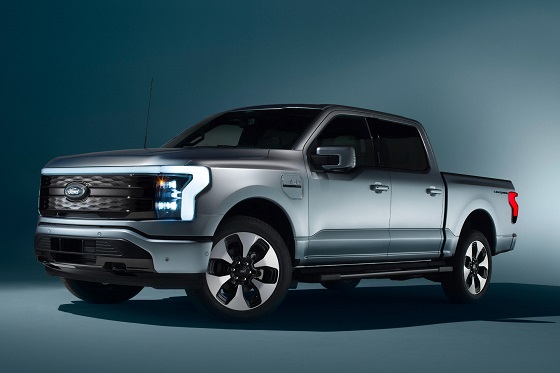
Cancelled is the Ford F-150 Lightning, the full-size electric pickup that few could afford and fewer wanted to buy, along with planned introductions of a second pricey pickup and fully electric vans and commercial vehicles. Ford will apparently keep making its costly Mustang Mach-E EV while adjusting the car’s features and price to try to make it more competitive. There will be a shift to making more hybrid models and introducing new lines of cheaper EVs and what the company calls “extended range electric vehicles,” or EREVs, which attach a gas-fueled generator to recharge the EV batteries while the car is being driven.
Dear Readers:
As a nonprofit, we are dependent on the generosity of our readers.
Please consider making a small donation of any amount here.
Thank you!
“The $50k, $60k, $70k EVs just weren’t selling; We’re following customers to where the market is,” Farley said. “We’re going to build up our whole lineup of hybrids. It’s gonna be better for the company’s profitability, shareholders and a lot of new American jobs. These really expensive $70k electric trucks, as much as I love the product, they didn’t make sense. But an EREV that goes 700 miles on a tank of gas, for 90% of the time is all-electric, that EREV is a better solution for a Lightning than the current all-electric Lightning.”
It all makes sense to Mr. Farley, but one wonders how much longer the company’s investors will tolerate his presence atop the corporate management pyramid if the company’s financial fortunes don’t turn around fast.
To Ford’s and Farley’s credit, the company has, unlike some of its competitors (GM, for example), been quite transparent in publicly revealing the massive losses it has accumulated in its EV projects since 2022. The company has reported its EV enterprise as a separate business unit called Model-E on its financial filings, enabling everyone to witness its somewhat amazing escalating EV-related losses since 2022:
• 2022 – Net loss of $2.2 billion
• 2023 – Net loss of $4.7 billion
• 2024 – Net loss of $5.1 billion
Add in the company’s $3.6 billion in losses recorded across the first three quarters of 2025, and you arrive at a total of $15.6 billion net losses on EV-related projects and processes in less than four calendar years. Add to that the financial carnage detailed in Monday’s announcement and the damage from the company’s financial electric boogaloo escalates to well above $30 billion with Q4 2025’s damage still to be added to the total.
Ford and Farley have benefited from the fact that the company’s lineup of gas-and-diesel powered cars have remained strongly profitable, resulting in overall corporate profits each year despite the huge EV-related losses. It is also fair to point out that all car companies were under heavy pressure from the Biden government to either produce battery electric vehicles or be penalized by onerous federal regulations.
Now, with the Trump administration rescinding Biden’s harsh mandates and canceling the absurdly unattainable fleet mileage requirements, Ford and other companies will be free to make cars Americans actually want to buy. Better late than never, as they say, but the financial fallout from it all is likely just beginning to be made public.
- David Blackmon is an energy writer and consultant based in Texas. He spent 40 years in the oil and gas business, where he specialized in public policy and communications.


Death by a thousand clicks – government censorship of Canada’s internet

Chinese Billionaire Tried To Build US-Born Baby Empire As Overseas Elites Turn To American Surrogates

Viral TikTok video shows 7-year-old cuddling great-grandfather before he’s euthanized

Politicians should be honest about environmental pros and cons of electric vehicles
-
 Agriculture2 days ago
Why is Canada paying for dairy ‘losses’ during a boom?
-
 Alberta2 days ago
Alberta’s new diagnostic policy appears to meet standard for Canada Health Act compliance
-
 Bruce Dowbiggin1 day ago
Hunting Poilievre Covers For Upcoming Demographic Collapse After Boomers
-
 Business1 day ago
State of the Canadian Economy: Number of publicly listed companies in Canada down 32.7% since 2010
-
 Censorship Industrial Complex22 hours ago
Canadian university censors free speech advocate who spoke out against Indigenous ‘mass grave’ hoax
-
 Alberta1 day ago
Housing in Calgary and Edmonton remains expensive but more affordable than other cities
-
 Censorship Industrial Complex2 days ago
Top constitutional lawyer warns against Liberal bills that could turn Canada into ‘police state’
-
 Digital ID2 days ago
Canadian government launches trial version of digital ID for certain licenses, permits