Connect with us

Energy

Trump asserts energy dominance, set to meet oil titans amid trade war

Published

4 minute read

MXM logo MxM News

Quick Hit:

President Donald Trump is taking decisive action to strengthen America’s energy sector, set to meet with top oil executives next week at the White House. The 47th president, who has prioritized energy independence and economic growth, is working to expand domestic oil and gas production while countering foreign market pressures and trade challenges. Industry leaders recognize Trump’s commitment to unleashing U.S. energy dominance, a stark contrast to the regulatory stranglehold of the Biden years.

Key Details:

  • Trump’s upcoming meeting with oil and gas leaders will be his first major sit-down with the industry since his second inauguration, reinforcing his commitment to energy independence.

  • The president’s policies have already slashed regulations and boosted U.S. energy production, but industry leaders seek further collaboration to ensure continued growth.

  • While some executives have voiced concerns over crude price fluctuations, Trump remains focused on lowering energy costs for American consumers while keeping the industry thriving.

Diving Deeper:

President Trump has long championed American energy as the backbone of economic prosperity and national security. Unlike his predecessor, who waged a war on fossil fuels in favor of radical climate policies, Trump has embraced U.S. oil and gas, calling it “liquid gold” and positioning it as a cornerstone of his administration’s economic agenda.

The meeting, set to include top oil executives and members of the American Petroleum Institute, will focus on advancing U.S. energy production. Trump’s newly formed National Energy Dominance Council, led by Interior Secretary Doug Burgum and Energy Secretary Chris Wright, will also play a key role in shaping policy discussions.

Industry leaders like Harold Hamm of Continental Resources and Kelcy Warren of Energy Transfer LP, both of whom backed Trump’s 2024 campaign, recognize the president’s unwavering support for the oil and gas sector. Trump’s administration has already implemented critical reforms to streamline permitting, cut bureaucratic red tape, and expand drilling opportunities—moves that starkly contrast with the Biden administration’s hostility toward domestic production.

Despite global economic factors influencing oil prices—such as increased OPEC+ output and weak Chinese demand—Trump’s policies have laid the groundwork for sustained industry success. While some executives argue that crude prices must remain above $80 per barrel for optimal production, Trump’s focus remains on ensuring affordable energy for American families and businesses.

Trade policy has also been a point of discussion, with some in the industry concerned about Trump’s tariffs on steel and aluminum, which are critical for drilling operations. However, Trump has consistently prioritized fair trade and American manufacturing, refusing to allow foreign competitors to undermine U.S. industry. Unlike the Biden administration, which caved to globalist interests, Trump is leveraging tariffs as a tool to strengthen domestic production.

Bethany Williams, spokesperson for the American Petroleum Institute, emphasized Trump’s impact: “President Trump’s energy agenda has set our nation on a path toward energy dominance. We appreciate the opportunity to discuss how American oil and natural gas are driving economic growth, strengthening our national security, and supporting consumers with the president and his team.”

As Trump continues to roll back Biden-era climate mandates and prioritize U.S. energy independence, his administration is making clear that American oil and gas will once again lead the global market. With the full backing of industry leaders, Trump is proving that energy dominance isn’t just a slogan—it’s a reality under his leadership.

Todayville is a digital media and technology company. We profile unique stories and events in our community. Register and promote your community event for free.

Follow Author

Energy

Why Japan wants Western Canadian LNG

Published on

From Resource Works

From Tokyo’s perspective, Canada offers speed, stability, and insulation from global energy shocks

In a Dec. 22, 2025 article, influential Japanese newspaper Asahi Shimbun laid out why Japan is placing growing strategic weight on liquefied natural gas exports from Western Canada – and why the start of full-scale operations at LNG Canada marks a significant shift in Japan’s energy-security calculus.

The article, written by staff writer Shiki Iwasawa, approaches Canadian LNG not as a climate story or an industrial milestone, but as a response to the vulnerabilities Japan has experienced since Russia’s invasion of Ukraine upended global gas markets.

1. Shorter distance and faster delivery

The most immediate advantage identified is geography. LNG shipped from British Columbia’s Pacific coast reaches Japan in about 10 days, roughly half the time required for cargoes originating in the Middle East or the U.S. Southeast, which can take 16 to 30 days.

For Japan – the world’s largest LNG importer – shorter voyages mean lower transportation costs, tighter inventory management, and reduced exposure to disruptions while cargoes are at sea.

2. Avoidance of global maritime choke points

Just as important, Canadian LNG avoids the world’s most precarious shipping bottlenecks.

The Asahi report emphasizes that shipments from B.C. do not pass through either:

  • the Strait of Hormuz, increasingly volatile amid Middle East conflict, or
  • the Panama Canal, where climate-driven water shortages have already led to passage restrictions.

Japanese officials explicitly frame these routes as strategic liabilities. As one senior government official responsible for energy security told the newspaper: “We, the government, have high hopes. It means a lot not having to go through the choke points.”

From Japan’s perspective, Canada’s Pacific-facing terminals offer a rare combination of proximity and route resilience.

3. Political reliability and allied status

The article contrasts Canada sharply with Russia, once a significant LNG supplier to Japan through the Sakhalin-2 project.

Before the Ukraine war, Russia accounted for about 10 per cent of Japan’s LNG imports. When Japan joined international sanctions, Moscow responded by restructuring the project’s ownership – a move that underscored how energy supplies can be weaponized.

A government source reflected on that experience bluntly: “We had thought it would be OK if we diversified procurement sources, but we were at risk of power outages even if only 10 percent (of LNG) didn’t reach Japan.”

Canada, by contrast, is described as a friendly and politically stable nation, free from sanctions risk and viewed as a long-term, rules-based partner.

4. Scale, certainty, and investment momentum

The Asahi article devotes considerable attention to the fundamentals of LNG Canada itself.

Key features highlighted include:

  • approximately $14 billion in total development costs,
  • 14 million tonnes per year of production capacity,
  • two liquefaction trains already operating,
  • natural gas sourced from inland Canada and transported via a 670-kilometre pipeline to the coast,
  • and the successful shipment of first cargoes in mid-2025.

Mitsubishi Corp., which holds a 15 per cent stake, has rights to market 2.1 million tonnes annually to Japan and other Asian buyers. Mitsubishi expects the project to generate tens of billions of yen in annual profits starting in the fiscal year beginning April 2026.

At a Nov. 4 news conference, Mitsubishi president Katsuya Nakanishi said the company is actively considering additional investment to expand capacity, with internal sources indicating output could eventually double.

5. LNG’s continuing role in Japan’s energy system

The article situates Canadian LNG within Japan’s broader energy strategy. Under Japan’s Economic Security Promotion Law, LNG is designated a “specified critical product.” The government maintains dedicated funds to secure supply during emergencies.

While nuclear power remains central to long-term planning, officials acknowledge LNG’s indispensable role. A senior economy ministry official told Asahi: “Nuclear power is the key player in the spotlight, but thermal power (mainly fueled by LNG) is the key player behind the scenes.”

Japan’s latest Basic Energy Plan projects LNG imports rising to 74 million tonnes by 2040, roughly 10 per cent higher than today, underscoring why secure, politically insulated suppliers matter.

What Japan’s view tells Canada

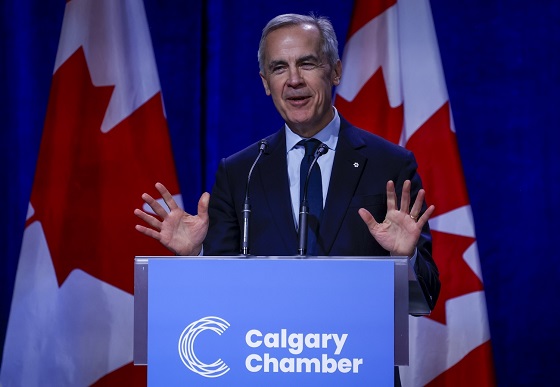
In a recent Canada-Japan leaders’ meeting on the sidelines of APEC, Prime Minister Mark Carney and Prime Minister Sanae Takaichi discussed expanding economic ties, with energy cooperation specifically highlighted around the LNG Canada project as a key element of their bilateral relationship. While Takaichi didn’t make a detailed public statement about Canadian LNG itself, the joint statement underscored Japan’s interest in stable and diversified LNG supplies—of which Canadian exports are a part of the broader Indo-Pacific energy security context.

What emerges from Asahi Shimbun’s reporting is a pragmatic assessment shaped by recent shocks. Japan values Canadian LNG because it is closer, less exposed to conflict-prone routes, backed by a stable political system, and already delivering cargoes at scale.

For Canadian readers, the message is unambiguous: Western Canadian LNG is not being embraced because of rhetoric or aspiration, but because it aligns with the operational, geopolitical, and economic priorities of one of the world’s most energy-dependent nations.

Continue Reading

Energy

Canada’s debate on energy levelled up in 2025

Published on

From Resource Works

By

Compared to last December, Canadians are paying far more attention.

Canada’s energy conversation has changed in a year, not by becoming gentler, but by becoming real. In late 2024, pipelines were still treated as symbols, and most people tuned out. By December 2025, Canadians are arguing about tolls, tariffs, tanker law, carbon pricing, and Indigenous equity in the same breath, because those details now ultimately decide what gets built and what stays in the binder. Prime Minister Mark Carney has gone from a green bureaucrat to an ostensible backer of another pipeline from Alberta to the West Coast.

From hypothetical to live instrument

The pivot began when the Trans Mountain expansion started operating in May 2024, tripling capacity from Alberta to the B.C. coast. The project’s C$34 billion price tag, and the question of who absorbs the overrun, forced a more adult debate than the old slogans ever allowed. With more barrels moving and new Asian cargoes becoming routine, the line stopped being hypothetical and became a live economic instrument, complete with uncomfortable arithmetic about costs, revenues, and taxpayer exposure.

The American election cycle then poured gasoline on the discussion. Talk in Washington about resurrecting Keystone XL, alongside President-elect Donald Trump’s threats of 25 percent tariffs, reminded Canadians how quickly market access can be turned into leverage.

In that context, Trans Mountain is being discussed not just as infrastructure, but as an emergency outlet if U.S. refiners start pricing in new levies.

The world keeps building

Against that backdrop, the world kept building. Global pipeline planning has not paused for Canadian anxieties, with more than 233,000 kilometres of large diameter oil and gas lines announced or advancing for 2024 to 2030. The claim that blocking Canadian projects keeps fossil fuels in the ground sounds thinner when other jurisdictions are plainly racing ahead.

The biggest shift, though, is domestic. Ottawa and Alberta signed a memorandum of understanding in late November 2025 that sketches conditions for a potential new oil pipeline to the West Coast, alongside a strengthened industrial carbon price and a Pathways Alliance carbon capture requirement. One Financial Post column argued the northwest coast fight may be a diversion, because cheaper capacity additions are on the table. Another argued the MOU is effectively a set of investment killers, because tanker ban changes, Indigenous co ownership, B.C. engagement, and CCUS preconditions create multiple points of failure.

This is where Margareta Dovgal deserves credit. Writing about the Commons vote where Conservatives tabled a motion echoing the Liberals’ own MOU language, she captured the new mood. Canadians are no longer impressed by politicians who talk like builders and vote like blockers. Symbolic yeses and procedural noes are now obvious, and voters are keeping score.

Skills for a new era

The same sharper attention is landing on carbon capture, once a technocratic sidebar. Under the MOU, a new bitumen corridor is tied to Pathways Alliance scale carbon management, and that linkage is already shaping labour planning. A Calgary based training initiative backed by federal funding aims to prepare more than 1,000 workers for carbon capture and storage roles, a sign that contested policy is producing concrete demand for skills.

British Columbia is no longer watching from the bleachers. It flared again at Carney’s December 18 virtual meeting, after Environment Minister Steven Guilbeault resigned from cabinet over it. Premier David Eby has attacked the Alberta Ottawa agreement as unacceptable, and Prime Minister Mark Carney has been forced into talks with premiers amid trade uncertainty. Polling suggests the public mood is shifting, too, with a slim majority of Canadians, and of British Columbians, saying they would support a new Alberta to West Coast pipeline even if the B.C. government opposed it, and similar support for lifting the tanker ban.

None of this guarantees a new line, or even an expanded one. But compared with last year’s tired trench warfare, the argument now has stakes, participants, and facts. Canadians have woken up to the reality that energy policy is not a culture war accessory. It is industrial policy, trade policy, and national unity policy, all at once.

Resource Works News

Continue Reading

Trending

X