
Business
Trump Announces Border Deal With Mexico, Sheinbaum Agrees To Close Border



 From the Daily Caller News Foundation
President-elect Donald Trump announced Wednesday that Mexico’s President Claudia Sheinbaum agreed to stop migration across the southern U.S. border.
The agreement aims to curb the flow of migrant caravans and drug trafficking into the United States. In a statement posted on Truth Social, Trump praised his conversation with Sheinbaum as “wonderful.” He said that the two leaders discussed strategies not only to stop unauthorized migration through Mexico but also to tackle the significant issue of drug smuggling into the U.S.
“She has agreed to stop Migration through Mexico, and into the United States, effectively closing our Southern Border. We also talked about what can be done to stop the massive drug inflow into the United States, and also, U.S. consumption of these drugs. It was a very productive conversation!,” Trump wrote.
Trump did not specify the strategies for addressing the drug issue. Following his announcement, the president-elect declared that the agreement would be implemented immediately.

“Mexico will stop people from going to our Southern Border, effective immediately. THIS WILL GO A LONG WAY TOWARD STOPPING THE ILLEGAL INVASION OF THE USA. Thank you!!!,” Trump said.
This agreement came after Trump threatened to impose tariffs on Mexican imports. Trump took to social media Monday to announce that he would impose a 25% tariff on all goods from Mexico and Canada starting from the first day of his administration.
He said that these tariffs would remain in place until the Mexican and Canadian governments take stronger measures to curb the flow of illegal drugs and migration into the U.S. Earlier Wednesday, Sheinbaum issued a warning of potential retaliation should Trump enact his proposed tariffs on Mexican imports.
In a letter to the president-elect, Sheinbaum said the United States needs to invest in development rather than warfare. She also said the U.S. is accountable for the proliferation of firearms within Mexican borders. Sheinbaum said her administration is responsible for the recent decline in migrant encounters along the U.S.-Mexico border.
“President Trump, migration and drug consumption in the United States cannot be addressed through threats or tariffs,” Sheinbaum wrote Tuesday to the upcoming president, according to a translation of her letter. “What is needed is cooperation and mutual understanding to tackle these significant challenges.”

Business
Largest fraud in US history? Independent Journalist visits numerous daycare centres with no children, revealing massive scam


A young journalist has uncovered perhaps the largest fraud scheme in US history.
He certainly isn’t a polished reporter with many years of experience, but 23 year old independent journalist Nick Shirley seems to be getting the job done. Shirley has released an incredible video which appears to outline fraud after fraud after fraud in what appears to be a massive taxpayer funded scheme involving up to $9 Billion Dollars.
In one day of traveling around Minneapolis-St. Paul, Shirley appears to uncover over $100 million in fraudulent operations.
🚨 Here is the full 42 minutes of my crew and I exposing Minnesota fraud, this might be my most important work yet. We uncovered over $110,000,000 in ONE day. Like it and share it around like wildfire! Its time to hold these corrupt politicians and fraudsters accountable
We ALL… pic.twitter.com/E3Penx2o7a
— Nick shirley (@nickshirleyy) December 26, 2025
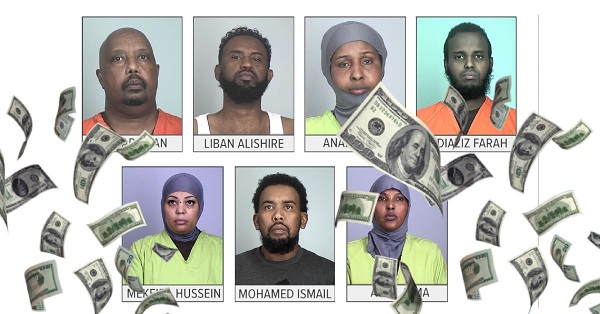

Federal prosecutors say Minnesota’s exploding social-services fraud scandal may now rival nearly the entire economy of Somalia, with as much as $9 billion allegedly stolen from taxpayer-funded programs in what authorities describe as industrial-scale abuse that unfolded largely under the watch of Democrat Gov. Tim Walz. The staggering new estimate is almost nine times higher than the roughly $1 billion figure previously suspected and amounts to about half of the $18 billion in federal funds routed through Minnesota-run social-services programs since 2018, according to prosecutors. “The magnitude cannot be overstated,” First Assistant U.S. Attorney Joe Thompson said Thursday, stressing that investigators are still uncovering massive schemes. “This is not a handful of bad actors. It’s staggering, industrial-scale fraud. Every day we look under a rock and find another $50 million fraud operation.”
Authorities say the alleged theft went far beyond routine overbilling. Dozens of defendants — the vast majority tied to Minnesota’s Somali community — are accused of creating sham businesses and nonprofits that claimed to provide housing assistance, food aid, or health-care services that never existed, then billing state programs backed by federal dollars. Thompson said the opportunity became so lucrative it attracted what he called “fraud tourism,” with out-of-state operators traveling to Minnesota to cash in. Charges announced Thursday against six more people bring the total number of defendants to 92.
BREAKING: First Assistant U.S. Attorney Joe Thompson revealed that 14 state Medicaid programs have cost Minnesota $18 billion since 2018, including more than $3.5 billion in 2024 alone.
Thompson stated, "Now, I'm sure everyone is wondering how much of this $18 billion was… pic.twitter.com/hCNDBuCTYH
— FOX 9 (@FOX9) December 18, 2025
Among the newly charged are Anthony Waddell Jefferson, 37, and Lester Brown, 53, who prosecutors say traveled from Philadelphia to Minnesota after spotting what they believed was easy money in the state’s housing assistance system. The pair allegedly embedded themselves in shelters and affordable-housing networks to pose as legitimate providers, then recruited relatives and associates to fabricate client notes. Prosecutors say they submitted about $3.5 million in false claims to the state’s Housing Stability Services Program for roughly 230 supposed clients.
Other cases show how deeply the alleged fraud penetrated Minnesota’s health-care programs. Abdinajib Hassan Yussuf, 27, is accused of setting up a bogus autism therapy nonprofit that paid parents to enroll children regardless of diagnosis, then billed the state for services never delivered, netting roughly $6 million. Another defendant, Asha Farhan Hassan, 28, allegedly participated in a separate autism scheme that generated $14 million in fraudulent reimbursements, while also pocketing nearly $500,000 through the notorious Feeding Our Future food-aid scandal. “Roughly two dozen Feeding Our Future defendants were getting money from autism clinics,” Thompson said. “That’s how we learned about the autism fraud.”
The broader scandal began to unravel in 2022 when Feeding Our Future collapsed under federal investigation, but prosecutors say only in recent months has the true scope of the alleged theft come into focus. Investigators allege large sums were wired overseas or spent on luxury vehicles and other high-end purchases. The revelations have fueled political fallout in Minnesota and prompted renewed federal scrutiny of immigration-linked fraud as well as criticism of state oversight failures. Walz, who is seeking re-election in 2026 after serving as Kamala Harris’ running mate in 2024, defended his administration Thursday, saying, “We will not tolerate fraud, and we will continue to work with federal partners to ensure fraud is stopped and fraudsters are caught.” Prosecutors, however, made clear the investigation is far from finished — and warned the final tally could climb even higher.


Ottawa’s Newly Released Defence Plan Crosses a Dangerous Line

Hunting Poilievre Covers For Upcoming Demographic Collapse After Boomers

Carney Floor Crossing Raises Counterintelligence Questions aimed at China, Former Senior Mountie Argues

Canadian university censors free speech advocate who spoke out against Indigenous ‘mass grave’ hoax
-
 International1 day ago
Ottawa is still dodging the China interference threat
-
 Business1 day ago
There’s No Bias at CBC News, You Say? Well, OK…
-
 Automotive1 day ago
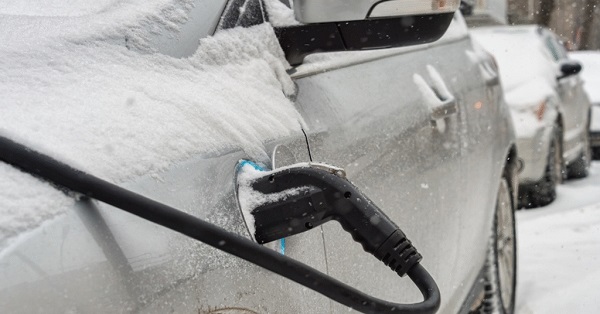
Canada’s EV gamble is starting to backfire
-
 International1 day ago
2025: The Year The Narrative Changed
-
 Alberta2 days ago
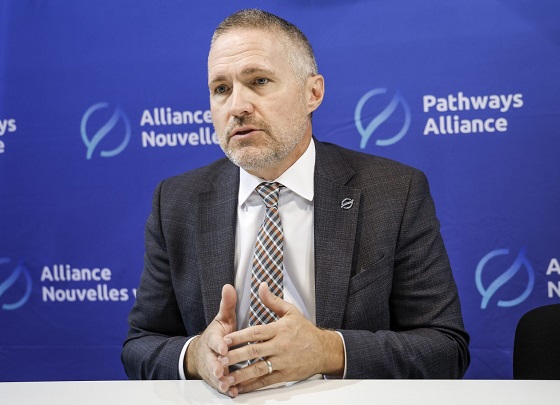
Alberta project would be “the biggest carbon capture and storage project in the world”
-
 Daily Caller2 days ago
While Western Nations Cling to Energy Transition, Pragmatic Nations Produce Energy and Wealth
-
 Business2 days ago
Residents in economically free states reap the rewards
-
 Bruce Dowbiggin2 days ago
Be Careful What You Wish For In 2026: Mark Carney With A Majority