
Also Interesting
Travel Tips for Meeting Someone From Another Country



With the rise of online dating apps and international brides site, it’s easier than ever to meet and
connect with potential partners from all over the world. While getting to know someone online
can be exciting, taking the next step to meet them in person for a first date can be thrilling but
also nerve-wracking. Planning a trip abroad to meet an online match for the first time adds extra
layers of complexity and potential challenges if you don’t prepare properly.
This article provides important tips for having a smooth, enjoyable, and safe trip when traveling
to meet an international online connection. With the right preparation and expectations, your
overseas travel can lead to incredible new adventures and deepened relationships.
Research the Destination Thoroughly
One of the key steps is doing thorough research beforehand about your date’s home country and city. This includes:
● Learning Cultural Customs and Etiquette – Study up on the local customs so you don’t inadvertently do something offensive. For example, certain hand gestures or body language could be inappropriate. Make sure you understand etiquette around things like greeting kisses, acceptable public displays of affection, dress codes, gift-giving, etc.
● Travel Requirements – Check visa, passport, and other travel requirements for your nationality. Make sure your passport is valid for at least 6 more months beyond the dates of travel. Secure necessary visas well in advance.
● Safety Risks – Read travel advisories and warnings from government sites to be aware of any safety risks or scams targeting tourists. Learn some basic emergency phrases in the local language.
● Transportation – Research options for getting around the destination, whether it’s trains, metro, taxis, or ride shares. Know options for getting to and from the airport.
● Lodging – Book a hotel or Airbnb in advance. Look for accommodations in central, well-lit areas rather than isolated locations.
Have Realistic Expectations
No matter how well you’ve connected with someone online, recognize that in-person chemistry is not guaranteed. Try not to build up fantasies about your first meeting being perfect. Remind yourself that you’re still getting to know this person.
Keep a realistic mindset about how well your different personalities, communication styles, values, and quirks will mesh in person. Be open-minded but also listen to any hesitations or doubts you feel.
Don’t rush into major commitments too quickly. Make returning home an option if you decide during the trip that you’re ultimately incompatible.
Take Basic Safety Precautions
Use common sense safety precautions, especially when meeting someone for the first time who you connected with online. This includes:
● Initially meeting in a public place like a restaurant or cafe rather than a private location. Do not agree to meet at their home or hotel room until you are comfortable.
● Avoid sharing your full itinerary and hotel address. Provide general details of the area, but not specifics.
● Check-in with a friend or family member back home periodically. Give them your date’s name, phone number, and information.
● Use extra caution if your date wants to take you to an isolated or unfamiliar location. Decline invitations that seem risky.
● Do not accept drinks you did not see poured and do not leave your drink unattended.
● Trust your instincts. If you feel uneasy, uncomfortable, or threatened, remove yourself from the situation.
● Arrange your transportation or travel by taxi/ride share rather than relying on your date for transport.
Have a Backup Plan
No matter how carefully you prepare, things may not go perfectly according to plan. Your in-person chemistry may not live up to the online connection. Logistical problems or disagreements could arise. One or both of you may decide you are not a match.
This is why it’s crucial to have backup plans in place for where to stay and how to get around if
needed:
● Book refundable flights and hotels when possible so you can change plans if needed.
● Research alternatives for places to stay, even if just a hotel to spend the night until your return flight.
● Know how to get around independently via taxi, metro, rideshares, etc. Don’t rely solely on your date for transportation.
● Have enough cash on hand for backup hotels, meals, and transportation in case of disagreements.
● Let a friend or family member know where you will be staying and meet up with them if plans for your date drastically change.
Bridge Any Language Barriers
For maximum comfort and connection on your overseas first date, try to bridge language and communication gaps as much as possible.
● Use translation apps to communicate important logistics and information before the trip. Slowly build your proficiency in their language by practicing common phrases and exchanging voice messages.
● Learn key date phrases like “hello”, “nice to meet you”, and “thank you”, etc. in their native
language. Showing effort means a lot.

● Be patient and speak slowly. Use body language to aid understanding. Avoid using complex slang or phrases they may not understand.
● Clarify meanings frequently to avoid misunderstandings. Don’t rely on assumptions.
● Have the hotel address and other logistics written down in both languages to show taxis, etc. if needed?
Overcoming language and cultural barriers shows commitment and can deeply strengthen your bond. The effort fosters openness, patience, and adaptation skills that enrich relationships.
Budget Accordingly
The costs add up quickly when traveling overseas to meet someone, especially when two people are involved. Carefully factor these expenses into your budget:
● Flights – Roundtrip international flights can easily be $1000+ per person. Try to book early for deals. Consider cheaper regional airports.
● Travel Documents – Factor in visa application fees, passport renewals, etc. which can cost $200+ depending on country.
● Accommodations – Hotels for even a few nights can run $100+ per night, or $1000+ for two people for a week. Price Airbnbs accordingly as well.
● Meals – Estimate $40-60 per day per person for simple meals to get a daily budget.
● Getting Around – Budget for trains, taxis, metro rides, etc. to get to activities and dates.
● Activities/ Entertainment – Entrance fees for museums, shows, attractions, and dates can add up too. Allocate accordingly.
● Emergency Funds – Have at least $500 extra as a buffer for unexpected changes, hotels, and meals if plans fall through.
While exciting, international travel is expensive. Carefully manage finances to reduce stress, arguments over money, and unexpected shortfalls.
Understand Visa Rules
Before you book travel, carefully research the visa requirements for your passport and the length of stay in your destination country.
● If a tourist visa is needed, apply well in advance as the process can be lengthy. Don’t risk being denied entry after booking non-refundable tickets.
● Make sure your passport has 1-2 blank pages for visas and entry stamps. Renew early if needed.
● Abide by the authorized length of stay granted with your visa. Overstaying could lead to serious legal trouble or bans from the country.
● If planning a longer visit, research extended stay or partner visas that allow you to legally reside abroad if the relationship progresses.
Trying to circumvent visa rules is never recommended. Be sure to follow proper immigration procedures and be honest if questioned by border officials to avoid red flags in the system that could jeopardize future entries.
Experience the Destination Together
Don’t spend all your precious overseas time holed up in a hotel room. Take advantage of exploring the exciting new destination together with your international date. This allows you to get to know each other in fun, active settings while creating wonderful shared memories.
Make time for activities like:
● Take a walking or cycling tour to see key landmarks
● Visiting famous museums and appreciating the culture
● Trying local flavors and dishes at restaurants and food markets
● Seeing a concert, theatre performance, or dance show
● Hiking scenic nature trails or parks together
● Learning something new like cooking classes or language lessons
Blending cultural immersion with quality time together makes for a richer dating experience. It builds bonds based on shared interests and new horizons.
Traveling overseas for an international online date is an exciting adventure when done thoughtfully. While language and cultural barriers exist, they can foster understanding.
Preparation and research are key for smooth travel. Most importantly, trust your instincts and do
not take unnecessary risks safety-wise.
With realistic expectations, budgeting diligence, and embracing the unknown together, your first
meetup can flourish into lasting love fueled by the spirit of adventure.


The Toronto Blue Jays are certainly keeping things interesting this winter. While the calendar might say late December, the front office shows no signs of slowing down. They have already made waves across MLB with some massive acquisitions earlier in the month.
Rather than packing it in for the holidays, the management team is seemingly working overtime. Their goal is to build a roster that can truly compete for a championship in 2026.
Although there are no more signing announcements for the end of the year, the silence is likely temporary. Reports indicate that the team is actively pursuing several more roster improvements before the new year begins.
A Rotation Built To Dominate
The team made their intentions clear in early December. They successfully signed Dylan Cease to a massive seven-year, $210 million contract. This deal, which became official around December 8, instantly transforms the Toronto rotation into one of the strongest in MLB.
Moreover, they did not stop with just one big arm. The front office added significant depth by bringing in KBO MVP Cody Ponce on a three-year deal worth $30 million. This gives the team a level of stability that was missing in previous seasons.
With such dramatic changes to the roster, fans might be looking for a clear overview of licensed Ontario sportsbooks to understand how these moves have impacted the team’s championship odds. It is certainly a different looking team than the one that ended the last season.
Targets for the Bullpen and Lineup
It seems that the focus has now shifted from the starting rotation to other needs. Agents around the league note that the Jays remain “everywhere” in trade talks. The priority is now on finding high-leverage arms and position players to round out the squad.
The front office is reportedly looking at several specific targets:
- Robert Suarez is a primary target to help lock down the late innings.
- Luke Weaver is being considered to add veteran versatility to the staff.
- Depth pieces for the lineup are being sought to support the core hitters.
- Internal extensions remain a key part of the winter strategy.
Due to the heavy spending on Cease and Ponce, these next moves will likely be strategic. The team is looking for the right fit to complement their new stars.
The Future of the Infield and Management
Conversations are actively continuing with free agent Bo Bichette. Bringing him back is a major topic of discussion among the fanbase, even if no deal is imminent yet. Furthermore, the team has been linked to prospect Kyle Tucker, suggesting they are keeping an eye on the future as well as the present.
Manager John Schneider has also expressed optimism regarding his own contract extension. However, he made it clear that building the team comes first. Therefore, while the heavy lifting might seem done, the work continues behind the scenes.
To be sure, the MLB offseason is long. But the Toronto Blue Jays have started fast, and they seem determined to finish strong.

We wanted to know what to do if you came to Canada for temporary or permanent residence. Many Ukrainians have arrived in the country, and many don’t know where to begin their financial journey. People often turn to traditional banks, where they encounter problems due to a lack of language skills and basic understanding of Canadian financial processes. We found an alternative – a credit union in Toronto. Today, we’ll look at one of the most well-known and learn more about what they have to offer Ukrainians.
What is a Credit Union in Toronto
These organisations differ from the typical bank for Ukrainians. They offer more flexible conditions, convenient online management, and a personalised approach.
However, these organisations are just as safe and reliable as banks. Let’s look at reliability using the example of the well-known BCU Financial:
- With over 70 years on the market. This credit union in Toronto has a dedicated client base with decades of experience.
- Extensive experience. Indeed, over more than 7 decades, its specialists have become experts in financial matters.
- Branches available. You can visit the office for face-to-face interaction.
- Active in the social life of the Ukrainian community. Buduchnist Credit Union provides financial support to schools, churches, and communication centres for Ukrainian newcomers.
As you can see, such companies have stability and experience. Now let’s look at how they differ from banks in financial matters.
Ukrainian Credit Union Toronto: Differences from a Traditional Bank
Firstly, such organizations welcome a personalized approach to Ukrainians. They are more flexible when it comes to obtaining a loan. Newcomers in Canada are working on receiving a good credit history. Banks always request one when reviewing a loan application.
Secondly, you can receive advice in your native language. Most Canadian banks don’t have multilingual consultants and respond only to inquiries in English or French. If, for example, you need help with a scholarship card, you’ll have to call a translator.
Third, you’ll get more flexible and understated banking for Ukrainians. It includes the ability to submit an app online. It provides such services as ordering credit cards, applying for a loan, or opening an account.
Conclusions
Credit unions are much easier for Ukrainians to work with. They speak your language, can provide advice on finances and their specific needs in Canada, and offer flexible terms. They also provide full-fledged online banking, so familiar to Ukrainians. You also become part of the community because, as a credit union member, you are, to a certain extent, its co-owner.
Georgia county admits illegally certifying 315k ballots in 2020 presidential election
Alberta Next Panel calls to reform how Canada works

Canadian government launches trial version of digital ID for certain licenses, permits

End Supply Management—For the Sake of Canadian Consumers
-
International10 hours ago
Georgia county admits illegally certifying 315k ballots in 2020 presidential election
-
 Business1 day ago
ICYMI: Largest fraud in US history? Independent Journalist visits numerous daycare centres with no children, revealing massive scam
-
 Alberta1 day ago
Alberta project would be “the biggest carbon capture and storage project in the world”
-
 Energy1 day ago
Canada’s debate on energy levelled up in 2025
-
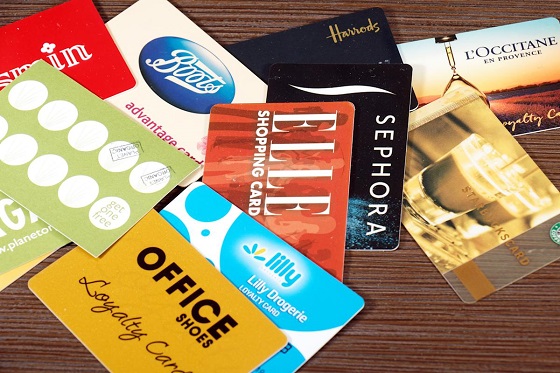 Business11 hours ago
What Do Loyalty Rewards Programs Cost Us?
-
 Haultain Research12 hours ago
Sweden Fixed What Canada Won’t Even Name
-
 Business1 day ago
Socialism vs. Capitalism
-
 Energy1 day ago
New Poll Shows Ontarians See Oil & Gas as Key to Jobs, Economy, and Trade