
Daily Caller
‘There Were Bodies In Trees’: Rural South Decimated By Hurricane Helene As Death Toll Rises Above 130

From the Daily Caller News Foundation

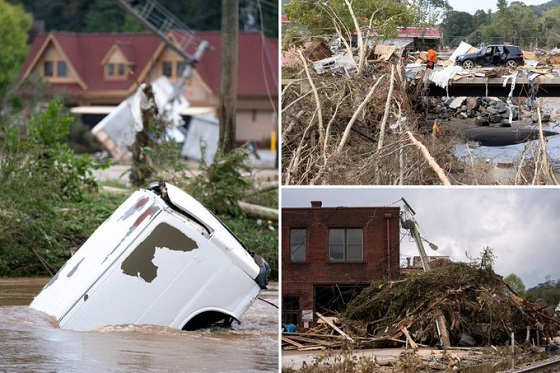
Hurricane Helene has continued to cause destruction and claim lives in the Southeast since Thursday night when it made landfall, leaving a combined death toll of 132 and nearly 600 missing as of Monday.
The catastrophic aftermath that became fully apparent on Monday left a scene of utter devastation with homes shattered, cargo containers crushed and highways engulfed in mud, according to The Associated Press. Infrastructure failures in Western North Carolina have plunged the area into crisis, cutting off roads and disrupting power and communications, forcing residents to queue for fresh water and to send messages to their loved ones to confirm that they were alive.
The storm affected Alabama, Florida, Georgia, South Carolina, North Carolina and Tennessee, the Federal Emergency Management Administration (FEMA) stated. White House homeland security adviser Liz Sherwood-Randall reported during Monday’s briefing that as many as 600 individuals were unaccounted for, some feared dead, AP reported.
Death toll triples in Asheville area after Hurricane Helene guts North Carolina: ‘There were bodies in the trees’ https://t.co/IRq5QpIgno pic.twitter.com/Dz2nJkHuHr
— New York Post (@nypost) September 30, 2024
President Joe Biden is scheduled to visit North Carolina on Wednesday to assess the damage and coordinate federal response efforts, the AP reported. Efforts to deliver relief to the affected regions are underway, with government and aid organizations attempting to reach isolated communities by various means, including air and truck deliveries, and even by mule. (RELATED: FEMA Lists ‘Equity’ Among Top Goals Even As Americans Face The Aftermath Of Hurricane Helene)
Relief efforts are ongoing in Asheville and Western North Carolina following the devastation of Tropical Storm Helene, according to the Citizen Times Monday. The full extent of the damage remains unclear, with more updates expected.
“There were bodies in trees. They were finding bodies under rubble,” Alyssa Hudson from Black Mountain, a village significantly impacted just 12 miles from Asheville, said, the New York Post reported Monday. “We started seeing videos of our house posted to Facebook. Our floors are caved in, our walls are gone. We had a shed in our backyard that they found two miles away.”
It's hard to wrap my head around this video. Underneath all of this debris is Lake Lure in North Carolina. All of this debris is parts of homes, businesses and other belongings that were washed here by the remnants of Hurricane Helene.
This will be a very long cleanup process. pic.twitter.com/9OlXKJIrmS
— Gage Goulding – KPRC 2 (@GageGoulding) September 30, 2024
Hurricane Helene Aftermath – NORTH CAROLINA
WATCH – DISASTER: North Carolina suffers historic flooding
Aerials show damages in Chimney Rock following Helene
SEP 28, 2024
Helene will end up being one of the most significant weather events of the modern era in western North… pic.twitter.com/yOW2DPUEuT
— Abhay (@AstuteGaba) September 29, 2024
Couple Kimberly and Jimmie Scott navigated through the devastated Black Mountain to rescue their daughter from Montreat College, where 1,000 students were stranded without power.
“All along the road, there were downed trees, downed power lines, structures collapsed, cars pushed over, train tracks destroyed. Buildings collapsed on the road,” Kimberly said, The Post reported.
GOP national committee member and local homeowner Ed Broyhill reported that storm damage has devastated Chimney Rock, North Carolina, washing away the community’s tourism-driven businesses into Lake Lure, Fox News reported Monday.
“The saddest thing in the world is that a lot of the folks have etched out a living catering to tourism … They have everything from hotels and motels and restaurants and nice stores and souvenir stores and clothing stores, and all of that was washed away. Every bit of it, all of it, was washed into the lake,” he said, Fox News reported.

Daily Caller
Minnesota Governor resigns from re-election campaign as massive government frauds revealed

From the Daily Caller News Foundation
Nick Shirley, the viral YouTuber who exposed the fraud happening at Somali daycare centers in Minnesota, took credit for Democratic Minnesota Gov. Tim Walz’s resignation from the 2026 gubernatorial race.
While Walz faced national scrutiny for his handling of fraud, Shirley posted a 42-minute documentary on Dec. 26, which found that nearly a dozen Somali daycare centers funded by taxpayer dollars were not actually providing services. In response to the governor accusing Shirley of being a “conspiracy theorist” who broke into daycare centers, Shirley posted on X that he “ended” Walz’s career.
Dear Readers:
As a nonprofit, we are dependent on the generosity of our readers.
Please consider making a small donation of any amount here.
Thank you!
Prominent conservatives, including tech mogul Elon Musk and YouTuber Brandon Tatum, praised Shirley for his role in making Walz step down.
“Thank God,” Elon Musk wrote in response to Shirley.
In his statement on Monday, Walz accused Republicans of “playing politics” by speaking to whistleblowers, exposing daycare centers and “demonizing” Somalis.
“But the political gamesmanship we’re seeing from Republicans is only making that fight harder to win. We’ve got Republicans here in the legislature playing hide-and-seek with whistleblowers,” Walz said. “We’ve got conspiracy theorist right-wing YouTubers breaking into daycare centers and demanding access to our children. We’ve got the President of the United States demonizing our Somali neighbors and wrongly confiscating childcare funding that Minnesotans rely on. It’s disgusting. And it is dangerous.”
Shirley responded on X by telling Walz he should have prevented the fraud from ever happening.
“You should’ve put Minnesota first when you had the chance, instead you let billions of dollars of fraud happen across your state… anywayssss … I hear Quality LEARING Center is hiring,” Shirley said.
The Quality “Learning” Center, which initially misspelled “Learning,” as “Learing,” is among the daycare centers that appeared to have no children inside when visited by Shirley. The center received $1.9 million in 2025 and $4 million in total funding from Minnesota’s Child Care Assistance Program (CCAP), Shirley reported in the documentary.
Ali Ibrahim, the son of the center’s owner, told the Post that Shirley visited the property outside of regular business hours.
In a separate case, federal prosecutors have charged over 90 individuals, whom are mostly of Somali descent, with stealing over $9 billion in taxpayer funds from federal social service programs in Minnesota. Five of the 10 daycare centers visited by Shirley operated as meal sites for Feeding Our Future, a program at the center of a $300 million scam that provided meals to children during the COVID-19 pandemic.
Between 2018 and 2021, those five businesses received nearly $5 million from Feeding Our Future, according to the Minnesota Star Tribune. One facility, the Minnesota Best Childcare Center, received $1.5 million from Feeding Our Future. The Sweet Angel Child Care center in Minneapolis had the same phone number as Walz’s office.
State employees in Minnesota stated in November that Walz bore full responsibility for the fraud by working to “discredit fraud reports” and ignore whistleblowers.
Democrats and state leaders defended Somalis while the fraud was uncovered, including Democratic Minneapolis Mayor Jacob Frey, who said that Somalis were part of the community’s family. Minnesota Democratic Lt. Gov. Peggy Flanagan appeared on a Somali TV station wearing a hijab.
Daily Caller
Scathing Indictment Claims Nicolás Maduro Orchestrated Drug-Fueled ‘Culture Of Corruption’ Which Plagued Entire Region
From the Daily Caller News Foundation
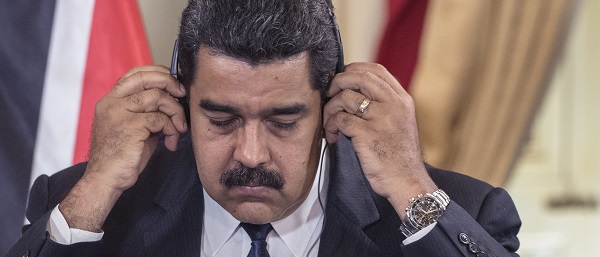
Ousted socialist Venezuelan dictator Nicolás Maduro was the mastermind of a pervasive drug-fueled “culture of corruption” which extended all the way to the U.S.’s backyard, according to the scathing indictment against him, his wife, his son, and others, released Saturday.
Hours after President Donald Trump announced Maduro’s capture and removal from power, Attorney General Pam Bondi confirmed the deposed despot and his wife, Cilia Flores, were indicted in the Southern District of New York on four charges, including narco-terrorism conspiracy, and “will soon face the full wrath of American justice” on U.S. soil. A grand jury found Maduro “and corrupt members of his regime enabled corruption fueled by drug trafficking throughout” the Latin American region, including in Mexico and Central America, and empowered notorious crime syndicates such as Tren de Aragua (TdA), according to the unsealed indictment.
Signed by Trump-appointed U.S. Attorney Jay Clayton, the 25-page indictment names six defendants, including the deposed Maduro, Flores, and Maduro’s 35-year-old son from his first marriage, Nicolás “Nicolasito” Maduro Guerra. It also names as defendants TdA leader Niño Guerrero and two high-profile members of Maduro’s United Socialist Party, Diosdado Cabello Rondón and Ramón Rodríguez Chacín.
Dear Readers:
As a nonprofit, we are dependent on the generosity of our readers.
Please consider making a small donation of any amount here.
Thank you!
Maduro, “like former President [Hugo] Chávez before him[,] participates in, perpetuates, and protects a culture of corruption in which powerful Venezuelan elites enrich themselves through drug trafficking and the protection of their partner drug traffickers,” the indictment alleges. “The profits of that illegal activity flow to corrupt rank-and-file civilian, military, and intelligence officials, who operate in a patronage system run by those at the top-referred to as the Cartel de Los Soles or Cartel of the Suns, a reference to the sun insignia affixed to the uniforms of high-ranking Venezuelan military officials.”
The Trump administration’s State Department announced it was designating the Cartel de Los Soles as a Foreign Terrorist Organization (FTO) in November 2025. Secretary of State Marco Rubio wrote in a statement at the time the cartel “is headed by Nicolás Maduro and other high-ranking individuals of the illegitimate Maduro regime who have corrupted Venezuela’s military, intelligence, legislature, and judiciary.”
The indictment also notes the South American nation “sits in a geographically valuable location for drug traffickers” and that, around the time Chávez came to power in 1999, “Venezuela became a safe haven” for them.
“In that environment, cocaine trafficking flourished,” the indictment continues, citing State Department estimates from arund 2020, with between 200 and 250 tons of the drug being trafficked through the country each year.
The charging document goes on to allege Maduro, his wife, son, and political allies had “partnered with narcotics traffickers and narco-terrorist groups, who dispatched processed cocaine from Venezuela to the United States via transshipment points in the Caribbean and Central America, such as Honduras, Guatemala, and Mexico.”
“Through this drug trafficking, [Maduro] and corrupt members of his regime enabled corruption fueled by drug trafficking throughout the region,” the indictment continues. “The transshipment points in Honduras, Guatemala, and Mexico similarly relied on a culture of corruption, in which cocaine traffickers operating in those countries paid a portion of their own profits to politicians who protected and aided them. In turn, these politicians used the cocaine-fueled payments to maintain and augment their political power.”
Maduro and his regime also “facilitated the empowerment and growth of violent narco-terrorist groups fueling their organizations with cocaine profits,” according to the indictment.
The charging document notably identifies organizations which collaborated with the Maduro regime: Colombian communist militant groups Revolutionary Armed Forces of Colombia (FARC) and National Liberation Army (ELN); Mexican syndicates the Sinaloa Cartel and Los Zetas; and Guerrero’s TdA.
The indictment also alleges Maduro Guerra, the captured dictator’s son, personally “worked to ship hundreds of kilograms of cocaine from Venezuela to Miami, Florida” around the year 2017. Maduro Guerra is a member of his father’s political party and served as a Deputy to the Venezuelan National Assembly since 2021.
“During this time, MADURO GUERRA spoke with his drug trafficking partners about, among other things, shipping low-quality cocaine to New York because it could not be sold in Miami, arranging a 500-kilogram shipment of cocaine to be unloaded from a cargo container near Miami, and using scrap metal containers to smuggle cocaine into the ports of New York,” the document reads.

Rulings could affect energy prices everywhere: Climate activists v. the energy industry in 2026

The Global Push for Government Mandated Digital IDs And Why You Should Worry

Maduro says he’s “ready” to talk
The Rise Of The System Engineer: Has Canada Got A Prayer in 2026?
-
 Frontier Centre for Public Policy16 hours ago
Is Canada still worth the sacrifice for immigrants?
-
 Business16 hours ago
Policy uncertainty continues to damage Canada’s mining potential
-
 Bruce Dowbiggin16 hours ago
The Olympic Shutout: No Quebec Players Invited For Canada
-
 Canadian Energy Centre16 hours ago
Five reasons why 2026 could mark a turning point for major export expansions
-
 International14 hours ago
Network of Nonprofits with Marxist and CCP Ties, and Elected Socialists Race to Counter Washington’s Narrative of the Maduro Raid
-
 Opinion2 days ago
Hell freezes over, CTV’s fabrication of fake news and our 2026 forecast is still searching for sunshine
-
 COVID-191 day ago
A new study proves, yet again, that the mRNA Covid jabs should NEVER have been approved for young people.
-
 Alberta13 hours ago
Trump’s Venezuela Geopolitical Earthquake Shakes up Canada’s Plans as a “Net Zero” Energy Superpower