Connect with us

Energy

The U.S. Just Removed a Dictator and Canada is Collateral Damage

Published

7 minute read

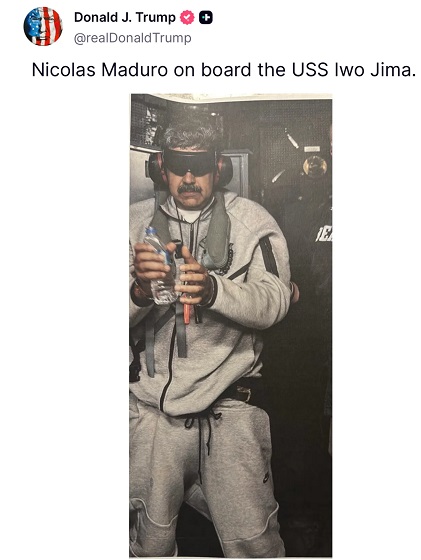
Early this morning, the United States says it carried out a ground raid supported by air strikes inside Venezuela, reportedly involving elite U.S. forces, including Delta Force, and removed Venezuelan President Nicolás Maduro and his wife Cilia Flores from the country.

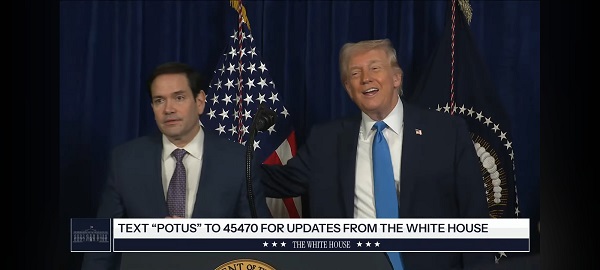
President Donald Trump confirmed the operation publicly and stated that the United States intends to “run Venezuela” during a transition period, explicitly including control over the country’s oil sector. That single statement should alarm Canada far more than any diplomatic condemnation ever could.

Kelsi Sheren is a reader-supported publication.

To receive new posts and support my work, consider becoming a free or paid subscriber.

While this move may be justified on moral or strategic grounds for the U.S., it is unequivocally bad news for Canada, really really bad. Canada’s energy position just weakened significantly and now Canada’s leverage with the United States has always rested on one simple fact: the U.S. needed Canadian oil.

Not liked it. Needed it.

Canada became Washington’s largest and most reliable foreign energy supplier not because it was cheap, fast, or efficient but because alternatives were unstable, sanctioned, or politically toxic. Venezuela was one of those alternatives.

It isn’t anymore.

If the U.S. succeeds in stabilizing Venezuelan oil production under its influence, Canada loses something it cannot easily replace and wish it did sooner, strategic indispensability. When your biggest customer gains options, your negotiating power not only shrinks, it completely disappears.

Venezuelan crude is largely heavy oil, the same category as much of Canada’s oil sands production. Many U.S. refineries, especially along the Gulf Coast, are designed to process heavy crude. For years, sanctions and mismanagement kept Venezuelan barrels off the market. Canadian heavy helped fill that gap. That advantage just cracked open. If Venezuelan supply re-enters global markets under U.S. oversight, Canadian oil faces more competition, downward pressure on prices, wider discounts for heavy crude and reduced urgency for new Canadian infrastructure. Urgency that Mark Carney refused to see was needed.

Canada’s oil is already expensive to extract and transport. It is already burdened by regulatory delays, pipeline bottlenecks, and political hostility at home. Now it faces a rival with larger reserves, lower production costs, shorter shipping routes and U.S. strategic backing

That is not a fair fight, but the liberals put us in this position and only have themselves to blame. Ottawa officially has no cards left to play. Canada’s response options are beyond limited and that’s the real problem.

Ottawa cannot meaningfully condemn the U.S. without risking trade and defence relations. It cannot influence Venezuelan reconstruction. It cannot outcompete Venezuelan oil on cost and it has spent years undermining its own energy sector in the name of climate virtue signalling. This is just the snake eating it’s tail and now realizing its proper fucked.

Canada is watching a major shift in global energy power from the sidelines, with no leverage and no contingency plan. This is the cost of mistaking morality for strategy. This is the cost of an ego gone unchecked.

Canada likes to tell itself that being stable, ethical, and predictable guarantees relevance. It doesn’t, Canada isn’t even in the game anymore it just hasn’t realized it. It only works when your partner has no better options.

The U.S. did not remove a communist dictator in Venezuela to protect Canadian interests. It did it to secure American interests energy, influence, and control. Thats what a real leader does, puts it’s country and it’s citizens first.

Canada’s reliability is now a nice bonus, not a necessity. That shift will show up quietly in trade negotiations, in infrastructure decisions and how quickly Canadian concerns get brushed aside. No dramatic break. Just less attention. Less urgency. Less patience and soon enough Canada won’t be invited to the table to even begin the conversation. Canada has just been down graded to the kids table.

This moment didn’t begin today. It began when Canada failed to build pipelines, ego drove away energy investment, allowed its regulatory system to become a chokehold and treated its largest export sector as an embarrassment.

While Ottawa debated optics, the U.S. planned for contingencies. Today was one of them.

The removal of a communist dictator in Venezuela may be a massive victory for it’s citizen and a strategic win for the United States but for Canada, it is a warning shot. Canada just became more optional in a world that punishes irrelevance quickly and quietly.

Being polite won’t save us. Being virtuous won’t save us.

Only being necessary ever did and today, Canada no longer became necessary.

KELSI SHEREN

– – – – – – – – – – – –

One Time Donation! – Paypal – https://paypal.me/brassandunity

Buy me a coffee! – https://buymeacoffee.com/kelsisheren

Let’s connect!

Youtube – https://www.youtube.com/@thekelsisherenperspective

Instagram – https://www.instagram.com/thekelsisherenperspective?utm_source=ig_web_button_share_sheet&igsh=ZDNlZDc0MzIxNw%3D%3D

X: https://x.com/KelsiBurns

Instagram: https://www.instagram.com/kelsie_sheren/

Substack: https://substack.com/@kelsisheren

TikTok – https://x.com/KelsiBurns

Todayville is a digital media and technology company. We profile unique stories and events in our community. Register and promote your community event for free.

Follow Author

Business

Virtue-signalling devotion to reconciliation will not end well

Published on

From the Fraser Institute

By Bruce Pardy

In September, the British Columbia Supreme Court threw private property into turmoil. Aboriginal title in Richmond, a suburb of Vancouver, is “prior and senior” to fee simple interests, the court said. That means it trumps the property you have in your house, farm or factory. If the decision holds up on appeal, it would mean private property is not secure anywhere a claim for Aboriginal title is made out.

If you thought things couldn’t get worse, you thought wrong. On Dec. 5, the B.C. Court of Appeal delivered a different kind of upheaval. Gitxaala and Ehattesaht First Nations claimed that B.C.’s mining regime was unlawful because it allowed miners to register claims on Crown land without consulting with them. In a 2-to-1 split decision, the court agreed. The mining permitting regime is inconsistent with the United Nations Declaration on the Rights of Indigenous People (UNDRIP). And B.C. legislation, the court said, has made UNDRIP the law of B.C.

UNDRIP is a declaration of the United Nations General Assembly. It consists of pages and pages of Indigenous rights and entitlements. If UNDRIP is the law in B.C., then Indigenous peoples are entitled to everything—and to have other people pay for it. If you suspect that is an exaggeration, take a spin through UNDRIP for yourself.

Indigenous peoples, it says, “have the right to the lands, territories and resources which they have traditionally owned, occupied or otherwise used or acquired… to own, use, develop and control, as well as the right to “redress” for these lands, through either “restitution” or “just, fair and equitable compensation.” It says that states “shall consult and cooperate in good faith” in order to “obtain free and informed consent prior to the approval of any project affecting their lands or territories and other resources,” and that they have the right to “autonomy or self-government in matters relating to their internal and local affairs, as well as ways and means for financing their autonomous functions.”

The General Assembly adopted UNDRIP in 2007. At the time, Canada sensibly voted “no,” along with New Zealand, the United States and Australia. Eleven countries abstained. But in 2016, the newly elected Trudeau government reversed Canada’s objection.

UN General Assembly resolutions are not binding in international law. Nor are they enforceable in Canadian courts. But in 2019, NDP Premier John Horgan and his Attorney General David Eby, now the Premier, introduced Bill 41, the Declaration on the Rights of Indigenous Peoples Act (DRIPA). DRIPA proposed to require the B.C. government to “take all measures necessary to ensure the laws of British Columbia are consistent with the Declaration.” The B.C. Legislature unanimously passed the bill. (The Canadian Parliament passed a similar bill in 2021.)

Two years later, the legislature passed an amendment to the B.C. Interpretation Act. Eby, still B.C.’s Attorney General, sponsored the bill. The amendment read, “Every Act and regulation must be construed as being consistent with the Declaration.”

Eby has expressed dismay about the Court of Appeal decision. It “invites further and endless litigation,” he said. “It looked at the clear statements of intent in the legislature and the law, and yet reached dramatically different conclusions about what legislators did when we voted unanimously across party lines” to pass DRIPA. He has promised to amend the legislation.

These are crocodile tears. The majority judgment from the Court of Appeal is not a rogue decision from activist judges making things up and ignoring the law. Not this time, anyway. The court said that B.C. law must be construed as being consistent with UNDRIP—which is what Eby’s 2021 amendment to the Interpretation Act says.

In fact, Eby’s government has been doing everything in its power to champion Aboriginal interests. DRIPA is its mandate. It’s been making covert agreements with specific Aboriginal groups over specific territories. These agreements promise Aboriginal title and/or grant Aboriginal management rights over land use. In April 2024, an agreement with the Haida Council recognized Haida title and jurisdiction over Haida Gwaii, an archipelago off the B.C. coast formerly known as the Queen Charlotte Islands. Eby has said that the agreement is a template for what’s possible “in other places in British Columbia, and also in Canada.” He is putting title and control of B.C. into Aboriginal hands.

But it’s not just David Eby. The Richmond decision from the B.C. Supreme Court had nothing to do with B.C. legislation. It was a predictable result of years of Supreme Court of Canada (SCC) jurisprudence under Section 35 of the Constitution. That section guarantees “existing” Aboriginal and treaty rights as of 1982. But the SCC has since championed, evolved and enlarged those rights. Legislatures can fix their own statutes, but they cannot amend Section 35 or override judicial interpretation, even using the “notwithstanding clause.”

Meanwhile, on yet another track, Aboriginal rights are expanding under the Charter of Rights and Freedoms. On the same day as the B.C. Court of Appeal decision on UNDRIP, the Federal Court released two judgments. The federal government has an actionable duty to Aboriginal groups to provide housing and drinking water, the court declared. Taxpayer funded, of course.

One week later, at the other end of the country, the New Brunswick Court of Appeal weighed in. In a claim made by Wolastoqey First Nation for the western half of the province, the court said that Aboriginal title should not displace fee simple title of private owners. Yet it confirmed that a successful claim would require compensation in lieu of land. Private property owners or taxpayers, take your pick.

Like the proverb says, make yourself into a doormat and someone will walk all over you. Obsequious devotion to reconciliation has become a pathology of Canadian character. It won’t end well.

Continue Reading

Energy

Rulings could affect energy prices everywhere: Climate activists v. the energy industry in 2026

Published on

From The Center Square

By 

Anti-oil and gas advocates across the country have pursued litigation in recent years attempting to force the fossil fuel industry to pay for decades of financial damages the advocates claim were caused by climate change.

Several cases have been dismissed while others advanced through court systems, with some being considered before the U.S. Supreme Court in 2026. Critics of the litigation call it “woke lawfare” and an attempt to force progressive political policies via the judicial system.

Critics also argue the lawsuits threaten U.S. energy independence and, depending on outcomes, will have sweeping impacts on every American.

Here are some of those cases.

Chevron USA Inc. v. Plaquemines Parish, Louisiana

On Jan. 12, 2026, the U.S. Supreme Court will hear oral arguments in Plaquemines Parish, Louisiana, vs. Chevron USA Inc. The case questions to what extent a state court can litigate against an oil company for its production of oil even if it obtained federal permits to produce the oil.

The litigation challenges activities of the oil companies dating back to World War II in some cases. Chevron argued the lawsuit was flawed, claiming that the activities in question were permitted, legal, and often conducted under federal direction – particularly those tied to national security during World War II.

A Plaquemines Parish jury in April ordered Chevron to pay $744 million in damages for its role in the degradation of the state’s coastal wetlands. Environmental activists celebrated the verdict. It was the first of 42 lawsuits filed since 2013 by parishes across coastal Louisiana to go to trial.

The Trump administration’s Justice Department stepped in on Chevron’s side, urging the Supreme Court to move the case from state court to federal court.

Business groups and energy advocates warned the verdict will drive jobs and investment out of Louisiana. The Louisiana Association of Business and Industry called the decision “shortsighted,” saying it would “brand Louisiana as a state that will extort the most recognizable companies on earth for billions of dollars, decades later.”

O.H. Skinner, executive director of Alliance for Consumers, told the Center Square the case seeks to score large settlements from the energy industry and stop oil production.

“The case arises from a broader campaign of woke lawfare in which activists and municipal governments seek to use courtrooms to determine what companies are allowed to produce and what consumers can buy,” Skinner said.

Suncor Energy Inc. v. Boulder

The nation’s highest court is still deciding whether it will hear arguments in Suncor Energy Inc. v. Boulder; a case to decide whether state and local governments can use nuisance laws to sue energy companies for activities that may cause climate change.

The case, originating in Colorado, centers around a City of Boulder and Boulder County lawsuit in state court against Suncor Energy claiming it misled the public in its activities that the local governments claim led to climate change effects.

Lawyers for Suncor Energy argue that allowing a case like this one to play out goes against protections in the Clean Air Act that prevent lawsuits from occurring against emitters from across state lines.

“Public nuisance can’t be used for global problems. It can be used for local problems,” Skinner told The Center Square. “That’s what it’s supposed to be used for.”

However, Skinner said many organizations that are pursuing climate change litigation are seeking to bankrupt energy companies with large monetary settlements. He said litigants will likely attempt to drain energy companies of their resources and use the funds to advocate certain ideological causes.

“These are highly ideological dark-money-funded, multi-faceted legal campaigns to bankrupt an entire industry and confiscate it for ideological reasons,” Skinner said.

City and County of Honolulu v. Sunoco

Similarly, in 2020, City and County of Honolulu v. Sunoco was one of the first examples of public nuisance lawsuits pursued in a state court. The city and county of Honolulu filed a lawsuit in 2020 accusing oil and gas companies, including Sunoco, Exxon Mobil, BP, Chevron and Shell, of misleading the public for decades about the dangers of climate change induced by burning fossil fuels.

The companies asked the U.S. Supreme Court to intervene in the case, but the court, without ruling on the merits, declined to do so in January.

While the case is based in Hawaii, Skinner said litigants there hope it will have far-reaching effects across the country.

“They’re not trying to stop behavior just in those states,” Skinner said. ”The thing that really freaks me out is how people in regular, everyday, real America are going to potentially be affected.”

The People of the State of California v. Exxon Mobil Corporation

Going a step further than Boulder and Honolulu, California Democrat Attorney General Rob Bonta filed a complaint against ExxonMobil in 2024 for what he says are its contributions to “the deluge of plastic pollution” affecting the state.

Exxon countersued, alleging “Bonta and the US Proxies – the former for political gain and the latter pawns for the Foreign Interests – have engaged in a deliberate smear campaign against ExxonMobil, falsely claiming that ExxonMobil’s effective and innovative advanced recycling technology is a ‘false promise’ and ‘not based on truth.,” American Tort Reform Foundation reported.

One of the foreign interests is  IEJF, an Australian nonprofit that’s connected to an Australian mining conmpany “that competes with ExxonMobil in the low carbon solutions and energy transition markets, ATRF reported.

Skinner said the litigants in this case are attempting to significantly reduce plastic use throughout the state of California and potentially beyond.

“That’ll make your average person’s life dramatically harder, and it’ll make a lot of things a lot more expensive, and it’ll make having kids, like, brutal,” Skinner said.

Leon v. Exxon Mobil Corp.

Aside from monetary settlements, petitioners in this case also are seeking wrongful death claims against energy companies for their contributions to climate change. The case stems from a woman in Washington state who said her mother died from heat-related illness due to the exacerbated effects of climate change.

She is suing energy companies for their alleged creation of conditions over a period of decades that led to increased temperatures on the day her mother died.

Skinner told The Center Square this case is one of the more blatant examples of ideology affecting the way a litigant pursues cases.

“I think they care because a death is worth a lot of money,” Skinner said. “The climate homicide cases are one of the more far-fetched legal theories I’ve ever seen, because you’re leveling this incredibly staggering charge.”

Climate cases will continue to move through the court system, with one to be heard before the U.S. Supreme Court in early 2026.

Skinner is urging the U.S. Supreme Court and lower courts to rule in favor of energy companies across the country.

“We want the energy companies to win, not because they are perfect actors, but because the alternative is that our lives are governed day in and day out by woke trial lawyers, woke [nongovernmental organizations] and local governments,” Skinner said.

Continue Reading

Trending

X