
Frontier Centre for Public Policy
The Toppling of the woke authoritarians

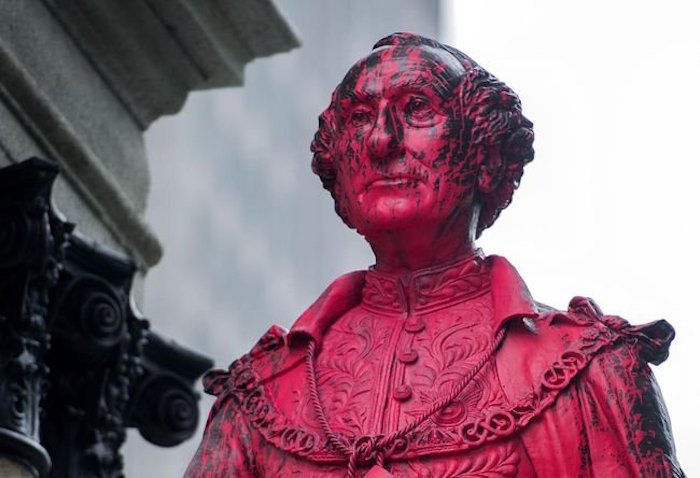

From the Frontier Centre for Public Policy
By Tom Slater, editor of Spiked.
If you – like me – loathe authoritarian, faux-progressive scolds, it’s actually been a good few years. I know it might not seem like it, with the ‘Queers for Palestine’ contingent currently running riot on American university campuses, but hear me out. Across the Anglosphere, one politician after another, beloved by the media but increasingly disliked by the public, have exited the stage, often jumping before they were pushed.
This week, we bid farewell to the SNP’s Humza Yousaf, whose year-and-a-bit-long premiership in Scotland produced more scandals and disparaging nicknames – Humza Useless, Humza the Hapless, etc – than it did any positive legacy. In the end, he proved himself to be as illiberal as he was inept. His Flagship policy, the Orwellian, broad-sweeping Hate Crime Act, alarmed voters and sparked a tsunami of spurious complaints, many of them about Yousaf himself. We can only hope it will now collapse under the weight of its own absurdity. (One thing’s for sure, voters are furious about it: only one in five Scots wants the Hate Crime Act to stay.)
Then, Humza managed to accidentally collapse his own government. He was apparently surprised to learn that his decision last week to suddenly terminate his party’s coalition agreement with the Scottish Greens –following some internal friction over trans and environmental issues – left the Greens angry and unwilling to prop up his minority government. As his short reign ends, Yousaf has at least managed the incredible feat of being even more unpopular than the leaders of the widely disliked Tories and the crackpot Greens, with an approval rating of -47. Yousaf – who was crowned first minister by SNP members and never gained a mandate from the people – was in negative numbers for all of this tenure.
Only in March, democrats were also toasting the demise of another despised, virtue-signalling leader who owed his position to elite politicking rather than democracy. Namely, Leo Varadkar. He became Irish taoiseach in 2017, after Fine Gael made him party leader. Even then, he had to rely on his support within the parliamentary party – in Fine Gael’s leadership-election process, the politicians are given much more weight than the members – given the membership voted two-to-one for his opponent. When Varadkar led his party to the polls in 2020, Fine Gael actually lost seats. Only by getting into bed with Fianna Fáil, his party’s supposed bitter rival, was Varadkar able to cling on to power.
Like Yousaf, Varadkar was a visionless leader who came to see superficial ‘social justice’ as his route to a legacy. While nominally on the centre-right economically, he was credited by international media with ‘Ireland’s transformation into a secular progressive state’. He clearly warmed to this image of himself, even if the Irish people did not. ‘We have made the country a more equal and more modern place’, he said in his resignation speech (my emphasis), ‘when it comes to the rights of children, the LGBT community, equality for women and their bodily autonomy’. This notion that Varadkar’s Ireland – like Yousaf’s Scotland – needed to be dragged kicking and screaming into the 21st century, that voters and their values desperately needed a politically correct makeover, gave the semblance of substance to his otherwise hollow premiership.
Ireland’s historic 2018 referendum, in which 66 per cent voted to overturn one of the Western world’s strictest abortion bans, was indeed a seismic blow for freedom. But Varadkar can hardly take credit for the decades of grassroots campaigning that got it over the line. His fingerprints were, however, all over the ‘family’ and ‘care’ referendums earlier this year, which produced two historic, humiliating defeats. Varadkar utterly failed to convince the people that this campaign to change the wording of the Irish constitution – to update the meaning of ‘family’ and to remove references to women’s role in the home – was anything other than an exercise in elite moral preening. He even insisted on holding the vote on International Women’s Day, just to heighten the sense of moral blackmail, even though doing so meant radically shortening the time the pro-amendments campaign had to prepare. The ‘family’ and ‘care’ amendments were rejected by 67 and 74 per cent of voters respectively. Varadkar tried to limp on, noting all major parties had backed the amendments. But this ballot-box revolt left his authority in tatters. He resigned two weeks later.
When Varadkar wasn’t talking down to voters, he was trying to censor them. Before he resigned, he had been toiling to pass Ireland’s own insanely draconian hate-speech bill, aimed at expanding restrictions on ‘incitement to hatred’ and adding gender to the list of ‘protected characteristics’, opening the door to criminalizing people for refusing to bow to the trans cult. To Scots, this may sound familiar. Indeed, it was as if Varadkar and Yousaf were competing to be the most censorious. Where Scotland’s Hate Crime Act criminalizes even private conversations in your own home (removing the so-called dwelling defence), Ireland’s proposed legislation would criminalize mere ‘possession’ of offensive material, including memes. From your phone’s camera roll to the family dinner table, no area of life is now safe, it seems, from the state censors. Having sailed through the Dáil in April 2023, the bill is now stuck in the upper house, after an almighty backlash from voters and civil libertarians. (Varadkar’s successor, Simon Harris, says he intends to table amendments to assuage voters’ concerns.)
Say what you will about Leo and Humza, at least they were occasionally – unintentionally – entertaining. Both were famously gaffe-prone. (Who could forget Yousaf’s tumble from his knee scooter, or Varadkar’s Monica Lewinsky joke in DC?) The same cannot be said for Nicola Sturgeon, the former Scottish first minister, Yousaf’s mentor and the walking embodiment of the prickly puritanism and mad identitarianism of our age. She looked upon the masses as reactionary filth – she once smeared her opponents as ‘transphobic… deeply misogynist, often homophobic, possibly some of them racist as well’ – all while ushering in the most reactionary agenda Scotland has seen for decades. Her already hated ‘gender self-ID’ reforms collapsed in 2023, when the public realized they would mean putting rapists in women’s prisons – which, by a grotesque quirk of fate, had become the ‘progressive’ position.
You could be forgiven for forgetting that the SNP was founded to achieve the ‘liberation’ of Scotland from the UK, rather than the ‘liberation’ of perfectly healthy genitals from the bodies of confused young people. It speaks to the grip of woke identity politics over the technocratic, centre-left imagination that Sturgeon was not only sidetracked but, in part, brought down by her dogged, fanatical pursuit of ‘trans rights’. Then again, social engineering has characterized much of the SNP agenda since it first came to power. Ending the Union has often taken a back seat to reforming Scots, from the SNP’s crackdown on offensive football chants to its profoundly creepy ‘named person’ scheme, which would have assigned a state guardian to every child had it not been held up in the courts on human-rights grounds.
One of the hallmarks of our woke, technocratic ruling class is that they increasingly define themselves against their own citizenry. Leaders today draw their moral authority not from the democratic endorsement of their electorates but from their ability to rise above the throng, to oppose our supposedly backward values. Skim-read the resignation speeches of Sturgeon, Yousaf and Varadkar and you’ll find them all peppered with rueful references to ‘populism’, ‘polarization’ and the supposed ‘toxicity’ of contemporary discourse. Voters are forever the implied villains of the piece, for refusing to just shut up and let the adults get on with governing.

All this speaks to why elites have become so insanely authoritarian in recent years. What we used to call illiberal liberalism, along with greenism and multicultural identity politics, has held a malign sway over our rulers for decades. But all these tendencies have been sent into overdrive over the past eight years. In the wake of Brexit and the rise of a more populist, democratic politics, our leaders have been confronted with the chasm that exists between their values and ours. And having failed to convince, they can only compel, coerce, punish. This self-righteousness has also bred an obnoxious, unabashed narcissism. In her resignation speech, Sturgeon used the words ‘I’, ‘me’ and ‘my’ 153 times. ‘Scotland’ appeared 11 times.
Covid added further fuel to this fear and loathing of the populace.
Politicians, already gripped by the panic about supposedly dim, irresponsible voters being manipulated by disinformation, gave full vent to their most authoritarian tendencies – locking us down and raging against any dissent. Arguably, no one did so as enthusiastically as New Zealand’s Jacinda Ardern, who was showered with praise by the globalist great and good for subjecting her own citizens to an unhinged ‘Zero Covid’ experiment. Naturally, she also became a campaigner for global censorship during this time, telling the United Nations in 2022 that ‘misinformation’ constituted a modern ‘weapon of war’, and calling on global leaders to confront climate-change deniers and peddlers of ‘hate’. She announced her resignation as prime minister and Labour leader in January 2023, just as she was enjoying her lowest-ever poll ratings while in office, all to the swoons of international media. Labour was wiped out later that year, in the worst election defeat of a sitting NZ government for decades.
Politicians seem to be going out of their way to alienate and infuriate voters, pursuing unpopular policies at the very same time as they demonize and clamp down on debate. On climate, they have embraced a programme of national immiseration, to be borne on the backs of the working classes, who are expected to just accept being colder, poorer and less mobile. On immigration, they have thrown open the doors to migrants and refugees on an unprecedented scale, without seeking public consent and without ensuring proper provision for – or vetting of – those arriving. On culture, they have embraced a new form of racism under the banner of anti-racism, and a misogyny and homophobia posing as ‘trans inclusion’. Meanwhile, voters are beginning to realise that all those calls to censor ‘hate’ and ‘misinformation’ are calls to censor them.
Even in Justin Trudeau’s Canada, a land long held up as ‘immune’ to populism, a backlash is stirring. The Canadian premier embodies woke authoritarianism in its most cartoonish form. When, in 2018, a woman confronted him at a corn roast about Canada’s enormous influx of refugees, he accused her of ‘racism’ to her face. Hell, he once corrected a woman who said ‘mankind’ instead of ‘peoplekind’. Worse still, his outrageous clampdowns on dissent make his contemporaries look subtle by comparison. When truckers rebelled against Covid mandates, he invoked emergency powers to freeze their bank accounts, break up their rallies and forcibly clear the streets. Of course, he’s also now trying to pass his own piece of censorship legislation, Bill C-63 – which, among other alarming provisions, would allow for people to be placed under house arrest if they are deemed likely to commit a hate crime. You know, like ‘precrime’ in Philip K Dick’s The Minority Report. Incidentally, Trudeau’s Liberal Party is currently trailing the Conservatives by a steady 19 points in the polls.
Wokeism. Climate extremism. Kindly authoritarianism. This is now the operating system of Western, ‘centrist’ politics. Take Joe Biden, America’s somnambulant president. At the 2020 election, even anti-woke liberals insisted this scion of the old Democratic establishment – a man so old he can’t even be slurred as a Boomer (he’s actually Silent Generation) – was the man to return America to normality, before the BLM riots and MAGA mania. ‘If you hate wokeness, you should vote for Joe Biden’, declared a piece in the Atlantic, arguing that Trump is to the culture war what kerosene is to a dumpster re, fueling the woke extremes. That take has aged like milk. On his first day in office, Biden signed sweeping Executive Orders on ‘racial equity’ and gender ideology. He later tried to apportion Covid relief on the basis of race. He’s a Net Zero zealot. He has allowed the justice system to be weaponised against his opponents. He invited Dylan Mulvaney to the White House, FFS. Biden’s return to ‘normalcy’ has been so successful millions of Americans are starting to wonder if Donald Trump might actually be the saner choice.
Everywhere, political leaders are pursuing the same batshit, authoritarian policies and everywhere they are colliding with reality – and the electorate.
Yousaf, Varadkar, Sturgeon and Ardern may have stepped down, but they did so in the face of growing public fury. Biden and Trudeau may not get the same privilege. Plus, while technocratic centrists remain in power or the ascendancy in various nations, they are at least being forced to adapt, albeit insincerely, to the new political reality – one in which voters are increasingly unwilling to put up with the punishing green policies, out-of-control transgenderism and woke censorship that have been rammed down their throats for years. And so, Labour’s Keir Starmer has suddenly worked out what a woman is. The SNP is watering down some of its ludicrous. Net Zero targets. Welsh Labour is paring back its more insane anti-car policies. The Irish government is finally, tacitly, admitting that it has let migration and asylum get out of control (albeit by just blaming it on the British).
The new authoritarianism is far from defeated. It is a feature, not a bug, of our technocratic ruling class. Worse than that, it is what gives our leaders meaning. The conviction that they are saving the world from a climate armageddon, that they are the protectors of all those supposedly easily offended minorities, that they must censor and re-educate the masses for our own good, has provided moral purpose to an otherwise simpleminded and disorientated elite. It won’t be easy to dislodge this stuff. But as one political leader after another exits the stage, having shredded their authority with voters, we see that the common sense of the demos remains our greatest defence against the insanity of the elites – if only we can find better ways to channel it. If there is hope, it lies in the masses. Always.
Tom Slater is editor of Spiked.

Frontier Centre for Public Policy
Canada Lets Child-Porn Offenders Off Easy While Targeting Bible Believers

From the Fr0ntier Centre for Public Policy
By Lee Harding
Judges struck down one-year minimum prison sentences for child pornography possession. Meanwhile, the chair of the Parliamentary Human Rights Committee publicly stated that religious scriptures condemning homosexuality are “hateful.” Lee Harding says the 1982 Charter has led to an inversion of Canadian values.
Light sentences for child-porn possession collide with federal signals that biblical texts could be prosecuted as hate
Was Canada’s 1982 Charter meant to condemn the Bible as hate literature or to weaken sentencing for child pornography? Like it or not, that is the direction post-Charter Canada is moving.
For Halloween, the black-robed justices at the Supreme Court of Canada ruled that a one-year mandatory sentence for accessing or possessing child sexual abuse materials amounted to “cruel and unusual punishment.” The judgment upheld a similar ruling from the Quebec Court of Appeal.
A narrow 5-4 majority leaned on a hypothetical. If an 18-year-old received a sexually explicit image from a 17-year-old girlfriend, that image would technically be child porn. If prosecuted, the recipient could face a one-year minimum sentence. On that basis, the judges rejected the entire minimum sentence law.
But the real case before them was far more disturbing. Two Quebec men possessed images and videos that were clearly the result of abuse. One had 317 unique images of child porn, with 90 per cent showing girls aged three to six years old forced into penetration and sodomy by adults or other minors. The other had 531 images and 274 videos of girls aged five to 10 engaged in sexual acts, including anal and vaginal penetration and, in some cases, multiple children.
The sentences were light. The first offender received 90 days of intermittent imprisonment, served concurrently, plus 24 months of probation. The second received nine months of imprisonment and the same probation period. How is this acceptable?
The judgment did not emerge without warning. Daniel A. Lang, a Liberal campaign chair appointed to the Senate by Lester B. Pearson, saw this coming more than 40 years ago. On April 23, 1981, he expressed concerns that the new Constitution could be used to erode basic decency laws. He pointed to the U.S. experience and predicted that Canada could face a wave of cases challenging laws on “obscenity, pornography and freedom of speech,” leading to the “negation of federal or provincial legislation.”
His warning has come true. If Parliament wants to restore mandatory minimum sentences, it can do so by passing a new law that removes the obscure scenario judges used to strike them down. Section 33, the notwithstanding clause, gives elected officials the power to override court rulings for up to five years at a time.
This reflects Canada’s own system. In the British tradition Canada inherited, Parliament—not the courts—is the ultimate authority. British common law developed over centuries through conventions and precedents shaped by elected lawmakers. Section 33 protects that balance by ensuring Parliament can still act when judges disagree.
There is a democratic check as well. If a government uses Section 33 and voters believe it made the wrong call, they can remove that government at the next election. A new government can then follow the judges’ views or let the old law expire after five years. That accountability is precisely why Section 33 strengthens democracy rather than weakening it.
Yet today, Ottawa is working to limit that safeguard. In September, the Carney Liberals asked the Supreme Court to rule on new limits to how legislatures can use Section 33. Five premiers wrote to Carney to oppose the move. Former Newfoundland and Labrador premier Brian Peckford, the last living signatory to the agreement that produced the 1982 Constitution Act, has also condemned the attempt as wrongful.
The judges will likely approve the new limits. Why would they refuse a chance to narrow the one tool elected governments have to get around their rulings? For decades, the Supreme Court has made a habit of striking down laws, telling Parliament it is wrong and forcing political change.
And while minimum sentences for child-porn offenders fall, the Carney cabinet is focused on something else entirely: prosecuting Bible believers for alleged hate.
The quiet part was said out loud by Montreal lawyer Marc Miller, former minister of immigration and citizenship and chair of the Parliamentary Human Rights Committee. On Oct. 30, he told the committee, “In Leviticus, Deuteronomy, Romans, there’s other passages, there’s clear hatred towards, for example, homosexuals.”
The former minister added, “There should perhaps be discretion for prosecutors to press charges … [T]here are clearly passages in religious texts that are clearly hateful.”
That is the former minister’s view. Instead of Bible thumpers, we now have Charter thumpers who use their “sacred” document to justify whatever interpretation suits their cause and wield it against their ideological opponents. When wokeness hardens into dogma, disagreement becomes heresy. And we know what happens to heretics.
A country that lets child-porn offenders off easy while it hunts down Bible believers for fines and possible prison has lost its way. Most Canadians would reject this trade-off, but their rulers do not, whether in cabinet or on the judges’ bench. A dark shadow is settling over the country.
Lee Harding is a research fellow for the Frontier Centre for Public Policy

From the Frontier Centre for Public Policy
New script, same budget playbook. Nothing in the Carney budget breaks from the Trudeau years
Prime Minister Mark Carney’s first budget talks reform but delivers the same failed spending habits that defined the Trudeau years.
While speaking in the language of productivity, infrastructure and capital formation, the diction of grown-up economics, it still follows the same spending path that has driven federal budgets for years. The message sounds new, but the behaviour is unchanged.
Time will tell, to be fair, but it feels like more rhetoric, and we have seen this rhetoric lead to nothing before.
The government insists it has found a new path, one where public investment leads private growth. That sounds bold. However, it is more a rebranding than a reform. It is a shift in vocabulary, not in discipline. The government’s assumptions demand trust, not proof, and the budget offers little of the latter.
Former prime ministers Jean Chrétien and Paul Martin did not flirt with restraint; they executed it. Their budget cuts were deep, restored credibility, and revived Canada’s fiscal health when it was most needed. Ottawa shrank so the country could grow. Budget 2025 tries to invoke their spirit but not their actions. The contrast shows how far this budget falls short of real reform.
Former prime minister Stephen Harper, by contrast, treated balanced budgets as policy and principle. Even during the global financial crisis, his government used stimulus as a bridge, not a way of life. It cut taxes widely and consistently, limited public service growth and placed the long-term burden on restraint rather than rhetoric. Carney’s budget nods toward Harper’s focus on productivity and capital assets, yet it rejects the tax relief and spending controls that made his budgets coherent.
Then there is Justin Trudeau, the high tide of redistribution, vacuous identity politics and deficit-as-virtue posturing. Ottawa expanded into an ideological planner for everything, including housing, climate, childcare, inclusion portfolios and every new identity category.
The federal government’s latest budget is the first hint of retreat from that style. The identity program fireworks are dimmer, though they have not disappeared. The social policy boosterism is quieter. Perhaps fiscal gravity has begun to whisper in the prime minister’s ear.
However, one cannot confuse tone for transformation.
Spending still rises at a pace the government cannot justify. Deficits have grown. The new fiscal anchor, which measures only day-to-day spending and omits capital projects and interest costs, allows Ottawa to present a balanced budget while still adding to the deficit. The budget relies on the hopeful assumption that Ottawa’s capital spending will attract private investment on a scale economists politely describe as ambitious.
The housing file illustrates the contradiction. New funding for the construction of purpose-built rentals and a larger federal role in modular and subsidized housing builds announced in the budget is presented as a productivity measure, yet continues the Trudeau-era instinct to centralize housing policy rather than fix the levers that matter. Permitting delays, zoning rigidity, municipal approvals and labour shortages continue to slow actual construction. These barriers fall under provincial and municipal control, meaning federal spending cannot accelerate construction unless those governments change their rules. The example shows how federal spending avoids the real obstacles to growth.
Defence spending tells the same story. Budget 2025 offers incremental funding and some procurement gestures, but it avoids the core problem: Canada’s procurement system is broken. Delays stretch across decades. Projects become obsolete before contracts are signed. The system cannot buy a ship, an aircraft or an armoured vehicle without cost overruns and missed timelines. The money flows, but the forces do not get the equipment they need.
Most importantly, the structural problems remain untouched: no regulatory reform for major projects, no tax-competitiveness agenda and no strategy for shrinking a federal bureaucracy that has grown faster than the economy it governs. Ottawa presides over a low-productivity country but insists that a new accounting framework will solve what decades of overregulation and policy clutter have created. The budget avoids the hard decisions that make countries more productive.
From an Alberta vantage, the pivot is welcome but inadequate. The economy that pays for Confederation receives more rhetorical respect, yet the same regulatory thicket that blocks pipelines and mines remains intact. The government praises capital formation but still undermines the key sectors that generate it.
Budget 2025 tries to walk like Chrétien and talk like Harper while spending like Trudeau. That is not a transformation. It is a costume change. The country needed a budget that prioritized growth rooted in tangible assets and real productivity. What it got instead is a rhetorical turn without the courage to cut, streamline or reform.
Canada does not require a new budgeting vocabulary. It requires a government willing to govern in the country’s best interests.
Marco Navarro-Genie is vice-president of research at the Frontier Centre for Public Policy and co-author with Barry Cooper of Canada’s COVID: The Story of a Pandemic Moral Panic (2023).


Trump DOJ seeks to quash Pfizer whistleblower’s lawsuit over COVID shots

Alberta introducing three “all-season resort areas” to provide more summer activities in Alberta’s mountain parks

The $50 Billion Question: EVs Never Delivered What Ottawa Promised
Trump admin wants to help Canadian woman rethink euthanasia, Glenn Beck says
-
 Alberta2 days ago
Canada’s New Green Deal
-
 Business2 days ago
Canada’s recent economic growth performance has been awful
-
 Alberta2 days ago
Alberta’s huge oil sands reserves dwarf U.S. shale
-
 Indigenous2 days ago
Residential school burials controversy continues to fuel wave of church arsons, new data suggests
-
 armed forces2 days ago
Ottawa’s Newly Released Defence Plan Crosses a Dangerous Line
-
 Health2 days ago
Saskatchewan woman approved for euthanasia urged to seek medical help in Canada rather than US
-
 Business2 days ago
COP30 finally admits what resource workers already knew: prosperity and lower emissions must go hand in hand
-
 Health2 days ago
Canadian gov’t considers sharing census data on gender-confused children