
Brownstone Institute
“The Numbers Favour Our Side”



From the Brownstone Institute

For me, it’s not difficult to see what the world’s real rulers are trying to achieve. They’re trying to obtain more power and control for themselves. In fact, they’ve largely already achieved this goal. The terrifying thought is they are far from done.
We know they are not finished because their most conspicuous initiative at the moment is their quest to slay the petulances of “misinformation” and “disinformation.”
The correct definition of misinformation/disinformation is any speech that challenges what authority figures say is the truth.
The world’s real rulers don’t want their pronouncements challenged, as this would pose a grave risk to their continued rule and their ability to implement myriad programs that will effectively defeat, once and for all, human freedom.
As long as persuasive dissent doesn’t go viral, the Powers that Be know they will achieve their objectives, which are authoritarian world government much closer to the communist utopia envisioned by thinkers and tyrants like Marx, Mao, and Lenin.
But real communism is not the real goal either, as communism was supposed to make every person equal. The modern form of communism, not unlike all previous forms of communism, ensures the world’s elite organizations will remain ultra-powerful while the proletariat will beg for crumbs.
Who are the World’s Elite Organizations?
They are every important organization – those with great influence (and police-state powers) – including all governmental agencies and departments as well as international government organizations like the UN, WHO, and European Union.
They are also all the major “crony” corporations that benefit from close ties to government and non-governmental organizations.
Plus, foundations like the Bill & Melinda Gates Foundation, the Wellcome Trust, and the Rockefeller Foundation, which have more money than many nations and certainly more ideological commitment to deploy their resources to implement their agendas.
A simple method to define the establishment organizations would be to simply identify the world’s key authorized narratives and then ask yourself what organizations zealously support these initiatives (aka “The Current Thing”).
In the last four years, any organization that vociferously supported all the Covid protocols would be examples of “captured” organizations that enthusiastically supported the Current Thing.
But these same organizations also support all the other ascendant political movements, such as the fight against (allegedly) man-made Climate Change, numerous wars or “interventions” to advance “democracy,” central bank digital currency, and ever more mRNA “vaccines.”
Furthermore, it’s obvious these same organizations support initiatives designed to discredit long-accepted cultural norms in favor of more “progressive” thinking that normalizes gender reversal, race grievances, LGBT+ initiatives, or any reform that advances “diversity, inclusion, or equity.”
The promotion of policies that make mass illegal immigration much easier to achieve has also become a crucial program of our planet’s establishment rulers.
I believe the above summary provides an accurate assessment of the state of the world today.
I also note that it’s an undeniable truth that every program of these establishment organizations has made the world a darker place, with future developments planned by our leaders guaranteed to decrease the qualify of life for children or young adults who may live another 50 to 80 years.
For example, at the moment, unelected delegates who serve on the World Health Organization continue to deliberate in secret as they finalize a new health treaty and make changes to “international regulations” that will affect virtually every citizen on the planet in decades to come.
The salient point about the WHO is that this agency was provably and disastrously wrong on every policy and piece of guidance it issued involving the response to Covid-19.
Another way to identify the members of the Establishment ruling class is to simply identify those who were spectacularly wrong on every key issue of our times. These are the people and organizations who are seeking even more power and control.
Who Will Prevail in the End?
The good news is our side – those who still believe in human liberty – vastly outnumbers the group that is clearly aligned against us.
Above I listed many of the world’s captured organizations. These organizations are staffed by probably a couple hundred thousand key leaders who are committed to supporting the nefarious and freedom -eradicating components of “The Current Thing.”
As I’ll show below, the numbers who identify with “our side” surely exceed tens of millions of citizens.
The bad news is the the enemies of freedom – the worshippers of Big Brother – control all of the institutions and organizations in the world that actually matter.
Whoever sought to capture all of these organizations – from the CDC, the military, the Federal Reserve, the WEF, and the mainstream press – didn’t embark on these projects just to entertain themselves. They did this for a reason. This reason? They wanted to use these organizations to advance/achieve their goals.
To be more specific, they must have known that if they captured all of these organizations it would be almost impossible for any private citizens to stop their plans.
Our Side Actually has a Major Numeric Advantage
Still, the committed generals and staff officers who are seeking even more global control of the masses are…greatly outnumbered by people who are repulsed by their programs.

I’m currently working on a business idea that might supplement the dissident class of independent writers or “citizen journalists” found in the alternative media and on Substack.
In working on this project, I’m very interested in gauging the size of the market for content that resonates with the world’s population that still values freedom. This would be the group of citizens who is skeptical of the authorized narratives and values (genuine) “watchdog” journalism.
My estimate is there must be tens of millions of people who think like I do, people who would like to stop all the goals of the WEF, Davos, and WHO crowd.
The Tucker Carlson Metric
Perhaps the simplest way to estimate the size of this market is to examine the audience of one of the world’s best-known “contrarian journalists,” Tucker Carlson.
Before Carlson was fired by Fox News, his nightly news show routinely drew four million viewers per night, which made it the top-rated news program in North America. Over the course of a month, the show might have attracted 10 million viewers.
As we all know, Carlson was fired for producing content that was extremely popular with millions of adults. But Carlson didn’t disappear or stop producing “taboo” commentary and news segments, he simply moved to Twitter (now X) and kept doing the exact same thing.
Carlson’s interview with Vladimir Putin garnered more than 150 million views and his various streaming podcasts routinely double or triple the number of people he was reaching on Fox News.
Since Tucker covers many of the same “taboo” subjects I do, one can conservatively estimate that at least 10 million of Carlson’s regular viewers strongly oppose everything the world’s so-called leaders want to make a reality. And that’s just Carlson’s audience.
Substack has more than 35 million subscribers, probably 20 percent of whom are searching for content they know they won’t find in, say, the New York Times or CBS News. That would be a “market” of 7 million freedom-supporting citizens.
Tucker was recently the guest on Joe Rogan’s podcast show. Rogan probably has an audience just as large and loyal as Carlson. Indeed, in their wide-ranging and fascinating conversation, Rogan made the point that shows like his and Tucker’s should now be considered “mainstream”…because they reach far more viewers than, say, the newscasts of the big TV networks (which actually aren’t so big anymore).
As far as I can tell, all the “alternative media” outlets are growing rapidly while all the traditional news outlets are Dead Men Walking.
Again, this is an extremely encouraging sign for anyone who believes that skeptical and independent speech is important to help ensure a world where real freedom might continue to exist.
But I Haven’t Mentioned the Biggest Group of Citizens
While “our side” greatly outnumbers the figure of key employees occupying all the captured organizations, the real population group that matters is the immense group that is sitting out this existential battle for freedom.
The citizens who will probably determine the outcome of this battle are the people who have not discovered the Substack contrarians or who never watch Joe Rogan…or who think Tucker Carlson is a dangerous extremist who should have been fired by Fox (and should now be fired by Elon Musk and X). This group numbers in the billions.
(This would be the group that doesn’t want to think anymore about the Covid response or think about the possibility that scary-looking, worm-like clots might be in their veins and arteries right now.)
This group just wants to get through each day with adequate supplies of bread…and if they’re given a few mildly entertaining circuses to distract them from the challenges of their daily lives, that’s enough.
For this segment of the population, any big debate on “freedom” is either boring, not germane to their lives, or they love and appreciate Big Brother and are convinced he is protecting them.
What this means to you and me is that the denouement of this historic battle will be determined by a relatively small percentage of the world’s population.
On one side, we have the 200,000 or so leaders of thousands of important captured organizations. On the other side, we have 10 to 20 million citizens who’ve found each other in the alternative media. In the middle, we have a couple billion people who are oblivious to what’s really at stake.
Whatever way this massive middle group swings in the future, so goes the world.
One suspects the world’s real rulers know that their track record and planned agendas won’t stand up to close scrutiny. They know that their arguments are not as persuasive and could easily be debunked if our side’s arguments were to “go viral.”
To help keep this middle group indifferent or on their side, the Deep State concocted the concepts of disinformation and misinformation to smear or throttle the influence of those on our side.
The ever-growing Censorship Industrial Complex has performed its most important job with (disgusting) distinction. For now at least, the depressing truth is the masses don’t seem to care much about the issues that some of us think are tectonic.
This means recruiting the legions of people we need to recruit will be a strangely tough sale.
Our charge of persuading more of our neighbors to join our side has been made far more difficult by the false narrative that all of the important disinformation is coming from citizens like us, when, in fact, we don’t control any of the important information.
If and when the masses realize who’s been producing the real disinformation, freedom might pull an upset victory.
Republished from the author’s Substack
Author


From the Brownstone Institute
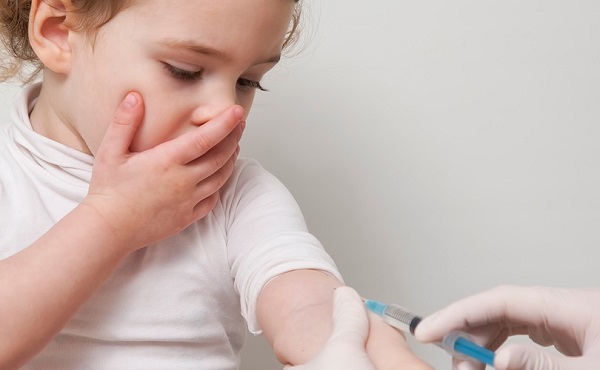
I recently purchased Aaron Siri’s new book Vaccines, Amen. As I flipped though the pages, I noticed a section devoted to his now-famous deposition of Dr Stanley Plotkin, the “godfather” of vaccines.
I’d seen viral clips circulating on social media, but I had never taken the time to read the full transcript — until now.
Siri’s interrogation was methodical and unflinching…a masterclass in extracting uncomfortable truths.
A Legal Showdown
In January 2018, Dr Stanley Plotkin, a towering figure in immunology and co-developer of the rubella vaccine, was deposed under oath in Pennsylvania by attorney Aaron Siri.
The case stemmed from a custody dispute in Michigan, where divorced parents disagreed over whether their daughter should be vaccinated. Plotkin had agreed to testify in support of vaccination on behalf of the father.
What followed over the next nine hours, captured in a 400-page transcript, was extraordinary.
Plotkin’s testimony revealed ethical blind spots, scientific hubris, and a troubling indifference to vaccine safety data.
He mocked religious objectors, defended experiments on mentally disabled children, and dismissed glaring weaknesses in vaccine surveillance systems.
A System Built on Conflicts
From the outset, Plotkin admitted to a web of industry entanglements.
He confirmed receiving payments from Merck, Sanofi, GSK, Pfizer, and several biotech firms. These were not occasional consultancies but long-standing financial relationships with the very manufacturers of the vaccines he promoted.
Plotkin appeared taken aback when Siri questioned his financial windfall from royalties on products like RotaTeq, and expressed surprise at the “tone” of the deposition.
Siri pressed on: “You didn’t anticipate that your financial dealings with those companies would be relevant?”
Plotkin replied: “I guess, no, I did not perceive that that was relevant to my opinion as to whether a child should receive vaccines.”
The man entrusted with shaping national vaccine policy had a direct financial stake in its expansion, yet he brushed it aside as irrelevant.
Contempt for Religious Dissent
Siri questioned Plotkin on his past statements, including one in which he described vaccine critics as “religious zealots who believe that the will of God includes death and disease.”
Siri asked whether he stood by that statement. Plotkin replied emphatically, “I absolutely do.”
Plotkin was not interested in ethical pluralism or accommodating divergent moral frameworks. For him, public health was a war, and religious objectors were the enemy.
He also admitted to using human foetal cells in vaccine production — specifically WI-38, a cell line derived from an aborted foetus at three months’ gestation.
Siri asked if Plotkin had authored papers involving dozens of abortions for tissue collection. Plotkin shrugged: “I don’t remember the exact number…but quite a few.”
Plotkin regarded this as a scientific necessity, though for many people — including Catholics and Orthodox Jews — it remains a profound moral concern.
Rather than acknowledging such sensitivities, Plotkin dismissed them outright, rejecting the idea that faith-based values should influence public health policy.
That kind of absolutism, where scientific aims override moral boundaries, has since drawn criticism from ethicists and public health leaders alike.
As NIH director Jay Bhattacharya later observed during his 2025 Senate confirmation hearing, such absolutism erodes trust.
“In public health, we need to make sure the products of science are ethically acceptable to everybody,” he said. “Having alternatives that are not ethically conflicted with foetal cell lines is not just an ethical issue — it’s a public health issue.”
Safety Assumed, Not Proven
When the discussion turned to safety, Siri asked, “Are you aware of any study that compares vaccinated children to completely unvaccinated children?”
Plotkin replied that he was “not aware of well-controlled studies.”
Asked why no placebo-controlled trials had been conducted on routine childhood vaccines such as hepatitis B, Plotkin said such trials would be “ethically difficult.”
That rationale, Siri noted, creates a scientific blind spot. If trials are deemed too unethical to conduct, then gold-standard safety data — the kind required for other pharmaceuticals — simply do not exist for the full childhood vaccine schedule.
Siri pointed to one example: Merck’s hepatitis B vaccine, administered to newborns. The company had only monitored participants for adverse events for five days after injection.
Plotkin didn’t dispute it. “Five days is certainly short for follow-up,” he admitted, but claimed that “most serious events” would occur within that time frame.
Siri challenged the idea that such a narrow window could capture meaningful safety data — especially when autoimmune or neurodevelopmental effects could take weeks or months to emerge.
Siri pushed on. He asked Plotkin if the DTaP and Tdap vaccines — for diphtheria, tetanus and pertussis — could cause autism.
“I feel confident they do not,” Plotkin replied.
But when shown the Institute of Medicine’s 2011 report, which found the evidence “inadequate to accept or reject” a causal link between DTaP and autism, Plotkin countered, “Yes, but the point is that there were no studies showing that it does cause autism.”
In that moment, Plotkin embraced a fallacy: treating the absence of evidence as evidence of absence.
“You’re making assumptions, Dr Plotkin,” Siri challenged. “It would be a bit premature to make the unequivocal, sweeping statement that vaccines do not cause autism, correct?”
Plotkin relented. “As a scientist, I would say that I do not have evidence one way or the other.”
The MMR
The deposition also exposed the fragile foundations of the measles, mumps, and rubella (MMR) vaccine.
When Siri asked for evidence of randomised, placebo-controlled trials conducted before MMR’s licensing, Plotkin pushed back: “To say that it hasn’t been tested is absolute nonsense,” he said, claiming it had been studied “extensively.”
Pressed to cite a specific trial, Plotkin couldn’t name one. Instead, he gestured to his own 1,800-page textbook: “You can find them in this book, if you wish.”
Siri replied that he wanted an actual peer-reviewed study, not a reference to Plotkin’s own book. “So you’re not willing to provide them?” he asked. “You want us to just take your word for it?”
Plotkin became visibly frustrated.
Eventually, he conceded there wasn’t a single randomised, placebo-controlled trial. “I don’t remember there being a control group for the studies, I’m recalling,” he said.
The exchange foreshadowed a broader shift in public discourse, highlighting long-standing concerns that some combination vaccines were effectively grandfathered into the schedule without adequate safety testing.
In September this year, President Trump called for the MMR vaccine to be broken up into three separate injections.
The proposal echoed a view that Andrew Wakefield had voiced decades earlier — namely, that combining all three viruses into a single shot might pose greater risk than spacing them out.
Wakefield was vilified and struck from the medical register. But now, that same question — once branded as dangerous misinformation — is set to be re-examined by the CDC’s new vaccine advisory committee, chaired by Martin Kulldorff.
The Aluminium Adjuvant Blind Spot
Siri next turned to aluminium adjuvants — the immune-activating agents used in many childhood vaccines.
When asked whether studies had compared animals injected with aluminium to those given saline, Plotkin conceded that research on their safety was limited.
Siri pressed further, asking if aluminium injected into the body could travel to the brain. Plotkin replied, “I have not seen such studies, no, or not read such studies.”
When presented with a series of papers showing that aluminium can migrate to the brain, Plotkin admitted he had not studied the issue himself, acknowledging that there were experiments “suggesting that that is possible.”
Asked whether aluminium might disrupt neurological development in children, Plotkin stated, “I’m not aware that there is evidence that aluminum disrupts the developmental processes in susceptible children.”
Taken together, these exchanges revealed a striking gap in the evidence base.
Compounds such as aluminium hydroxide and aluminium phosphate have been injected into babies for decades, yet no rigorous studies have ever evaluated their neurotoxicity against an inert placebo.
This issue returned to the spotlight in September 2025, when President Trump pledged to remove aluminium from vaccines, and world-leading researcher Dr Christopher Exley renewed calls for its complete reassessment.
A Broken Safety Net
Siri then turned to the reliability of the Vaccine Adverse Event Reporting System (VAERS) — the primary mechanism for collecting reports of vaccine-related injuries in the United States.
Did Plotkin believe most adverse events were captured in this database?
“I think…probably most are reported,” he replied.
But Siri showed him a government-commissioned study by Harvard Pilgrim, which found that fewer than 1% of vaccine adverse events are reported to VAERS.
“Yes,” Plotkin said, backtracking. “I don’t really put much faith into the VAERS system…”
Yet this is the same database officials routinely cite to claim that “vaccines are safe.”
Ironically, Plotkin himself recently co-authored a provocative editorial in the New England Journal of Medicine, conceding that vaccine safety monitoring remains grossly “inadequate.”
Experimenting on the Vulnerable
Perhaps the most chilling part of the deposition concerned Plotkin’s history of human experimentation.
“Have you ever used orphans to study an experimental vaccine?” Siri asked.
“Yes,” Plotkin replied.
“Have you ever used the mentally handicapped to study an experimental vaccine?” Siri asked.
“I don’t recollect…I wouldn’t deny that I may have done so,” Plotkin replied.
Siri cited a study conducted by Plotkin in which he had administered experimental rubella vaccines to institutionalised children who were “mentally retarded.”
Plotkin stated flippantly, “Okay well, in that case…that’s what I did.”
There was no apology, no sign of ethical reflection — just matter-of-fact acceptance.
Siri wasn’t done.
He asked if Plotkin had argued that it was better to test on those “who are human in form but not in social potential” rather than on healthy children.
Plotkin admitted to writing it.
Siri established that Plotkin had also conducted vaccine research on the babies of imprisoned mothers, and on colonised African populations.
Plotkin appeared to suggest that the scientific value of such studies outweighed the ethical lapses—an attitude that many would interpret as the classic ‘ends justify the means’ rationale.
But that logic fails the most basic test of informed consent. Siri asked whether consent had been obtained in these cases.
“I don’t remember…but I assume it was,” Plotkin said.
Assume?
This was post-Nuremberg research. And the leading vaccine developer in America couldn’t say for sure whether he had properly informed the people he experimented on.
In any other field of medicine, such lapses would be disqualifying.
A Casual Dismissal of Parental Rights
Plotkin’s indifference to experimenting on disabled children didn’t stop there.
Siri asked whether someone who declined a vaccine due to concerns about missing safety data should be labelled “anti-vax.”
Plotkin replied, “If they refused to be vaccinated themselves or refused to have their children vaccinated, I would call them an anti-vaccination person, yes.”
Plotkin was less concerned about adults making that choice for themselves, but he had no tolerance for parents making those choices for their own children.
“The situation for children is quite different,” said Plotkin, “because one is making a decision for somebody else and also making a decision that has important implications for public health.”
In Plotkin’s view, the state held greater authority than parents over a child’s medical decisions — even when the science was uncertain.
The Enabling of Figures Like Plotkin
The Plotkin deposition stands as a case study in how conflicts of interest, ideology, and deference to authority have corroded the scientific foundations of public health.
Plotkin is no fringe figure. He is celebrated, honoured, and revered. Yet he promotes vaccines that have never undergone true placebo-controlled testing, shrugs off the failures of post-market surveillance, and admits to experimenting on vulnerable populations.
This is not conjecture or conspiracy — it is sworn testimony from the man who helped build the modern vaccine program.
Now, as Health Secretary Robert F. Kennedy, Jr. reopens long-dismissed questions about aluminium adjuvants and the absence of long-term safety studies, Plotkin’s once-untouchable legacy is beginning to fray.
Republished from the author’s Substack


From the Brownstone Institute

A walk through a dozen convenience stores in Montgomery County, Pennsylvania, says a lot about how US nicotine policy actually works. Only about one in eight nicotine-pouch products for sale is legal. The rest are unauthorized—but they’re not all the same. Some are brightly branded, with uncertain ingredients, not approved by any Western regulator, and clearly aimed at impulse buyers. Others—like Sweden’s NOAT—are the opposite: muted, well-made, adult-oriented, and already approved for sale in Europe.
Yet in the United States, NOAT has been told to stop selling. In September 2025, the Food and Drug Administration (FDA) issued the company a warning letter for offering nicotine pouches without marketing authorization. That might make sense if the products were dangerous, but they appear to be among the safest on the market: mild flavors, low nicotine levels, and recyclable paper packaging. In Europe, regulators consider them acceptable. In America, they’re banned. The decision looks, at best, strange—and possibly arbitrary.
What the Market Shows
My October 2025 audit was straightforward. I visited twelve stores and recorded every distinct pouch product visible for sale at the counter. If the item matched one of the twenty ZYN products that the FDA authorized in January, it was counted as legal. Everything else was counted as illegal.
Two of the stores told me they had recently received FDA letters and had already removed most illegal stock. The other ten stores were still dominated by unauthorized products—more than 93 percent of what was on display. Across all twelve locations, about 12 percent of products were legal ZYN, and about 88 percent were not.
The illegal share wasn’t uniform. Many of the unauthorized products were clearly high-nicotine imports with flashy names like Loop, Velo, and Zimo. These products may be fine, but some are probably high in contaminants, and a few often with very high nicotine levels. Others were subdued, plainly meant for adult users. NOAT was a good example of that second group: simple packaging, oat-based filler, restrained flavoring, and branding that makes no effort to look “cool.” It’s the kind of product any regulator serious about harm reduction would welcome.
Enforcement Works
To the FDA’s credit, enforcement does make a difference. The two stores that received official letters quickly pulled their illegal stock. That mirrors the agency’s broader efforts this year: new import alerts to detain unauthorized tobacco products at the border (see also Import Alert 98-06), and hundreds of warning letters to retailers, importers, and distributors.
But effective enforcement can’t solve a supply problem. The list of legal nicotine-pouch products is still extremely short—only a narrow range of ZYN items. Adults who want more variety, or stores that want to meet that demand, inevitably turn to gray-market suppliers. The more limited the legal catalog, the more the illegal market thrives.
Why the NOAT Decision Appears Bizarre
The FDA’s own actions make the situation hard to explain. In January 2025, it authorized twenty ZYN products after finding that they contained far fewer harmful chemicals than cigarettes and could help adult smokers switch. That was progress. But nine months later, the FDA has approved nothing else—while sending a warning letter to NOAT, arguably the least youth-oriented pouch line in the world.
The outcome is bad for legal sellers and public health. ZYN is legal; a handful of clearly risky, high-nicotine imports continue to circulate; and a mild, adult-market brand that meets European safety and labeling rules is banned. Officially, NOAT’s problem is procedural—it lacks a marketing order. But in practical terms, the FDA is punishing the very design choices it claims to value: simplicity, low appeal to minors, and clean ingredients.
This approach also ignores the differences in actual risk. Studies consistently show that nicotine pouches have far fewer toxins than cigarettes and far less variability than many vapes. The biggest pouch concerns are uneven nicotine levels and occasional traces of tobacco-specific nitrosamines, depending on manufacturing quality. The serious contamination issues—heavy metals and inconsistent dosage—belong mostly to disposable vapes, particularly the flood of unregulated imports from China. Treating all “unauthorized” products as equally bad blurs those distinctions and undermines proportional enforcement.
A Better Balance: Enforce Upstream, Widen the Legal Path
My small Montgomery County survey suggests a simple formula for improvement.
First, keep enforcement targeted and focused on suppliers, not just clerks. Warning letters clearly change behavior at the store level, but the biggest impact will come from auditing distributors and importers, and stopping bad shipments before they reach retail shelves.
Second, make compliance easy. A single-page list of authorized nicotine-pouch products—currently the twenty approved ZYN items—should be posted in every store and attached to distributor invoices. Point-of-sale systems can block barcodes for anything not on the list, and retailers could affirm, once a year, that they stock only approved items.
Third, widen the legal lane. The FDA launched a pilot program in September 2025 to speed review of new pouch applications. That program should spell out exactly what evidence is needed—chemical data, toxicology, nicotine release rates, and behavioral studies—and make timely decisions. If products like NOAT meet those standards, they should be authorized quickly. Legal competition among adult-oriented brands will crowd out the sketchy imports far faster than enforcement alone.
The Bottom Line
Enforcement matters, and the data show it works—where it happens. But the legal market is too narrow to protect consumers or encourage innovation. The current regime leaves a few ZYN products as lonely legal islands in a sea of gray-market pouches that range from sensible to reckless.
The FDA’s treatment of NOAT stands out as a case study in inconsistency: a quiet, adult-focused brand approved in Europe yet effectively banned in the US, while flashier and riskier options continue to slip through. That’s not a public-health victory; it’s a missed opportunity.
If the goal is to help adult smokers move to lower-risk products while keeping youth use low, the path forward is clear: enforce smartly, make compliance easy, and give good products a fair shot. Right now, we’re doing the first part well—but failing at the second and third. It’s time to fix that.
Author


Common Vaccines Linked to 38-50% Increased Risk of Dementia and Alzheimer’s
Trump DOJ seeks to quash Pfizer whistleblower’s lawsuit over COVID shots

Alberta introducing three “all-season resort areas” to provide more summer activities in Alberta’s mountain parks

The $50 Billion Question: EVs Never Delivered What Ottawa Promised
-
 Community2 days ago
Charitable giving on the decline in Canada
-
 Alberta2 days ago
Canada’s New Green Deal
-
 Business2 days ago
Canada’s recent economic growth performance has been awful
-
 armed forces2 days ago
Ottawa’s Newly Released Defence Plan Crosses a Dangerous Line
-
 Alberta1 day ago
Alberta’s huge oil sands reserves dwarf U.S. shale
-
 Health1 day ago
Saskatchewan woman approved for euthanasia urged to seek medical help in Canada rather than US
-
 Business2 days ago
COP30 finally admits what resource workers already knew: prosperity and lower emissions must go hand in hand
-
 Health1 day ago
Canadian gov’t considers sharing census data on gender-confused children