
COVID-19
Shocking new study shows COVID patients had higher mortality risk if they were vaxxed


From LifeSiteNews
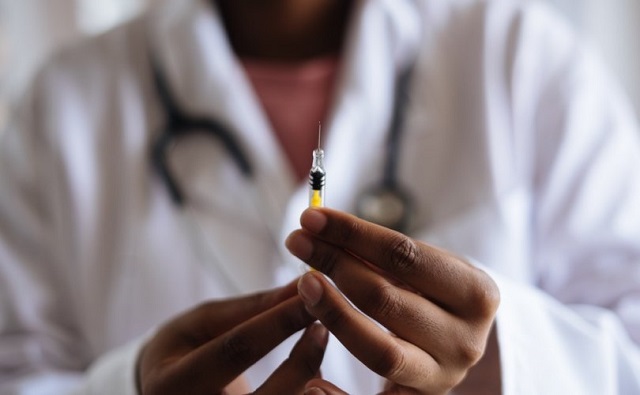
Hospitalized COVID patients who took the jab had a 70% mortality risk compared to 37% for those who did not, according to a new study published by Frontiers in Immunology.
Hospitalized COVID patients have a significantly higher risk of death if they have received a COVID-19 shot, according to a shocking new study published by the journal Frontiers in Immunology.
The study, which examined 152 adult patients who were admitted to the hospital at Ohio State University, and found that “[a]mong COVID-19 patients, mortality rate was significantly higher among Vax vs. NVax [vaccinated vs. not vaccinated] patients,” specifically “70% compared with 37%.”
While those who chose the jab were somewhat more likely to have other comorbidities, the discrepancy remained even “when we compared COVID-19 Vax vs. NVax patients with similar CCI score, suggesting that additional factors may increase risk of mortality,” referring to the Charlson’s Comorbidity Index, which accounts for numerous variables increasing one’s odds of death. The authors said their findings “sugges[t] there are other risk factors in vaccinated patients.”
“As a possible explanation for this observation, recent studies have shown that mRNA (but not vector-based) vaccine-associated increases in SARS-CoV-2 S-specific IgG4 levels vaccines did not contribute to increased protection,” the paper says. “In contrast, they were thought to suppress antiviral immune responses, promoting immune tolerance and, possibly, unrestricted SARS-CoV-2 replication.”
The authors note that their findings are “limited to patients with severe infection admitted to the OSU hospital.”
Overall, the findings contribute to a significant body of evidence associating significant risks with the COVID jabs, which were developed and reviewed in a fraction of the time vaccines usually take under former President Donald Trump’s Operation Warp Speed initiative.
The federal Vaccine Adverse Event Reporting System (VAERS) reports 37,231 deaths, 214,906 hospitalizations, 21,524 heart attacks, and 28,214 myocarditis and pericarditis cases as of February 23, among other ailments. An April 2022 study out of Israel indicates that COVID infection itself cannot fully account for the myocarditis numbers, despite common insistence to the contrary. VAERS reports are technically unconfirmed, as anyone can submit one, but U.S. Centers for Disease Control and Prevention (CDC) researchers have recognized a “high verification rate of reports of myocarditis to VAERS after mRNA-based COVID-19 vaccination,” leading to the conclusion that “under-reporting is more likely” than overreporting.

A 2010 report submitted to the U.S. Department of Health and Human Services’ (HHS’s) Agency for Healthcare Research and Quality (AHRQ) warned that VAERS caught “fewer than 1% of vaccine adverse events.” On the problem of underreporting, the VAERS website offers only that “more serious and unexpected medical events are probably more likely to be reported than minor ones” (emphasis added).
In 2021, Project Veritas shed light on some of the reasons for such underreporting with undercover video from inside Phoenix Indian Medical Center, a facility run under HHS’s Indian Health Service program, in which emergency room physician Dr. Maria Gonzales laments that myocarditis cases go unreported “because they want to shove it under the mat,” and nurse Deanna Paris attests to seeing “a lot” of people who “got sick from the side effects” of the COVID shots, but “nobody” is reporting them to VAERS “because it takes over a half hour to write the d–n thing.”
Further, VAERS is not the only data source containing red flags. Data from the Pentagon’s Defense Medical Epidemiology Database (DMED) shows that 2021 saw drastic spikes in a variety of diagnoses for serious medical issues over the previous five-year average, including hypertension (2,181%), neurological disorders (1,048%), multiple sclerosis (680%), Guillain-Barre syndrome (551%), breast cancer, (487%), female infertility (472%), pulmonary embolism (468%), migraines (452%), ovarian dysfunction (437%), testicular cancer (369%), and tachycardia (302%).
Last September, the Japanese Society for Vaccinology published a peer-reviewed study conducted by researchers from Stanford, UCLA, and the University of Maryland, which found that the “Pfizer trial exhibited a 36% higher risk of serious adverse events in the vaccine group” while the “Moderna trial exhibited a 6% higher risk of serious adverse events in the vaccine group,” for a combined “16% higher risk of serious adverse events in mRNA vaccine recipients.”
In December 2022, U.S. Sen. Ron Johnson (R-WI) hosted a roundtable discussion during which civil rights attorney Aaron Siri detailed data from the CDC’s V-Safe reporting system revealing that 800,000 of the system’s 10 million participants, or approximately 7.7 percent, reported needing medical care after COVID injection. “Twenty-five percent of those people needed emergency care or were hospitalized, and another 48 percent sought urgent care,” Siri added. “Also, another 25 percent on top of the 7.7 percent reported being unable to work or go to school.”
Another study by a team of American, British, and Canadian researchers, published last December in the Journal of Medical Ethics, found that COVID booster mandates for university students – a relatively healthy group at relatively low risk from the virus – do far more harm than good: “per COVID-19 hospitalisation prevented, we anticipate at least 18.5 serious adverse events from mRNA vaccines, including 1.5–4.6 booster-associated myopericarditis cases in males (typically requiring hospitalisation).”
Most recently, an analysis of 99 million people across eight countries published in February in the journal Vaccine – the largest analysis to date – “observed significantly higher risks of myocarditis following the first, second and third doses” of mRNA-based COVID shots, as well as signs of increased risk of “pericarditis, Guillain-Barré syndrome, and cerebral venous sinus thrombosis,” and other “potential safety signals that require further investigation.”


From LifeSiteNews
A judge ruled that the Ontario Court of Justice is already ‘satisfied’ with Chris Barber’s sentence and taking away his very livelihood would be ‘disproportionate.’
A Canadian judge has dismissed a demand from Canadian government lawyers to seize Freedom Convoy leader Chris Barber’s “Big Red” semi-truck.
On Friday, Ontario Court of Justice Judge Heather Perkins-McVey denied the Crown’s application seeking to forfeit Barber’s truck.
She ruled that the court is already “satisfied” with Barber’s sentence and taking away his very livelihood would be “disproportionate.”
“This truck is my livelihood,” said Barber in a press release sent to LifeSiteNews.
“Trying to permanently seize it for peacefully protesting was wrong, and I’m relieved the court refused to allow that to happen,” he added.
Criminal defense lawyer Marwa Racha Younes was welcoming of the ruling as well, stating, “We find it was the right decision in the circumstances and are happy with the outcome.”
John Carpay, president of the Justice Centre for Constitutional Freedoms (JCCF), said the decision is “good news for all Canadians who cherish their Charter freedom to assemble peacefully.”
READ: Freedom Convoy protester appeals after judge dismissed challenge to frozen bank accounts
“Asset forfeiture is an extraordinary power, and it must not be used to punish Canadians for participating in peaceful protest,” he added in the press release.
As reported recently by LifeSiteNews, the Canadian government claimed that Barber’s truck is an “offence-related property” relating to his involvement in the 2022 protests against Canada’s COVID mandates.
At this time, the court ruling ends any forfeiture proceedings for the time being, however Barber will continue to try and appeal his criminal conviction and house arrest sentence.
Barber’s truck, a 2004 Kenworth long-haul he uses for business, was a focal point in the 2022 protests. He drove it to Ottawa, where it was parked for an extended period of time, but he complied when officials asked him to move it.
On October 7, 2025, after a long trial, Ontario Court Justice Perkins-McVey sentenced Barber and Tamara Lich, the other Freedom Convoy leader, to 18 months’ house arrest. They had been declared guilty of mischief for their roles as leaders of the 2022 protest against COVID mandates, and as social media influencers.
Lich and Barber have filed appeals of their own against their house arrest sentences, arguing that the trial judge did not correctly apply the law on their mischief charges.
Government lawyers for the Crown have filed an appeal of the acquittals of Lich and Barber on intimidation charges.
The pair’s convictions came after a nearly two-year trial despite the nonviolent nature of the popular movement.
From LifeSiteNews
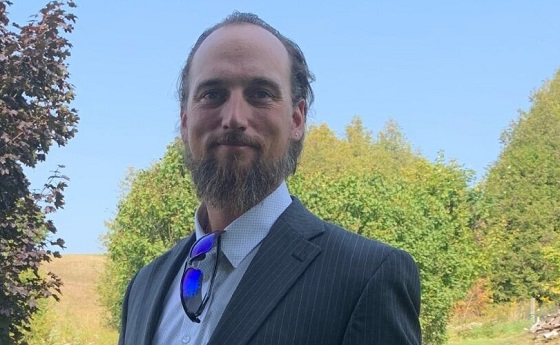
Protestor Evan Blackman’s legal team argues Trudeau’s Emergencies Act-based bank account freezes were punitive state action tied directly to protest participation.
A Freedom Convoy protester whose bank accounts were frozen by the Canadian government says a judge erred after his ruling did not consider the fact that the funds were frozen under the Emergencies Act, as grounds for a stay of proceedings.
In a press release sent out earlier this week, the Justice Centre for Constitutional Freedoms (JCCF) said that Freedom Convoy protestor Evan Blackman will challenge a court ruling in his criminal case via an appeal with the Ontario Superior Court of Justice.
“This case raises serious questions about how peaceful protest is treated in Canada and about the lasting consequences of the federal government’s unlawful use of the Emergencies Act,” noted constitutional lawyer Chris Fleury. “The freezing of protestors’ bank accounts was part of a coordinated effort to suppress dissent, and courts ought to be willing to scrutinize that conduct.”
Blackman was arrested on February 18, 2022, during the police crackdown on Freedom Convoy protests against COVID restrictions, which was authorized by the Emergencies Act (EA). The EA was put in place by former Prime Minister Justin Trudeau’s Liberal government, which claimed the protests were violent, despite no evidence that this was the case.
Blackman’s three bank accounts with TD Bank were frozen due to his participation in the Freedom Convoy, following a directive ordered by Trudeau.
As reported by LifeSiteNews, in November of this year, Blackman was convicted at his retrial even though he had been acquitted at his original trial. In 2023, Blackman’s “mischief” and “obstructing police” charges were dismissed by a judge due to lack of evidence and the “poor memory of a cop regarding key details of the alleged criminal offences.”
His retrial resulted in Blackman getting a conditional discharge along with 12 months’ probation and 122 hours of community service, along with a $200 victim fine surcharge.
After this, Blackman’s application for a stay of proceedings was dismissed by the court. He had hoped to have his stay of proceedings, under section 24(1) of the Charter of Rights and Freedoms, allowed. However, the judge ruled that the freezing of his bank accounts was legally not related to his arrest, and because of this, the stay of proceedings lacked standing.
The JCCF disagreed with this ruling, noting, it “stands in contrast to a Federal Court decision finding that the government’s invocation of the Emergencies Act was unreasonable and violated Canadians’ Charter rights, including those targeted by the financial measures used against Freedom Convoy protestors.”
As of press time, a hearing date has not been scheduled.
In 2024, Federal Court Justice Richard Mosley ruled that Trudeau was “not justified” in invoking the Emergencies Act.
In early 2022, the Freedom Convoy saw thousands of Canadians from coast to coast come to Ottawa to demand an end to COVID mandates in all forms. Despite the peaceful nature of the protest, Trudeau’s federal government enacted the EA in mid-February.
After the protesters were cleared out, which was achieved through the freezing of bank accounts of those involved without a court order as well as the physical removal and arrest of demonstrators, Trudeau revoked the EA on February 23, 2022.


Death by a thousand clicks – government censorship of Canada’s internet

Chinese Billionaire Tried To Build US-Born Baby Empire As Overseas Elites Turn To American Surrogates

Viral TikTok video shows 7-year-old cuddling great-grandfather before he’s euthanized
Politicians should be honest about environmental pros and cons of electric vehicles
-
 Agriculture2 days ago
Why is Canada paying for dairy ‘losses’ during a boom?
-
 Alberta2 days ago
Alberta’s new diagnostic policy appears to meet standard for Canada Health Act compliance
-
 Business1 day ago
State of the Canadian Economy: Number of publicly listed companies in Canada down 32.7% since 2010
-
 Bruce Dowbiggin1 day ago
Hunting Poilievre Covers For Upcoming Demographic Collapse After Boomers
-
 Censorship Industrial Complex24 hours ago
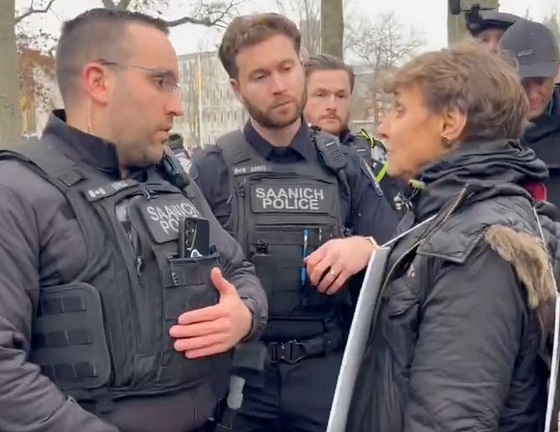
Canadian university censors free speech advocate who spoke out against Indigenous ‘mass grave’ hoax
-
 Alberta1 day ago
Housing in Calgary and Edmonton remains expensive but more affordable than other cities
-
 Censorship Industrial Complex2 days ago
Top constitutional lawyer warns against Liberal bills that could turn Canada into ‘police state’
-
 Digital ID2 days ago
Canadian government launches trial version of digital ID for certain licenses, permits