
MAiD
Saskatchewan seniors say they were offered euthanasia when faced with increased hospice costs



From LifeSiteNews
Most Canadians fear the nation’s euthanasia regime unfairly targets those who are financially and socially vulnerable
A senior aged Canadian couple has said that a hospice care center presented euthanasia to one of them as an option as they were facing increased care costs they could not afford on their fixed income.
71-year-old Fred Sandeski from Saskatchewan, who suffers from chronic obstructive pulmonary disease (COPD) along with a host of other ailments such as diabetes and epilepsy, and his wife Teresa, who also has failing health, say death via Canada’s Medical Assistance in Dying euthanasia program was suggested to them when they realized they would not be able to cover the costs associated with increased care at a hospice center.
According to the Epoch Times, when Fred started with palliative care, “they were just listing us the availability of what options they had for us,” and MAiD was presented as “one option.”
Thankfully, Sandeski refused MAiD, saying, “I really, really believe that the Lord has put me on this earth for a reason, and he’s not going to let me go until I’m done.”
Sandeski’s plight was brought to the attention of the provincial government of Saskatchewan by the opposition New Democratic Party’s shadow minister for seniors, Keith Jorgenson, who encouraged Saskatchewan Health Minister Jeremy Cockrill to help the couple.
In response, Cockrill said that he had reached out to the Sandeskis and would “find a solution that’s going to work for Fred and Theresa this week.”
He added that when it comes to the care home having offered them MAiD as a solution to their plight, he would “hope that any health care professional in this province, having those discussions with a patient has a strong understanding of the patient’s health and familial context.”

Instances of people being offered MAiD as a solution to their health issues have become commonplace in Canada, as reported by LifeSiteNews.
Indeed, most Canadians fear the nation’s euthanasia regime unfairly targets those who are financially and socially vulnerable while still supporting the immoral practice in general.
However, some provincial governments are looking at fighting back against Trudeau’s expansion of legal assisted suicide.
Recently, the United Conservative government of Alberta said it would push back against the Canadian federal government’s continued desire to expand euthanasia in the nation, announcing it will be launching a review of the legislation and policies surrounding the grim practice, which will include a period of public engagement.
Under Prime Minister Justin Trudeau, whose government legalized MAiD in 2016, the deadly program has continued to relax who is eligible for death.
In 2021, the program expanded from killing only terminally ill patients to allowing the chronically ill to qualify, as since then the government has sought to include those suffering solely from mental illness.
The number of Canadians killed by lethal injection under the nation’s MAiD program since 2016 stands at close to 65,000, with an estimated 16,000 deaths in 2023 alone. Many fear that because the official statistics are manipulated the number may be even higher.
Canada had approximately 15,280 euthanasia deaths in 2023.

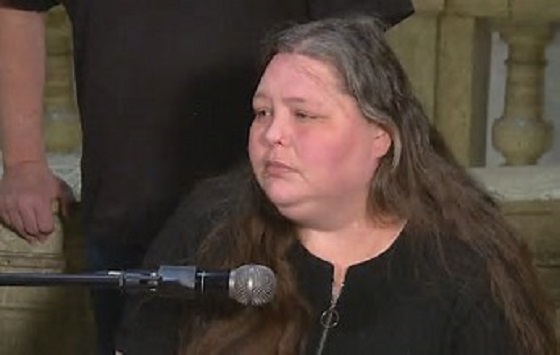
From LifeSiteNews
Jolene Van Alstine, approved for state-sanctioned euthanasia after enduring long wait times to receive care for a rare parathyroid disease, is in need of a passport to enter the U.S.
Well-known American media personality Glenn Beck says he has been in touch with the U.S. State Department to help a Canadian woman in Saskatchewan reconsider euthanasia after she sought assisted suicide due to long medical wait times to address her health problems.
As reported by LifeSiteNews on Tuesday, Canadian woman Jolene Van Alstine was approved to die by state-sanctioned euthanasia because she has had to endure long wait times to get what she considers to be proper care for a rare parathyroid disease.
Van Alstine’s condition, normocalcemic primary hyperparathyroidism (nPHPT), causes her to experience vomiting, nausea, and bone pain.
Her cause caught the attention of Beck and many other prominent Americans and Canadians on X.
In an update today on X, Beck said, “Jolene does not have a passport to gain legal entry into the U.S., but my team has been in touch with President (Donald) Trump’s State Department.”
“All I can say for now is they are aware of the urgent life-saving need, and we had a very positive call,” he added.
Beck had said before that he was in “contact with Jolene and her husband” and that he had “surgeons who emailed us standing by to help her.”
As of press time, neither the State Department nor other officials have not yet confirmed Beck’s claim that he has been in touch with them.
As a result of Van Alstine’s frustrations with the healthcare system, she applied for Canada’s Medical Assistance in Dying (MAiD) and was approved for January 7.
As reported by LifeSiteNews, over 23,000 Canadians have died while on wait lists for medical care as Prime Minister Mark Carney’s Liberal government is focused on euthanasia expansions.
A new Euthanasia Prevention Coalition report revealed that Canada has euthanized 90,000 people since 2016, the year it was legalized.
As reported by LifeSiteNews recently, a Conservative MP’s private member’s bill that, if passed, would ban euthanasia for people with mental illness received the full support of the Euthanasia Prevention Coalition.
Great Reset
Proposed ban on euthanasia for mental illness sparks passionate debate in Canada’s Parliament

From LifeSiteNews
“When a person is standing on the edge, the role of a responsible nation is to pull them back.”
Conservative MP Tamara Jansen’s Bill C-218—the “Right to Recover Act”—was debated in Parliament on Friday. The legislation would ban euthanasia for those suffering solely from a mental illness, which was legalized in 2021 with the Trudeau government’s Bill C-7, but subsequently delayed. It is set to come into effect in 2027, pending a parliamentary report.
Tamara Jansen led with a passionate and powerful speech highlighting the desperate need for Bill C-218; Conservative MP Andrew Lawton gave a supporting speech in which he shared his own experience with a nearly successful suicide attempt. Two Liberal MPs and a member of the Bloc Quebecois pushed back in support of euthanasia for mental illness.
Jansen moved that Bill C-218 be read the second time and referred to committee, and asked her fellow parliamentarians to imagine someone’s son, in his forties, struggling with a painful illness and struggling with addiction, depression, and anxiety. He is supported by his family, she said, and they are doing their best but struggling. When he finally gets a psychiatrist appointment, he hopes he might finally get real help.
“He is vulnerable, scared and hanging on by a thread,” Jansen said. “At that appointment, instead of being offered a plan to get him stable, MAID is raised as an option. The assessment moves ahead, and before he ever receives proper support for his mental health or addictions, he is approved. His MAID provider is the one who drives him to the place where his life is ended. This is someone’s son who needed help, not a final exit.”
“Believe it or not, this actually happened here in Canada, and this is where we are headed if we do not act,” she emphasized. “Unless this Parliament chooses a different path, Canada will allow MAID for people whose only condition is mental illness. That means men and women struggling with depression, trauma or overwhelming psychological pain could be steered toward death by a system that too often cannot offer timely treatment, consistent follow-up or even basic support.”
Jansen noted that when Parliament last debated assisted suicide, mental illness was not included in the core discussion—but that it was added “in a last-minute Senate amendment to Bill C-7.” Since then, Canadians from all walks of life have spoken clearly against this dangerous expansion. “Psychiatrists across Canada, including the chairs of psychiatry at all 17 medical schools, have told us plainly that there is no reliable way to predict when a mental illness is irremediable, which is a requirement in the MAID law,” she reminded her colleagues.
READ: Canadian broadcaster’s positive coverage of disability advocate’s euthanasia sends terrible message
“We must ask: who receives suicide prevention and who is guided toward MAID?” she asked. “If a person suffering from depression calls a crisis line tonight, do we encourage them to hold on or do we quietly redirect them to an assessor? What principle decides the answer? What medical test? What ethical standard? There is none. That is because the very feelings that drive someone to seek MAID, hopelessness, despair or the belief that they are a burden, are the same signals that every suicide prevention worker is trained to treat as a cry for help.”
Jansen also noted that Canada’s planned expansion has been condemned in the international community. “International human rights experts have raised the alarm, including the UN Committee on the Rights of Persons with Disabilities, which has urged Canada to step back. It warns that our trajectory risks discriminating against people with disabilities and mental illness and recommends repealing this expansion entirely. This is what Bill C-218 would do.” She cited several heartbreaking examples from Ontario’s MAID death review committee findings:
They describe a man who had cancer. I will call him Bill. Earlier in his illness, he had briefly mentioned MAID, as frightened patients tend to do. By the time he was assessed, he was delirious, confused and heavily sedated. His own medical team made it clear that he no longer had the capacity to make major decisions, yet a MAID assessor shook him awake, took the faint motion of lips as consent, withheld sedation, obtained a rushed virtual second opinion and ended his life that same day. Bill was not stable. Bill was not capable. He did not understand what was happening.
Alana Hirtle, the Liberal MP for the Nova Scotia riding of Cumberland-Colchester, responded by attempting to divert from the issue. She told Jansen that her father died by assisted suicide in August 2024, after suffering from “four different types of cancer over five years,” and stated that she “fully supported his choice” and that she “supported the process as it took place and was there throughout it.” She then asked if Jansen had voted for the “initial legislation”; Jansen told her she was not an elected MP at the time.
Claude DeBellefeuille, a Bloc Quebecois MP, then claimed that he was “stunned” by what he had heard, stating that Jansen had been misleading “by claiming that the law allows for medical assistance in dying when major mental illness is the sole underlying disorder” when the “member knows that in 2027, a joint committee of members and senators will make a decision based on the recommendations of the Department of Health.” While he did, somewhat surprisingly, agree that “the medical community is not ready and will probably not be ready in 2027,” he insisted that Jansen “has simply found a way to assert her opposition to medical assistance in dying.”
“We simply do not have the medical grounds to declare that a life is beyond hope,” Jansen responded. “We have already seen cases where people were approved for MAID not because their condition was truly irremediable but because they lacked housing, treatment or basic support. That is not medicine; that is a system misreading desperation as destiny. … When a person is standing on the edge, the role of a responsible nation is to pull them back.”
Juanita Nathan, the Liberal MP from Pickering-Brooklin, gave a speech essentially reiterating the government’s talking points. More research is needed, she said, but fundamentally the “panel concluded that the existing Criminal Code safeguards, when supported by the development of MAID practices standards and the implementation of other recommendations, are adequate to allow for safe provision of MAID to people whose sole underlying medical condition is a mental illness.”
MP Andrew Lawton recounted his own suicide attempt, in which he almost lost his life and spent seven weeks in the hospital, during which he was resuscitated multiple times and on life support. He noted that on that “horribly dark and sad December day in 2010,” he could never have imagined that he would one day be standing in the House of Commons, happily married with a successful career. It is that experience, he said, which spurs him to speak so forcefully for Bill C-218—because “if the laws that are coming into force in 15 months had been there 15 years ago, I would probably be dead right now.”
When Bill C-218 was introduced, Lawton launched the “I Got Better” campaign, inviting Canadians to share their own stories.
He shared several with the House—while a number of the Liberal MPs talked loudly with each other across the House, even laughing out loud at each other. He shared the story of an Ottawa lawyer, who feared using MAID if depression should return. He shared the story of a man who struggles with mental illness and has attempted suicide and is afraid of what he might do if MAID is available. A woman who had been in a long-term abusive relationship told him that she would have used MAID if it had been available.
Lawton detailed several other stories and reminded his colleagues of testimony they had previously heard. “Dr. John Maher testified before Parliament that 7% of those who attempt suicide die by suicide,” he said. “That means that 93% of people who, at one or multiple points, want to end their life eventually get over that. The success rate of MAID is 100%. By design, this is a policy that will give up on people.”
Lawton’s closing lines summed up the stakes. “These are real people,” he said. “There are faces to this. If Bill C-218 does not pass, people will die. We have a right and a duty to stand up for those who need it. I will be proudly supporting this bill, and I thank my colleague so much for introducing it.”
You can support Bill C-218 and submit your own story to MP Andrew Lawton here.


University of Colorado will pay $10 million to staff, students for trying to force them to take COVID shots

Wayne Gretzky’s Terrible, Awful Week.. And Soccer/ Football.

Integration Or Indignation: Whose Strategy Worked Best Against Trump?

Western Campuses Help Build China’s Digital Dragnet With U.S. Tax Funds, Study Warns
-
 Business2 days ago
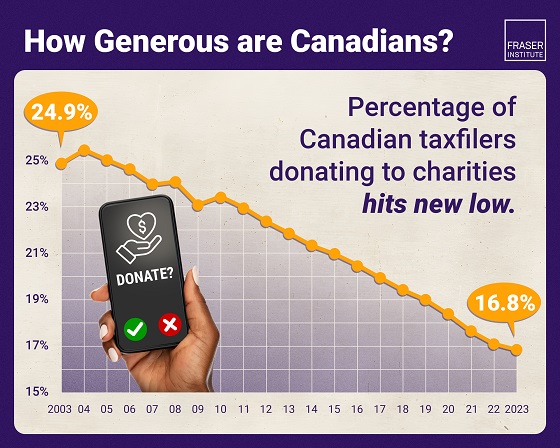
Albertans give most on average but Canadian generosity hits lowest point in 20 years
-
 Censorship Industrial Complex2 days ago
Ottawa’s New Hate Law Goes Too Far
-
 Bruce Dowbiggin2 days ago
Carney Hears A Who: Here Comes The Grinch
-
 Fraser Institute1 day ago
Claims about ‘unmarked graves’ don’t withstand scrutiny
-
 Business2 days ago
Taxpayers Federation calls on politicians to reject funding for new Ottawa Senators arena
-
 National1 day ago
Canada’s free speech record is cracking under pressure
-
 Digital ID1 day ago
Canada considers creating national ID system using digital passports for domestic use
-
 Energy1 day ago
Meet REEF — the massive new export engine Canadians have never heard of