
illegal immigration
Retired border chief was ordered not to report border crossers with ties to terrorism

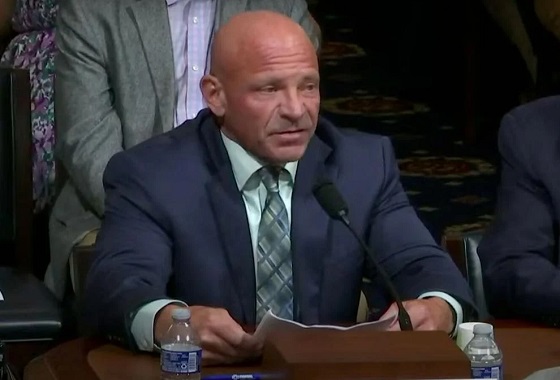

Retired San Diego Border Patrol Chief Patrol Agent Aaron Heitke said he was instructed by the Biden administration to not publicize arrests of “special interest aliens” who pose national security threats.
From The Center Square
By
‘We have no idea who and what entered our country’
Retired San Diego Border Patrol Chief Patrol Agent Aaron Heitke said he was instructed by the Biden administration to not publicize arrests of illegal border crossers identified as “Significant Interest Aliens” with ties to terrorism.
Heitke testified before a U.S. House Committee on Homeland Security hearing on Wednesday about how Biden-Harris “open border policies have undermined our safety and security.”
“We had an exponential increase in Significant Interest Aliens … with significant ties to terrorism,” illegally entering in the U.S. Customs and Border Protection San Diego Sector, he said.
Prior to the Biden-Harris administration, the sector averaged 10 to 15 SIAs per year. “Once word was out that the border was far easier to cross, San Diego went to over 100 SIAs in 2022, way over 100 SIAs in 2023 and more than that this year,” he said.
“These are only the ones we caught,” meaning the number likely is higher because of the volume of gotaways, those who illegally cross the border and are not apprehended.
“At the time, I was told I could not release any information on this increase in SIA’s or mention any of the arrests,” Heitke testified. “The administration was trying to convince the public that there was no threat at the border.”
His testimony came as the greatest number of individuals on the U.S. federal terrorist watch list have been apprehended under the Biden-Harris administration of 1,856 since fiscal 2021 through August, The Center Square reported.
None of this would have happened if current federal laws enacted by Congress were enforced, he said.
“The only true consequence we have to slow down and discourage people from coming to the United States illegally is sending them back to their country of origin,” required under current law, he said.
Under the Biden-Harris administration, Border Patrol agents were instructed to do the opposite, he said. In three and half years, “I saw a steady decrease in countries we could send people back to.
“For the first time in my 25 years and under five different administrations, whether through neglect or on purpose, I saw a large-scale lapse in our ability to return people to their country of origin. The inability to send people home meant that most people being arrested for illegal entry would either have to be detained or released.”

Since January 2021, “on day one,” the Biden-Harris administration “made a point of decreasing the amount of detention space available nationwide,” noting that Immigration and Customs Enforcement’s funding for detention space has steadily been cut and private detention eliminated.
The “open border policies” and “the fact that so many illegal aliens were being released into the United States spread worldwide very quickly,” he said, resulting in an unprecedented influx of illegal entry into the country.
“The impacts to me and my agents were significant. Sectors were ordered to take in and process all the illegal aliens encountered on the border. The Border Patrol saw groups of hundreds and thousands coming into the United States and turning themselves in.”
The result was “80% to 90%, sometimes 100% of the agents on duty [were taken] away from” the southwest border. There were miles of the border unmanned in Texas, Arizona and California, he said, where there was “no agent presence for weeks and months at a time.”
Foreign nationals “who did not want to be caught could simply walk in,” he said, referring to gotaways. They total at least more than 2 million since fiscal 2021, The Center Square first reported.
“We have no idea who and what entered our country over this time. Throughout 2022 and 2023, I sent agents to Texas and Arizona to count gotaways. Those sectors could not even put enough agents in the field to see what they had missed.”
U.S. Rep. Anthony D’Esposito, R-NY, then asked him, “What information do we have on the millions of known gotaways that have entered this country?”
“None,” Heitke replied.
“Zero information of millions of people – some of which have been found to be on the terror watchlist – we have zero information?” D’Esposito asked.
“Correct.”
Heitke was previously interviewed by the committee last year and described the level of national security threats that existed because they were forced to close checkpoints after an influx of illegal border crossers shifted to California. Agents were then required to shift manpower from the field to process and release into the country illegal border crossers, The Center Square reported. With their agents being pulled from the field, Heitke and others said Americans were unsafe and transnational criminal organizations were exploiting the open border to smuggle people and an unprecedented amount of fentanyl.
“Each time we asked for help in dealing with a new issue, it fell on deaf ears,” he said.

illegal immigration
EXCLUSIVE: Canadian groups, First Nation police support stronger border security

First Nation police chiefs join Texas Department of Public Safety marine units to patrol the Rio Grande River in Hidalgo County, Texas. L-R: Dwayne Zacharie, President of the First Nations Chiefs of Police Association, Ranatiiostha Swamp, Chief of Police of the Akwesasne Mohawk Territory, Brooks County Sheriff Benny Martinez, Jamie Tronnes, Center for North American Prosperity and Security, Goliad County Sheriff Roy Boyd. Photo: Bethany Blankley for The Center Square
From The Center Square
By
Despite Canadian officials arguing that the “Canada-U.S. border is the best-managed and most secure border in the world,” some Canadian groups and First Nation tribal police chiefs disagree.
This week, First Nation representatives traveled to Texas for the first time in U.S.-Canadian history to find ways to implement stronger border security measures at the U.S.-Canada border, including joining an Operation Lone Start Task Force, The Center Square exclusively reported.
Part of the problem is getting law enforcement, elected officials and the general public to understand the reality that Mexican cartels and transnational criminal organizations are operating in Canada; another stems from Trudeau administration visa policies, they argue.
When it comes to public perception, “If you tell Canadians we have a cartel problem, they’ll laugh at you. They don’t believe it. If you tell them we have a gang problem, they will absolutely agree with you 100%. They don’t think that gangs and cartels are the same thing. They don’t see the Hells Angels as equal to the Sinaloa Cartel because” the biker gang is visible, wearing vests out on the streets and cartel operatives aren’t, Jamie Tronnes, executive director of the Center of North American Prosperity and Security, told The Center Square in an exclusive interview.
The center is a US-based project of the MacDonald-Laurier Institute, the largest think tank in Canada. Tronnes previously served as a special assistant to the cabinet minister responsible for immigration and has a background in counterterrorism. She joined First Nation police chiefs to meet with Texas law enforcement and officials this week.
Another Canadian group, Future Borders Coalition, argues, “Canada has become a critical hub for transnational organized crime, with networks operating through its ports, banks, and border communities.” The Sinaloa and Jalisco New Generation Mexican cartels control the fentanyl, methamphetamine and cocaine business in Canada, partnering with local gangs like the Hells Angels and Chinese Communist Party (CCP)-linked actors, who launder profits through casinos, real estate, and shell companies in Vancouver and Toronto, Ammon Blair, a senior fellow at the Texas Public Policy Foundation, and others said at a coalition event prior to First Nation police chiefs and Tronnes coming to Texas.
“The ’Ndrangheta (Italian Mafia) maintains powerful laundering and import operations in Ontario and Quebec, while MS-13 and similar Central American gangs facilitate human smuggling and enforcement. Financial networks tied to Hezbollah and other Middle Eastern groups support laundering and logistics for these criminal alliances,” the coalition reports.
“Together, they form interconnected, technology-driven enterprises that exploit global shipping, cryptocurrency, and AI-enabled communications to traffic whatever yields profit – narcotics, weapons, tobacco, or people. Taking advantage of Canada’s lenient disclosure laws, fragmented jurisdictions, and weak cross-border coordination, these groups have embedded themselves within legitimate sectors, turning Canada into both a transit corridor and safe haven for organized crime,” the coalition reports.
Some First Nation reservations impacted by transnational crime straddle the U.S.-Canada border. One is the Akwesasne Mohawk Reservation, located in Ontario, Quebec, and in two upstate New York counties, where human smuggling and transnational crime is occurring, The Center Square reported. Another is the Tsawwassen First Nation (TWA) Reservation, located in a coastal region south of Vancouver in British Columbia stretching to Point Roberts in Washington state, which operates a ferry along a major smuggling corridor.
Some First Nation reservations like the TWA are suffering from CCP organized crime, Tronnes said. Coastal residents observe smugglers crossing their back yards, going through the reserve; along Canada’s western border, “a lot of fentanyl is being sent out to Asia but it’s also being made in Canada,” Tronnes said.
Transnational criminal activity went largely unchecked under the Trudeau government, during which “border security, national security and national defense were not primary concerns,” Tronnes told The Center Square. “It’s not to say they weren’t concerns, but they weren’t top of mind concerns. The Trudeau government preferred to focus on things like climate change, international human rights issues, a feminist foreign policy type of situation where they were looking more at virtue signaling rather than securing the country.”
Under the Trudeau administration, the greatest number of illegal border crossers, including Canadians, and the greatest number of known, suspected terrorists (KSTs) were reported at the U.S.-Canada border in U.S. history, The Center Square first reported. They include an Iranian with terrorist ties living in Canada and a Canadian woman who tried to poison President Donald Trump, The Center Square reported.
“Had it been a priority for the government to really crack down and provide resources for national security,” federal, provincial and First Nation law enforcement would be better equipped, funded and staffed, Tronnes said. “They would have better ways to understand what’s really happening at the border.”
In February, President Donald Trump for the first time in U.S. history declared a national emergency at the northern border and ordered U.S. military intervention. Months later, his administration acknowledged the majority of fentanyl and KSTs were coming from Canada, The Center Square reported.
Under a new government and in response to pressure from Trump, Canada proposed a $1.3 billion border plan. However, more is needed, the groups argue, including modernizing border technology and an analytics infrastructure, reforming disclosure and privacy rules to enable intelligence sharing, and recognizing and fully funding First Nation police, designating them as essential services and essential to border security.
“National security doesn’t exist without First Nation policing at the border,” Dwayne Zacharie, First Nations Chiefs of Police president, told The Center Square.
illegal immigration
While Trump has southern border secure, hundreds of thousands of illegal immigrants still flooding in from Canada
From The Center Square
By
Under the Biden administration, the greatest number of illegal border crossers at the U.S.-Canada border were reported in U.S. history, breaking records nearly every month for four years, The Center Square first reported.
While record high numbers dropped under the Trump administration, illegal entries still remain high in northern border states, with some states reporting more apprehensions in 2025 than during the Biden years.
Fourteen U.S. states share the longest international border in the world with Canada, totaling 5,525 miles across land and water.
The majority of illegal border crossers were apprehended and encountered in five northern border states, according to U.S. Customs and Border Protection data analyzed by The Center Square. Nearly half were reported in New York. Washington, Vermont, Maine and Montana recorded the next greatest numbers.
The majority of northern border states reported the greatest number of illegal entries in U.S. history in 2024, the last year of the Biden administration, according to CBP data. At the height of the border crisis, illegal entries reached nearly 200,000 at the northern border in 2024 and in 2023, first reported by The Center Square.
For fiscal years 2022 through 2025, 754,928 illegal border crossers were reported in 14 northern border states, according to the latest available CBP data.
From west to east, illegal entries at the northern border totaled:
-
Alaska: 7,380
-
Washington: 135,116
-
Idaho: 620
-
Montana: 32,036
-
North Dakota: 14,818
-
Minnesota: 8,315
-
Wisconsin: 118
-
Michigan: 50,321
-
Ohio: 1,546
-
Pennsylvania: 19,145
-
New York: 363,910
-
Vermont: 61,790
-
New Hampshire: 82
-
Maine: 59,731
Notably, Alaska, Idaho, New York, Pennsylvania and Wisconsin reported record high illegal crossings in 2023. Although Montana and North Dakota saw a drop in 2025 from record highs in 2024, the number of illegal border crossers apprehended in the two states in 2025 were greater than they were in 2022; in Montana they were more than double.
The data only includes nine months of the Trump administration. The CBP fiscal year goes from Oct. 1 through Sept. 30. Biden administration data includes the first three months of fiscal 2025, nine months of fiscal 2021, and all of fiscal years 2022, 2023 and 2024. Combined, illegal northern border crosser apprehensions totaled roughly one million under the Biden administration, according to CBP data.
The data excludes “gotaways,” the official term used by CBP to describe foreign nationals who illegally enter between ports of entry to evade capture, don’t make immigration claims and don’t return to their country of origin. CBP does not publicly report gotaway data. The Center Square exclusively obtained it from Border Patrol agents. More than two million gotaways were identified by Border Patrol agents under the Biden administration, although the figure is expected to be much higher, The Center Square first reported.
For decades, the northern border has been largely unmanned and unprotected with increased threats of terrorism and lack of operational control, The Center Square reported.
Unlike the 1,954-mile U.S.-Mexico border, there is no border wall, significantly less technological equipment exists and far fewer agents are stationed there.
Officials have explained that the data represents a fraction of illegal border crossers – it remains unclear how many really came through largely remote areas where one Border Patrol agent may be responsible for patrolling several hundred miles, The Center Square has reported.
Despite being understaffed and having far less resources, Border Patrol and CBP agents at the U.S.-Canada border apprehended the greatest number of known or suspected terrorists (KSTs) in U.S. history during the Biden administration – 1,216, or 64% of the KSTs apprehended nationwide, The Center Square exclusively reported.
In February, President Donald Trump for the first time in U.S. history declared a national emergency at the northern border, also ordering the U.S. military to implement border security measures there. After shutting down illegal entries at the southwest border, the administration acknowledged the majority of fentanyl and KSTs were coming through the northern border, The Center Square reported.
The Trump administration has also prioritized increased funding, recruitment and hiring and investment in technological capabilities at the northern border.

University of Colorado will pay $10 million to staff, students for trying to force them to take COVID shots

Wayne Gretzky’s Terrible, Awful Week.. And Soccer/ Football.

Integration Or Indignation: Whose Strategy Worked Best Against Trump?

Western Campuses Help Build China’s Digital Dragnet With U.S. Tax Funds, Study Warns
-
 Business2 days ago
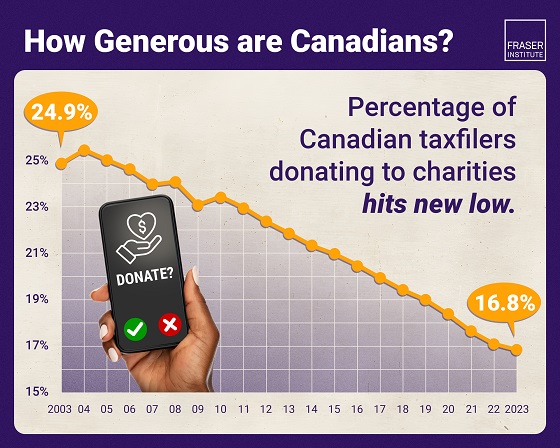
Albertans give most on average but Canadian generosity hits lowest point in 20 years
-
 Censorship Industrial Complex2 days ago
Ottawa’s New Hate Law Goes Too Far
-
 Bruce Dowbiggin2 days ago
Carney Hears A Who: Here Comes The Grinch
-
 Business2 days ago
Taxpayers Federation calls on politicians to reject funding for new Ottawa Senators arena
-
 Fraser Institute1 day ago
Claims about ‘unmarked graves’ don’t withstand scrutiny
-
 Energy1 day ago
Meet REEF — the massive new export engine Canadians have never heard of
-
 National1 day ago
Canada’s free speech record is cracking under pressure
-
 Digital ID1 day ago
Canada considers creating national ID system using digital passports for domestic use