
Indigenous
Residential school burials controversy continues to fuel wave of church arsons, new data suggests



By Edgardo Sepulveda for Inside Policy
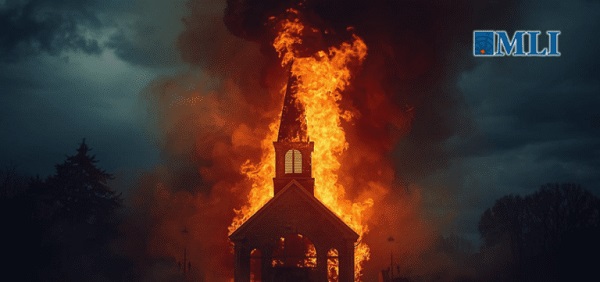
Church arsons surged again in 2024 according to new data released by Statistics Canada—continuing a disturbing trend first uncovered by a Macdonald-Laurier Institute investigation published last year.
Scorched Earth: A quantitative analysis of arson at Canadian religious institutions and its threat to reconciliation, which I published last April, warned that the arson wave – almost certainly spurred by ongoing anger over potential unmarked burials of children at residential schools –would not disappear without concerted government policy intervention.
Unfortunately, my prediction is proving accurate.
Newly available custom data from Statistics Canada confirms that arsons in 2024 continued at nearly double the baseline level established from 2011–17.
This persistent elevation is particularly concerning given that arson is a dangerous crime with significant financial costs and, in the case of religious institutions, broader implications for Canadian society and political discourse. Most importantly for those committed to Indigenous reconciliation, the apparent lack of effective policy response risks undermining public support for reconciliation efforts—suggesting these crimes are not being treated with the seriousness they deserve, particularly because many targets are Catholic churches associated with residential school legacies.
Scorched Earth developed specific terms and a conceptual framework to analyze arsons at religious institutions. First, I refer to “potential unmarked burials” rather than other terminology, including “mass graves” – language suggesting verified remains and, potentially, the site of clandestine burials. Neither has been established. No remains have been verified at any of the 21 announced sites. The Tk’emlúps te Secwépemc First Nation revised its own characterization of the Kamloops, BC, announcements in May 2024 to “probable unmarked burial sites,” a significant shift from its initial May 2021 announcement of “remains of 215 children.” This precipitated announcement, together with some of the initial media coverage in Canada and elsewhere, likely contributed to the intensity of the arson response.
Second, the conceptual framework, updated with the latest Statistics Canada data, separates “baseline” from “excess” arson associated with specific shocks, such as the announcements. It shows that arsons at religious institutions have remained elevated since the initial spike in 2021. Based on careful geographic statistical analysis presented in Scorched Earth, I demonstrated that the most likely explanation for elevated arsons was a criminal response prompted by the 17 announcements of potential unmarked burials at former residential schools, beginning in Kamloops, B.C., in May 2021. Four additional announcements occurred in 2024, bringing the total to 21. While data through 2023 showed no detectable increase in arsons related to the Israel-Gaza conflict, analysis of 2024 data suggests this changed: arsons in response to that conflict now constitute a minority of the increase above baseline levels, with the majority remaining those related to announcements of potential unmarked burials.
Investigation and Prosecution Rates Remain Insufficient for Effective Deterrence
Statistics Canada’s newly released custom clearance data for arson at religious institutions provides the first comprehensive official view of law enforcement effectiveness in these cases, superseding the preliminary compilation included in Scorched Earth.
Crimes in Canada are considered “solved” when police identify a suspect with sufficient evidence to support charges. Cases are then classified as “cleared” through two mechanisms: laying charges (“cleared by charge”) or alternative processes such as diversion programs (“cleared otherwise”).
As Figure 2 illustrates, the cleared-by-charge rate for all arson averaged 13.1 per cent over the 2011–24 period. For religious institutions, the yearly average reached 14.4 per cent—marginally higher but still concerning. The clearance rate for religious institutions shows significant year-over-year variability, reflecting the smaller statistical base compared to all arsons. The “cleared otherwise” category adds an average of 4.7 per cent for both arson types.
While these low clearance rates align with those for other property crimes, the continuing elevated arson rate suggests they provide insufficient deterrence for either first-time or serial arsonists. Evidence from Scorched Earth indicates that sustained clearance rates in the mid-30 per cent range—achieved by the National Church Arson Task Force (NCATF) in the United States during the 1990s—effectively reduced church arsons targeting predominantly Black congregations in the American South.

While my statistical analysis indicates that announcements of potential unmarked burials likely motivated many incidents, this remains circumstantial evidence. Direct evidence would require confessions or explicit statements of rationale from arrested arsonists, or credible claims of responsibility from organized groups. Out of the 306 arsons at religious institutions over the 2021-24 period, 53 resulted in charges and 13 were cleared through alternative processes, totaling 64 cleared incidents—an overall clearance rate of 21 per cent.
A clearance rate at this level, while insufficient for effective deterrence, makes it unlikely that most arsons during this period resulted from organized political, ideological, or anti-religious campaigns. A coordinated campaign would likely be visible to investigators even at this clearance level. Since police identify suspects in far more cases than they prosecute, investigators develop a broader perspective on potential culprits than clearance rates alone suggest. Law enforcement officials have not provided any indication of such organized campaigns.
Federal and Provincial Funding Addresses Searches But Ignores Consequences
Neither federal nor provincial governments have introduced policy initiatives addressing elevated arson rates at religious institutions, despite substantial new funding for related matters.
Following the Kamloops announcement, the federal government launched the Residential Schools Missing Children Community Support program, providing $246 million to hundreds of communities, including for research and field investigations. Separately, British Columbia, Alberta, Ontario, and other provinces have committed hundreds of millions in additional dollars, including programs to address mental health effects from the search process and announcements.
This funding inventory highlights a significant policy gap: substantial resources address the cause—announcements of potential unmarked burials—while none target the effect: arsons at religious institutions.
Even viewed narrowly as a crime issue, recent government responses to other property crimes demonstrate available policy tools. When auto theft peaked in 2023, the federal government announced $121 million in federal support, convened a national summit with all levels of government and law enforcement, and released a National Action Plan by May 2024.
Policy Gaps and a Call to Action
The NCATF, created in response to arsons targeting Black churches in the 1990s United States, achieved clearance rates sufficient to reduce incidents. Canada possesses the same policy tools but has not deployed them for residential school-related arsons.
This is not a matter of capacity or institutional precedent. Recent government responses to other serious property crimes, such as auto theft, demonstrate that Canada can mobilize coordinated federal-provincial action when it chooses to. The apparent policy inaction since 2021 for residential school-related arsons must end.
Canada is not powerless to stop the arsonists. The policy recommendations set out in Scorched Earth continue to be valid:
- Create a national or regional integrated police/fire investigations unit focused specifically on arson at religious institutions. This integrated unit would investigate arsons at all religious institutions—Christian, Muslim, Jewish, and others.
- Improve Indigenous police and fire protection services, including to ensure full Indigenous participation in the integrated unit.
- Complete the long-running project of building and maintaining a comprehensive and timely national and on-reserve database of fire statistics.
Law enforcement officials must thoroughly investigate and prosecute the arsonists. The attacks threaten reconciliation and full Indigenous equality—and they must be condemned by all Canadians.
Economist Edgardo Sepulveda has more than 30 years of experience advising clients in more than forty countries. He has written for Jacobin magazine, TVO Today, and the Alberta Federation of Labour, and has been lead author of three peer-reviewed academic articles in the last five years. He received his BA (Hon) from the University of British Columbia and his MA from Queen’s University, both in Economics. He established Sepulveda Consulting Inc. in 2006.

From the Fraser Institute
By Tegan Hill and Jason Clemens
Recent court decision adds to growing uncertainty in B.C.
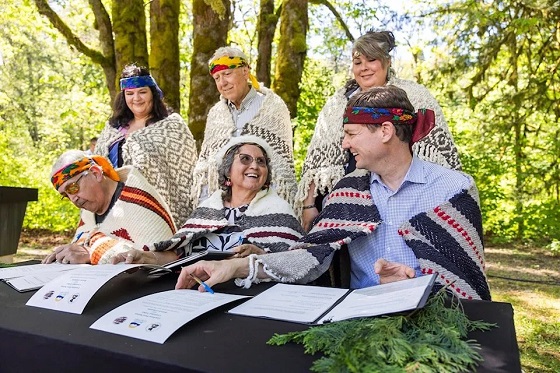
A recent decision by the B.C. Court of Appeal further clouds private property rights and undermines investment in the province. Specifically, the court determined British Columbia’s mineral claims system did not follow the province’s Declaration on the Rights of Indigenous Peoples Act (DRIPA), which incorporated the United Nations Declaration on the Rights of Indigenous Peoples (UNDRIP) into law.
DRIPA (2019) requires the B.C. provincial government to “take all measures necessary to ensure the laws of British Columbia are consistent with the Declaration,” meaning that all legislation in B.C. must conform to the principles outlined in the UNDRIP, which states that “Indigenous peoples have the right to the lands, territories and resources which they have traditionally owned, occupied or otherwise used or acquired.” The court’s ruling that the provincial government is not abiding by its own legislation (DRIPA) is the latest hit for the province in terms of ongoing uncertainty regarding property rights across the province, which will impose massive economic costs on all British Columbians until it’s resolved.
Consider the Cowichan First Nations legal case. The B.C. Supreme Court recently granted Aboriginal title to over 800 acres of land in Richmond valued at $2.5 billion, and where such aboriginal title is determined to exist, the court ruled that it is “prior and senior right” to other property interests. Put simply, the case puts private property at risk in BC.
The Eby government is appealing the case, yet it’s simultaneously negotiating bilateral agreements that similarly give First Nations priority rights over land swaths in B.C.
Consider Haida Gwaii, an archipelago on Canada’s west coast where around 5,000 people live—half of which are non-Haida. In April 2024, the Eby government granted Haida Aboriginal title over the land as part of a bilateral agreement. And while the agreement says private property must be honoured, private property rights are incompatible with communal Aboriginal title and it’s unclear how this conflict will be resolved.
Moreover, the Eby government attempted to pass legislation that effectively gives First Nations veto power over public land use in B.C. in 2024. While the legislation was rescinded after significant public backlash, the Eby’s government’s continued bilateral negotiations and proposed changes to other laws indicate it’s supportive of the general move towards Aboriginal title over significant parts of the province.
UNDRIP was adopted by the United Nations in 2007 and the B.C. Legislature adopted DRIPA in 2019. DRIPA requires that the government must secure “free, prior and informed consent” before approving projects on claimed land. Premier Eby is directly tied to DRIPA since he was the attorney general and actually drafted the interpretation memo.
The recent case centres around mineral exploration. Two First Nations groups—the Gitxaala Nation and the Ehattesaht First Nation—claimed the duty to consult was not adequately met and that granting mineral claims in their land “harms their cultural, spiritual, economic, and governance rights over their traditional territories,” which is inconsistent with DRIPA.
According to a 2024 survey of mining executives, more uncertainty is the last thing B.C. needs. Indeed, 76 per cent of respondents for B.C. said uncertainty around protected land and disputed land claims deters investment compared to only 29 per cent and 44 per cent (respectively) for Saskatchewan.
This series of developments have and will continue to fuel uncertainty in B.C. Who would move to or invest in B.C. when their private property, business, and investment is potentially at risk?
It’s no wonder British Columbians are leaving the province in droves. According to the B.C. Business Council, nearly 70,000 residents left B.C. for other parts of Canada last year. Similarly, business investment (inflation-adjusted) fell by nearly 5 per cent last year, exports and housing starts were down, and living standards in the province (as measured by per-person GDP) contracted in both 2023 and 2024.
B.C.’s recent developments will only worsen uncertainty in the province, deterring investment and leading to stagnant or even declining living standards for British Columbians. The Eby government should do its part to reaffirm private property rights, rather than continue fuelling uncertainty.

Tegan Hill
Director, Alberta Policy, Fraser Institute

Jason Clemens
Executive Vice President, Fraser Institute


By Peter Best
What do children owe their parents? Love, honour and respect are a good start. But what about parents who were once political figures – does the younger generation owe a duty of care to the beliefs of their forebears?
Two recent cases in Canada highlight the inter-generational conflict at play in Canada over Indigenous politics. One concerns Prime Minister Mark Carney and his father Robert. The other, a recent book on the life of noted aboriginal thinker William Wuttunee edited by his daughter Wanda. In each case, the current generation has let its ancestors down – and left all of Canada worse off.
William Wuttunee was born in 1928 in a one-room log cabin on a reserve in Saskatchewan, where he endured a childhood of poverty and hardship. Education was his release, and he went on to become the first aboriginal to practice law in Western Canada; he also served as the inaugural president of the National Indian Council in 1961.
Wuttunee rose to prominence with his controversial 1971 book Ruffled Feathers, that argued for an end to Canadian’s Indian Reserve system, which he believed trapped his people in poverty and despair. He dreamed of a Canada where Indigenous people lived side-by-side all other Canadians and enjoyed the same rights and benefits.
Such an argument for true racial equality put Wuttunee at odds with the illiberal elite of Canada’s native community, who still believe in a segregated, race-based relationship between Indigenous people and the rest of Canada. For telling truth to power, Wuttunee was ostracized from the native political community and banned from his own reserve. He died in 2015.
This year, William’s daughter Wanda had the opportunity to rectify the past mistreatment of her father. In the new book Still Ruffling Feathers – Let Us Put Our Minds Together, Wanda, an academic at the University of Manitoba, and several other contributors claim to “fearlessly engage” with her father’s ideas. Unfortunately, the authors mostly seek to bury, rather than
praise, Wuttunee’s vision of one Canada for all.
Wanda claims her father’s desire for a treaty-free, reserve-free Canada would be problematic today because it would have required giving up all the financial and legal goodies that have since been showered upon Indigenous groups. But there is a counterfactual to consider. What if Indigenous Canadians had simply enjoyed the same incremental gains in income, health and other social indicators as the rest of the country during this time?
Ample evidence on the massive and longstanding gap between native and non-native Canadians across a wide variety of socio-economic indicators suggest that integration would have been the better bet. The life expectancy for Indigenous Albertans, for example, is a shocking 19 years shorter than for a non-native Albertans. William Wuttunee was right all along about the damage done by the reserve system. And yet nearly all of the contributors to Wanda’s new book refuse to admit this fact.
The other current example concerns Robert Carney, who had a long and distinguished career in aboriginal education. When the future prime minister was a young boy, Robert was the principal of a Catholic day school in Fort Smith, Northwest Territories; he later became a government administrator and a professor of education. What he experienced throughout his
lifetime led the elder Carney to become an outspoken defender of Canada’s now-controversial residential schools.
When the 1996 Royal Commission on Aboriginal Peoples (RCAP) attacked the legacy of residential schools, Carney penned a sharp critique. He pointed out that the schools were not jails despite frequent claims that students were there against their will; in fact, parents had to sign an application form to enroll their children in a residential school. Carney also bristled at
the lack of context in the RCAP report, noting that the schools performed a key social welfare function in caring for “sick, dying, abandoned and orphaned children.”
In the midst of the 2025 federal election campaign, Mark Carney was asked if he agreed with his father’s positive take on residential schools. “I love my father, but I don’t share those views,” he answered. Some Indigenous activists have subsequently accused Robert Carney of residential school “denialism” and “complicity” in the alleged horrors of Canada’s colonial education system.
Like Wanda Wuttunee, Mark Carney let his father down by distancing himself from his legacy for reasons of political expediency. He had an opportunity to offer Canadians a courageous and fact-based perspective on a subject of great current public interest by drawing upon his intimate connection with an expert in the field. Instead, Mark Carney caved to the
requirements of groupthink. As a result, his father now stands accused of complicity in a phony genocide.
As for William Wuttunee, he wanted all Canadians – native and non-native alike – to be free from political constraints. He rejected racial segregation, discrimination and identity politics in all forms. And yet in “honouring” his life’s work, his daughter misrepresents his legacy by sidestepping the core truths of his central belief.
No one doubts that Wanda Wuttunee and Mark Carney each loved their dads, as any son or daughter should. And there is no requirement that a younger generation must accept without question whatever their parents thought. But in the case of Wuttunee and Carney, both offspring have deliberately chosen to tarnish their fathers’ legacies in obedience to a poisonous
ideology that promotes the entirely un-Canadian ideal of permanent racial segregation and inequity. And all of Canada is the poorer for it.
Peter Best is a retired lawyer living in Sudbury, Ontario. The original, longer version of this story first appeared in C2CJournal.ca.


Wayne Gretzky’s Terrible, Awful Week.. And Soccer/ Football.

Western Campuses Help Build China’s Digital Dragnet With U.S. Tax Funds, Study Warns

Common Vaccines Linked to 38-50% Increased Risk of Dementia and Alzheimer’s

Trump DOJ seeks to quash Pfizer whistleblower’s lawsuit over COVID shots
-
 Daily Caller1 day ago
Chinese Billionaire Tried To Build US-Born Baby Empire As Overseas Elites Turn To American Surrogates
-
 Great Reset2 days ago
Viral TikTok video shows 7-year-old cuddling great-grandfather before he’s euthanized
-
 Alberta2 days ago
Schools should go back to basics to mitigate effects of AI
-
 International2 days ago
At Least 15 Killed In Shooting Targeting Jewish Community At Australia’s Bondi Beach, Police Say
-
 International1 day ago
Two states designate Muslim group as terrorist
-
 Business1 day ago
Major tax changes in 2026: Report
-
 Digital ID1 day ago
Canada releases new digital ID app for personal documents despite privacy concerns
-
 Bruce Dowbiggin1 day ago
NFL Ice Bowls Turn Down The Thermostat on Climate Change Hysteria