
Media
Reporters determined to drive their industry and its reputation into the abyss one Tweet at a time




Last week, my column for The Hub was about why journalists, for the sake of journalism, should avoid posting on Twitter/X.
It took mere hours for my advice to be wrapped up in a ball and shoved right back at me when Robert Fife, a reporter of many years experience (he’s even older than I am) and the Globe and Mail’s Ottawa bureau chief, posted in response to the House of Commons’ vote on a Conservative motion to approve pipelines that:
“Conservatives persist with cute legislative tricks, while the government tries to run a country.”
The Rewrite is a reader-supported publication.
To receive new posts and support my work, consider becoming a free or paid subscriber.
While he’s free to do so and obviously views things differently, it is quite beyond me why the bureau chief of a distinguished journalism organization would expose himself so casually to accusations of bearing a bias – particularly given public concern about government funding of media – and so I responded by sharing Fife’s post with the comment:
“I’m old-fashioned enough to think reporters shouldn’t be blatantly stating biases. Not a great way to retain public trust.”
Now, I was aware that Fife was sharing a headlined opinion column by a colleague, Robyn Urback. But Urback is perfectly capable of promoting her own work and if Fife’s sole motivation was to neutrally share her column, it would’ve been fine if he had posted something like: “Here’s one perspective on yesterday’s House of Commons vote.”
Some people suggested the post was OK because it was only sharing someone else’s viewpoint and a headline. But Fife’s appearance on CBCNN’s Power and Politics – in which he enthusiastically described the Opposition as “childish” and criticized it for criticizing the government – made it appear the Tweet was otherwise motivated. Not everyone in today’s newsrooms shares my view that reporters should do everything in their power to be viewed as objective. Fair enough. While the aspiration remains popular with the public, it is no longer favoured by many, maybe even most, modern journalists.
Fife’s been a good reporter for decades going back to long before Twitter. He’s been announced as the 2026 recipient of the Public Policy Forum’s Hy Solomon award for excellence in public policy journalism. There are also some exceptionally good reporters at the Globe and Mail such as Grant Robertson, who has won nine National Newspaper Awards – more than anyone, ever, and eight more than me. There is no evidence I can find that Robertson, like a lot of other very good journalists, even has an account on X/Twitter. I have absolutely no idea or suspicions concerning what he thinks about anything going on in the world and I think that is how journalists should aspire to be perceived. But when social media posts by other reporters bring into question journalists’ reputations as fair brokers of the events of the day, his prudent behaviour isn’t enough to keep the entire craft from suffering reputational damage. As the old saying goes, newspapers don’t report when airplanes land safely – a phrase that applies equally to reporters, of which, according to the latest Global Media and Internet Concentration Project report, there were 1,600 fewer in Canada last year.
All that said, I don’t think anyone cares enough to do anything about it. Despite considerable evidence detailing journalism’s decline as a trusted institution, the overwhelming majority of its practitioners appear to me to have no intention whatsoever of altering course.
It looks like time has passed me by. As Leonard Cohen sang, “I’m old and the mirrors don’t lie.” So I will just continue to tilt at windmills for a little longer and then decide if there aren’t more rewarding things to do.
So Tweet away, journos, Tweet away. Tweet all the way into the abyss.
The colloquial nature of many newsrooms continues to fascinate, the latest example being treatment of Bill C-9, which expands the powers of Canada’s hate criminal speech legislation. Already problematic from a free speech perspective, the deal Justice Minister Sean Fraser struck with the Bloc Quebecois to ensure its passage has alarmed both the Canadian Conference of Catholic Bishops and the National Council of Canadian Muslims.
That’s because in exchange for the Bloc’s support, Fraser will amend C-9 so that it removes the exemption given to statements made based on sincerely held religious beliefs. The exemption states: “if, in good faith, the person expressed or attempted to establish by an argument an opinion on a religious subject or an opinion based on a belief in a religious text.”
But, just as our media refuse to acknowledge developments beyond our borders on trans issues and health care models, they remain rube-ishly reluctant to look at what happens when quoting from the Bible becomes a police matter. I wrote about it elsewhere and, given that I am planning a Christmas break, will re-post that piece next week. In the meantime it will be interesting to see if any Canadian media or commentators pick up on the case of Päivi Räsänen, a medical doctor and Member of the Finnish Parliament. She and Bishop Juhana Pohjola of the Evangelical Lutheran Mission Diocese of Finland, twice acquitted, are awaiting the outcome of their third trial on allegations of criminal hate for quoting passages of the Bible regarding a church Pride event. If found guilty, they will face up to two years in prison, the same as in Canada.
The bad news for journalists working within traditional media structures continues.
The Nieman Lab predictions for 2026 forecast that Artificial Intelligence will continue to grow as a source of information for the public.
The good news?
“Tech companies will face pressure in the year ahead to bolster the information ecosystem.”
The bad news?

“Tech companies will realize they don’t need journalism to give people the answers they need.”
The conclusion?
“The threats we (journalists) face are existential, but we can reframe them as opportunities.”
Postmedia columnist Brian Lilley is definitely playing journalism with his elbows up these days.
Last week, he challenged his colleagues in the industry to question the activist group Coastal First Nations on its funding by US interests.
“Here’s an open challenge to the Parliamentary Press Gallery who will be covering the CEO of Coastal First Nations appearing in Ottawa,” he posted on Twitter. “Ask them what rights and title they hold to any of the land in question.
“Ask them about American funding.”
Near as I could tell, he didn’t get any takers and the industry will continue to present the anti-pipeline group as organic. But, just in case, I checked and Lilley’s response was “Hahahahahahhaha!”
Earlier, he firmly put CBCNN Power and Politics host David Cochrane in his place with a Facebook post stating “I’ve never seen an anchor in any country, on any network, push left-wing Liberal talking points as hard as Cochrane.”
Whew! Brian won’t be popular at parties.
Finally, a bouquet to Peter Mazereeuw of The Hill Times for the literary flourish with which he described the anonymous sources so routinely used by press gallery journalists who pretend they aren’t authorized to speak.
Justice Minister Sean “Fraser is currently in a bit of hot water with the PMO, which sent forth some of its anonymous flying monkeys yesterday to tell the CBC that he had not gotten its approval for his deal with the Bloc Québécois ….”
Remember that term.
Happy Hannukah. May your candles burn bright.
Readers will notice a new DONATE button has been added. Please consider making use of it and help us save journalism from bad journalism.
(Peter Menzies is a commentator and consultant on media, Macdonald-Laurier Institute Senior Fellow, a past publisher of the Calgary Herald, a former vice chair of the CRTC and a National Newspaper Award winner.)
The Rewrite is a reader-supported publication.
To receive new posts and support my work, consider becoming a free or paid subscriber.



By James Corbett
corbettreport.com
Remember when I wrote about the Dead Internet Theory? You know, the idea that most of what we see, read and hear on the internet is bot-generated?
Well, guess what? That theory has been confirmed! Everyone you talk to online is a bot, spy, troll or psyops warrior!
And, as you’re about to see, it gets even worse before it gets (hopefully) better.
Intrigued? Want to know what this means for the future of the internet? Or, much more importantly, what it means for the future of human community? Then read on!
This Substack is reader-supported.
To receive new posts and support my work, consider becoming a free or paid subscriber.
FOREIGN SPIES UNMASKED
If you’ve been “surfing the web” since the early days of the “information superhighway,” you’ll no doubt recall one of the earliest online jokes: “On the internet, nobody knows you’re a dog.”
 |
Now, in 2025, it seems we may need to amend that joke to take it from a pithy observation about online anonymity to a dire warning about the weaponization of online anonymity: “On the internet, no one knows you’re a foreign psyops officer.”
You see, last month the social media platform formerly known as Twitter decided to roll out a new feature: a location tool that reveals the country or region in which a given account is based. The result? A lot of foreign psyops warriors got caught with their pants down.
@MagaNationX?

Screenshot
…Turns out that account is actually based in Eastern Europe.
And the @IvankaNews Ivanka Trump fan account?
 |
It seems that particular Trump-loving Ivanka fan is based in the MAGA stronghold of . . . Nigeria?
And it’s not just those accounts. The @BarronTNews_ Barron Trump fan account (that posted heartfelt birthday messages to “Dad” Donald before it was exposed as a fan account)? The “UltraMAGA Trump 2028” account? Those accounts and numerous others were discovered to be originating from similarly far-flung corners of the globe.
You can imagine the field day that headline writers of the dinosaur legacy media had with these revelations:
- X’s new feature raises questions about the foreign origins of some popular US political accounts;
- Has X’s new location feature just exposed MAGA influencers as foreign trolls?;
- New X Feature Reveals Top MAGA Accounts Based Overseas;
- &c.
Indeed, it seems every online outlet was able to find examples of their ideological enemies being exposed as foreign agents.
Israeli outlet ynetnews, for example, is reporting that the X location feature has unmasked a “fake Gaza influencer network” with accounts purporting to be of Gazans under attack that actually originate from Malaysia, Afghanistan, Pakistan and other distinctly non-Gazan locales.
Some users protested their geographic identification or added context to their apparent location. The @1776General_ account, claiming to be “Constitutionalist, Patriot  , Ethnically American” but found to be “based in Turkey,” countered with a post noting: “I work in international business. I’m currently working in Turkey on a contract.”
Remarkably, even the US Department of Homeland Security had to tweet a reassurance that it is, in fact, American, after apparently doctored screenshots circulated suggesting the account was based in a foreign country.
 |
X, for its part, attempted damage control over the incident—advising users that “its new feature could be partially spoofed by using a VPN to mask a user’s true location”—before removing the location information altogether.
And so The Day The Foreign Spies Were Unmasked came and went. For one brief moment, people were reminded of one of the fundamental lessons of the internet: you have no idea who (or what) you are “talking to” in online conversation.
Perhaps the account feeding you a “first person” tale of some breaking news event or “on-the-ground” analysis of a military conflict actually is whoever they’re claiming to be. Or perhaps they’re a dog. But it’s certainly possible they’re a foreign agent attempting to influence your opinion by feeding you fake, misleading or selective information.
This should not be news to anyone who has been paying attention.
Long-time Corbetteers will recall my 2018 report on The Weaponization of Social Media, in which I reported that:
- the Pentagon was “buying software that will enable the American military to create and control fake online personas—fake people, essentially—who will appear to have originated from all over the world”;
- government-owned computers at the Army Corps of Engineers offices in New Orleans were caught verbally attacking critics of the Corps;
- Israeli groups were giving courses on how to edit Wikipedia articles to ensure content on the online encyclopedia remains “Zionist in nature”; and
- an internal document from the GCHQ—Britain’s NSA equivalent—had been leaked, exposing that the British spies were using social media platforms to spread propaganda and influence public opinion.
And that was seven years ago. Imagine how much worse things have gotten since then, after the Q Anonsense psyop and the advent of the 77th Brigade and the takeover of every major social media platform by “ex”-intelligence officials.
Yes, it’s no surprise to anyone in the conspiracy realist community that the internet is flooded with spies who are actively attempting to mislead you.
But wait, it gets worse!
CLANKERS DEPLOYED, TROLLS UNLEASHED
 |
Why assume that the account you’re interacting with is human—or even canine? As chatbot technology advances, it’s increasingly likely that you’re talking to a machine.
I’m not talking out of my posterior here. I’m talking statistically.
You might not have caught this story when it flitted through the newswires earlier this year, but it’s confirmed: bots now account for over half of all internet traffic.
That is the alarming (but hardly surprising) conclusion of the Imperva Bad Bot Report, an annual assessment of bot activity on the internet by cybersecurity company Imperva. This year’s report found that not only do “bots”—that is, automated programs running tasks on the internet—now account for 51% of all online traffic but that 72% of that bot activity is malicious.
Once again, this is not news to those paying attention. Indeed, as I observed in my “The Internet is Dead“ editorial two years ago:
If this theory [i.e., the Dead Internet Theory] is correct, then the computer-created content of the dead internet includes not just the obviously inhuman content on the web—the spam that overruns every unmoderated comment section, for instance, or the botnets that flood social media with identically worded propaganda posts—but everything: the content itself, the commentary on that content, the “people” we interact with online, even audio podcasts and video vlogs and other seemingly human-generated media.
While the concept of a bot-dominated internet might have seemed outlandish when the theory was first floated, it is decidedly less outlandish in this age of Sora video slop and AI news article slop and AI scientific paper slop and AI podcast slop. After encountering the Facebook Shrimp Jesus phenomenon, who can doubt that the web is increasingly populated by bots posting AI-generated content for consumption by other clankers in some sort of snake-eating-its-own-slop version of the internet that only makes sense to the likes of Zuckerberg and Musk?
But wait, it gets even worse!!!
Not only do the average Joe and average Jane have to contend with the online spooks, spies and cyberwarriors pumping propaganda out in furtherance of their paymasters’ and string-pullers’ nefarious agendas, and not only do they have to sift through the mounds of AI slop to find genuine human interaction online, but they also have to deal with the trolls who are there to poison that human interaction “for the lulz.”
Anyone who has spent time in the comments section of a website, or, increasingly, in discussion on a social media platform, knows exactly why the term “rage bait” has been chosen as Oxford’s word of the year for 2025. As every netizen is all too aware, these days any online conversation with enough participation to be interesting is inevitably dominated by the lowest common denominator of loud, obnoxious and boorish behaviour.
But the trolls are a different breed altogether. They set rage bait and spew bad faith arguments online as a way of (at best) venting their anti-social tendencies in an environment where they won’t be punched in the face and (at worst) deliberately steering online conversation away from productive topics.
In the course of my research, I sometimes come across old school online fora and other long-forgotten parts of the web showcasing how online discussions unfolded twenty or more years ago, before the advent of social media. The difference between those discussions and what passes for online discourse today is never less than breathtaking. You can witness people of a bygone internet era having in-depth discussions, sometimes on important political or social matters upon which the posters fundamentally disagree. But, unlike anything you’d see today, these online debaters of yore not only spent time articulating their viewpoint and how they arrived at it, they actually listened to their interlocutors and (gasp!) engaged them in good faith. Sometimes, they even conceded points or agreed to disagree.
The fact that such fruitful online discourse is now a thing of the past is, obviously, something to lament. But what makes it even worse is that the types of toxic rage-inducing flamewars that pass for online discourse these days are now starting to manifest in the real world. An entire generation of young people who have grown up primarily online and in internet trolling culture have been socialized into thinking that this is what natural human discussion is. They are now reflecting that attitude in their everyday, offline, “IRL” behaviour, leading to the breakdown of social mores we see around us today.
In other words, the dead internet is leaking.
Yes, as we’ve seen, things are going from bad (the online spies and cyberwarriors) to worse (the AI slop of today’s web) to even worse (the trolls who are threatening to tear apart the very fabric of society).
But here’s the real question: does it get better?
WHAT IT MEANS
 |
As usual, the answer to that question is what we make of it.
Sure, there are things we can do to make the online world slightly more human (in the good sense).
You can avoid the spies and trolls and cyberwarriors (at least for the most part) by avoiding the major social media platforms altogether and participating in discussion in more elite circles (like the comment section of corbettreport.com, to take one completely random example).
You can take greater control of your online life by using RSS instead of allowing algorithms to determine what you’ll read or watch or listen to next.
Heck, there’s even a new “Slop Evader“ browser extension you can install that promises to help you explore the pre-AI slop internet by searching for content from before ChatGPT was unleashed on the world. (Although, as even its creator notes, this extension is just a simple date filter for Google search results and thus not a fundamental solution to the crisis.)
But perhaps the real solution to this bot-generated, spook-propagated, troll-inflamed Dead Internet emergency is not to be found online at all. Perhaps the real solution is to be found in actual human community. In real people coming together in the real world to reconnect with what is really human.
Yes, that seems like a pie-in-the-sky fantasy in today’s online world, doesn’t it? But if we can’t even dream it we’ll surely never achieve it.
Like this type of essay? Then you’ll love The Corbett Report Subscriber newsletter, which contains my weekly editorial as well as recommended reading, viewing and listening.
If you’re a Corbett Report member, you can sign in to corbettreport.com and read the newsletter today.
Not a member yet? Sign up today to access the newsletter and support this work.
Are you already a member and don’t know how to sign in to the website? Contact me HERE and I’ll be happy to help you get logged in!
This Substack is reader-supported.
To receive new posts and support my work, consider becoming a free or paid subscriber.
Censorship Industrial Complex
Conservative MP calls on religious leaders to oppose Liberal plan to criminalize quoting Scripture

From LifeSiteNews
Quoting the Bible, Quran, or Torah to condemn abortion, homosexuality, or LGBT propaganda could be considered criminal activity
Conservatives are warning that Canadians should be “very afraid” of the Liberals’ proposal to punish quoting Scripture, while advising religious leaders to voice their opposition to the legislation.
During a December 6 session in Parliament, Conservative Member of Parliament (MP) Larry Brock warned Canadians of the very real threat to their religious freedom thanks to proposed amendments to Bill C-9, the “Combating Hate Act,” that would allow priests quoting Scripture to be punished.
“Do Christians need to be concerned about this legislation?” MP Bob Zimmer questioned. “Does it really threaten the Bible and free speech in Canada?”
“They should be very afraid,” Brock responded. “Every faith leader should be very afraid as to what this Liberal government with the support of the Bloc Quebecois wishes to do.”
“As I indicated, religious freedom is under attack at the hands of this Liberal government,” he declared.
Brock stressed the need for religious leaders to “speak out loud and clear” against the proposed amendment and contact their local Liberal and Bloc MPs.
Already, the Canadian Conference of Catholic Bishops penned an open letter to the Carney Liberals, condemning the proposed amendment and calling for its removal.
As LifeSiteNews reported earlier this week, inside government sources revealed that Liberals agreed to remove religious exemptions from Canada’s hate speech laws as part of a deal with the Bloc Québécois to keep Liberals in power.
Bill C-9, as reported by LifeSiteNews, has been blasted by constitutional experts as empowering police and the government to go after those it deems to have violated a person’s “feelings” in a “hateful” way.
Now, the Bloc amendment seeks to further restrict free speech. The amendment would remove the “religious exemption” defense, which has historically protected individuals from conviction for willful promotion of hatred if the statements were made “in good faith” and based on a “religious subject” or a “sincerely held” interpretation of religious texts such as passages from the Bible, Quran, or Torah.
As a result, quoting the Bible, Quran, or Torah to condemn abortion, homosexuality, or LGBT propaganda could be considered criminal activity.
Shortly after the proposed amendment was shared on social media, Conservatives launched a petition, calling “on the Liberal government to protect religious freedom, uphold the right to read and share sacred texts, and prevent government overreach into matters of faith.”
Already, in October, Liberal MP Marc Miller said that certain passages of the Bible are “hateful” because of what it says about homosexuality and those who recite the passages should be jailed.
“Clearly there are situations in these texts where these statements are hateful,” Miller said. “They should not be used to invoke or be a defense, and there should perhaps be discretion for prosecutors to press charges.”
His comments were immediately blasted by Conservative politicians throughout Canada, with Alberta provincial Conservative MLA and Minister of Municipal Affairs Dan Williams saying, “I find it abhorrent when MPs sitting in Ottawa – or anyone in positions of power – use their voice to attack faith.”


Wayne Gretzky’s Terrible, Awful Week.. And Soccer/ Football.

Western Campuses Help Build China’s Digital Dragnet With U.S. Tax Funds, Study Warns

Common Vaccines Linked to 38-50% Increased Risk of Dementia and Alzheimer’s
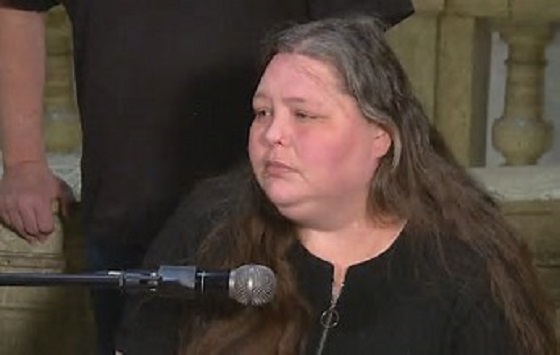
US podcaster Glenn Beck extends a lifeline to a Saskatchewan woman waiting for MAiD
-
Bruce Dowbiggin2 days ago
Wayne Gretzky’s Terrible, Awful Week.. And Soccer/ Football.
-
espionage1 day ago
Western Campuses Help Build China’s Digital Dragnet With U.S. Tax Funds, Study Warns
-
Focal Points20 hours ago
Common Vaccines Linked to 38-50% Increased Risk of Dementia and Alzheimer’s
-
 Opinion2 days ago
The day the ‘King of rock ‘n’ roll saved the Arizona memorial
-
 Automotive10 hours ago
The $50 Billion Question: EVs Never Delivered What Ottawa Promised
-
 Agriculture2 days ago
Canada’s air quality among the best in the world
-
 Business1 day ago
Canada invests $34 million in Chinese drones now considered to be ‘high security risks’
-
 Health18 hours ago
The Data That Doesn’t Exist