
Opinion
Religion on trial: what could happen if Canada passes its new hate speech legislation

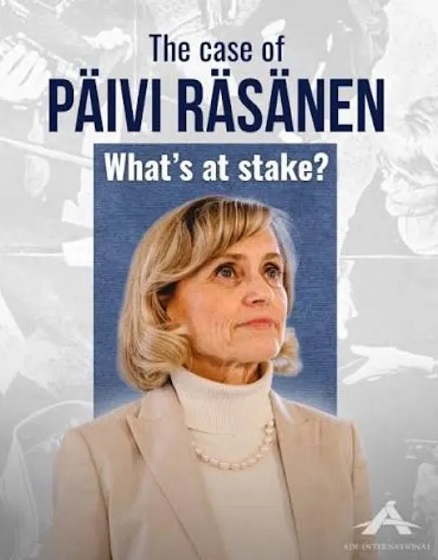


Just in time for Christmas, the Liberals make a deal with the Bloc that will suppress religious expressions of belief
(The Rewrite will return to its usual format in 2026. In the meantime please enjoy this republication of Peter Menzies’s take on Bill C-9 and its threat to free speech and freedom of religion. And, please, have a Merry Christmas)
If you want to get some sense of what life in Canada could be like if the federal government’s new hate speech law passes, check out Finland.
There, Päivi Räsänen, a medical doctor and Member of Parliament, and Bishop Juhana Pohjola of the Evangelical Lutheran Mission Diocese of Finland are awaiting the verdict of their third hate speech trial – all for the same issues – since 2019.
The prospect of a similar future “Bible Trial” now hangs over Canada thanks to the minority government’s openness to making a deal with the Bloc Quebecois to get Bill C-9 – An Act to amend the Criminal Code (hate propaganda, hate crime and access to religious or cultural places) – passed.
Already contentious, the contemplated amendment that would remove the current protections for sincerely held religious belief, could very well stifle the ability of Christians, Muslims, Jews and others to freely refer to their most sacred texts.
As the Canadian Conference of Catholic Bishops puts it: “the removal of this provision risks creating uncertainty for faith communities, clergy, educators, and others who may fear that the expression of traditional moral or doctrinal teachings could be misinterpreted as hate speech and could subject the speaker to proceedings that threaten imprisonment of up to two years.
“Eliminating a clear statutory safeguard will likely therefore have a chilling effect on religious expression, even if prosecutions remain unlikely in practice.”
Rasanen, Finland’s former Interior Minister, was charged under a section of the Finnish criminal code titled “war crimes and crimes against humanity” after jointly publishing a 2004 pamphlet with Pohjola that described traditional religious views on marriage and sexuality. Also involved were a 2019 live radio debate and a Tweet in which she questioned a decision by Finland’s majority church, the Finnish Evangelical Lutheran Church, to formally support a Helsinki Pride event.
Both she and Pohjola were acquitted at their initial trial and, again unanimously, upon appeal. The prosecution, determined to get convictions, then took the case all the way to Finland’s Supreme Court, where the third trial wound up on Oct. 30. At the time of writing, a verdict is pending. The accused face up to two years in prison if convicted.
Given that a total of six judges have, so far, not been convinced thay quoting Bible passages constitutes a hate crime, that level of punishment seems unlikely. But as Rasanen has written “the greatest danger is the threat of society-wide censorship and the crushing effect on freedom of speech and religion. A judgment against me would open the floodgates to a broad ban on the public expression of religious views or other beliefs and the threat of modern book burnings.”
While that may alarm those of us who still adhere to increasingly old-fashioned views on freedom and liberal democracy, there’s no doubt that the move to suppress religious expression – and some of its very unfashionable concerns regarding sexuality – has a strong fan base.
Quebec, where a crucifix inexplicably remains mounted in the National Assembly, appears particularly keen on this approach. Its Bill 21 banned the wearing of religious symbols or clothing by certain public employees and is now being extended to daycare workers and others. Its “burka ban” also insists a person’s face must be uncovered when receiving public services and is making it illegal to pray in public without government permission.
Prompted by the mass Islamo-Leftist coalition demonstrations that have occupied Montreal’s streets for the past two years, it seems unlikely that one would be busted for bowing one’s head to commune with the Almighty while sitting on a park bench. But the fact that it might be possible could just be enough to discourage one from doing so.
This is why the Bloc Quebecois is so keen to assert its leverage within a minority Parliament and stands ready to assist its passage if the exemption (“if, in good faith, the person expressed or attempted to establish by an argument an opinion on a religious subject or an opinion based on a belief in a religious text”) within current hate speech legislation for people sincerely motivated by their faith is removed.

Indeed, Bloc leader Yves-Francois Blanchet believed he had a deal but that the Liberals, led by a regular attendant at Roman Catholic Mass – Prime Minister Mark Carney – “fear a backlash” and may try to find another dance partner. That hesitance, according to Blanchet, may have motivated the suspension of a (Dec. 4) House of Commons Justice Committee.
Conservative MP Andrew Lawton also wondered on X if the committee was putting the bill on hold, stating “The Liberal chair of the Justice Committee says he cancelled today’s Bill C-9 meeting so MPs could “regroup.” He refuses to say whether he’ll call next Tuesday’s meeting.”
The deal now appears to be locked in, although Justice Minister Sean Fraser promised concerned faith groups he would hear them out over the winter.
Meanwhile, the very idea that the exemption might be removed has lit up Conservative Leader Pierre Poilievre, who, already opposed to Bill C-9 because of its restrictions on free speech, declared that it would “criminalize sections of the Bible, Qur’an, Torah and other sacred texts.”
I don’t know that it would. But it could. And that should be enough to alarm all those who believe in a God greater than the state. Just in time for Christmas, or whatever our politicians call it these days.
We note with sadness the passing Wednesday of Peter Arnett, whose work will be remembered vividly by those old enough to recall the first Gulf War and CNN’s hey day.
A New Zealander and later American too, Arnett made his name in war zones reporting for Associated Press, beginning in Vietnam. He won a Pulitzer prize for his sins, experienced controversy and lived to be 91. He tried and that’s all you can ask. Farewell, faithful servant.

Readers will notice a new DONATE button has been added. Please consider making use of it and help us save journalism from bad journalism.
(Peter Menzies is a commentator and consultant on media, Macdonald-Laurier Institute Senior Fellow, a past publisher of the Calgary Herald, a former vice chair of the CRTC and a National Newspaper Award winner. This commentary originally appeared in Epoch Times Canada)
The Rewrite is a reader-supported publication.
To receive new posts and support my work, consider becoming a free or paid subscriber.


It’s been nearly a year since I last wrote about the CBC. In the intervening months, the Prescott memo on bias at the BBC was released, whose stunning allegations of systemic journalistic malpractice “inspired” multiple senior officials to leave the corporation. Given how the institutional bias driving problems at the BBC is undoubtedly widely shared by CBC employees, I’d be surprised if there weren’t similar flaws embedded inside the stuff we’re being fed here in Canada.
Apparently, besides receiving nearly two billion dollars¹ annually in direct and indirect government funding, CBC also employs around a third of all of Canada’s full time journalists. So taxpayers have a legitimate interest in knowing what we’re getting out of the deal.
Naturally, corporate president Marie-Philippe Bouchard has solemnly denied the existence of any bias in CBC reporting. But I’d be more comfortable seeing some evidence of that with my own eyes. Given that I personally can easily go multiple months without watching any CBC programming or even visiting their website, “my own eyes” will require some creative redefinition.
So this time around I collected the titles and descriptions from nearly 300 stories that were randomly chosen from the CBC Top Stories RSS feed from the first half of 2025. You can view the results for yourself here. I then used AI tools to analyze the data for possible bias (how events are interpreted) and agendas (which events are selected). I also looked for:
- Institutional viewpoint bias
- Public-sector framing
- Cultural-identity prioritization
- Government-source dependency
- Social-progressive emphasis
Here’s what I discovered.
Story Selection Bias
Millions of things happen every day. And many thousands of those might be of interest to Canadians. Naturally, no news publisher has the bandwidth to cover all of them, so deciding which stories to include in anyone’s Top Story feed will involve a lot of filtering. To give us a sense of what filtering standards are used at the CBC, let’s break down coverage by topic.
Of the 300 stories covered by my data, around 30 percent – month after month – focused on Donald Trump and U.S.- Canada relations. Another 12-15 percent related to Gaza and the Israel-Palestine conflict. Domestic politics – including election coverage – took up another 12 percent, Indigenous issues attracted 9 percent, climate and the environment grabbed 8 percent, and gender identity, health-care worker assaults, immigrant suffering, and crime attracted around 4 percent each.
Now here’s a partial list of significant stories from the target time frame (the first half of 2025) that weren’t meaningfully represented in my sample of CBC’s Top Stories:
- Housing affordability crisis barely appears (one of the top voter concerns in actual 2025 polls).
- Immigration levels and labour-market impact.
- Crime-rate increases or policing controversies (unless tied to Indigenous or racialized victims).
- Private-sector investment success stories.
- Any sustained positive coverage of the oil/gas sector (even when prices are high).
- Critical examination of public-sector growth or pension liabilities.
- Chinese interference or CCP influence in Canada (despite ongoing inquiries in real life).
- The rest of the known galaxy (besides Gaza and the U.S.)
Interpretation Bias
There’s an obvious pattern of favoring certain identity narratives. The Indigenous are always framed as victims of historic injustice, Palestinian and Gazan actions are overwhelmingly sympathetic, while anything done by Israelis is “aggression”. Transgender representation in uniformly affirmative while dissent is bigotry.
By contrast, stories critical of immigration policy, sympathetic to Israeli/Jewish perspectives, or skeptical of gender medicine are virtually non-existent in this sample.
That’s not to say that, in the real world, injustice doesn’t exist. It surely does. But a neutral and objective news service should be able to present important stories using a neutral and objective voice. That obviously doesn’t happen at the CBC.
Consider these obvious examples:
- “Trump claims there are only ‘2 genders.’ Historians say that’s never been true” – here’s an overt editorial contradiction in the headline itself.
- “Trump bans transgender female athletes from women’s sports” which is framed as an attack rather than a policy debate.
And your choice of wording counts more than you might realize. Verbs like “slams”, “blasts”, and “warns” are used almost exclusively describing the actions of conservative figures like Trump, Poilievre, or Danielle Smith, while “experts say”, “historians say”, and “doctors say” are repeatedly used to rebut conservative policy.
Similarly, Palestinian casualties are invariably “killed“ by Israeli forces – using the active voice – while Israeli casualties, when mentioned at all, are described using the passive voice.
Institutional Viewpoint Bias
A primary – perhaps the primary job – of a serious journalist is to challenge the government’s narrative. Because if journalists don’t even try to hold public officials to account, then no one else can. Even the valuable work of the Auditor General or the Parliamentary Budget Officer will be wasted, because there will be no one to amplify their claims of wrongdoing. And Canadians will have no way of hearing the bad news.
So it can’t be a good sign when around 62 percent of domestic political stories published by the nation’s public broadcaster either quote government (federal or provincial) sources as the primary voice, or are framed around government announcements, reports, funding promises, or inquiries.
 |
In other words, a majority of what the CBC does involves providing stenography services for their paymasters.
Here are just a few examples:
- “Federal government apologizes for ‘profound harm’ of Dundas Harbour relocations”
- “Jordan’s Principle funding… being extended through 2026: Indigenous Services”
- “Liberal government announces dental care expansion the day before expected election call”
Agencies like the Bank of Canada, Indigenous Services Canada, and Transportation Safety Board are routinely presented as authoritative and neutral. By contrast, opposition or industry critiques are usually presented as secondary (“…but critics say”) or are simply invisible. Overall, private-sector actors like airlines, oil companies, or developers are far more likely to be criticized.
All this is classic institutional bias: the state and its agencies are the default lens through which reality is filtered.
Not unlike the horrors going on at the BBC, much of this bias is likely unconscious. I’m sure that presenting this evidence to CBC editors and managers would evoke little more than blank stares. This stuff flies way below the radar.
But as one of the AI tools I used concluded:
In short, this 2025 CBC RSS sample shows a very strong and consistent left-progressive institutional bias both in story selection (agenda) and in framing (interpretation). The outlet functions less as a neutral public broadcaster and more as an amplifier of government, public-sector, and social-progressive narratives, with particular hostility reserved for Donald Trump, Canadian conservatives, and anything that could be construed as “right-wing misinformation.”
And here’s the bottom line from a second tool:
The data reveals a consistent editorial worldview where legitimate change flows from institutions downward, identity group membership is newsworthy, and systemic intervention is the default solution framework.
You might also enjoy:
Is Updating a Few Thousand Readers Worth a Half Million Taxpayer Dollars? |
||||||
|
||||||
 |
||||||
| Plenty has been written about the many difficulties faced by legacy news media operations. You might even recall reading about the troubled CBC and the Liberal government’s ill-fated Online News Act in these very pages. Traditional subscription and broadcast models are drying up, and on-line ad-based revenues are in sharp decline. | ||||||
|
Indigenous
Residential school burials controversy continues to fuel wave of church arsons, new data suggests

By Edgardo Sepulveda for Inside Policy
Church arsons surged again in 2024 according to new data released by Statistics Canada—continuing a disturbing trend first uncovered by a Macdonald-Laurier Institute investigation published last year.
Scorched Earth: A quantitative analysis of arson at Canadian religious institutions and its threat to reconciliation, which I published last April, warned that the arson wave – almost certainly spurred by ongoing anger over potential unmarked burials of children at residential schools –would not disappear without concerted government policy intervention.
Unfortunately, my prediction is proving accurate.
Newly available custom data from Statistics Canada confirms that arsons in 2024 continued at nearly double the baseline level established from 2011–17.
This persistent elevation is particularly concerning given that arson is a dangerous crime with significant financial costs and, in the case of religious institutions, broader implications for Canadian society and political discourse. Most importantly for those committed to Indigenous reconciliation, the apparent lack of effective policy response risks undermining public support for reconciliation efforts—suggesting these crimes are not being treated with the seriousness they deserve, particularly because many targets are Catholic churches associated with residential school legacies.
Scorched Earth developed specific terms and a conceptual framework to analyze arsons at religious institutions. First, I refer to “potential unmarked burials” rather than other terminology, including “mass graves” – language suggesting verified remains and, potentially, the site of clandestine burials. Neither has been established. No remains have been verified at any of the 21 announced sites. The Tk’emlúps te Secwépemc First Nation revised its own characterization of the Kamloops, BC, announcements in May 2024 to “probable unmarked burial sites,” a significant shift from its initial May 2021 announcement of “remains of 215 children.” This precipitated announcement, together with some of the initial media coverage in Canada and elsewhere, likely contributed to the intensity of the arson response.
Second, the conceptual framework, updated with the latest Statistics Canada data, separates “baseline” from “excess” arson associated with specific shocks, such as the announcements. It shows that arsons at religious institutions have remained elevated since the initial spike in 2021. Based on careful geographic statistical analysis presented in Scorched Earth, I demonstrated that the most likely explanation for elevated arsons was a criminal response prompted by the 17 announcements of potential unmarked burials at former residential schools, beginning in Kamloops, B.C., in May 2021. Four additional announcements occurred in 2024, bringing the total to 21. While data through 2023 showed no detectable increase in arsons related to the Israel-Gaza conflict, analysis of 2024 data suggests this changed: arsons in response to that conflict now constitute a minority of the increase above baseline levels, with the majority remaining those related to announcements of potential unmarked burials.
Investigation and Prosecution Rates Remain Insufficient for Effective Deterrence
Statistics Canada’s newly released custom clearance data for arson at religious institutions provides the first comprehensive official view of law enforcement effectiveness in these cases, superseding the preliminary compilation included in Scorched Earth.
Crimes in Canada are considered “solved” when police identify a suspect with sufficient evidence to support charges. Cases are then classified as “cleared” through two mechanisms: laying charges (“cleared by charge”) or alternative processes such as diversion programs (“cleared otherwise”).
As Figure 2 illustrates, the cleared-by-charge rate for all arson averaged 13.1 per cent over the 2011–24 period. For religious institutions, the yearly average reached 14.4 per cent—marginally higher but still concerning. The clearance rate for religious institutions shows significant year-over-year variability, reflecting the smaller statistical base compared to all arsons. The “cleared otherwise” category adds an average of 4.7 per cent for both arson types.
While these low clearance rates align with those for other property crimes, the continuing elevated arson rate suggests they provide insufficient deterrence for either first-time or serial arsonists. Evidence from Scorched Earth indicates that sustained clearance rates in the mid-30 per cent range—achieved by the National Church Arson Task Force (NCATF) in the United States during the 1990s—effectively reduced church arsons targeting predominantly Black congregations in the American South.
While my statistical analysis indicates that announcements of potential unmarked burials likely motivated many incidents, this remains circumstantial evidence. Direct evidence would require confessions or explicit statements of rationale from arrested arsonists, or credible claims of responsibility from organized groups. Out of the 306 arsons at religious institutions over the 2021-24 period, 53 resulted in charges and 13 were cleared through alternative processes, totaling 64 cleared incidents—an overall clearance rate of 21 per cent.
A clearance rate at this level, while insufficient for effective deterrence, makes it unlikely that most arsons during this period resulted from organized political, ideological, or anti-religious campaigns. A coordinated campaign would likely be visible to investigators even at this clearance level. Since police identify suspects in far more cases than they prosecute, investigators develop a broader perspective on potential culprits than clearance rates alone suggest. Law enforcement officials have not provided any indication of such organized campaigns.
Federal and Provincial Funding Addresses Searches But Ignores Consequences
Neither federal nor provincial governments have introduced policy initiatives addressing elevated arson rates at religious institutions, despite substantial new funding for related matters.
Following the Kamloops announcement, the federal government launched the Residential Schools Missing Children Community Support program, providing $246 million to hundreds of communities, including for research and field investigations. Separately, British Columbia, Alberta, Ontario, and other provinces have committed hundreds of millions in additional dollars, including programs to address mental health effects from the search process and announcements.
This funding inventory highlights a significant policy gap: substantial resources address the cause—announcements of potential unmarked burials—while none target the effect: arsons at religious institutions.
Even viewed narrowly as a crime issue, recent government responses to other property crimes demonstrate available policy tools. When auto theft peaked in 2023, the federal government announced $121 million in federal support, convened a national summit with all levels of government and law enforcement, and released a National Action Plan by May 2024.
Policy Gaps and a Call to Action
The NCATF, created in response to arsons targeting Black churches in the 1990s United States, achieved clearance rates sufficient to reduce incidents. Canada possesses the same policy tools but has not deployed them for residential school-related arsons.
This is not a matter of capacity or institutional precedent. Recent government responses to other serious property crimes, such as auto theft, demonstrate that Canada can mobilize coordinated federal-provincial action when it chooses to. The apparent policy inaction since 2021 for residential school-related arsons must end.
Canada is not powerless to stop the arsonists. The policy recommendations set out in Scorched Earth continue to be valid:
- Create a national or regional integrated police/fire investigations unit focused specifically on arson at religious institutions. This integrated unit would investigate arsons at all religious institutions—Christian, Muslim, Jewish, and others.
- Improve Indigenous police and fire protection services, including to ensure full Indigenous participation in the integrated unit.
- Complete the long-running project of building and maintaining a comprehensive and timely national and on-reserve database of fire statistics.
Law enforcement officials must thoroughly investigate and prosecute the arsonists. The attacks threaten reconciliation and full Indigenous equality—and they must be condemned by all Canadians.
Economist Edgardo Sepulveda has more than 30 years of experience advising clients in more than forty countries. He has written for Jacobin magazine, TVO Today, and the Alberta Federation of Labour, and has been lead author of three peer-reviewed academic articles in the last five years. He received his BA (Hon) from the University of British Columbia and his MA from Queen’s University, both in Economics. He established Sepulveda Consulting Inc. in 2006.


Death by a thousand clicks – government censorship of Canada’s internet

Chinese Billionaire Tried To Build US-Born Baby Empire As Overseas Elites Turn To American Surrogates

Politicians should be honest about environmental pros and cons of electric vehicles

Viral TikTok video shows 7-year-old cuddling great-grandfather before he’s euthanized
-
Censorship Industrial Complex1 day ago
Death by a thousand clicks – government censorship of Canada’s internet
-
Daily Caller1 day ago
Chinese Billionaire Tried To Build US-Born Baby Empire As Overseas Elites Turn To American Surrogates
-
Great Reset1 day ago
Viral TikTok video shows 7-year-old cuddling great-grandfather before he’s euthanized
-
Automotive2 days ago
Politicians should be honest about environmental pros and cons of electric vehicles
-
 Digital ID1 day ago
Canada releases new digital ID app for personal documents despite privacy concerns
-
 Community1 day ago
Charitable giving on the decline in Canada
-
 Alberta1 day ago
Schools should go back to basics to mitigate effects of AI
-
 Alberta4 hours ago
Alberta’s huge oil sands reserves dwarf U.S. shale