
Alberta
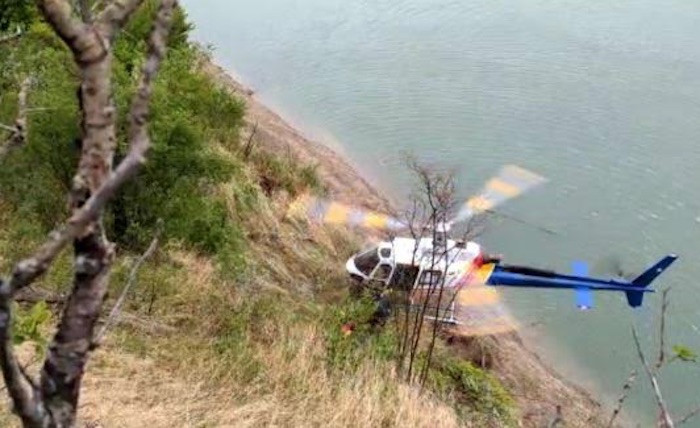
RCMP chopper pilot pulls off amazing helicopter rescue of missing woman west of Innisfail


News release from Innisfail RCMP
Innisfail RCMP seek public assistance in locating missing elderly female – Update #3
Innisfail, Alta. – RCMP would like to provide additional details and clarify some information with regards the search efforts and the ultimate rescue of Lorraine Vandenbosch who went missing from Dickson Point Campground on May 29, 2023.
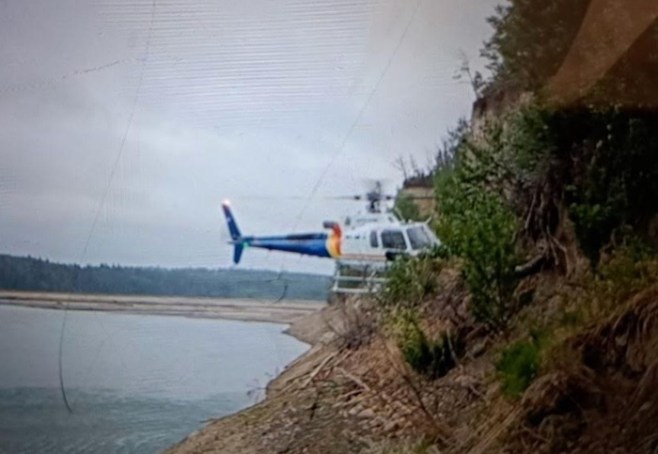
Upon locating Lorraine as she emerged from a heavily wooded area, rescue teams had difficulties transporting her due to a steep embankment. Alberta RCMP Air Services were again up to the task in supporting rescue efforts by landing in the difficult location and transporting Lorraine . She was taken for medical assessment and ultimately transported by STARS to hospital. Lorraine remains confused about her ordeal and RCMP have few details at this time.
Background
June 1, 2023
Innisfail RCMP seek public assistance in locating missing elderly female – Update #2
Innisfail, Alta. – RCMP are please to report that after 4 days of searching, Lorraine Vandenbosch has been located by rescue teams alive and in good spirits.
The RCMP helicopter located Lorainne this morning at approximately 9:30 a.m. walking out of a heavily wood area near the Dickson Trout Pond.
Lorainne is receiving precautionary medical attention and is with her family.
RCMP would like to thank the tireless effort of all involved in this search: Red Deer County SAR, Rocky Mountain House SAR, Sundre SAR, Wetaskiwin SAR, Red Deer County Patrol, Innisfail Fire Dept, Red Deer County Fire Dept, Spruceview Fire Dept, Alberta Conservation Officers, Raven Crime Watch and Mounted Horse volunteers.
RCMP would also like to thank the organizations that provided food to the teams, Spruceview Bakery and Red Deer Costco. This support allowed the rescue teams to continue working long hours.

Background
Innisfail RCMP seek public assistance in locating missing elderly female – Update
Innisfail, Alta. – Innisfail RCMP continue to search for Lorraine Vadenbosch who went missing from the Dickson Point Campground at Glennifer Lake yesterday. RCMP with assistance from Red Deer County, Sundre, and Rocky Mountain House Search and Rescue teams are actively searching the area.
While search teams continue to search, we are asking residents in the Glennifer Lake, Dickson, Spruce View, and nearby areas, to check your properties including treed outcroppings and outbuildings for Lorraine.
If you have any information regarding the whereabouts of Lorraine, please contact the Innisfail RCMP Detachment at 403-227-3342. If you want to remain anonymous, you can contact Crime Stoppers at 1-800-222-8477 (TIPS), online at www.P3Tips.com or by using the “P3 Tips” app available through the Apple App or Google Play Store.
May 29, 2023
Innisfail RCMP seek public assistance in locating missing elderly female
Innisfail. Alta. – Innisfail RCMP are seeking public assistance in locating a missing elderly female. Lorraine Vandenbosch (78), a resident of Didsbury, was last seen on May 29, 2023, at 10:30 a.m., at the Dickson Point Campground at Gleniffer Lake. Lorraine may be confused and there is great concern for her safety.
Lorraine is described as:
- 5 feet tall
- Red hair
- Light complexion
- Last seen wearing white pants, white and black shirt, black runners and a cream colored hat
If you have any information regarding the whereabouts of Lorraine, please contact the Innisfail RCMP Detachment at 403-227-3342. If you want to remain anonymous, you can contact Crime Stoppers at 1-800-222-8477 (TIPS), online at www.P3Tips.com or by using the “P3 Tips” app available through the Apple App or Google Play Store.

Alberta
Danielle Smith slams Skate Canada for stopping events in Alberta over ban on men in women’s sports
From LifeSiteNews
The Alberta premier has denounced Skate Canada as ‘disgraceful’ for refusing to host events in the province because of a ban on ‘transgender’ men in women’s sports.
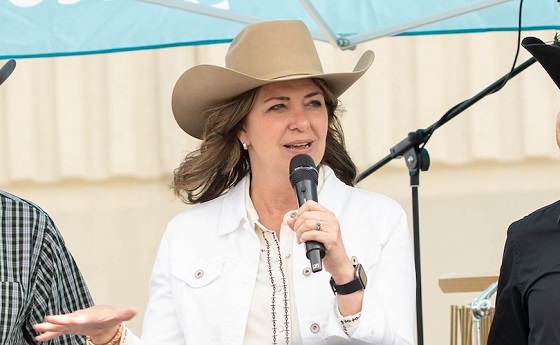
Alberta Premier Danielle Smith has demanded an apology after Skate Canada refused to continue holding events in Alberta.
In a December 16 post on X, Smith denounced Skate Canada’s recent decision to stop holding competitions in Alberta due to a provincial law keeping gender-confused men from competing in women’s sports.
“Women and girls have the right to play competitive sports in a safe and fair environment against other biological females,” Smith declared. “This view is held by a vast majority of Albertans and Canadians. It is also common sense and common decency.”
Women and girls have the right to play competitive sports in a safe and fair environment against other biological females.
This view is held by a vast majority of Albertans and Canadians. It is also common sense and common decency.
Skate Canada‘s refusal to hold events in… pic.twitter.com/n4vbkTx6B0
— Danielle Smith (@ABDanielleSmith) December 16, 2025
“Skate Canada‘s refusal to hold events in Alberta because we choose to protect women and girls in sport is disgraceful,” she declared.
“We expect they will apologize and adjust their policies once they realize they are not only compromising the fairness and safety of their athletes, but are also offside with the international community, including the International Olympic Committee, which is moving in the same direction as Alberta,” Smith continued.
Earlier this week, Skate Canada announced their decision in a statement to CBC News, saying, “Following a careful assessment of Alberta’s Fairness and Safety in Sport Act, Skate Canada has determined that we are unable to host events in the province while maintaining our national standards for safe and inclusive sport.”
Under Alberta’s Fairness and Safety in Sport Act, passed last December, biological men who claim to be women are prevented from competing in women’s sports.
Notably, Skate Canada’s statement failed to address safety and fairness concerns for women who are forced to compete against stronger, and sometimes violent, male competitors who claim to be women.
Under their 2023 policy, Skate Canada states “skaters in domestic events sanctioned by Skate Canada who identify as trans are able to participate in the gender category in which they identify.”
While Skate Canada maintains that gender-confused men should compete against women, the International Olympic Committee is reportedly moving to ban gender-confused men from women’s Olympic sports.
The move comes after studies have repeatedly revealed what almost everyone already knew was true, namely that males have a considerable innate advantage over women in athletics.
Indeed, a recent study published in Sports Medicine found that a year of “transgender” hormone drugs results in “very modest changes” in the inherent strength advantages of men.
Additionally, male athletes competing in women’s sports are known to be violent, especially toward female athletes who oppose their dominance in women’s sports.
Last August, Albertan male powerlifter “Anne” Andres was suspended for six months after a slew of death threats and harassments against his female competitors.
In February, Andres ranted about why men should be able to compete in women’s competitions, calling for “the Ontario lifter” who opposes this, apparently referring to powerlifter April Hutchinson, to “die painfully.”
Interestingly, while Andres was suspended for six months for issuing death threats, Hutchinson was suspended for two years after publicly condemning him for stealing victories from women and then mocking his female competitors on social media. Her suspension was later reduced to a year.

From the Canadian Energy Centre
By Will Gibson
Oil sands could maintain current production rates for more than 140 years
Investor interest in Canadian oil producers, primarily in the Alberta oil sands, has picked up, and not only because of expanded export capacity from the Trans Mountain pipeline.
Enverus Intelligence Research says the real draw — and a major factor behind oil sands equities outperforming U.S. peers by about 40 per cent since January 2024 — is the resource Trans Mountain helps unlock.
Alberta’s oil sands contain 167 billion barrels of reserves, nearly four times the volume in the United States.
Today’s oil sands operators hold more than twice the available high-quality resources compared to U.S. shale producers, Enverus reports.
“It’s a huge number — 167 billion barrels — when Alberta only produces about three million barrels a day right now,” said Mike Verney, executive vice-president at McDaniel & Associates, which earlier this year updated the province’s oil and gas reserves on behalf of the Alberta Energy Regulator.
Already fourth in the world, the assessment found Alberta’s oil reserves increased by seven billion barrels.
Verney said the rise in reserves despite record production is in part a result of improved processes and technology.
“Oil sands companies can produce for decades at the same economic threshold as they do today. That’s a great place to be,” said Michael Berger, a senior analyst with Enverus.
BMO Capital Markets estimates that Alberta’s oil sands reserves could maintain current production rates for more than 140 years.
The long-term picture looks different south of the border.
The U.S. Energy Information Administration projects that American production will peak before 2030 and enter a long period of decline.
Having a lasting stable source of supply is important as world oil demand is expected to remain strong for decades to come.
This is particularly true in Asia, the target market for oil exports off Canada’s West Coast.
The International Energy Agency (IEA) projects oil demand in the Asia-Pacific region will go from 35 million barrels per day in 2024 to 41 million barrels per day in 2050.
The growing appeal of Alberta oil in Asian markets shows up not only in expanded Trans Mountain shipments, but also in Canadian crude being “re-exported” from U.S. Gulf Coast terminals.
According to RBN Energy, Asian buyers – primarily in China – are now the main non-U.S. buyers from Trans Mountain, while India dominates purchases of re-exports from the U.S. Gulf Coast. .
BMO said the oil sands offers advantages both in steady supply and lower overall environmental impacts.
“Not only is the resulting stability ideally suited to backfill anticipated declines in world oil supply, but the long-term physical footprint may also be meaningfully lower given large-scale concentrated emissions, high water recycling rates and low well declines,” BMO analysts said.

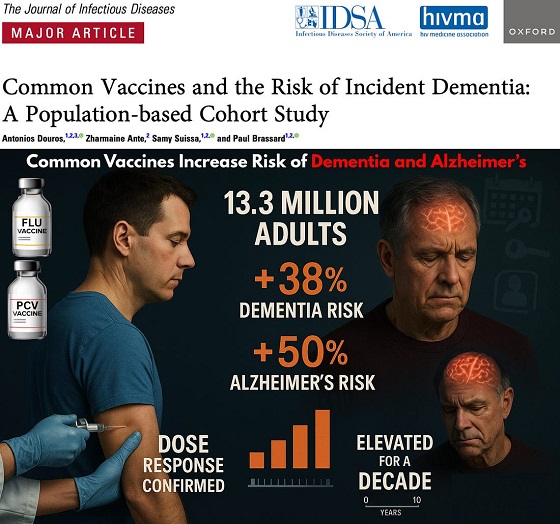
Common Vaccines Linked to 38-50% Increased Risk of Dementia and Alzheimer’s

Trump DOJ seeks to quash Pfizer whistleblower’s lawsuit over COVID shots
Alberta introducing three “all-season resort areas” to provide more summer activities in Alberta’s mountain parks

The $50 Billion Question: EVs Never Delivered What Ottawa Promised
-
 Community2 days ago
Charitable giving on the decline in Canada
-
 Business2 days ago
Canada’s recent economic growth performance has been awful
-
 Alberta2 days ago
Canada’s New Green Deal
-
 armed forces2 days ago
Ottawa’s Newly Released Defence Plan Crosses a Dangerous Line
-
Alberta1 day ago
Alberta’s huge oil sands reserves dwarf U.S. shale
-
 Health1 day ago
Saskatchewan woman approved for euthanasia urged to seek medical help in Canada rather than US
-
 Business2 days ago
COP30 finally admits what resource workers already knew: prosperity and lower emissions must go hand in hand
-
 Health1 day ago
Canadian gov’t considers sharing census data on gender-confused children