
Bruce Dowbiggin
Rays Of Sunshine In MLB’s Pointless Lockout

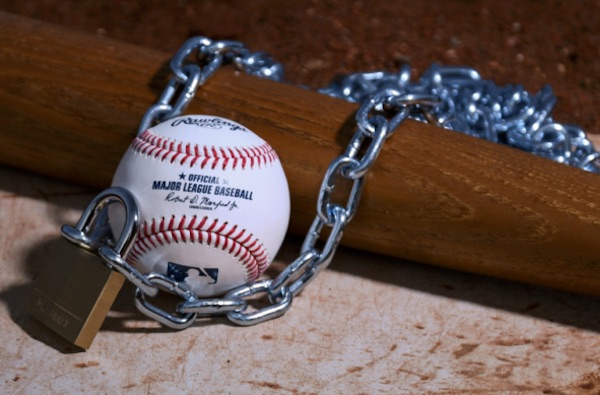

If you’re a baseball fan planning on going to 2022 spring training to see your favourite team you might want to pause before booking a flight or hotel room. In case you didn’t see the news, MLB has locked out its players again as the two sides jockey for a new collective bargaining agreement.
“We hope that the lockout will jumpstart the negotiations and get us to an agreement that will allow the season to start on time,” says MLB owners commissioner Rob Manfred. “This defensive lockout was necessary because the Players Association’s vision for Major League Baseball would threaten the ability of most teams to be competitive. It’s simply not a viable option.” Sure. Go with that.
Understand that for baseball fans the words collective-bargaining agreement are as welcoming as a reminder that you’re due for a colonoscopy. Labour actions of the past have ruined seasons and— in the case of the Montreal Expos— doomed a franchise. (See: 1994 lockout )
“The Expos were widely regarded as the best team in baseball that season, prohibitive favorites to win the World Series for the first time in franchise history. Once play resumed, the cash-strapped Expos tore apart their contending team, shipping off their best players in trades for lesser prospects in most cases.” By 2005 they had moved to Washington.
Since that 1994 disaster MLB has managed to avoid losing playing time to strikes/ lockouts. But the pressure has been building since the sport rejected the notion of a salary cap in favour of a much-less-restrictive luxury tax on free-spending terms. While the NHL, NBA and NFL operate more stringent salary cap systems, baseball has gone its own way in controlling salaries.
Concurrent with that has been an explosion of revenues for MLB, sending salaries and franchise values into the stratosphere. (See my book Cap In Hand for a full history of salary-cap economics and how a return to freer player markets is the future of the business.)
In a sign of how loose the financial reins have become, Max Scherzer’s $43-million annual salary with the New York Mets is more than the entire payroll of two MLB teams. With no minimum payroll, Pittsburgh and Baltimore are free to lap up their 1/30th share of MLB’s lucrative digital/ TV package, logo rights and other baubles.
Meanwhile players are concerned that while the stars become rich as Saudi princes the working class of the sport is not getting a proper share of the revenues. They claim owners are using devious practices to delay players getting to arbitration and free-agency. And they decry owners tanking for better draft picks or simply to make money.
None of this says that an early solution is imminent should the sides get past the next few weeks. The only lever for players is cancelling games, and there are none scheduled till next February (spring training) and late March (regular season). Likewise players are paid their salaries only during the regular season, meaning no player will lose any money till the games begin. Translation: They’re not panicking either. So expect the real negotiating to start in February as camps set to open for 2022.

The hiccup in the debate over highly paid superstars and exploding payrolls is the Tampa Bay Rays. The definitive “small MLB market” Tampa has found a way to get to the 2020 World Series and the 2021 ALDS using a formula that involves dumping their name players (Evan Longoria, Blake Snell, David Archer) and culling prospects and rejects from other clubs.
While teams like the Blue Jays, Mets, Yankees, Dodgers and Angels are profligate spenders on big names, Tampa throws around nickels like they were manhole covers. The Rays are so frugal that they’re proposing their summertime games be played in Montreal.
You want more? The cash-strapped Rays traded their stopper at the 2021 trade deadline— even as they led the majors in wins. They virtually invented the notion of reducing the value of starting pitching by creating the “bullpen” day, in which they start a relief pitcher and followed him with a series of other situational pitchers. Picking through the bargain bin they found inexpensive rejects and burnouts on other staffs and thrust them into their lineup.
As Mack Cerullo of Yahoo Sports noted, the Rays used 39 different pitchers last season; of the nine relief pitchers on Tampa Bay’s opening-day roster, only three remained at season’s end. The team’s three All-Stars, Joey Wendle, Mike Zunino and Andrew Kittredge, made a combined $5 million last year. Brandon Lowe, Randy Arozarena and Austin Meadows, the heart of their batting order, made less than $3.7 million among them.
Despite cutting corners the Rays had the No. 1 ranked system in baseball starting 2021. By season’s end prized rookies Wander Franco, Arozarena, Luis Patino and Shane McClanahan were all keys to TB getting to the ALDS. When they get too expensive the Rays will likely trade them for prospects or let them walk in free agency.

(Although the Rays tarnished their Scrooge reputation by signing the brilliant young Franco an eleven-year, $182 million contract extension, with a club option of $25 million for a twelfth year.)
Which begs the question: why are the tall foreheads of MLB shutting down the sport to save a system that has worked so well for Tampa? There is a ready template to compete and prosper in smaller markets. Why is this news to other owners? Likely it’s easier to lock out players than do the heavy lifting of the Rays. With no threat of losing a franchise via relegation (as in soccer) or being cut off from the MLB gravy train why bother?
So prepare for months of crocodile tears from owners that MLBPA’s demands “would threaten the ability of most teams to be competitive”. And prepare to hold your nose when they say they’ve solved the Grand Old Past-Time.
Bruce Dowbiggin @dowbboy is the editor of Not The Public Broadcaster (http://www.notthepublicbroadcaster.com). The best-selling author was nominated for the BBN Business Book award of 2020 for Personal Account with Tony Comper. A two-time winner of the Gemini Award as Canada’s top television sports broadcaster, he’s also a regular contributor to Sirius XM Canada Talks Ch. 167. His new book with his son Evan Inexact Science: The Six Most Compelling Draft Years In NHL History is now available on http://brucedowbigginbooks.ca/book-personalaccount.aspx

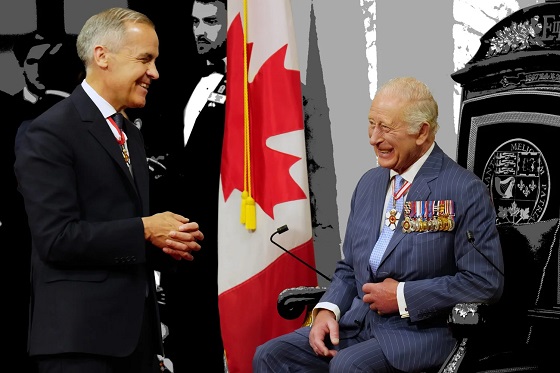
“The unifying theme that enables the Liberal party to maintain its hold over Canada is persistent anti-Americanism…I hope Canadians finally mature, acknowledge that we are neither superior nor inferior to the United States, and abandon our collective national inferiority complex.” Conrad Black quotes a friend.
Canadian media have almost always been reflexively anti-American. Fair enough. Abandoned by Britain they needed to push back. But the real fear of being consumed by the rebel colonies to the south has morphed into a fear of Donald Trump reminding Canada that it has been riding first class while paying economy.
Bashing noisy, bumptious America has always been good business if you owned a Canadian newspaper or television/radio network. The performative worship of Canadian leaders who cocked a snook at the Yankees led, in recent times, to the open-mouthed support for the fatuous Trudeaupian line of monarchs. As Ray Davies sang, “each one a dedicated follower of fashion.”
Since Pierre “The Bold” Trudeau succeeded Lester Pearson and ascended to the throne of the Family Compact in 1968, Canadian policy from Viet Nam to Trump has become “What are the Americans doing? Then let’s do the opposite”. Sample of spite: CBS TV pulled a controversial 60 Minutes news story —but it aired in Canada after being leaked by pissed-off CBS employees.
Yes, there was the brief Harper interregnum when Canada actually fought a military campaign alongside the U.S. in Afghanistan. But mostly it was Jean “Golf Balls” Chretien sitting out the Iraq War.
Alas, all good things must end. Or at least pause. People were starting to notice that Justy was a Chinese trusty, his Montreal riding campaign funded by hundreds of Chinese “businessman” from far away. The tragi-comic Trudeuapian succession hit a speed bump with Mark Carney being brought in to domesticate Canada in manner satisfactory to Brookfield and the EU.

But no one is betting the Libs won’t turn to a third generation of Quebec fashionistas— in the form of another Trudeau progeny— when all else fails.
As usual caustic Conrad Black sums up Canada best. With Quebec and Alberta talking separation he quotes a friend on the state of the nation. “What exists instead is a Liberal Party that manages — often quite poorly — the finances of a collection of provinces and territories, while relying on its media apparatus to shape and safeguard its narrative. It resembles a hedge fund supported by an image consulting firm.” (Insert your convict felon/ anglo wannabe reference here.)
There is no doubt that, as 2025 skulks out, the “image-consulting firm” painting rosy pictures of the Laurentian Elite is in for a a challenge. Justin thought using Trump as his pretext could achieve peace by buying up the lads and lasses of the fourth estate. It worked with Covid and the Truckers Convoy as the column writers/ panel hosts dutifully wrote it like he called it (even as the international press chided Trudeau.).
But even those good times didn’t last, forcing the Libs to do a presto-chango before Justin could lead them to a catastrophic defeat in the spring election. Once more, faced with Trump’s aggressive posture toward trade with Canada, the press closed ranks over Elbows Up, portraying CPC leader Pierre Poilievre as Dick Dastardly.
But new polling shows that the burst of enthusiasm for more Liberal pantomime is wearing thin. The new “new” trade deal promised with Trump has dissipated. The threat to private home ownership in B.C. by government’s indigenous land concessions has sent a chill through the middle class. The NDP fainting goats who bought Elbows Up are headed back to Crazytown, likely under Avi Lewis.
Now, at last, the reckoning promised by the Conservatives’ 20-point lead in polling this time last year may be at hand. While the diehards will go their graves mumbling land acknowledgements and 32 pronouns, there is hope that the under 60s— who emphatically support the Tories— will force change.
What change? Tristan Hopper in the National Post suggests that one place to start reforming the jalopy of Canadian government is in the oceans of money lavished on cause-related political leeches. Seeing the Bondi Beach slaughter by ISIS radicals many now question how long before Toronto or Montreal experiences a similar tragedy at the hands of jihadis who are lavishly supported by tax money.
Yes, not all Muslims in the West are terrorists. But almost all terrorists in the West are Muslim. Hate-spewing Hamas groupies from college faculty are regularly allowed major intersections with police protection as they promise to wipe out infidels. Till now it’s been poor form to even mention, let alone criticize, this pantomime.
Withdrawing financial aid to these groups and their academic fellow travellers would immediately rob these brigands of their impact. The cries of despair from cutting the cord would also expose those in the Commons who have coddled these vipers with grants and ministries.
Similar hacking at the slush money aimed at every other form of leftist posing— from trans to indigenous to illegal immigrants— would also mark the end of free money. Of course there will be caterwauling from the Elizabeth May Free Lunch crew. But with the threat of Canada coming apart with Quebec and Alberta/ Saskatchewan headed for the door those usual dissenting voices will be muted.
Only one thing stands in the way of this culling. That is PM Mark Carney coercing one more MP to cross the floor to his party, cementing its majority status for up to four more years. While the At Issue panels slap their flippers in glee at Poilievre’s demise, the rest of the nation will be less enthralled with the new realities of censorship, trade and housing.

As Stephen Punwasi states. “People in Canada can’t afford homes & prices can’t fall because debt was securitized with widespread fraud—so taxpayers will subsidize foreign speculation. It’s like they hired the mayor of Vancouver to run housing. Oh—they did, eh? Kids, run.”
Bruce Dowbiggin @dowbboy is the editor of Not The Public Broadcaster A two-time winner of the Gemini Award as Canada’s top television sports broadcaster, his 2025 book Deal With It: The Trades That Stunned The NHL And Changed Hockey is now available on Amazon. Inexact Science: The Six Most Compelling Draft Years In NHL History, his previous book with his son Evan, was voted the seventh-best professional hockey book of all time by bookauthority.org . His new poetry collection In Other Words is available via brucedowbigginbooks.ca and on Kindle books at https://www.amazon.ca/dp/1069802700

For those not familiar with hunting seasons in Canada it may come as a surprise that the nation has a year-round hunting season. That would be the targeting of Conservative leader Pierre Poilievre by the massed army of Liberals, their bots and the richly endowed media pack. Forget he’s never held power. He’s to blame for the ills in Canadian society.
It has been a good hunt. After floor-crossing by dissident CPC, the Liberals are one seat from the majority that Canadian voters denied them in the spring. (They’ll likely get the majority soon.) MPs who a day earlier were at Conservative Xmas parties suddenly sang the praises of Carney. MPs in ridings targeted by the Chinese suddenly joined Team Elbow Up.
All the while the media corps landed blows from their perch. Robert Benzie: “I know that Premier [Danielle] Smith is very unhappy privately with Pierre Poilievre because she thinks that [MOU motion] is undermining this [pipeline] project.” The nadir of the media dog pile was formerly eminent scribe Robert Fife who sniped, “Conservatives persist with cute legislative tricks, while the government tries to run a country.” Run a country. That’s rich.
From his lips to Liberal brains, however. “.@CBCNews and @AlJazeeraWorld viewers consider themselves uniquely informed, says @ElectionsCan_E report. The two TV networks were named by self-described “informed” voters when asked where they got their news. “
It is, seemingly, a great time to be a Liberal. Or not. While Operation Poilievre was gathering steam for Xmas polling revealed that Liberals and Conservatives remain locked in a tie, and Canadians continue to express ambivalence about the country’s direction, mixed feelings about their leaders, and sharp divides by generation, region, and policy concern. These generational discrepancies continue to be buried.

As was the case in the spring, the Liberals are supported only by the Boomer generation that swallowed Elbows Up nostalgia like a fat man on a donut. The under 60s demo at every level shows the current Carney agenda is a loser for them. In the segment of house-rich Boomers the Libs lead 50-31 over CPC. But in every other category it’s “how can I get out of here faster?”
The 45-59 demo it’s 46-36 Conservatives; 30-44 it’s a whopping 48-31 CPC; 18-29 it’s 40-39 CPC. A healthy chunk of Liberal supporting from the collapse of NDP vote. Where they used to poll in the 20s, the highest demo shows 11 percent support. Otherwise Poilievere would be PM.
Meanwhile, research now finds that 54 percent of Canadians say the growing number of newcomers to the country threatens our traditional customs and values— an increase of sixteen points since 2020. Over the same period, the share of Canadians who say immigration strengthens our society fell thirteen points to 35%
In short, the Carney Circus of marrying Canada to China and the EU is a card trick that will be exposed shortly. But where do we see the Ottawa press corps attention to this impending demographic snow plow? As we wrote in March “It’s not hard to see the (under 60s) looking at the Mike Myers obsession with a long-gone Canada and saying let’s get out of here.
Recently former TVOntario host Steve Pakin attended two convocations. The first at the former Ryerson University, (switched to Toronto Metropolitan University in a fit of settler colonizer guilt.) The second at Queens University, traditionally one of the elite schools in the nation. Here’s what he saw.
“At the end of the (TMU) convocation, when Charles Falzon, on his final day as dean of TMU’s Creative School, asked students to stand and sing the national anthem, many refused. They remained seated. Then, when the singing began, it was abundantly noticeable that almost none of the students sang along. And it wasn’t because they didn’t know the words, which were projected on a big screen. The unhappy looks on their faces clearly indicated a different, more political, explanation.
“I asked some of the TMU staff about it after the ceremony was over, and they confirmed what I saw happens all the time at convocations. Then I texted the president of another Ontario university who agreed: this is a common phenomenon among this generation at post-secondary institutions.”
At Queens, where Canadian flags were almost non-existent, O Canada was sung, but the message of unrest was clear: “Convocation sends a message of social stability,” Queen’s principal Patrick Deane began in his speech. “It is a ceremony shaped in history. You should value your connection to the past, but question that inheritance. Focus on the kind of society you’d like to inhabit.”
You can bet Deane is not telling them to question climate change and trans rights. As Paikin observes, “if we fail to create a more perfect union, we shouldn’t be surprised when a vast swath of young people don’t sing our anthem the way so many of the rest of us do.” So why are the best and brightest so reluctant to see as future in becoming the new professional class that runs society?
In the Free Press River Page searched the source of their discontent. “If the Great Recession, Covid-19, and the spectre of an artificial intelligence-assisted ‘white collar bloodbath’ has taught the professional class anything, it is that their credentials cannot save them. This insecurity, compounded by the outrageous cost of living in many large cities, has pushed the PMC’s anxieties to the breaking point.

“Add that to the triumph of identity politics in professional class institutions like universities, corporate C-suites, non-governmental organizations, and media—itself a byproduct of inter-elite competition as many have observed—and what you have is the modern left.
“… they’ve already come to the baffling conclusion that there’s no difference between class struggle and child sex changes. More to the point, the socialist mantra “From each according to his ability, to each according to his need” has only ever stood the test of time in Anabaptist sects. It requires a religious devotion to self-sacrifice that is not characteristic of this anxious and hyper-competitive class—as many actual socialists have spent the last decade warning.”
The tsunami over immigration has caused severe dislocations— as PM Steven Harper predicted in the 2015 election debate. He was shouted down by the dopey dauphin Justin Trudeau who opened the sluice gates to every kind of progressive nonsense. Which is now evident.
Like all people addicted, CDN Boomers don’t want the truth. They want performance theatre, T-shirts and hockey games. They blame Trump for their predicament, caught between grim realities. Will they take the 12 steps? Or will their kids have to tell them the facts as they escort them to the home?” We’re now seeing the likely answer to that question everywhere in Canadian society.
Bruce Dowbiggin @dowbboy is the editor of Not The Public Broadcaster A two-time winner of the Gemini Award as Canada’s top television sports broadcaster, his 2025 book Deal With It: The Trades That Stunned The NHL And Changed hockey is now available on Amazon. Inexact Science: The Six Most Compelling Draft Years In NHL History, his previous book with his son Evan, was voted the seventh-best professional hockey book of all time by bookauthority.org . His new poetry collection In Other Words is available via brucedowbigginbooks.ca and on Kindle books


Why is Canada paying for dairy ‘losses’ during a boom?

Ottawa’s Newly Released Defence Plan Crosses a Dangerous Line
Hunting Poilievre Covers For Upcoming Demographic Collapse After Boomers

Carney Floor Crossing Raises Counterintelligence Questions aimed at China, Former Senior Mountie Argues
-
 International18 hours ago
Ottawa is still dodging the China interference threat
-
 Business16 hours ago
There’s No Bias at CBC News, You Say? Well, OK…
-
 Automotive15 hours ago
Canada’s EV gamble is starting to backfire
-
 International17 hours ago
2025: The Year The Narrative Changed
-
 Fraser Institute1 day ago
Carney government sowing seeds for corruption in Ottawa
-
 Daily Caller1 day ago
While Western Nations Cling to Energy Transition, Pragmatic Nations Produce Energy and Wealth
-
 Business1 day ago
Residents in economically free states reap the rewards
-
 Alberta1 day ago
Alberta Next Panel calls for less Ottawa—and it could pay off