
Frontier Centre for Public Policy
Public opposition in Regina halts Dewdney Avenue renaming as Kamloops mass grave allegations unravel

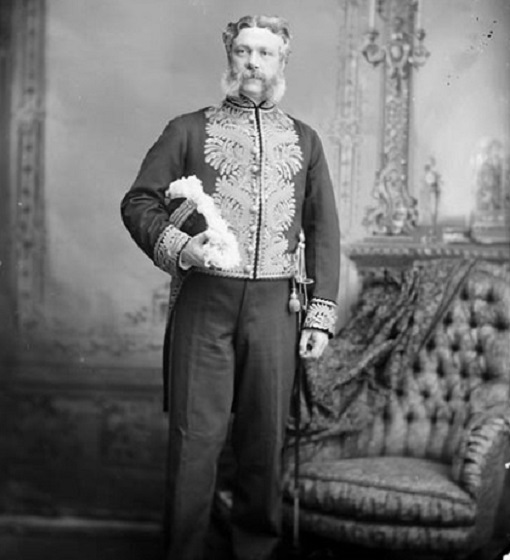

From the Frontier Centre for Public Policy
By Lee Harding
Three years after taking down a statue of Canada’s first Prime Minister, Regina decides not to change street named after a far more controversial historical figure.
In a sign of the times, the same City of Regina that removed a statue of John A. MacDonald has just preserved the name of former Indian Commissioner Edgar Dewdney.
Dewdney, a Conservative MP under MacDonald, became Indian Commissioner of the North-West Territories in 1879 and was named Lieutenant Governor of the territory in 1881. He served in both positions until 1888. He was, briefly, the Minister of Indian Affairs before being appointed Lieutenant- Governor of British Columbia.
It was Dewdney who decided to move the territorial capital from Battleford to Wascana in 1882, later renamed Regina. He also moved the North-West Mounted Police headquarters to Regina from Fort Walsh: the fact that Dewdney had land nearby was likely not coincidental.
In 1883, Dewdney wrote to MacDonald to back the 1879 Davin Report in support of residential industrial schools, saying they “might be carried on with great advantage to the Indians.” The Davin Report, written by Nicholas Flood Davin, a journalist and politician, was commissioned by the Canadian government to provide recommendations on the establishment of residential schools for Indigenous children.
Despite this enormous contribution to Regina and Canadian history, Regina city councillors Andrew Stevens and Dan LeBlanc made a motion last May to remove Dewdney’s name from a street, park, and public pool.
The prospects seemed good. After all, the city of Regina decided to remove the statue of Sir John A. Macdonald from Victoria Park in 2021, primarily due to his role in the creation of Canada’s residential school system.
Dewdney was neither a father of Confederation nor a prime minister but is often viewed as a more controversial figure in Canadian history. He actively supported the residential school system, believing it to be more effective than day schools in breaking the influence of Indigenous families and communities. His policies were designed to assimilate Indigenous children by separating them from their cultural roots.
He refused to allocate certain lands promised to Indigenous communities under treaty agreements. He also withheld food rations, which were crucial during times of famine, using them as leverage to force Indigenous bands to relocate further north, where the government wanted them to settle. These actions contributed to widespread suffering and are part of his contentious legacy.

Yet on August 21, by a vote of seven to three, Regina city council refused to rename the 12-km Dewdney Avenue. Ward 10 councillor Jason Mancinelli said the change would cause too much hassle for businesses and people on the street.
Mayor Sandra Masters, who is seeking re-election, estimated that renaming Dewdney Avenue could cost around $350,000. She argued that this amount could be better spent on other priorities in the city.
“There are other things we could invest in that wouldn’t be as divisive,” she said.
So, what changed between 2021 and now?
In 2021, the city removed Macdonald’s statue following a brief, one-sided consultation shortly after the Kamloops Residential School mass grave allegations. At the time, ground-penetrating radar suggested potential burial sites, prompting widespread reactions across Canada.
Three years later, the investigation into the allegations, at a cost of $8 million, has yet to uncover any bodies. Some experts suggest that soil disturbances detected by the scans might have been caused by shallow trenches dug for a septic field back in 1924 rather than unmarked graves as initially alleged.
In contrast, Regina introduced the issue of renaming Dewdney Avenue in May and held presentations in June of this year, long after the Kamloops allegations started to unravel. The decision on the name change was delayed long enough for those opposed to speak up. Apparently, the suggested replacement name Tatanka – the Cree word for bison – did not seem to resonate with many of those opposed to the renaming.
The takeaway from these two outcomes is clear: rushed decisions can lead to unintended consequences, while a more thoughtful, measured approach ensures that choices are better informed and more beneficial to the community.
Lee Harding is a Research Fellow at the Frontier Centre for Public Policy


From the Frontier Centre for Public Policy
By Lee Harding
Ottawa says Bill C-9 fights hate. Critics say it turns ordinary disagreement into a potential crime.
Discriminatory hate is not a good thing. Neither, however, is the latest bill by the federal Liberal government meant to fight it. Civil liberties organizations and conservative commentators warn that Bill C-9 could do more to chill legitimate speech than curb actual hate.
Bill C-9 creates a new offence allowing up to life imprisonment for acts motivated by hatred against identifiable groups. It also creates new crimes for intimidation or obstruction near places of worship or community buildings used by identifiable groups. The bill adds a new hate propaganda offence for displaying terrorism or hate symbols.
The Canadian Civil Liberties Association (CCLA) warns the legislation “risks criminalizing some forms of protected speech and peaceful protest—two cornerstones of a free and democratic society—around tens of thousands of community gathering spaces in Canada.” The CCLA sees no need to add to existing hate laws.
Bill C-9 also removes the requirement that the Attorney General consent to lay charges for existing hate propaganda offences. The Canadian Constitution Foundation (CCF) calls this a major flaw, noting it removes “an important safeguard for freedom of expression that has been part of Canada’s law for decades.” Without that safeguard, decisions to prosecute may depend more on local political pressures and less on consistent national standards.
Strange as it sounds, hatred just will not be what it used to be if this legislation passes. The core problem begins with how the bill redefines the term itself.
Previously, the Supreme Court of Canada said hatred requires “extreme manifestations” of detestation or vilification that involve destruction, abhorrence or portraying groups as subhuman or innately evil. Instead, Bill C-9 defines hatred as “detestation or vilification,” stronger than “disdain or dislike.” That is a notably lower threshold. This shift means that ordinary political disagreement or sharp criticism could now be treated as criminal hatred, putting a wide range of protected expression at real risk.
The bill also punishes a hateful motivation more than the underlying crime. For example, if a criminal conviction prompted a sentence of two years to less than five years, a hateful motivation would add as much as an additional five years of jail time.
On paper, most Canadians may assume they will never be affected by these offences. In practice, the definition of “hate” is already stretched far beyond genuine threats or violence.
Two years ago, the 1 Million March for Children took place across Canada to protest the teaching of transgender concepts to schoolchildren, especially the very young. Although such opposition is a valid position, unions, LGBT advocates and even Newfoundland and Labrador Conservatives adopted the “No Space For Hate” slogan in response to the march. That label now gets applied far beyond real extremism.
Public pressure also shapes how police respond to protests. If citizens with traditional values protest a drag queen story hour near a public library, attendees may demand that police lay charges and accuse officers of implicit hatred if they refuse. The practical result is clear: officers may feel institutional pressure to lay charges to avoid being accused of bias, regardless of whether any genuine threat or harm occurred.
Police, some of whom take part in Pride week or work in stations decorated with rainbow colours in June, may be wary of appearing insensitive or intolerant. There have also been cases where residents involved in home invasion incidents were charged, and courts later determined whether excessive force was used. In a similar way, officers may lay charges first and allow the courts to sort out whether a protest crossed a line. Identity-related considerations are included in many workplace “sensitivity training” programs, and these broader cultural trends may influence how such situations are viewed. In practice, this could mean that protests viewed as ideologically unfashionable face a higher risk of criminal sanction than those aligned with current political priorities.
If a demonstrator is charged and convicted for hate, the Liberal government could present the prosecution as a matter for the justice system rather than political discretion. It may say, “It was never our choice to charge or convict these people. The system is doing its job. We must fight hate everywhere.”
Provincial governments that support prosecution will be shielded by the inability to show discretion, while those that would prefer to let matters drop will be unable to intervene. Either way, the bill could increase tensions between Ottawa and the provinces. This could effectively centralize political authority over hate-related prosecutions in Ottawa, regardless of regional differences in values or enforcement priorities.
The bill also raises concerns about how symbols are interpreted. While most Canadians would associate the term “hate symbol” with a swastika, some have linked Canada’s former flag to extremism. The Canadian Anti-Hate Network did so in 2022 in an educational resource entitled “Confronting and preventing hate in Canadian schools.”
The flag, last used nationally in 1965, was listed under “hate-promoting symbols” for its alleged use by the “alt-right/Canada First movement” to recall when Canada was predominantly white. “Its usage in modern times is an indicator of hate-promoting beliefs,” the resource insisted. If a historic Canadian symbol can be reclassified this easily, it shows how subjective and unstable the definition of a “hate symbol” could become under this bill.
These trends suggest the legislation jeopardizes not only symbols associated with Canada’s past, but also the values that supported open debate and free expression. Taken together, these changes do not merely target hateful behaviour. They create a legal framework that can be stretched to police dissent and suppress unpopular viewpoints. Rest in peace, free speech.
Lee Harding is a research fellow for the Frontier Centre for Public Policy.
From the Frontier Centre for Public Policy
By Ian Madsen
Canada’s growing LNG exports are opening global markets and reducing dependence on U.S. prices, if Ottawa allows the pipelines and export facilities needed to reach those markets
Canada’s LNG advantage is clear, but federal bottlenecks still risk turning a rare opening into another missed opportunity
Canada is finally in a position to profit from global LNG demand. But that opportunity will slip away unless Ottawa supports the pipelines and export capacity needed to reach those markets.
Most major LNG and pipeline projects still need federal impact assessments and approvals, which means Ottawa can delay or block them even when provincial and Indigenous governments are onside. Several major projects are already moving ahead, which makes Ottawa’s role even more important.
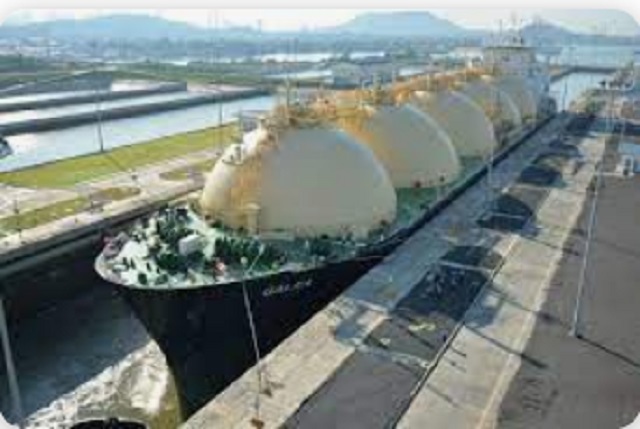
The Ksi Lisims floating liquefaction and export facility near Prince Rupert, British Columbia, along with the LNG Canada terminal at Kitimat, B.C., Cedar LNG and a likely expansion of LNG Canada, are all increasing Canada’s export capacity. For the first time, Canada will be able to sell natural gas to overseas buyers instead of relying solely on the U.S. market and its lower prices.
These projects give the northeast B.C. and northwest Alberta Montney region a long-needed outlet for its natural gas. Horizontal drilling and hydraulic fracturing made it possible to tap these reserves at scale. Until 2025, producers had no choice but to sell into the saturated U.S. market at whatever price American buyers offered. Gaining access to world markets marks one of the most significant changes for an industry long tied to U.S. pricing.
According to an International Gas Union report, “Global liquefied natural gas (LNG) trade grew by 2.4 per cent in 2024 to 411.24 million tonnes, connecting 22 exporting markets with 48 importing markets.” LNG still represents a small share of global natural gas production, but it opens the door to buyers willing to pay more than U.S. markets.
LNG Canada is expected to export a meaningful share of Canada’s natural gas when fully operational. Statistics Canada reports that Canada already contributes to global LNG exports, and that contribution is poised to rise as new facilities come online.
Higher returns have encouraged more development in the Montney region, which produces more than half of Canada’s natural gas. A growing share now goes directly to LNG Canada.
Canadian LNG projects have lower estimated break-even costs than several U.S. or Mexican facilities. That gives Canada a cost advantage in Asia, where LNG demand continues to grow.
Asian LNG prices are higher because major buyers such as Japan and South Korea lack domestic natural gas and rely heavily on imports tied to global price benchmarks. In June 2025, LNG in East Asia sold well above Canadian break-even levels. This price difference, combined with Canada’s competitive costs, gives exporters strong margins compared with sales into North American markets.
The International Energy Agency expects global LNG exports to rise significantly by 2030 as Europe replaces Russian pipeline gas and Asian economies increase their LNG use. Canada is entering the global market at the right time, which strengthens the case for expanding LNG capacity.
As Canadian and U.S. LNG exports grow, North American supply will tighten and local prices will rise. Higher domestic prices will raise revenues and shrink the discount that drains billions from Canada’s economy.
Canada loses more than $20 billion a year because of an estimated $20-per-barrel discount on oil and about $2 per gigajoule on natural gas, according to the Frontier Centre for Public Policy’s energy discount tracker. Those losses appear directly in public budgets. Higher natural gas revenues help fund provincial services, health care, infrastructure and Indigenous revenue-sharing agreements that rely on resource income.
Canada is already seeing early gains from selling more natural gas into global markets. Government support for more pipelines and LNG export capacity would build on those gains and lift GDP and incomes. Ottawa’s job is straightforward. Let the industry reach the markets willing to pay.
Ian Madsen is a senior policy analyst at the Frontier Centre for Public Policy.

Wayne Gretzky’s Terrible, Awful Week.. And Soccer/ Football.

Western Campuses Help Build China’s Digital Dragnet With U.S. Tax Funds, Study Warns

Common Vaccines Linked to 38-50% Increased Risk of Dementia and Alzheimer’s

The day the ‘King of rock ‘n’ roll saved the Arizona memorial
-
espionage2 days ago
Western Campuses Help Build China’s Digital Dragnet With U.S. Tax Funds, Study Warns
-
Focal Points2 days ago
Common Vaccines Linked to 38-50% Increased Risk of Dementia and Alzheimer’s
-
 Automotive1 day ago
The $50 Billion Question: EVs Never Delivered What Ottawa Promised
-
 Business2 days ago
Canada invests $34 million in Chinese drones now considered to be ‘high security risks’
-
 Alberta11 hours ago
Alberta introducing three “all-season resort areas” to provide more summer activities in Alberta’s mountain parks
-
 Economy2 days ago
Affordable housing out of reach everywhere in Canada
-
 Business20 hours ago
Storm clouds of uncertainty as BC courts deal another blow to industry and investment
-
 Health1 day ago
The Data That Doesn’t Exist