
Censorship Industrial Complex
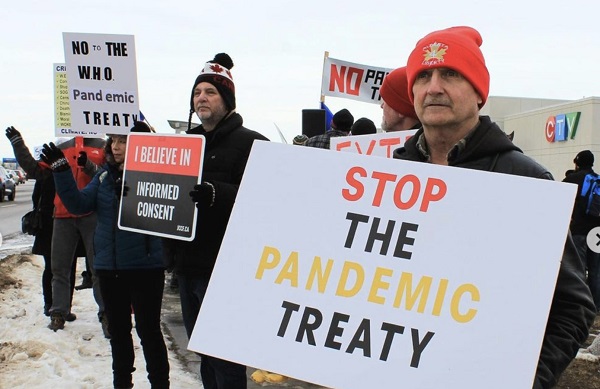
Protesters demand coverage of WHO pandemic treaty outside CTV building in Edmonton


From LifeSiteNews
Canada is set to adopt the World Health Organization’s ‘pandemic treaty’ this May, despite warnings that its provisions will undermine the country’s sovereignty in the event of crisis.
Protesters surrounded the Edmonton headquarters of mainstream media outlet CTV News last weekend to demand coverage of Canada’s plan to sign on to the World Health Organization’s pandemic treaty in May.
On March 9, Alberta 4 Liberty, a non-profit organization aimed at fight back against “the rise of totalitarian rule,” organized a protest outside the CTV News building in Edmonton to call on the mainstream to report on the WHO pandemic treaty which critics such as Conservative MP Leslyn Lewis have warned would give the globalist WHO increased power over Canada in the event of another “pandemic.”
“It’s pretty clear that this treaty does not have your health in the best interest. This treaty is all about power and control over you and your family,” Alberta 4 Liberty member Jessica Silva wrote in an Instagram post.
“The only way out is UNITED NON COMPLIANCE,” she declared.
“In May 2024 if the collective consensus is to give the W.H.O binding power on all pandemic response,” Silva warned. “This can be a pandemic of a virus, a pandemic of climate crisis, a pandemic of misinformation or anything that would consider a pandemic like response.”
Children “won’t have the quality of life and future that you have had if we don’t actually stop this pandemic treaty,” one protestor warned.
At the protest, Albertans held signs reading “exit the WHO” and “no pandemic treaty,” pleading with the mainstream media to cover the forthcoming agreement.
According to the protesters, CTV News ignored the demonstration, instead locking their gates and remaining inside their building.
Despite the lack of coverage from mainstream media, many have warned that the WHO’s treaty poses a threat to Canada’s sovereignty.

“Canada consented to the amendments to the WHO’s International Health Regulations (IHR), which limits Canada’s time to respond to further amendments, despite thousands of Canadians signing a petition expressing their concerns,” Conservative MP Leslyn Lewis warned in January, as reported by LifeSiteNews.
Lewis’ January statement followed her October endorsement of a petition demanding the Liberal government under the leadership of Prime Minister Justin Trudeau “urgently” withdraw from the United Nations and its subgroup, the World Health Organization (WHO), due to the organizations’ undermining of national “sovereignty” and the “personal autonomy” of citizens.
It warned that the “secretly negotiated” amendments could “impose unacceptable, intrusive universal surveillance, violating the rights and freedoms guaranteed in the Canadian Bill of Rights and the Charter of Rights and Freedoms.”
Despite nearly 19,000 Canadians signing the petition, the Trudeau government adopted the amendments proposed by the WHO.
The Trudeau government’s rejection of Canadians’ concerns and acceptance of the amendments should not come as a surprise considering Trudeau’s environmental goals which are in lockstep with the United Nations’ “2030 Agenda for Sustainable Development.”
Agenda 2030 was adopted by the U.N. General Assembly in 2015. Through its 17 Sustainable Development Goals (SDGs), it seeks to “transform our world for the better,” by “taking urgent action on climate change,” as well as “support[ing] the research and development of vaccines and medicines.” Some of the 17 goals also seek to expand “reproductive” services, including contraception and abortion, across the world in the name of women’s rights.
According to the UN, “all” nations working on the program “will implement this plan.”
Part of the plan includes phasing out coal-fired power plants, reducing fertilizer usage, and curbing natural gas use over the coming decades. Canada is one of the world’s largest oil and gas producers; however, Trudeau has made it one of his goals to decimate the industry.
Critics have sounded the alarm over the Trudeau government’s involvement in the WEF and other globalist groups, pointing to the socialist, totalitarian nature of the “Great Reset” agenda and its potential to usher in a Communist China-style social credit system.

Censorship Industrial Complex
How Wikipedia Got Captured: Leftist Editors & Foreign Influence On Internet’s Biggest Source of Info

Fr0m Stossel TV
I once reported how great Wikipedia is. But now, it’s manipulated by leftists. That’s a big problem because its bad information corrupts AI and search results. Even c0-founder Larry Sanger agrees.
But that’s just the beginning of the problem because “Wikipedia’s information spreads into everything online,” says @ashleyrindsbergmedia of @NPOVmedia .
That means when your ask ChatGPT, Google, or your phone a question, it’ll likely to take leftist spin straight from Wikipedia. Wikipedia bans most right-wing news sources and suggests Donald Trump is an authoritarian fascist (but they don’t even call Fidel Castro’s successor authoritarian).
They’ve turned my Wikipedia page into a smear against me.
I explain in this video.
_ _ _ _ _ _
To make sure you receive the weekly video from Stossel TV, sign up here:
https://www.johnstossel.com/#subscrib…
_ _ _ _ _ _
Censorship Industrial Complex
Death by a thousand clicks – government censorship of Canada’s internet


The Justice Centre for Constitutional Freedoms announces its latest publication, Death by a thousand clicks: The rise of internet censorship and control in Canada, authored by veteran journalist and researcher Nigel Hannaford. The report outlines how recommendations from the Broadcasting and Telecommunications Legislative Review Panel in 2020 set the stage for a series of federal bills that have collectively transformed Canada’s once open internet into a state-managed digital environment that restricts what Canadians may access, share, and say online.
The report highlights the following federal legislation:
Online Streaming Act (C-11): Passed in 2023, this Bill gives the CRTC power to regulate online videos and other content, including material created by everyday Canadians. It also lets the government influence online “discoverability,” meaning it can push certain content to the top of your feeds while making other content harder to find.
Online News Act (C-18): Also passed in 2023, this Bill forces platforms to pay approved news outlets, a measure that led to increased dependence of media organizations on the government and widespread blocking of Canadian news as a result of Meta’s news ban on Facebook and Instagram.
Online Harms Act (C-63): Although this Bill was halted by the 2025 election, it would have empowered a new “Digital Safety Commission” to order content removals, demand platform data, levy severe financial penalties on service providers for non-compliance with regulations created by the federal cabinet, and impose house arrest on Canadians who had not been charged with or convicted of any crime. It also would have allowed the Canadian Human Rights Commission to pursue Canadians over non-criminal “discriminatory” speech, together creating a sweeping censorship regime under the guise of addressing so-called “harms” that were already illegal.
Strong Borders Act (C-2): Introduced in June 2025 and currently at second reading, this Bill authorizes law enforcement to obtain subscriber information and metadata without a warrant, chilling anonymous online expression and eroding digital privacy.
An Act respecting cyber security, amending the Telecommunications Act and making consequential amendments to other Acts (C-8): Introduced in April 2025 and now before committee, this Bill expands government access to private networks and enables federal officials to direct telecommunications providers to kick individual Canadians off the internet without due process or appeal.
Combatting Hate Act (C-9): Introduced in September 2025 and currently before Parliament, this Bill broadens “hate-propaganda” offences, removes Attorney General oversight for prosecutions, encourages widespread self-censorship, and makes Canada more like the United Kingdom, where thousands of citizens are arrested over their social media commentary.
Report author Nigel Hannaford said, “It is important for Canadians to know that these bills are not isolated technical updates. Together they form a coordinated shift toward state-managed digital speech.”
“If we value open debate, privacy, and democratic accountability, we need to repeal the laws already passed and stop the ones now before Parliament,” he added.
Benjamin Klassen, Research and Education Coordinator for the Justice Centre, said, “It is important Canadians stay informed about these important issues. An informed public is essential to a free society.”
“Through research reports like this one, our Education team works to explain complex legislation in a way that empowers Canadians to participate in the national debate around important policies and defend their rights and freedoms,” he added.
To protect free expression online, Canadians should demand the repeal of Bills C-11 and C-18, insist that MPs vote against Bills C-2, C-8, and C-9, and elect representatives committed to restoring a free and open internet.

Death by a thousand clicks – government censorship of Canada’s internet

Viral TikTok video shows 7-year-old cuddling great-grandfather before he’s euthanized

Chinese Billionaire Tried To Build US-Born Baby Empire As Overseas Elites Turn To American Surrogates

Politicians should be honest about environmental pros and cons of electric vehicles
-
 Alberta1 day ago
Alberta’s huge oil sands reserves dwarf U.S. shale
-
 Alberta1 day ago
Canada’s New Green Deal
-
 Energy22 hours ago
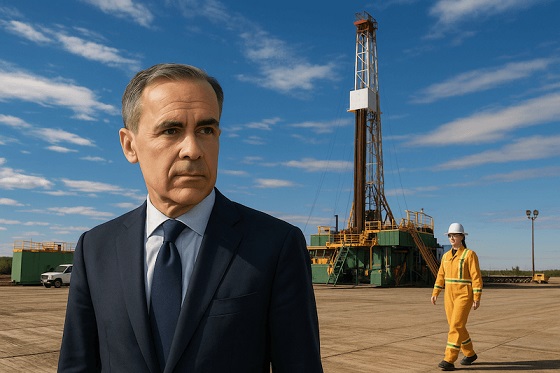
Canada’s sudden rediscovery of energy ambition has been greeted with a familiar charge: hypocrisy
-
 armed forces1 day ago
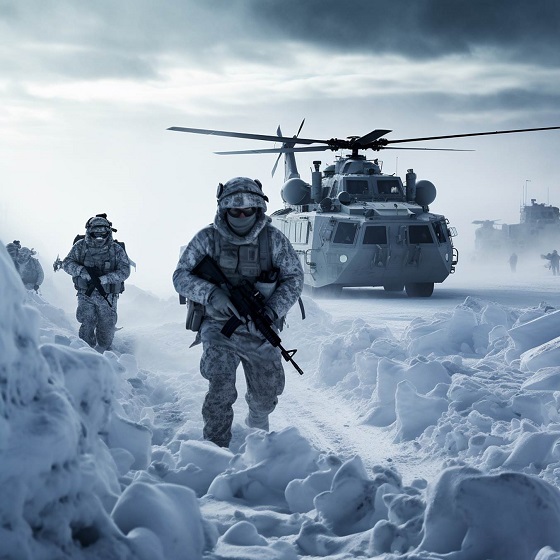
Ottawa’s Newly Released Defence Plan Crosses a Dangerous Line
-
 Business1 day ago
COP30 finally admits what resource workers already knew: prosperity and lower emissions must go hand in hand
-
 Indigenous1 day ago
Residential school burials controversy continues to fuel wave of church arsons, new data suggests
-
 Business20 hours ago
Ottawa Pretends To Pivot But Keeps Spending Like Trudeau
-
 Daily Caller21 hours ago
Paris Climate Deal Now Decade-Old Disaster