
Business
Poilievre: “Carney More Irresponsible Than Trudeau” as Housing, Jobs, and Energy Failures Mount

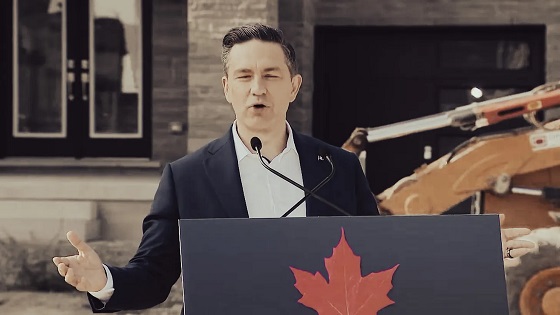


50,000 lost manufacturing jobs, 86,000 more unemployed, soaring housing costs, and blocking every LNG project while vowing to end the TFW program
Pierre Poilievre opened his press conference with a direct attack on Mark Carney and the Liberal record on housing, framing the crisis as the product of government mismanagement rather than market forces.
He began by pointing to Conservative MP Scott Aitchison, a former mayor, as an example of what can be done when local leaders “cut the taxes and the development charges and the wait times so that building can happen.” Then came the pivot: “What a contrast with Justin Trudeau — excuse me, with Mark Carney,” he said, before slamming Carney’s choice of Gregor Robertson as housing minister. Robertson, he reminded the crowd, presided over a 149% increase in Vancouver housing costs and more than doubled homebuilding taxes. Carney, Poilievre said, rewarded that record by handing him the national housing file.
The setting itself — Deco Homes, a family-run builder founded by Italian immigrants — was chosen deliberately. Poilievre praised the Gasper family for their role in building Canada’s homes and businesses, but then asked whether such families could do the same today. His answer was no. “After a decade of Liberal taxes, Liberal spending, out-of-control Liberal immigration, reckless crime policies… the Canadian promise is really broken.”
From there, he broadened the attack. He spoke of an entire generation priced out of homeownership, of immigration growing “three times faster than housing and jobs,” of crime rising, and of what he called “the worst economy in the G7.” And then he turned squarely on Carney: “Mr. Carney is actually more irresponsible than even Justin Trudeau was,” citing an 8% increase in government spending, 37% more for consultants, and 62 billion dollars in lost investment — the largest outflow in Canadian history, according to the National Bank.
The message was simple: Liberals talk, Conservatives build. Poilievre painted Carney as a man of speeches and promises, not results. “The mistake the media is making is they’re judging him by his words rather than his deeds,” he said.
It was an opening statement designed less to introduce policy — those details came later — and more to frame the battle. For Poilievre, Carney isn’t just Trudeau’s replacement. He’s Trudeau’s sequel, and in some ways worse.
During the Q and A portion of the presser; Pierre Poilievre was pressed on immigration today, and what he said was blunt. Canada, he argued, once had the “envy of the world” system: immigrants came in at numbers the country could absorb. There were jobs, housing, health care. Everyone integrated. Ten years later? He says the Liberals have destroyed that.

The facts he used were stark. According to Poilievre, Canada is bringing in people three times faster than homes and jobs are being created. He accused the government of allowing “massive abuses” of the international student program, the Temporary Foreign Worker program, and asylum claims, with what he called “rampant fraud” right under Ottawa’s nose.
He tied this directly to the economy: youth unemployment, he said, is the worst in three decades. At the same time, employers are importing more temporary foreign workers than ever, this year at a record high and using them for cheap labor under poor conditions. His line: “While our young people can’t find jobs, employers are able to exploit temporary foreign workers by giving them lower wages and terrible working conditions.”
But here’s the part that stands out politically. Poilievre said, “Immigrants are not to blame.” He put the responsibility squarely on Liberal governments, calling their immigration numbers “reckless and irresponsible.”
His fix? End the Temporary Foreign Worker program. Cut immigration levels back to “the right numbers and the right people” to fill jobs Canadians can’t do. Tighten border standards to keep criminals out. And, in his words, “always and everywhere put Canada first.”

Pierre Poilievre didn’t hold back when asked about Mark Carney’s record. His words: “Mr. Carney is actually more irresponsible than even Justin Trudeau was.” That’s not a throwaway line, he backed it with numbers.
According to Poilievre, Carney inherited what he called a “morbidly obese government” from Trudeau and made it worse: 8% bigger overall, 37% more for consultants, and 6% more bureaucracy. He says Carney’s deficit is set to be even larger than Trudeau’s.
Then the jobs number: 86,000 more unemployed people under Carney than under Trudeau. That, Poilievre argued, is the real measure, not the polished speeches Carney gives. His line: “The mistake the media is making is they’re judging him by his words rather than his deeds.”
He also went after Carney for what hasn’t happened: “He has not approved a single major national project.” Meanwhile, Poilievre says food price inflation is even worse today, crime policy hasn’t changed the same “catch and release” approach and every big promise Carney made has already been broken.

Pierre Poilievre was asked about Ukraine, and his answer wasn’t about speeches or handshakes in Brussels. It was about pipelines.
“The best way to put Canada first while helping Ukraine is to sell our oil and gas in Europe.” His argument: Vladimir Putin bankrolls his war because Europe still buys his fuel. Poilievre said if Canada had built the Energy East pipeline, we’d be shipping a million barrels of oil a day to Europe right now.
He went further: approve LNG plants immediately, liquefy tens of billions of dollars of Canadian gas, and ship it overseas to “fully displace” Russian sales. His line: “Instead of the money going to Putin’s war machine, it will go to the trades workers in this country.”
And then the indictment of the Liberals: “Mark Carney and the Liberals have blocked every single LNG project that has been put before them. As a result, we only have one plant and it was approved by Stephen Harper.”
So the contrast is stark. Carney talks about climate virtue. Poilievre says: build pipelines, sell fuel, kill Putin’s war economy, and pay Canadian workers. His closer: “That is how you put Canada first.”
Final Thoughts
So let’s just be honest. Under Mark Carney’s leadership, the numbers aren’t just bad they’re devastating. In a matter of months, Canada has lost 50,000 manufacturing jobs. These are not low-skill jobs; they are the backbone of the economy, the kind of work that built the middle class in this country. Add to that another 86,000 unemployed overall compared to when he took office. This is what Carney calls stability.
Now, if you’re a Temporary Foreign Worker, life looks pretty good. Ottawa has built an entire system around you cheap wages, little recourse, and companies happy to import you as disposable labor. If you’re a Carney insider, it looks even better. The government is 8% bigger than when Trudeau left, consultants are raking in 37% more, the bureaucracy is swelling. It’s one of the greatest insider rackets in modern Canadian politics.
But if you’re part of Canada’s middle class, if you’re a young person trying to buy a home, if you’re a worker trying to hold onto a job in a plant, a mill, or a construction site you are being hollowed out. You’re watching your wages stagnate, your housing costs explode, your jobs disappear overseas or into government-mandated “green transitions.” And when you ask for answers, what do you get? You get Patty Hajdu telling you not to be afraid of robots. You get Mark Carney telling you his deficits are “investments.” You get speeches about “climate virtue” and “AI literacy” while your livelihood collapses.
That’s the contrast Poilievre is trying to draw. On immigration, he says: let’s end the Temporary Foreign Worker scam, bring people in at a pace we can actually house and employ, and put Canadian workers first. On energy, he says: build the pipelines, approve the LNG projects, and stop funding Putin’s war by leaving Europe dependent on Russian fuel. On the economy, he says: stop measuring success by the size of government or the smoothness of a prime minister’s speeches, and start measuring it by the number of Canadians who can work, buy homes, and raise families in their own country.
So the choice is simple. Carney offers more of the same consultants, insiders, deficits, slogans, and the slow managed decline of a once-prosperous nation. Poilievre is offering something completely different: a chance to reverse the hollowing out of the middle class and to put Canadian jobs, Canadian energy, and Canadian sovereignty first.
If you’re an insider, Carney’s Canada works just fine. If you’re a middle-class Canadian, it’s a disaster. And that, in the end, is the dividing line in this country.


From the Fraser Institute
By Tegan Hill and Jason Clemens
Recent court decision adds to growing uncertainty in B.C.
A recent decision by the B.C. Court of Appeal further clouds private property rights and undermines investment in the province. Specifically, the court determined British Columbia’s mineral claims system did not follow the province’s Declaration on the Rights of Indigenous Peoples Act (DRIPA), which incorporated the United Nations Declaration on the Rights of Indigenous Peoples (UNDRIP) into law.
DRIPA (2019) requires the B.C. provincial government to “take all measures necessary to ensure the laws of British Columbia are consistent with the Declaration,” meaning that all legislation in B.C. must conform to the principles outlined in the UNDRIP, which states that “Indigenous peoples have the right to the lands, territories and resources which they have traditionally owned, occupied or otherwise used or acquired.” The court’s ruling that the provincial government is not abiding by its own legislation (DRIPA) is the latest hit for the province in terms of ongoing uncertainty regarding property rights across the province, which will impose massive economic costs on all British Columbians until it’s resolved.
Consider the Cowichan First Nations legal case. The B.C. Supreme Court recently granted Aboriginal title to over 800 acres of land in Richmond valued at $2.5 billion, and where such aboriginal title is determined to exist, the court ruled that it is “prior and senior right” to other property interests. Put simply, the case puts private property at risk in BC.
The Eby government is appealing the case, yet it’s simultaneously negotiating bilateral agreements that similarly give First Nations priority rights over land swaths in B.C.
Consider Haida Gwaii, an archipelago on Canada’s west coast where around 5,000 people live—half of which are non-Haida. In April 2024, the Eby government granted Haida Aboriginal title over the land as part of a bilateral agreement. And while the agreement says private property must be honoured, private property rights are incompatible with communal Aboriginal title and it’s unclear how this conflict will be resolved.
Moreover, the Eby government attempted to pass legislation that effectively gives First Nations veto power over public land use in B.C. in 2024. While the legislation was rescinded after significant public backlash, the Eby’s government’s continued bilateral negotiations and proposed changes to other laws indicate it’s supportive of the general move towards Aboriginal title over significant parts of the province.

UNDRIP was adopted by the United Nations in 2007 and the B.C. Legislature adopted DRIPA in 2019. DRIPA requires that the government must secure “free, prior and informed consent” before approving projects on claimed land. Premier Eby is directly tied to DRIPA since he was the attorney general and actually drafted the interpretation memo.
The recent case centres around mineral exploration. Two First Nations groups—the Gitxaala Nation and the Ehattesaht First Nation—claimed the duty to consult was not adequately met and that granting mineral claims in their land “harms their cultural, spiritual, economic, and governance rights over their traditional territories,” which is inconsistent with DRIPA.
According to a 2024 survey of mining executives, more uncertainty is the last thing B.C. needs. Indeed, 76 per cent of respondents for B.C. said uncertainty around protected land and disputed land claims deters investment compared to only 29 per cent and 44 per cent (respectively) for Saskatchewan.
This series of developments have and will continue to fuel uncertainty in B.C. Who would move to or invest in B.C. when their private property, business, and investment is potentially at risk?
It’s no wonder British Columbians are leaving the province in droves. According to the B.C. Business Council, nearly 70,000 residents left B.C. for other parts of Canada last year. Similarly, business investment (inflation-adjusted) fell by nearly 5 per cent last year, exports and housing starts were down, and living standards in the province (as measured by per-person GDP) contracted in both 2023 and 2024.
B.C.’s recent developments will only worsen uncertainty in the province, deterring investment and leading to stagnant or even declining living standards for British Columbians. The Eby government should do its part to reaffirm private property rights, rather than continue fuelling uncertainty.

Tegan Hill
Director, Alberta Policy, Fraser Institute

Jason Clemens
Executive Vice President, Fraser Institute

From the Daily Caller News Foundation
By Greg Blackie
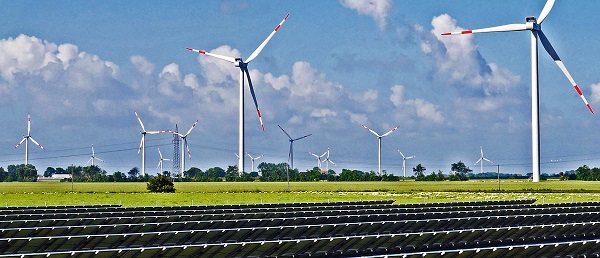
Our country is facing an energy crisis. No, not because of new demand from data centers or AI. Instead, it’s because utilities in nearly every state, due to government imposed “renewable” mandates, self-imposed mandates, and the supercharging of the Green New Scam under the so-called “Inflation Reduction Act,” have been shutting down vital coal resources and building out almost exclusively intermittent and costly resources like solar, wind, and battery storage.
President Donald Trump understands this, and that is why on day one of his administration he declared an Energy Emergency. Then, a few months later, the President signed a trio of Executive Orders designed to keep our “beautiful, clean coal” burning and providing the reliable, baseload, and affordable electricity Americans have benefitted from for generations.
Those orders have been used to keep coal generation online that was slated to shut down in Michigan and will potentially keep two units operating that were scheduled to shut down in Colorado this December. In Arizona, however, the Cholla Power Plant in Navajo County was shuttered by the utility just weeks after Trump explicitly called out the plant for saving in a press conference.
Dear Readers:
As a nonprofit, we are dependent on the generosity of our readers.
Please consider making a small donation of any amount here.
Thank you!
Unlike states with green mandates, Arizona essentially has none. Instead, our utilities, like many around the country, have self-imposed commitments to go “Net Zero” by 2050. To meet that target, they have planned to shut down all coal generation in the state by 2032 and plan to build out almost exclusively solar, wind, and battery storage to meet an expected explosive growth in demand, at a cost of tens of billions of dollars. So it is no surprise that like much of the rest of the country, Arizona is facing an energy crisis.
Taking a look at our largest regulated utilities (APS, TEP, and UNS) and the largest nonprofit utility, SRP, future plans paint an alarming picture. Combined, over the next 15 years, these utilities expect to see demand increase from 19,200 MW to 28,000 MW. For reference, 1,000 MW of electricity is enough to power roughly 250,000 homes. To meet that growth in demand, however, Arizonans will only get a net increase of 989 MW of reliable generation (coal, natural gas, and nuclear) compared to 22,543 MW (or nearly 23 times as much) of intermittent solar, wind, and battery storage.
But what about all of the new natural gas coming into the state? The vast majority of it will be eaten up just to replace existing coal resources, not to bring additional affordable energy to the grid. For example, the SRP board recently voted to approve the conversion of their Springerville coal plant to natural gas by 2030, which follows an earlier vote to convert another of their coal plants, Coronado, to natural gas by 2029. This coal conversion trap leaves ratepayers with the same amount of energy as before, eating up new natural gas capacity, without the benefit of more electricity.
So, while the Arizona utilities plan to collectively build an additional 4,538 MW of natural gas capacity over the next 15 years, at the same time they will be removing -3,549 MW (all of what is left on the grid today) of coal. And there are no plans for more nuclear capacity anytime soon. Instead, to meet their voluntary climate commitments, utilities plan to saddle ratepayers with the cost and resultant blackouts of the green new scam.
It’s no surprise then that Arizona’s largest regulated utilities, APS and TEP, are seeking double digit rate hikes next year. It’s not just Arizona. Excel customers in Colorado (with a 100% clean energy commitment) and in Minnesota (also with a 100% clean energy commitment) are facing nearly double-digit rate hikes. The day before Thanksgiving, PPL customers in Rhode Island (with a state mandate of 100% renewable by 2033) found out they may see rate hikes next year. Dominion (who has a Net Zero by 2050 commitment) wanted to raise rates for customers in Virginia by 15%. Just last month, regulators approved a 9% increase. Importantly, these rate increases are to recover costs for expenses incurred years ago, meaning they are clearly to cover the costs of the energy “transition” supercharged under the Biden administration, not from increased demand from data centers and AI.
It’s the same story around the country. Electricity rates are rising. Reliability is crumbling. We know the cause. For generations, we’ve been able to provide reliable energy at an affordable cost. The only variable that has changed has been what we are choosing to build. Then, it was reliable, dispatchable power. Now, it is intermittent sources that we know cost more, and that we know cause blackouts, all to meet absurd goals of going 100% renewable – something that no utility, state, or country has been able to achieve. And we know the result when they try.
This crisis can be avoided. Trump has laid out the plan to unleash American Energy. Now, it’s time for utilities to drop their costly green new scam commitments and go back to building reliable and affordable power that generations to come will benefit from.
Greg Blackie, Deputy Director of Policy at the Arizona Free Enterprise Club. Greg graduated summa cum laude from Arizona State University with a B.S. in Political Science in 2019. He served as a policy intern with the Republican caucus at the Arizona House of Representatives and covered Arizona political campaigns for America Rising during the 2020 election cycle.


Wayne Gretzky’s Terrible, Awful Week.. And Soccer/ Football.

Western Campuses Help Build China’s Digital Dragnet With U.S. Tax Funds, Study Warns

Common Vaccines Linked to 38-50% Increased Risk of Dementia and Alzheimer’s
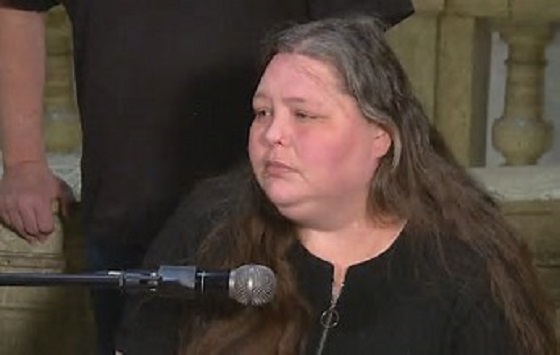
US podcaster Glenn Beck extends a lifeline to a Saskatchewan woman waiting for MAiD
-
Bruce Dowbiggin2 days ago
Wayne Gretzky’s Terrible, Awful Week.. And Soccer/ Football.
-
espionage1 day ago
Western Campuses Help Build China’s Digital Dragnet With U.S. Tax Funds, Study Warns
-
Focal Points1 day ago
Common Vaccines Linked to 38-50% Increased Risk of Dementia and Alzheimer’s
-
 Opinion2 days ago
The day the ‘King of rock ‘n’ roll saved the Arizona memorial
-
 Automotive16 hours ago
The $50 Billion Question: EVs Never Delivered What Ottawa Promised
-
 Agriculture2 days ago
Canada’s air quality among the best in the world
-
 Business1 day ago
Canada invests $34 million in Chinese drones now considered to be ‘high security risks’
-
 Health24 hours ago
The Data That Doesn’t Exist