
National
PBO report shows massive deficits for years to come

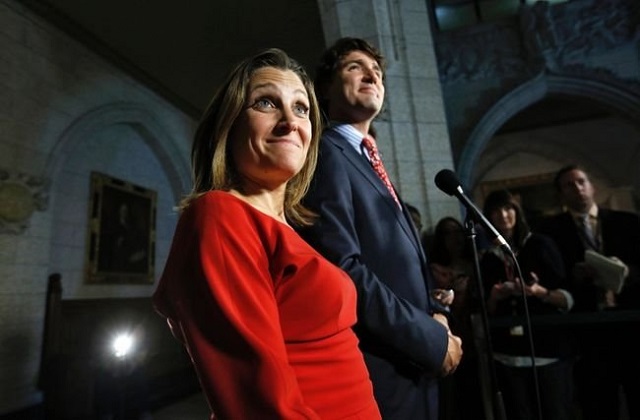

From the Canadian Taxpayers Federation
Author: Franco Terrazzano
The Canadian Taxpayers Federation is calling on the federal government to rein in spending and balance the budget following today’s Parliamentary Budget Officer report.
“PBO numbers show the government is running massive deficits for years to come with no plan to balance the budget,” said Franco Terrazzano, CTF Federal Director. “It’s time for Prime Minister Justin Trudeau to listen to the PBO’s warnings, put down the credit card, pick up some scissors and return to fiscal sanity.”
The PBO forecasts a $41 billion deficit in 2024.
“Compared to our October outlook, we are projecting budgetary deficits that are $7.9 billion higher, on average, over 2023-24 to 2028-29,” according to the PBO. “This increase is largely due to upward revisions to our projection of direct program expenses (including new measures).”

The PBO projects interest charges on the debt will cost taxpayers $52.1 billion. That’s equal to the amount the federal government sends to the provinces through health transfers. In 2028, interest charges will cost $62 billion, which is more than the government expects to collect through its GST.
Despite Finance Minister Chrystia Freeland’s commitment to reduce debt-to-GDP, the PBO report forecasts the ratio to increase slightly from to 42.4 to 42.5 per cent in 2024.
In its last budget, the government said it would find “savings of $15.4 billion over the next five years.” However, the PBO shows spending increasing by almost $20 billion in 2024.
“This government’s spending is out of control,” Terrazzano said. “In the upcoming budget, Trudeau and Freeland need to show Canadians that they care about the state of the country’s finances and balance the books.”
The federal government will present its 2024 budget on April 16.



As I’m sure your eyes have been glued to every scrap of news about the recent COP30 climate conference, I need hardly tell you about Canada’s related $392 million commitment. This, of course, will be part of (or perhaps in addition to) our overall $200 billion investment in the fight against global warming since 2015.
$200 billion, by the way, comes to nearly $5,000 for each man, woman, and child in the country. The yearly interest on the loans that were required to spend that money will cost considerably more. And, as far as we can tell, all that money has so far failed to even slow the rise in global temperatures.
Ok. But who’s getting this particular tranche of $392 million? Well, $263 million of it will go to the International Fund for Agricultural Development (IFAD).
IFAD is a fund, so it doesn’t do anything itself. But in this case, it’s expected to distribute money for projects in the Brazilian Amazon and work with local partners on forest and rural development issues. It’s the local partners who will do the work.
No matter who’s holding the shovels, any rural, agricultural, or environmental operations taking place in, for example, the State of Amazonas will require approval or licensing from the government agency, Instituto de Proteção Ambiental do Amazonas (IPAAM).
And that could be interesting. Because that very same IPAAM, as it happens, has been under Brazilian Federal Police investigation for the past year. In other words, the agency in control of issuing licenses and authorizing the work IFAD wants done, is (allegedly) as crooked as a corkscrew.
Well that certainly gets us off to a great start.
The next $106 million from Canada’s commitment has been directed to Deetken Asset Management’s new Inclusive Climate Action Fund (ICAF). As the name suggests, ICAF is a climate-focused investment fund whose broader strategy includes a “gender lens”. Which is another way of saying that financial success is not the fund’s overriding priority.
Under the best of circumstances, deploying climate-focused financial instruments through small and medium-sized enterprises – especially in emerging markets – is notoriously challenging. Besides all the regular headwinds facing any business startup, initiatives in those parts of the world will routinely face risks related to corruption, criminal gangs, and plenty of currency volatility. Being forced to operate while business solvency is your second or third-tier priority is like swimming across a fast-moving river with your legs tied to a tree.
What’s curious is that the government is doubling down on ESG investments at just the moment in history when ESG failures are hitting their stride. U.S.-based ESG funds faced net outflows of $8.6B in Q1 2025, while fund closures outpaced launches in 2024. Major managers like Vanguard approved no ESG proposals at all in 2024.
Closer to home, Canada Pension Plan Investments scrapped its net-zero emissions commitment “after several Canadian banks left the Net-Zero Banking Alliance earlier this year”. It seems that they felt rigid climate targets could conflict with the Plan’s fiduciary duties to maximize financial returns.
I for one would be curious to know who in Global Affairs Canada was ultimately responsible for those spending choices and whether they’ll be held responsible in the event of program failures. Although, all things considered, I’d be surprised if we ever hear anything at all about where all that money really ended up.
MAiD
From Exception to Routine. Why Canada’s State-Assisted Suicide Regime Demands a Human-Rights Review


Ontario’s chief coroner has now confirmed, in expert reports released alongside that AP probe, that some non-terminal MAiD deaths in the province were driven by “unmet social needs” such as fear of homelessness or uninhabitable housing.
Canada’s state-assisted suicide program, called MAiD, was sold by the Liberal government as a “stringently limited, carefully monitored system,” a rare option of last resort for people at the very end of life. New data from Health Canada show that in 2024, 16,499 Canadians died by MAiD — 5.1 percent of all deaths in the country.
Does it not follow logically, from these data, that Ottawa’s original framework has, cloaked in the rhetoric of progressively humane ideals, insidiously crept into something far more sinister than what Supreme Court justices, in their wisdom, affirmed in a society-altering Charter of Rights ruling in 2015?
Prior analysis from Cardus, a Canadian faith-based think tank, documented exponential increases from 1,018 deaths in 2016 to 13,241 in 2022 — about a thirteenfold rise — and notes that MAiD has become Canada’s fifth leading cause of death, roughly tied with cerebrovascular disease and behind cancer, heart disease, and accidents.
Under current federal law, eligibility for MAiD is scheduled to expand again in 2027, when people whose sole underlying medical condition is a mental illness can join the program. A joint House of Commons–Senate committee has recommended extending MAiD to “mature minors.”
Hold on, though. Roughly one in twenty deaths in Canada is now attributed to MAiD. On those numbers alone, rather than moving ahead with this expansion agenda, an external human-rights review should come first — and it should test whether Canada’s existing system is already breaching the rights of disabled, poor and socially isolated people before any further gates are opened.
In a statement this week citing its own prior research, Cardus, a faith-based think tank, added that Health Canada’s own data underlines a massive expansion beyond the “stringently limited, carefully monitored system” of last resort cited by the Supreme Court in 2015.
“Almost 58 percent of Track 1 MAiD recipients and more than 63 percent of Track 2 recipients reported ‘emotional distress/anxiety/fear/existential suffering’ in 2024, a significant jump from around 39 percent and 35 percent respectively in 2023,” Cardus wrote. “Meanwhile, almost half of those who died by MAiD in 2024 reported feeling like a burden on family, friends, or caregivers, maintaining the alarmingly high levels of previous years.”
Canada’s share of deaths from assisted dying is now among the highest in the world.
That is not what Canadians were told to expect when politicians and medical bodies insisted assisted death would be reserved for “rare situations” and “last resort” suffering. It is exactly what critics of a rapidly expanding regime warned about.
A new Angus Reid–Cardus survey, reported in the Catholic Register, suggests Canadians see the danger. Sixty-two percent of respondents — including 61 percent of health-care workers — say they are worried that socially or financially vulnerable people will choose MAiD because they cannot get adequate, quality health care. Health professionals admit they are often ill-equipped to meet the needs of people with disabilities, and nearly half say disabled patients receive “poor or terrible” care in our system.
But even stark data do not tell the whole story.
Recall that in late 2022, Veterans Affairs Minister Lawrence MacAulay acknowledged that a number of Canadian military veterans were casually offered the option of medically assisted death by a now-suspended caseworker. Those veterans were calling their own government for help living with post-traumatic stress, brain injuries and the scars of service. Instead, they were encouraged to explore dying.
An Associated Press investigation in 2024, drawing on private forums used by Canadian doctors and nurses, documented cases where MAiD was approved for people whose primary suffering was homelessness, social isolation or poverty: a homeless man who refused long-term care, a woman with severe obesity, an injured worker living on meagre benefits, grieving widows. Clinicians privately debated whether they were being asked to solve social abandonment with a lethal injection.
Ontario’s chief coroner has now confirmed, in expert reports released alongside that AP probe, that some non-terminal MAiD deaths in the province were driven by “unmet social needs” such as fear of homelessness or uninhabitable housing.
The coroner’s committee estimated that around 2 percent of cases they reviewed may not have followed all legally required safeguards — but no prosecutions have followed. Many of those euthanized came from the poorest parts of the province.
In December 2024, the Catholic Register reported on an Angus Reid–Cardus survey finding that many people with severe disabilities have experienced discrimination and poor care in the health system, while support for ever-broader MAiD access keeps rising. Cardus’s Rebecca Vachon warned that euthanasia is “crippling health-care resources and eroding the doctor-patient relationship.”
More recently, the same magazine highlighted doctors’ concerns about Health Canada messaging that encourages clinicians to raise MAiD discussions earlier with patients as part of “advance care planning.” Physicians interviewed said vulnerable patients already feel “pestered” about MAiD — and worry that a legal obligation to present all options is sliding into a cultural expectation to offer death.
Meanwhile, disability advocates have taken Canada’s MAiD regime directly to the United Nations. In March 2025, Inclusion Canada and allied groups appeared in Geneva before the UN Committee on the Rights of Persons with Disabilities, warning that Canada may be breaching its obligations under international disability rights law by offering assisted death to people whose suffering is driven by poverty, lack of care and discrimination.
The Bureau is a reader-supported publication.
To receive new posts and support my work, consider becoming a free or paid subscriber.


From Underdog to Top Broodmare

Landmark 2025 Study Says Near-Death Experiences Can’t Be Explained Away

STUDY: TikTok, Instagram, and YouTube Shorts Induce Measurable “Brain Rot”
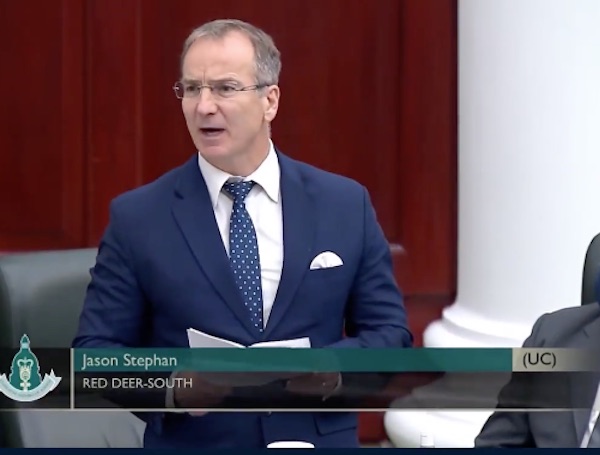
Red Deer’s Jason Stephan calls for citizen-led referendum on late-term abortion ban in Alberta
-
 C2C Journal2 days ago
Learning the Truth about “Children’s Graves” and Residential Schools is More Important than Ever
-
 Business2 days ago
Is there a cure for Alzheimer’s Disease?
-
 Brownstone Institute2 days ago
The Unmasking of Vaccine Science
-
 Bruce Dowbiggin2 days ago
Sometimes An Ingrate Nation Pt. 2: The Great One Makes His Choice
-
 Alberta2 days ago
New era of police accountability
-
 Alberta2 days ago
Emissions Reduction Alberta offering financial boost for the next transformative drilling idea
-
 Business1 day ago
Recent price declines don’t solve Toronto’s housing affordability crisis
-
 armed forces2 days ago
Global Military Industrial Complex Has Never Had It So Good, New Report Finds