
Environment
Ottawa’s plastic ban may actually hurt the environment


From the Fraser Institute
” a market research firm, found that in New Jersey… “non-woven polypropylene… consumes over 15 times more plastic and generates more than five times the amount of GHG emissions during production per bag than polyethylene plastic bags.” In other words, the ban helped increase pollution. “
Despite a court ruling late last year, which deemed the Trudeau government ban on single-use plastic (cutlery, straws, grocery bags, etc.) “unreasonable and unconstitutional,” the ban essentially remains in place pending appeal or further regulatory action. But according to the government’s own data and analysis, plastic waste is a virtual non-issue in Canada, as 99 per cent of all plastic waste is disposed of safely in landfills or is incinerated. And less than 1 per cent of Canada’s plastic waste finds its way into the environment.
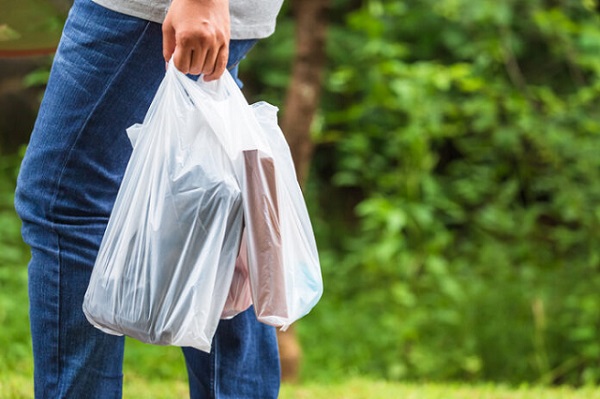
Moreover, there’s great potential for people to replace banned plastic items, including plastic grocery bags, with other plastic bags not included in the ban such as heavy gauge “reusable” shopping totes and other types of plastic trash bags made of heavier-gauge plastics than the filmy bags banned from grocery stores.
In New Jersey, for example, while plastic grocery bag use did decline following a statewide ban in 2022, plastic substitute materials skyrocketed, plastic consumption rose threefold for heavier reusable bags and sixfold for woven and non-woven polypropylene bags, which are not produced domestically, not recycled nor do they contain recycled content. Freedonia, a market research firm, found that in New Jersey “increased consumption of polypropylene bags” contributed to a “500% increase in greenhouse gas (GHG) emissions compared to non-woven polypropylene bag production” and that “non-woven polypropylene… consumes over 15 times more plastic and generates more than five times the amount of GHG emissions during production per bag than polyethylene plastic bags.” In other words, the ban helped increase pollution.
In California, an environmental interest group called CALPIRG recently issued a report generally favouring plastic bag bans, observing that they do indeed reduce the use of banned bags. However, the report notes that “loopholes,” which allow consumers to use heavier plastic bag alternatives, results in more plastic consumption and waste—not less. According to CALPIRG, plastic bag disposal rates increased in one jurisdiction (Alameda) from 157,000 tons in the year before the ban on single-use grocery bags to 231,000 tons in 2021. On a per-person basis, it rose from 4.1 tons disposed of per 100,000 people to 5.9 tons disposed of per 100,000 over that same span.

In both New Jersey and California, efforts are underway to “fix” the loopholes that have allowed proliferation of plastic consumption and waste in the wake of plastic bag bans. However, these actions are unlikely to work unless they can somehow stop consumers from simply switching to plastic garbage bags or buying online heavier-gauge plastic shopping totes (and trashing them after a few shopping trips). Consumers have already shown they’re prepared to do these things.
Here at home, there’s no reason to believe that Canadian consumers will react any differently to a ban on single-use plastics. Canadians are just as likely to reach for the convenient substitute, whether that’s heavier paper products or heavier plastic products not covered under existing bans.
If sanity reigned, Canada would get ahead of the perverse consequences likely to flow from plastic bans by scrapping the entire idea and allowing consumers to consume what they believe best suits their lives and pocketbooks. Canada already has an admirable waste management system that keeps 99 per cent of disposed plastics safely locked away in environmentally protective landfills or eliminates them completely through incineration.
There’s no need for plastic bans or a governmental takeover of the plastics sector via regulation. Government should throw these bans in the bin.
Author:


From the Fraser Institute
By Annika Segelhorst and Elmira Aliakbari
According to Steven Guilbeault, former environment minister under Justin Trudeau and former member of Prime Minister Carney’s cabinet, “Switching to an electric vehicle is one of the most impactful things Canadians can do to help fight climate change.”
And the Carney government has only paused Trudeau’s electric vehicle (EV) sales mandate to conduct a “review” of the policy, despite industry pressure to scrap the policy altogether.
So clearly, according to policymakers in Ottawa, EVs are essentially “zero emission” and thus good for environment.
But is that true?
Clearly, EVs have some environmental advantages over traditional gasoline-powered vehicles. Unlike cars with engines that directly burn fossil fuels, EVs do not produce tailpipe emissions of pollutants such as nitrogen dioxide and carbon monoxide, and do not release greenhouse gases (GHGs) such as carbon dioxide. These benefits are real. But when you consider the entire lifecycle of an EV, the picture becomes much more complicated.
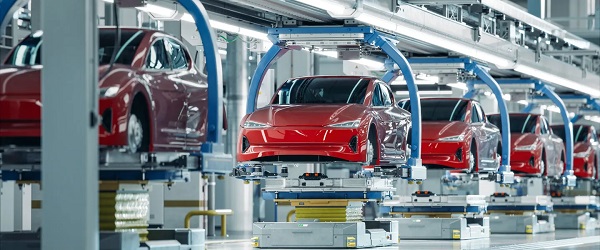
Unlike traditional gasoline-powered vehicles, battery-powered EVs and plug-in hybrids generate most of their GHG emissions before the vehicles roll off the assembly line. Compared with conventional gas-powered cars, EVs typically require more fossil fuel energy to manufacture, largely because to produce EVs batteries, producers require a variety of mined materials including cobalt, graphite, lithium, manganese and nickel, which all take lots of energy to extract and process. Once these raw materials are mined, processed and transported across often vast distances to manufacturing sites, they must be assembled into battery packs. Consequently, the manufacturing process of an EV—from the initial mining of materials to final assembly—produces twice the quantity of GHGs (on average) as the manufacturing process for a comparable gas-powered car.
Once an EV is on the road, its carbon footprint depends on how the electricity used to charge its battery is generated. According to a report from the Canada Energy Regulator (the federal agency responsible for overseeing oil, gas and electric utilities), in British Columbia, Manitoba, Quebec and Ontario, electricity is largely produced from low- or even zero-carbon sources such as hydro, so EVs in these provinces have a low level of “indirect” emissions.
However, in other provinces—particularly Alberta, Saskatchewan and Nova Scotia—electricity generation is more heavily reliant on fossil fuels such as coal and natural gas, so EVs produce much higher indirect emissions. And according to research from the University of Toronto, in coal-dependent U.S. states such as West Virginia, an EV can emit about 6 per cent more GHG emissions over its entire lifetime—from initial mining, manufacturing and charging to eventual disposal—than a gas-powered vehicle of the same size. This means that in regions with especially coal-dependent energy grids, EVs could impose more climate costs than benefits. Put simply, for an EV to help meaningfully reduce emissions while on the road, its electricity must come from low-carbon electricity sources—something that does not happen in certain areas of Canada and the United States.
Finally, even after an EV is off the road, it continues to produce emissions, mainly because of the battery. EV batteries contain components that are energy-intensive to extract but also notoriously challenging to recycle. While EV battery recycling technologies are still emerging, approximately 5 per cent of lithium-ion batteries, which are commonly used in EVs, are actually recycled worldwide. This means that most new EVs feature batteries with no recycled components—further weakening the environmental benefit of EVs.
So what’s the final analysis? The technology continues to evolve and therefore the calculations will continue to change. But right now, while electric vehicles clearly help reduce tailpipe emissions, they’re not necessarily “zero emission” vehicles. And after you consider the full lifecycle—manufacturing, charging, scrapping—a more accurate picture of their environmental impact comes into view.

Annika Segelhorst
Junior Economist

Elmira Aliakbari

From the Fraser Institute
By Annika Segelhorst and Elmira Aliakbari
Canadians care about the environment and breathing clean air. In 2023, the share of Canadians concerned about the state of outdoor air quality was 7 in 10, according to survey results from Abacus Data. Yet Canada outperforms most comparable high-income countries on air quality, suggesting a gap between public perception and empirical reality. Overall, Canada ranks 8th for air quality among 31 high-income countries, according to our recent study published by the Fraser Institute.
A key determinant of air quality is the presence of tiny solid particles and liquid droplets floating in the air, known as particulates. The smallest of these particles, known as fine particulate matter, are especially hazardous, as they can penetrate deep into a person’s lungs, enter the blood stream and harm our health.
Exposure to fine particulate matter stems from both natural and human sources. Natural events such as wildfires, dust storms and volcanic eruptions can release particles into the air that can travel thousands of kilometres. Other sources of particulate pollution originate from human activities such as the combustion of fossil fuels in automobiles and during industrial processes.
The World Health Organization (WHO) and the Canadian Council of Ministers of the Environment (CCME) publish air quality guidelines related to health, which we used to measure and rank 31 high-income countries on air quality.
Using data from 2022 (the latest year of consistently available data), our study assessed air quality based on three measures related to particulate pollution: (1) average exposure, (2) share of the population at risk, and (3) estimated health impacts.
The first measure, average exposure, reflects the average level of outdoor particle pollution people are exposed to over a year. Among 31 high-income countries, Canadians had the 5th-lowest average exposure to particulate pollution.
Next, the study considered the proportion of each country’s population that experienced an annual average level of fine particle pollution greater than the WHO’s air quality guideline. Only 2 per cent of Canadians were exposed to fine particle pollution levels exceeding the WHO guideline for annual exposure, ranking 9th of 31 countries. In other words, 98 per cent of Canadians were not exposed to fine particulate pollution levels exceeding health guidelines.
Finally, the study reviewed estimates of illness and mortality associated with fine particle pollution in each country. Canada had the fifth-lowest estimated death and illness burden due to fine particle pollution.
Taken together, the results show that Canada stands out as a global leader on clean air, ranking 8th overall for air quality among high-income countries.

Canada’s record underscores both the progress made in achieving cleaner air and the quality of life our clean air supports.
Annika Segelhorst
Junior Economist
Elmira Aliakbari


Death by a thousand clicks – government censorship of Canada’s internet
Politicians should be honest about environmental pros and cons of electric vehicles

Viral TikTok video shows 7-year-old cuddling great-grandfather before he’s euthanized

Canada releases new digital ID app for personal documents despite privacy concerns
-
Automotive6 hours ago
Politicians should be honest about environmental pros and cons of electric vehicles
-
 Agriculture2 days ago
Why is Canada paying for dairy ‘losses’ during a boom?
-
 Agriculture2 days ago
Canadians should thank Trump for targeting supply management
-
 Business2 days ago
Canada Hits the Brakes on Population
-
 Frontier Centre for Public Policy2 days ago
Canada Lets Child-Porn Offenders Off Easy While Targeting Bible Believers
-
 Business2 days ago
White House declares inflation era OVER after shock report
-
 Daily Caller1 day ago
‘Almost Sounds Made Up’: Jeffrey Epstein Was Bill Clinton Plus-One At Moroccan King’s Wedding, Per Report
-
 Crime1 day ago
Brown University shooter dead of apparent self-inflicted gunshot wound